
How a Wilmette Law Firm Could Use Claude Managed Agents for Discovery, Conflict Checks, and Deal Diligence
Anthropic's new Managed Agents service quietly fixes the single biggest problem with AI in a law office: the work that takes longer than a single sitting. For a Wilmette firm, that changes the math on discovery, conflict screens, and small-business deals.

Key Takeaways
- ✓ Anthropic launched Claude Managed Agents on April 8, 2026 as a public beta on the Claude Platform. The beta header is
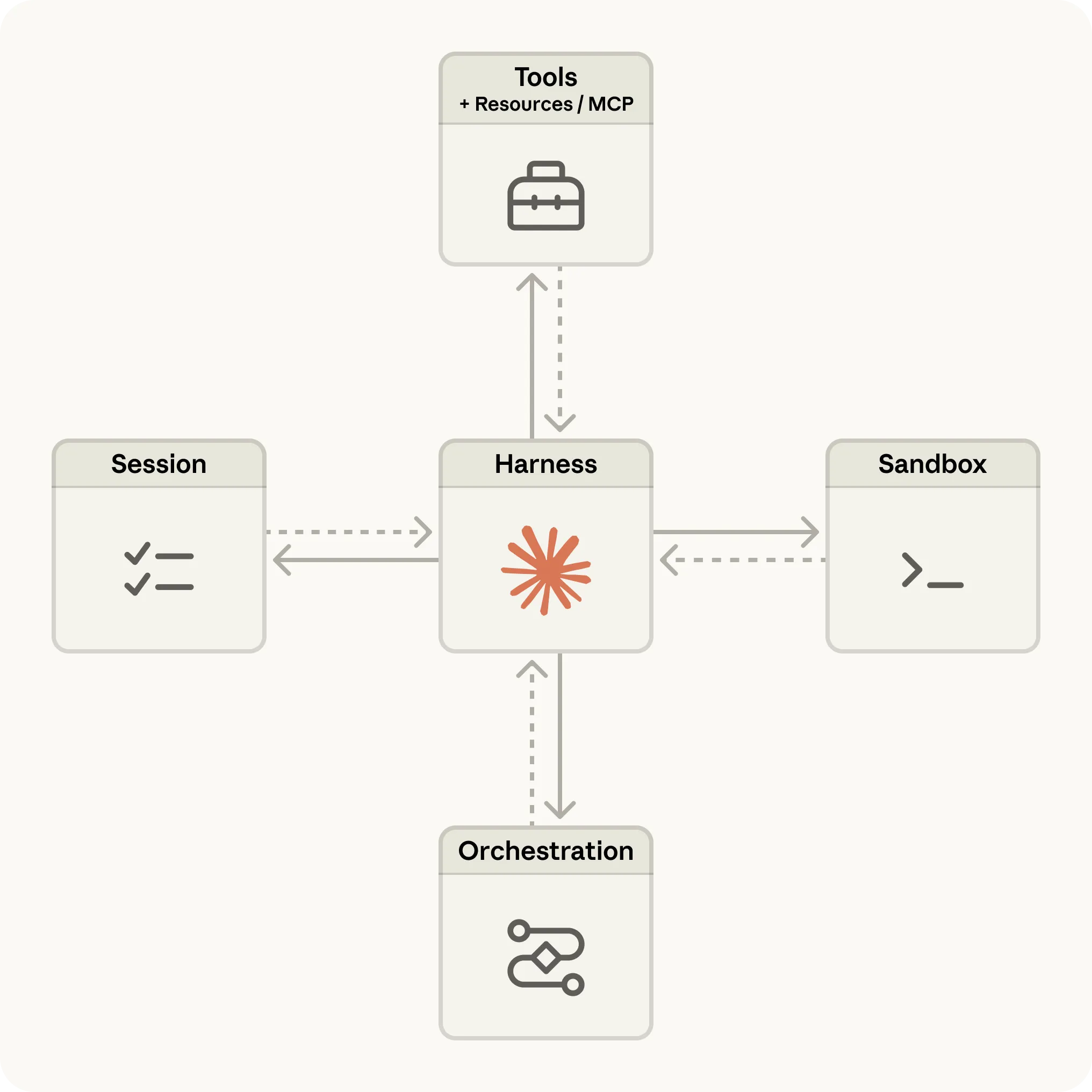
managed-agents-2026-04-01. Pricing is the standard Claude API token rate plus $0.08 per active session-hour. - ✓ Managed Agents adds the four pieces a law firm previously had to build itself: sandboxed code execution, checkpointing across disconnections, credential vaulting, and end-to-end tracing.
- ✓ For a Wilmette firm, the practical change is this: a job that runs for three days no longer dies if a paralegal closes a laptop. The agent picks up where it left off.
- ✓ Three concrete workflows: multi-day discovery review on a single litigation matter, long-running conflict-of-interest screens across years of email and matter history, and contract analysis on a small-business client M&A transaction.
Wilmette, Ill. , April 20, 2026. Picture a four-attorney firm on Central Avenue, the kind that handles a steady book of estate plans, family-law matters, and the occasional commercial dispute for a client who has been with the firm since the partner's father was running it. On a Tuesday afternoon, a complaint arrives by certified mail. A long-tenured client, a small manufacturer with a plant in Skokie, has been sued by a former employee. The discovery demand is the usual surprise: nineteen broad requests, a defined relevant period of seven years, and a production deadline that is forty-five days away.
The firm's senior associate opens the client's email export, all 312,000 messages of it, and starts the work the same way associates have started this work for thirty years. She picks a search term, runs it, scrolls. Picks another, runs it, scrolls. Three hours in, she has read maybe four hundred messages, identified twelve that look responsive, and started a privilege-log spreadsheet. She has 311,600 messages to go.
This is the work that AI was supposed to fix two years ago. And it has, sort of. Claude can read an email, classify it, summarize it, and tag it for privilege review. The problem has never been whether Claude can do the work. The problem has been that the work takes longer than any single Claude session can stay alive.
That changed twelve days ago.
On April 8, Anthropic launched Claude Managed Agents, a service that lets a developer or an agency hand Claude a long-running task and walk away. The agent runs on Anthropic's infrastructure for hours. Progress is checkpointed. Credentials are vaulted. The session survives disconnections. Early customers include Notion, Rakuten, and Asana, according to SiliconANGLE's coverage of the launch.
For a Wilmette law firm, the technical news is small. The practical news is large. The work that used to die on a closed laptop now finishes overnight.
What follows is what actually shipped, why it matters specifically for an estates-and-litigation practice on the North Shore, and three concrete matters where a small Wilmette firm could deploy it inside thirty days.
What Actually Shipped on April 8
Claude Managed Agents is a Claude Platform service. It is not a chatbot, not a desktop app, and not a feature inside Claude.ai. A firm does not log in and use it. A developer or implementation agency builds an agent against the API, points it at the firm's documents, and runs it.
What that developer gets, per Anthropic's engineering blog on the launch, is four pieces of infrastructure that were previously the developer's problem.
Sandboxed code execution. Each agent runs inside an isolated container. The container has a working file system, can run shell commands, can install packages, and can call out to external systems through Model Context Protocol (MCP) servers. Critically, that container is destroyed at the end of the session. Nothing leaks across matters.
Checkpointing. Every event in a session, every tool call, every model response, every file write, is appended to a durable session log. If the harness crashes, the network drops, or a paralegal closes the browser tab, the agent's state is recoverable from that log. The session can be resumed by ID. This is the single change that makes multi-day legal work feasible.
Credential management. The agent can authenticate against external services without ever seeing the raw token in the code-execution sandbox. Anthropic's documentation describes a vault-and-proxy pattern. For a law firm, this matters because the agent will need to read from Clio, Microsoft 365, NetDocuments, and a billing system, and none of those credentials should be sitting in plain text inside an LLM context window.
Scoped permissions and tracing. Each session can be locked to a narrow set of tools and a narrow set of data sources. Every tool call is recorded. The result is an audit trail an ethics committee can actually read, which matters when the work product is going to be discussed in a deposition.
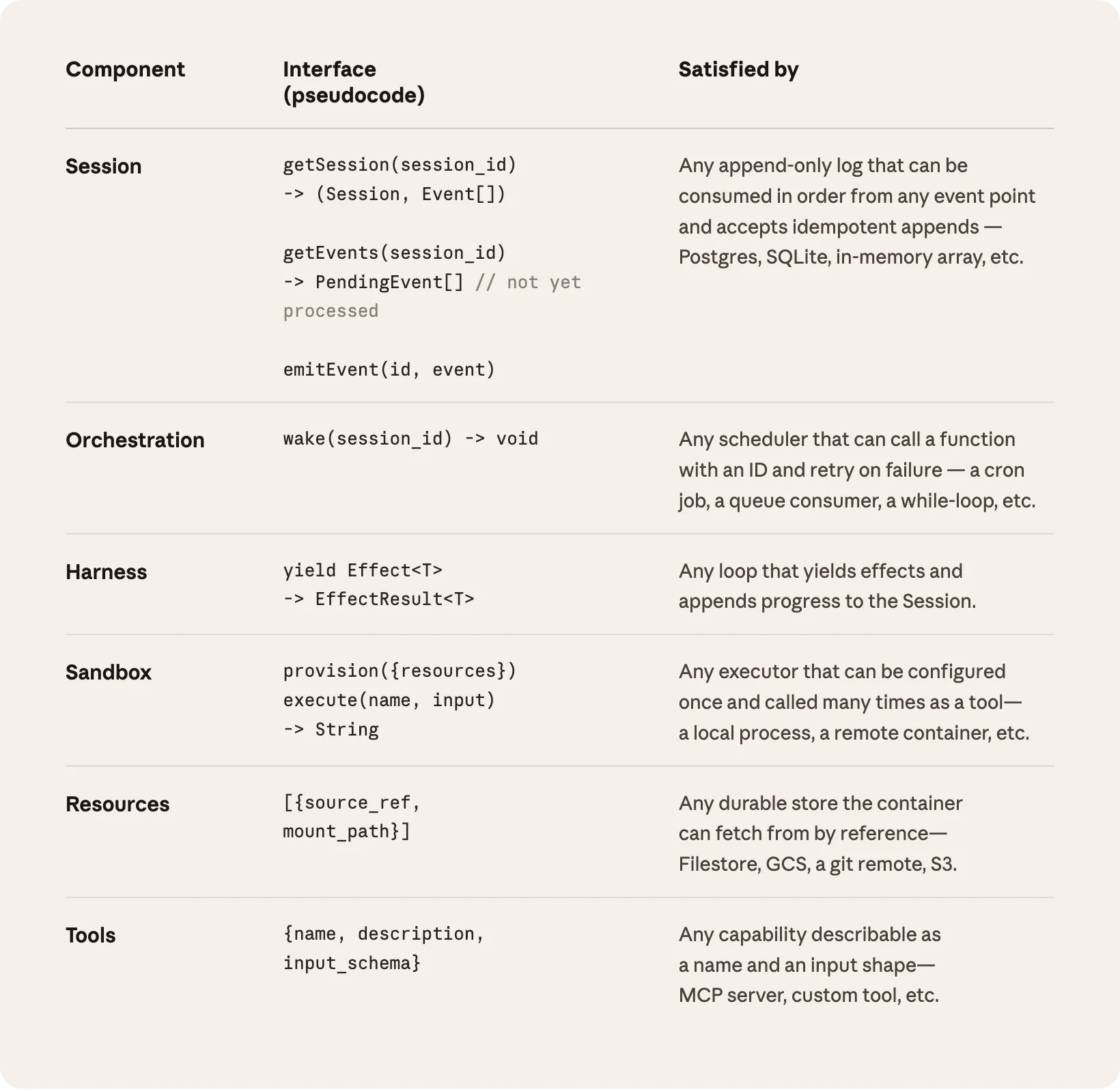
Pricing is a flat $0.08 per active session-hour, billed in milliseconds, per The New Stack's reporting. Idle time is excluded. Standard Claude token rates apply on top. For a typical firm workflow that runs three or four hours of active inference per day, the infrastructure cost is closer to coffee money than to a billable hour.
Anthropic shipped this in public beta. The required header on every API call is managed-agents-2026-04-01. Two features remain in research preview: agent spawning, where one agent kicks off subordinate agents to handle parallel subtasks, and automatic prompt refinement. Neither is necessary for the use cases below.
"Shipping a production agent requires sandboxed code execution, checkpointing, credential management, scoped permissions, and end-to-end tracing. That's months of infrastructure work before you ship anything users see."
Anthropic, in its April 8 launch documentationWhy This Release Matters Specifically for a Wilmette Law Firm
A four-attorney firm in Wilmette is not going to hire a software engineer. It is also not going to commit to a six-figure annual contract with one of the large e-discovery vendors. The firm runs on tight margins, a strong referral network, and the partners' personal time. Anything that demands a new IT department is, in practice, off the table.
What the firm can do is bring in a consulting agency, an implementation partner, or a sufficiently technical paralegal to set up a small number of recurring agents. The agents run on Anthropic's infrastructure. The firm pays per use. There is no on-premise software, no rack of servers, and no annual seat license that has to be renegotiated.
Three categories of work, in particular, have always been bad fits for the prior generation of in-context Claude.
The first is anything that touches the entire client file. A complete review of a client's email archive, document folder, and prior communications is exactly the kind of work that, in the old model, would either run out of context, time out, or require an associate to babysit the session for hours. In the new model, the agent runs on its own.
The second is anything that requires the agent to reach into the firm's existing systems and pull data. Clio for matter management, NetDocuments or iManage for documents, Microsoft 365 for email, a billing system for time entries. Each of those systems has its own authentication. Stuffing those credentials into a Claude.ai session was always either insecure or impossible. Managed Agents introduces the credential-proxy pattern that makes this routine.
The third is anything that has to be defensible. A privilege log produced by an agent, a conflict-screen result, a diligence memo: all of these may need to be discussed under oath, justified to a client, or reviewed by a committee at the firm. The session log is the artifact that makes that defense possible. Every step the agent took is recoverable, in order, with timestamps.
Three matters illustrate the point.
Use Case 1: Multi-Day Discovery Review on a Single Litigation Matter
The firm that produces a privilege log on day fourteen instead of day forty-three is the firm that bills less and wins more pretrial motions.
Return to the certified-mail complaint above. The firm has 312,000 emails to review, a forty-five-day production window, and a single senior associate who is also carrying three other matters. The traditional choice is between paying a contract review attorney $35 to $65 an hour for two weeks of full-time work, sending the corpus to a vendor at $0.10 to $0.40 per document, or, more often, accepting that the production will be sloppier than it should be.
A Managed Agent rewrites that choice.
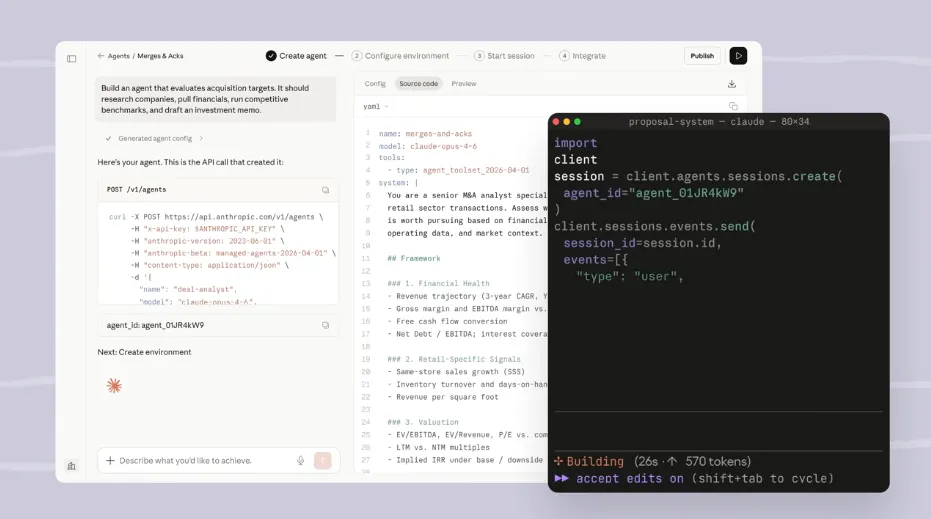
The implementation is small. An agent is configured with the firm's privilege rules, the matter-specific search protocol, the date range, the custodians, and the categories of responsive material. It is given read-only access to the email export sitting in a sandboxed file system. It runs.
SAMPLE CLAUDE PROMPT
"You are reviewing the email archive for the matter Smith v. Acme Manufacturing. Custodians are listed in custodians.json. Relevant period is January 1, 2018 through April 1, 2024. For every email in the archive: classify as responsive, non-responsive, or marginal against the nineteen requests in production_requests.md. For every responsive email, separately classify as privileged, non-privileged, or work-product. Produce two outputs: a responsive_log.csv with one row per email, and a privilege_log.csv following the format in privilege_log_template.csv. Checkpoint after every 1,000 emails. If you encounter an email that requires human judgment, flag it and continue."
On a Claude.ai session, that prompt would have failed by message six hundred. The context would fill, the model would lose the early instructions, and the associate would arrive in the morning to find a half-finished privilege log and a session that had silently lost the thread.
On Managed Agents, the agent runs for the better part of a day, possibly across two or three calendar days, and the session log preserves every classification, every flag, and every borderline call. The associate's job shifts. Instead of clicking through 312,000 emails, she reviews the agent's flagged-for-human-judgment queue and spot-checks a sample of the agent's confident classifications. That is one to three days of attorney time, not four to six weeks.
The cost math is genuinely surprising. Per Anthropic's pricing, a session that runs ten hours of active inference, processing a quarter-million emails, costs about $0.80 in session fees. Token costs, depending on the model, run somewhere between two hundred and a thousand dollars for a corpus of that size. Compare that to a $25,000 vendor invoice or three weeks of $55-an-hour contract attorney time.
The trace is the thing that makes this defensible. If opposing counsel challenges a privilege call, the firm can produce the exact reasoning the agent used: the email text, the rule the agent applied, the classification, and the timestamp. That artifact is more rigorous than the handwritten margin notes a contract reviewer typically produces.
What this does not replace: an attorney's judgment on the borderline calls and on the strategic narrative the production tells. The agent does the volume work. The attorney does the work that requires actual legal judgment.
Use Case 2: Long-Running Conflict-of-Interest Checks Across Years of Email and Matter History
Conflict checks are the second use case that has, until now, lived in an awkward middle ground. The firm has a conflict-check database. It is, in most North Shore firms, a CSV that someone in the back office maintains. It captures the names of clients, opposing parties, related entities, and the matters those entities appeared in. It does not capture the subtleties.
The subtleties are where conflicts actually live.
An estates partner at the firm took a meeting in 2019 with a man who was thinking about restructuring his family business. The meeting did not result in a retainer. There is a single email in the partner's inbox confirming the meeting time. There is no entry in the conflict-check database. Six years later, the man's now-ex-wife walks into the firm and asks the family-law partner to represent her in a divorce. The conflict-check database returns clean. The Illinois Rules of Professional Conduct, specifically Rule 1.18 on prospective clients, are about to be a problem.

A Managed Agent designed for conflict screens does what the database cannot. It is given read-only access to the firm's matter database, every partner's email archive across the relevant retention window, the firm's accounting records for client payments, and the calendar history. It is also given the prospective client's name, the spouse's name, the spouse's businesses, the spouse's family members, and any known related entities.
The agent runs for as long as it needs to. On a small firm with five years of history and four partners' inboxes, that is typically four to nine hours.
SAMPLE CLAUDE PROMPT
"Run a conflict screen for prospective client Jane Doe, who wishes to retain the firm in a divorce matter against her spouse John Doe. Spouse-related entities are listed in entities_to_screen.json and include Doe Family Holdings LLC, Doe Manufacturing Inc., and three trust names. Search the matter database, every partner's email archive from January 2019 forward, accounting records, and calendar history. Identify any prior representation, prospective representation under Rule 1.18, social or professional relationships, or financial entanglements. Produce a conflict_report.md that lists every potential conflict with the supporting document, the rule that applies, and a recommended action. If you find anything that looks like a clear disqualifier, surface it immediately and do not continue without confirmation."
The result is a memo the managing partner can actually read in fifteen minutes, with hyperlinks to the underlying email or document for every flagged item. The 2019 prospective-client meeting shows up. The divorce engagement gets declined or papered with an informed-consent waiver. The firm avoids a malpractice exposure that, in the old workflow, depended on the estates partner remembering a six-year-old conversation.
None of this is technically new. A determined associate with two weeks could do the same search by hand. The change is that "two weeks of associate time on a conflict screen" is not an expense any small firm will actually incur, which means the deeper screens do not get done. The agent makes the deeper screen the default.
For a firm taking on twenty new matters a month, running a Managed Agent conflict screen on each new file costs less than the firm spends on coffee. The session-hour pricing is the entire reason this is feasible. A process that an internal IT team would have priced at six figures runs, in the new model, for the cost of a deli lunch per matter.
Use Case 3: Contract Analysis on a Small-Business Client M&A Transaction
A long-tenured commercial client of the Wilmette firm is selling his company to a strategic buyer out of Chicago. The deal is small by Loop standards, eight figures, but it is the largest single transaction the client will ever conduct. The buyer's counsel, a mid-sized Loop firm, sends over a draft asset purchase agreement on a Friday afternoon. It is sixty-eight pages, with five exhibits, and references twenty-three pre-existing contracts from the seller's data room that need to be cross-checked against the representations and warranties.
The Wilmette partner has the next ten days to turn around an issues list, a redlined APA, and a memo to the client on the deal terms.
In the old model, the partner reads the APA over the weekend, the associate cross-checks the data room contracts on Monday and Tuesday, the partner produces an issues list on Wednesday, and the redline goes back on Friday. The cross-checking is the bottleneck. There is no way to compare a representation against twenty-three contracts in an afternoon, so the work either gets done in a hurry or gets done shallowly.
A Managed Agent reorganizes that workflow.
The agent is given the draft APA, the seller's data room (including all twenty-three pre-existing contracts), the client's standard internal forms, and a checklist of the issues the firm always raises on a sale of this size. It is also given the firm's prior memos from comparable transactions, anonymized, as reference material.
SAMPLE CLAUDE PROMPT
"Review the attached draft asset purchase agreement (apa_draft_v1.docx) for our seller-side client. Cross-check every representation in Section 3 and every covenant in Section 5 against the twenty-three contracts in /data_room/. For each cross-check, identify whether the representation is accurate, whether there is a notable counterparty consent or change-of-control provision that has not been disclosed, and whether the covenant conflicts with an existing obligation. Produce three outputs: an issues_list.md ordered by deal significance, a draft_redline_notes.md with proposed language changes section by section, and a client_memo.md written for a non-lawyer business owner explaining the five most important things to negotiate before signing. Use our prior memos in /reference/ as a style guide."
The agent runs for an evening. The session log captures every cross-check. By morning, the partner has a working draft of all three deliverables. Not a final product: a working draft that turns the next four days of associate time into one focused day of partner review and client conversation.
The client's experience changes too. Instead of "we'll get you the issues list by Wednesday afternoon," the answer is "we have a working list now and a final version by tomorrow." For a client whose sale is the most important financial event of his life, that responsiveness is the difference between a firm that wins the next referral and one that does not.
The economics make this almost embarrassing. A four-evening agent run, on a sixty-eight-page agreement plus a data room of contracts, costs perhaps fifty to two hundred dollars in tokens and session fees. The same work, billed at standard partner-and-associate rates, would have run twelve to twenty-five thousand dollars. The firm does not need to discount the bill. It does need to think about which parts of that bill it should still be charging for, and which it should be reallocating into more strategic work for the same client.
How a Wilmette Firm Could Get Started in the First Thirty Days
An ethics-conscious firm does not roll three new agents into production in the same week. The sequence I would recommend starts where the stakes are lowest and the right answer is already known, then expands only once the firm trusts the output.
Week 1: Pick a Single, Bounded Pilot Matter
Do not start with the live discovery review. Start with a closed matter where the production has already happened, the privilege log already exists, and the firm knows the right answer. Run a Managed Agent against that matter and grade its output against the human-produced privilege log.
The point of week one is not productivity. It is calibration. The firm needs to see, with its own eyes, what the agent gets right and what it gets wrong before any client work depends on the result.
Week 2: Stand Up the Conflict-Screen Agent as a Standing Workflow
Conflict checks are lower stakes than discovery (no opposing counsel sees the artifact) and higher value (every new matter gets one). Configure a single agent with read-only access to the matter database and partner inboxes. Run it on every new file for two weeks. Compare results to the manual screen.
By the end of week two, the firm has a standing workflow that runs without anyone thinking about it, and a clear sense of how often the agent finds something the database missed.
Weeks 3 and 4: Bring the Discovery and Diligence Agents Online for Specific Matters
Now choose one live matter for the discovery agent and one transaction for the diligence agent. Run them in parallel with whatever the human team would have done anyway. Compare timing, cost, and quality. After two complete cycles, the firm has the data it needs to decide which workflows to permanently absorb and which to retire.
By the end of the month, the firm has three production-ready agents, a clear sense of what each costs per matter, and an audit trail it can show its malpractice carrier.
What This Does Not Replace
The point of saying this out loud, in plain English, is that the firms that get this wrong are the firms that try to use the agent as a substitute for the lawyer.
The agent does not write the brief. The agent does not negotiate the deal. The agent does not sit across from the prospective client and decide whether the matter is worth taking. The agent does not show up at the funeral home when the long-time estates client passes and the family needs to know what to do next. None of those tasks are amenable to checkpointing or session logs, and none of them are what the firm is paid to do, in the deepest sense.
What the agent replaces is the substrate of paperwork that has, for thirty years, prevented lawyers from spending more of their time on the human work. The volume document review. The repetitive cross-check. The conflict screen that nobody really runs because there is not enough time. The diligence memo that gets shorter every year because the associates are tired.
The reason this matters is not the headline number on the cost savings. It is that, after the agent runs, the partner has time to actually read the contract instead of skimming it.
The firm that absorbs this technology well does not lay off its paralegal. It moves the paralegal out of the email-tagging chair and into the chair where she calls the client back, prepares the witness, and sits in on the deposition. The economics improve. The client experience improves. The work that the firm sells, judgment, advocacy, presence, becomes a bigger fraction of every billable hour.
A Note on the Ethics Side
The Illinois Rules of Professional Conduct, particularly Rules 1.1 (competence), 1.6 (confidentiality), and 5.3 (responsibilities for non-lawyer assistance), apply to agent work the same way they apply to a paralegal. A lawyer cannot delegate the obligation. The agent's output is the lawyer's output. The agent's mistakes are the lawyer's mistakes.
The practical implications are three. First, the data the agent sees has to be subject to a confidentiality posture the firm can defend, which means using the API rather than a free consumer tier and confirming the firm's data is not used for training. Anthropic's enterprise terms address this. Second, the firm must supervise the agent's work to a level commensurate with the risk: a low-stakes initial conflict screen requires less review than a privilege log going into a production. Third, the firm must keep the trace, not because it expects to need it, but because the day it does need it will be the day a court asks how a particular call was made.
None of this is novel. Every firm already navigates these rules with paralegals, contract attorneys, and outside vendors. The agent is a new category of non-lawyer assistance, but the framework is familiar.
A Final Note on Timing
Managed Agents shipped on April 8. The firms that have it running in production by Memorial Day will be twelve weeks ahead of the firms that wait for the case studies. Twelve weeks, in the small-firm professional-services market, is the difference between being the firm a referral source thinks of first and the firm she thinks of second.
For a Wilmette partner thinking through which workflow is worth piloting first, or wondering whether the ethics posture can actually be defended in front of a malpractice carrier, a free thirty-minute AI audit is available. In person in Wilmette or by video. No obligation, no pitch deck. The output is a one-page plan covering which agent to start with, what it will cost in the first ninety days, and what the firm needs to put in place from a confidentiality and supervision standpoint before any client data goes near it.
The infrastructure shipped. The question is what a firm does with it before the next one does.
Frequently Asked Questions
What exactly is Claude Managed Agents, and how is it different from using Claude.ai? +
Claude Managed Agents is a Claude Platform service, not a chatbot. A developer or implementation agency builds an agent against Anthropic's API, and the agent then runs on Anthropic's infrastructure for hours or days, with checkpointing, credential vaulting, and end-to-end tracing. Claude.ai is the consumer-facing chat interface; Managed Agents is the production-grade backend for long-running, autonomous work. A small firm does not log in and use Managed Agents directly. It contracts with someone to set up specific agents that handle specific workflows.
What does a Managed Agent actually cost for a small Wilmette law firm? +
The Anthropic infrastructure cost is $0.08 per active session-hour, billed in milliseconds, plus standard Claude API token rates. For typical firm workflows (a multi-day discovery review, a conflict screen, a diligence pass), that translates to something between fifty and a few hundred dollars per matter, end to end. The larger cost is the implementation work: configuring the agent, connecting the firm's systems, and supervising the first runs. That is typically a one-time engagement of one to three weeks, not a recurring license fee.
Is this safe to use with confidential client information under the Illinois Rules of Professional Conduct? +
Anthropic's API and enterprise plans do not train on customer data by default. For a firm handling privileged communications, the right path is the API or an enterprise plan, with the firm's own data-handling policies layered on top. The lawyer remains responsible for confidentiality under Rule 1.6, for competent supervision under Rule 5.3, and for the work product as a whole under Rule 1.1. The session-log trace produced by Managed Agents is the artifact that makes that supervision auditable, which is itself a step forward from how most firms supervise contract attorneys today.
What happens if the agent makes a mistake on a privilege call or a conflict screen? +
Same answer as if a paralegal made the mistake: the supervising lawyer is responsible. The mitigations are the standard ones, applied with more rigor because the volume is higher. Configure the agent to flag borderline calls for human review rather than guessing. Spot-check a meaningful sample of the agent's confident classifications. Use the session log to verify the reasoning on any disputed call. Build the firm's review process into the workflow rather than bolting it on after.
Does the firm need to hire a developer to use this? +
No. Most small firms work with an outside implementation partner for the initial setup, then have a sufficiently technical paralegal or office manager handle day-to-day operations. The agents themselves do not require code changes after they are configured; new matters are simply pointed at the existing agents. A typical initial engagement covers the three workflows discussed in this article and runs one to three weeks of consulting time, not a full-time hire.
Will Managed Agents replace paralegals or junior associates? +
No. The firms that try to use this as a headcount substitute typically misfire and damage their teams in the process. The work the agent does well, the volume document review, the cross-check, the screen, is exactly the work paralegals and junior associates have always disliked doing. Moving that work to the agent frees the human team for the work that a small firm actually competes on: client relationships, deposition preparation, deal strategy, and the personal presence that a strong North Shore firm sells.
Related Articles
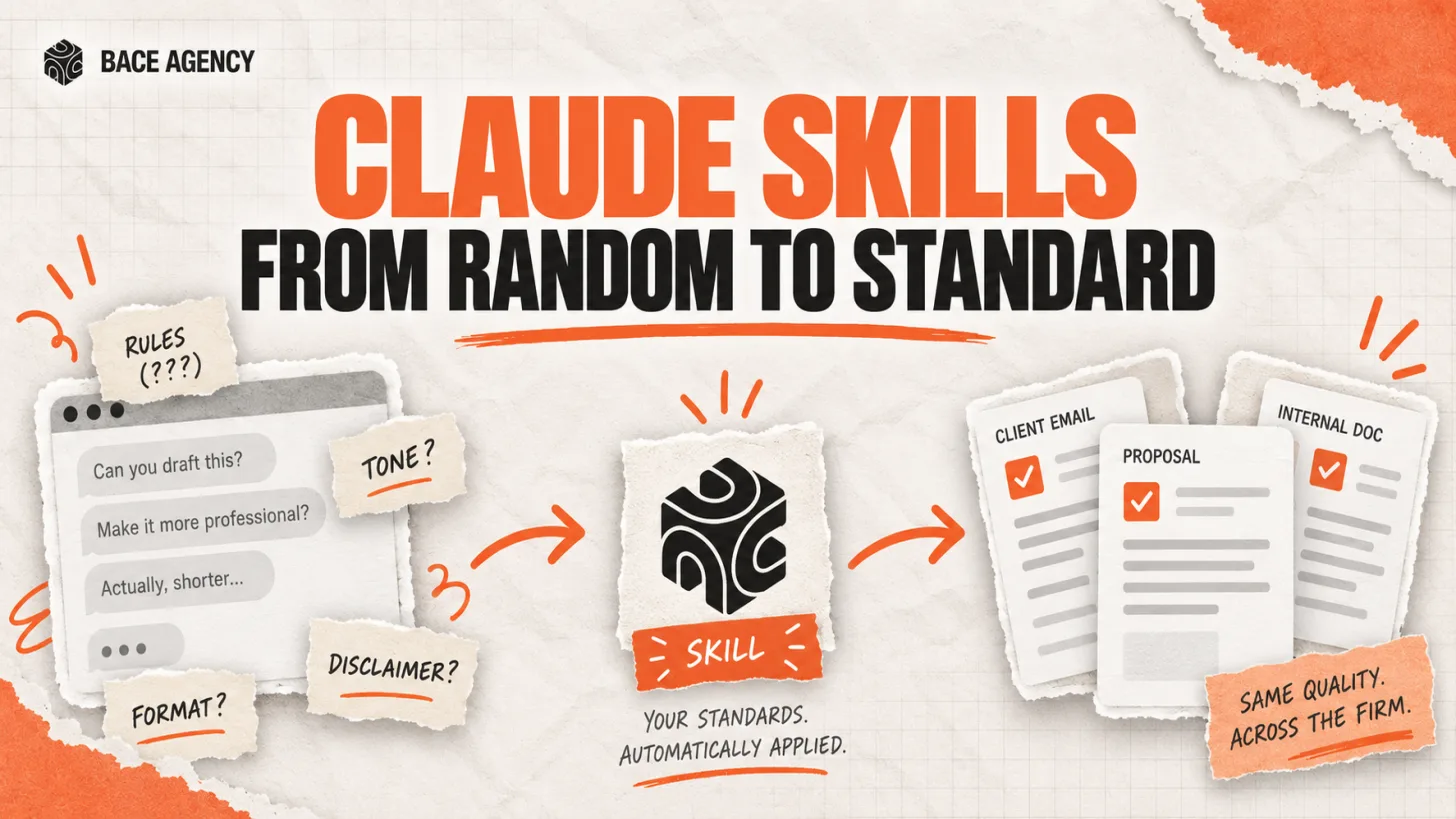
Claude Skills Give a Law Firm One AI Standard
One associate gets sharp drafts, another gets generic filler from the same tool. A Claude Skill turns one person's rules into a standard the whole firm can rely on.
Let AI Agents Handle Intake at Evanston Law Firms
Most Evanston firms still run intake on a phone and a Word template. The firms pulling ahead hand the whole new-matter pipeline to an agent, then review its work before anything reaches the client.

Oregon Federal Court Fines Lawyers $110,000 Over AI
Two lawyers were fined $110,000 for filing AI-invented case citations. The lesson is not to avoid AI. It is to verify it. Here is the workflow that prevents it.
About the author

Written by
Michael Pavlovskyi
Founder, Bace Agency
Michael builds custom Claude and GPT workflows for insurance agencies, law firms, and PE firms on Chicago's North Shore. Speaker at Northwestern and Lake Forest College on practical AI adoption for professional services.
Connect on LinkedInSee it in your firm
Book an audit.
A free 30-minute AI audit. No obligation, no pitch deck.
Book a free AI audit