
How a Glencoe Wealth Advisor Can Build an AI Playbook With Claude Skills
Anthropic's 2026 Skills system turned slash commands into reusable, chainable playbooks. For a small RIA on the North Shore, that means the firm's repeat workflows can finally live somewhere other than a partner's head.

Key Takeaways
- ✓ In 2026, Claude Skills and slash commands are the same system. The skill name field becomes the slash command. Custom commands you wrote last year still work, and a skill at
.claude/skills/quarterly-review/SKILL.mdcreates/quarterly-review. - ✓ For a small RIA in Glencoe, a Skill is the place where your firm-specific intake, quarterly review, compliance, and tax-planning playbooks finally get written down once and run identically by anyone on the team.
- ✓ Three concrete plays:
/quarterly-review,/new-client-intake, and/annual-tax-planning. Each codifies a workflow that today lives in one partner's head and dies when that partner is on vacation. - ✓ Skills with
disable-model-invocation: trueonly run when you type the slash command. Use that for any workflow that ends in an outbound email, a filed document, or a posted journal entry. The default setting lets Claude auto-invoke when relevant.
Glencoe, Ill. , April 23, 2026. Picture the kind of morning that plays out in small RIAs all over the North Shore. Park Avenue is quiet at 7:14 on a Tuesday, the way Glencoe is quiet most mornings before the 7:32 inbound to Ogilvie. A founding partner is at the desk with a coffee, a printed client portfolio, and a three-ring binder of review prep for one household. The binder exists because the partner has done that review the same way for fourteen years and the way is in the partner's head.
The associate who joined in November has the same client and half the binder. What the associate does not have is the part that lives in the partner's head.
This is the problem Claude Skills, in their 2026 form, are built to solve.
If you run a small registered investment advisor on the North Shore, this article is about a specific operational change you can make in the next two weeks. It is not about a new chatbot. It is not about ripping out Wealthbox or Orion. It is about taking the playbooks that already exist inside your firm, the way you do quarterly reviews, the way you onboard a household, the way you tax-plan in October, and making them into reusable commands that any team member, including you, can run identically every time.
Glencoe's 2022 median household income was $228,750, per the village's most recent Census reporting. That is the math that makes a small Glencoe RIA work in the first place: a hundred to four hundred households, average AUM per household well into the seven figures, and a partner who personally knows every client. The model is excellent at the relationship and operationally fragile at almost everything else.
What Actually Changed With Claude Skills in 2026
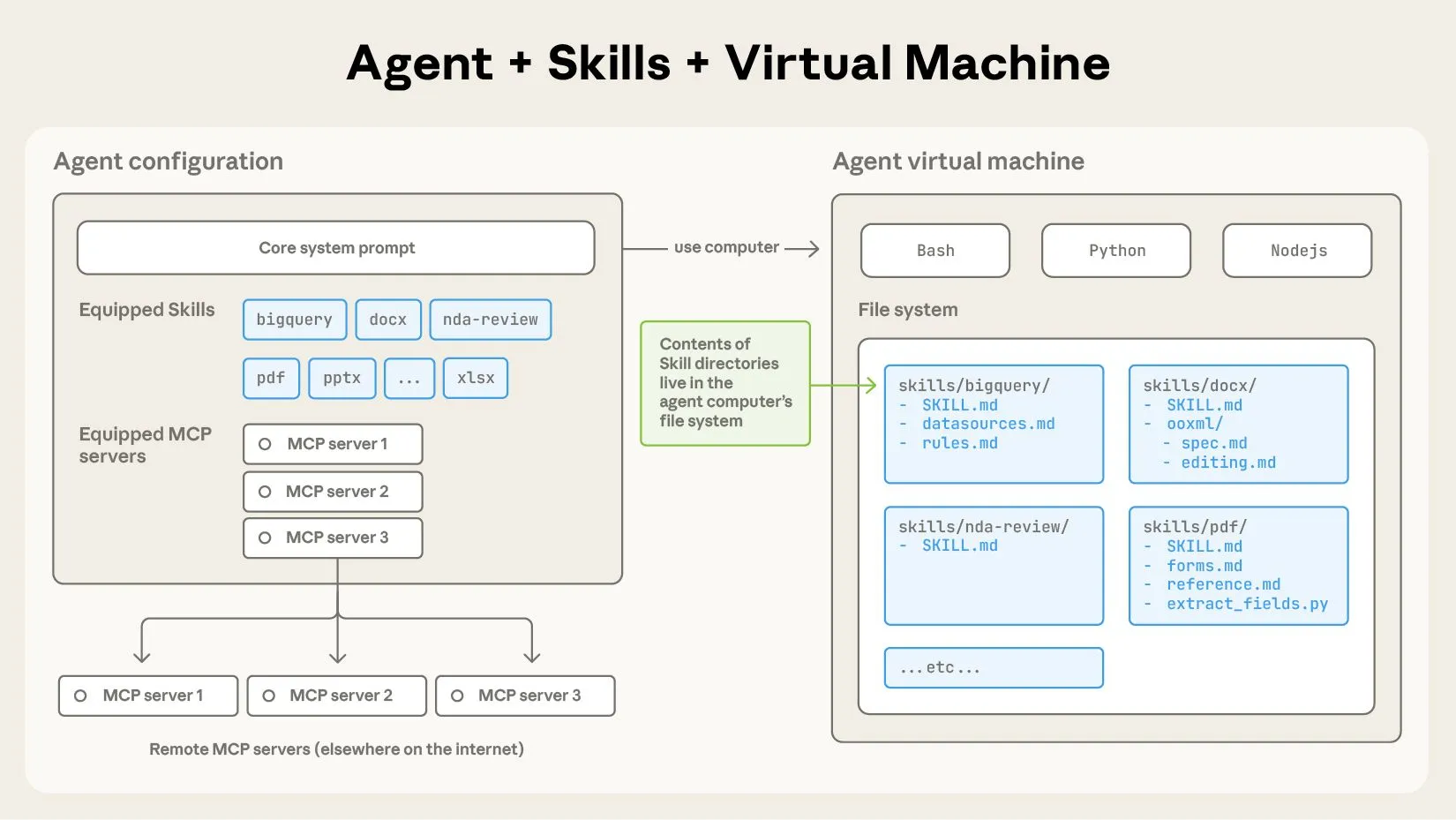
For most of the last two years, the Claude ecosystem had two parallel ways to extend the assistant. Skills were folders containing a SKILL.md file. Slash commands were single Markdown files in a different folder. They did similar things, in subtly different ways, and you had to know which one to use when.
That distinction is gone. Per Anthropic's current Claude Code documentation: "Custom commands have been merged into skills. A file at .claude/commands/deploy.md and a skill at .claude/skills/deploy/SKILL.md both create /deploy and work the same way." The name field at the top of a SKILL.md file becomes the slash command. The description field controls when, and whether, Claude can pick the skill up automatically.
Three other things matter for an RIA principal who is not a developer.
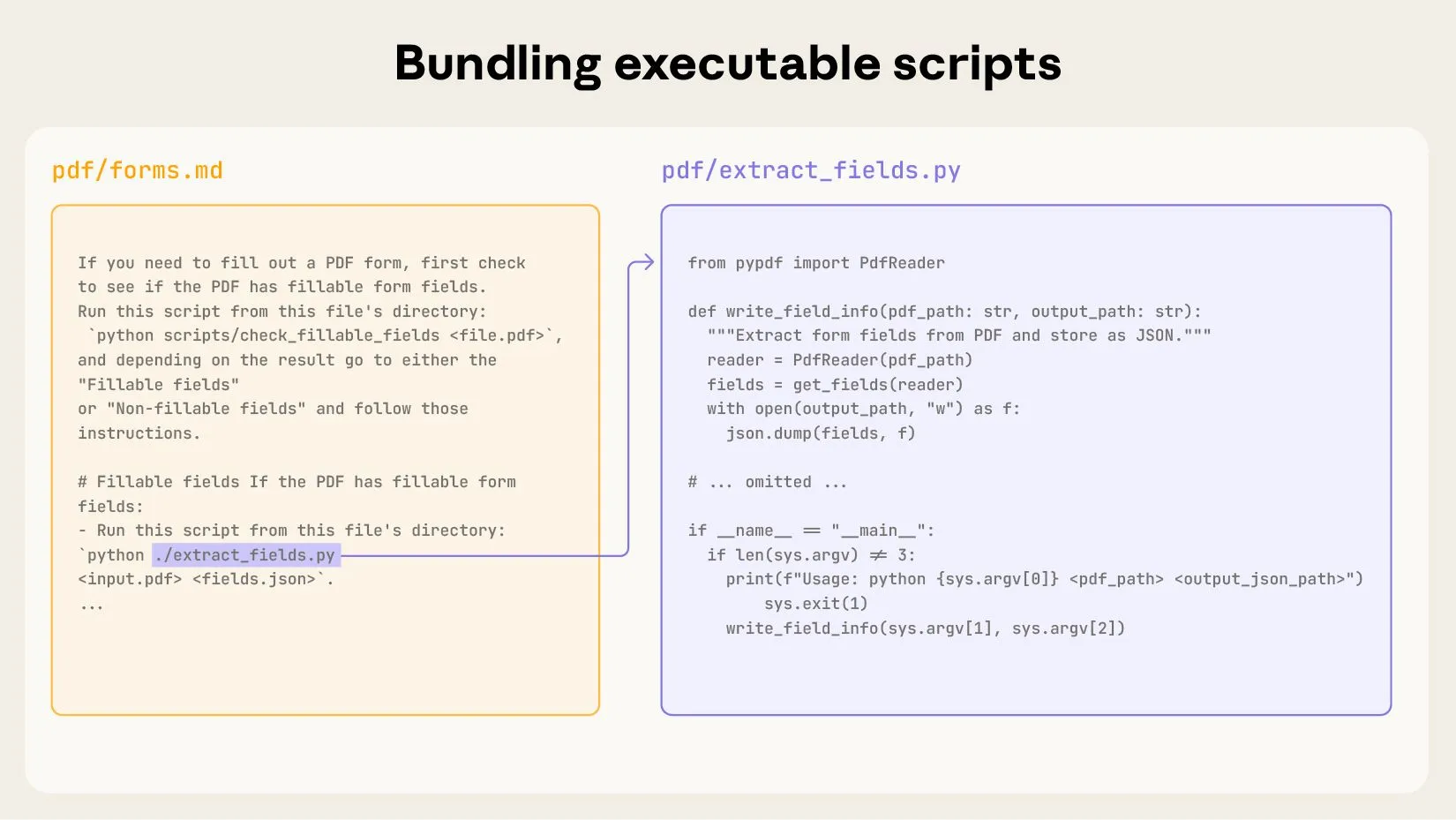
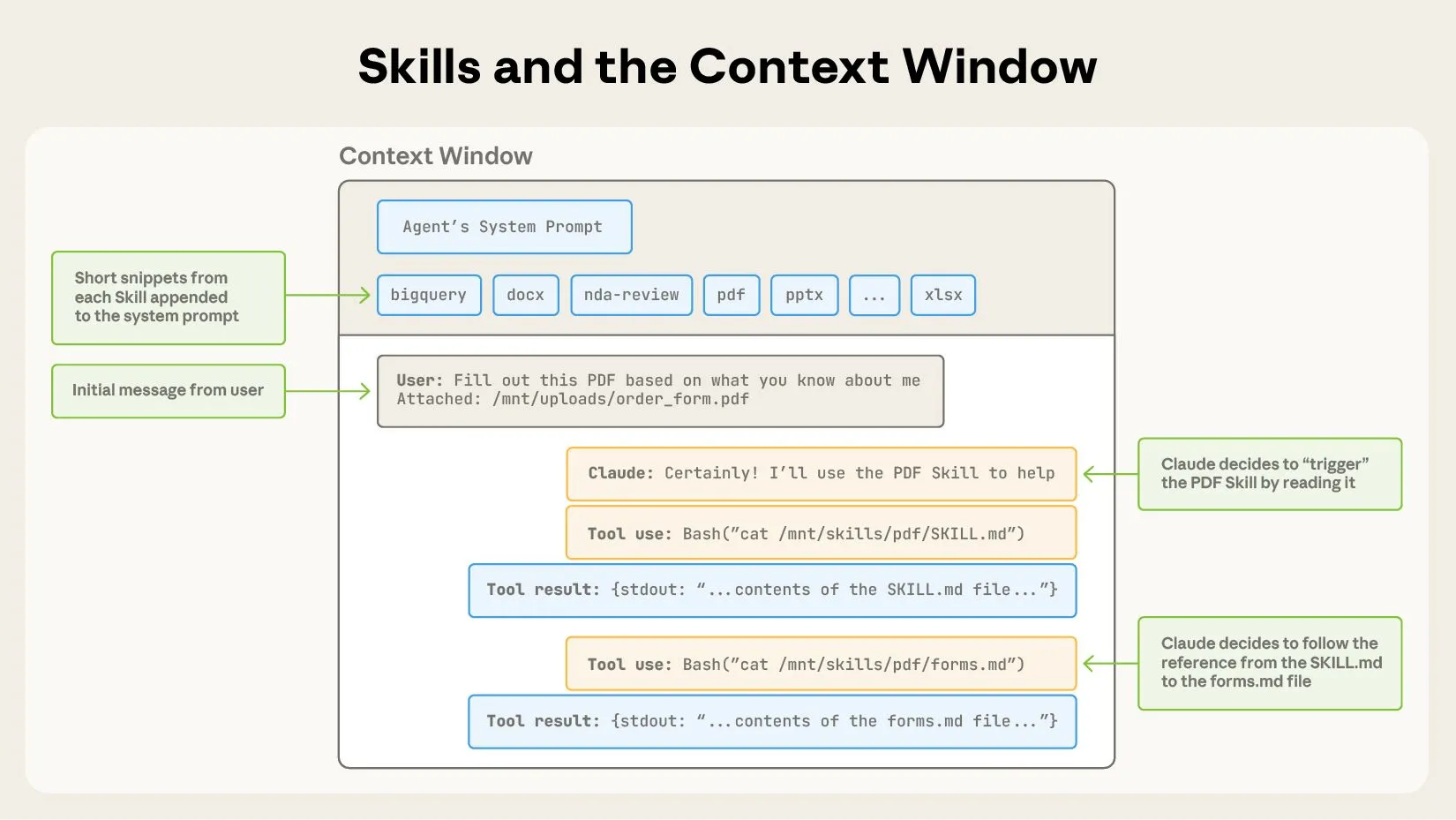
Skills can auto-invoke. The default behavior, per Anthropic's docs, is that the description field is "always in context" and Claude loads the full skill the moment the conversation matches. If you describe a skill as "Use this when preparing a quarterly client review," and someone asks Claude to help them prepare a quarterly review, the skill fires. No slash typing required.
Skills can be locked to manual-only. Adding disable-model-invocation: true in the frontmatter forces the skill to wait for a human to type the slash command. Anthropic specifically recommends this for "/commit, /deploy, or /send-slack-message." For a wealth-advisory firm, that translates to anything that ends in client contact: an outbound email, a calendar invite, a filed compliance note, a journal entry on the custodian. You do not want Claude deciding on its own that it is time to email a client.
Skills can chain. Skills can call other skills. Mindstudio's coverage describes the architecture as having two layers: "Automation Layer: Skills handle repeatable, predictable work. Control Layer: Commands enable oversight without micromanagement." A practical version of this for an RIA is an orchestrator skill called /quarterly-review-all that runs the per-client /quarterly-review skill across a client list and stops for human review at the end. Anthropic's own example, context: fork, lets a skill spawn a forked subagent so the orchestrator's context stays clean.
"Skills are about delegating a pattern. You're saying: Whenever this situation arises, handle it this way."
Mindstudio, Claude Skills vs Slash Commands, 2026Translate that for a small RIA: a Skill is where your firm's policies, your preferred talking points, your suitability questions, your compliance checklist, and your email tone live, in one file Claude reads every time the work shows up. Today most of that lives across three people, two notebooks, and a shared drive nobody opens. A Skill is the artifact that makes the firm survive the partner being on a sailboat in Croatia for two weeks in July.
Why This Specifically Matters for a Glencoe RIA
The Bace blog has covered wealth advisors using Claude to do more without hiring earlier this month, and there is a separate piece in circulation about Projects and Skills as building blocks. This article is a different angle: the playbook angle. The argument is not "use AI to save time." The argument is "the workflows you have already perfected over fifteen years are intellectual property, and the 2026 Skills system finally gives you somewhere to put them."
A Glencoe RIA has a particular operational profile. Most of the firms operating between Park Avenue and Vernon look the same from the outside. One or two founding partners. One or two associates, often a recent finance grad from Northwestern or Loyola. A part-time operations or compliance coordinator. A book of two hundred to four hundred households, almost all of them within a five-mile radius. Custody at Schwab or Fidelity. CRM in Wealthbox or Redtail. Performance reporting in Orion or Black Diamond.
The bottleneck is never tooling. The bottleneck is partner attention. The partner does the quarterly reviews because the partner is the relationship. The partner does the new-client intake because the partner is the trust. The partner does the October tax-planning sweep because the partner has been doing it since 2009 and remembers what each client did the last three Octobers.
The associates and the operations coordinator can do all of those things, in theory. In practice they cannot, because the playbook is not written down. Skills are the format the playbook gets written in.
One more piece of context. A small RIA does not have, and should not pretend to have, an engineering team. A skill is a Markdown file. The author is the partner who knows the workflow. The first draft is written in plain English. The whole thing fits on one screen. There is nothing to deploy and nothing to maintain beyond a quarterly review of whether the file still reflects how the firm actually works.
Use Case 1: The /quarterly-review Skill
The single most expensive recurring meeting in a small RIA is a quarterly review the partner had to prep alone at 6 AM the morning of.
Walk through what a "good" quarterly review prep looks like at most Glencoe firms. The partner pulls the household's portfolio out of Orion. The partner reads back through the meeting notes from the last review. The partner checks for any household life-events recorded in Wealthbox in the last ninety days, a college graduation, a job change, a new grandchild. The partner glances at any flagged emails from the household since the last touch. The partner drafts three to five talking points: performance versus benchmark, allocation drift, planning topics for this quarter, an item or two specific to the household. The partner writes a short pre-meeting email confirming the time and previewing the agenda.
That whole sequence takes a good partner forty-five to seventy-five minutes per household. At a 250-household book reviewed quarterly, the partner is spending twenty to thirty hours per quarter just on review prep, not the meetings themselves.
The Skill version replaces that.
SAMPLE SKILL.md
"---
name: quarterly-review
description: Prepare a quarterly review packet for a single household. Use when the partner asks to prep a Q1, Q2, Q3, or Q4 review for a named client.
---
When invoked, do the following in order:
1. Pull the household's most recent Orion performance PDF from the linked drive folder.
2. Read the last two quarterly review notes for this household from Wealthbox.
3. Scan any inbound emails from the household in the last 90 days for life events: marriage, birth, death, job change, college tuition, real-estate purchase.
4. Draft a one-page packet with: performance vs benchmark in plain English, allocation drift in plain English, three planning topics specific to this household this quarter, and a fourth topic only if a life event was found.
5. Draft a short pre-meeting email in the partner's voice (warm, plain-spoken, three sentences max) confirming time and previewing the agenda.
6. Stop. Do not send anything. Output the packet and the draft email for partner review."
That file goes in .claude/skills/quarterly-review/SKILL.md. It is around 200 words. It will become the /quarterly-review command. The associate types /quarterly-review [household name] and gets the packet. The partner reviews the packet, marks it up, and walks into the meeting an hour after starting instead of three hours after starting.
Two design choices matter. First, the description starts with "Use when the partner asks to prep a Q1, Q2, Q3, or Q4 review." That phrasing lets Claude auto-fire the skill if anyone on the team asks a question that matches the pattern, even if they forgot the slash command. Second, step six explicitly says "Stop. Do not send anything." A wealth-advisory skill should almost never autonomously send client communication. The Skill format makes that boundary explicit.
For a firm that wants to go further, the same skill can be set to run as a context: fork subagent, so each household's prep happens in an isolated context, and an orchestrator skill called /quarterly-review-batch runs the per-household skill across the next two weeks of scheduled meetings. The partner walks into Monday with twelve packets pre-built, sips coffee, marks up, and starts the week.
Use Case 2: The /new-client-intake Skill
Onboarding a new household is the single most-handled-by-the-partner workflow in a small RIA, and the single most worth standardizing.

A new-client intake at a small RIA touches roughly fourteen artifacts in the first thirty days: a discovery questionnaire, a risk-tolerance instrument, a suitability narrative, a fee disclosure, an ADV delivery, a privacy notice, a custodial application, a beneficiary form, a transfer authorization, a CRM record, an Orion household setup, a welcome packet, a thank-you note, and a calendar invite for the first follow-up. Each of those exists somewhere in the firm. They do not exist in one place, in one order, with one owner.
The Skill version pulls the whole sequence into one file. The partner who built the firm knows how the sequence should run. The Skill is where that knowledge becomes the firm's standard operating procedure, in a format any team member can execute.
SAMPLE SKILL.md
"---
name: new-client-intake
description: Run the firm's new household onboarding sequence. Use when the firm has signed a new client and needs to move them from signed-engagement to first-quarter-review-ready.
disable-model-invocation: true
---
Onboard the household named in $ARGUMENTS. Output a checklist with status for each step:
1. Suitability questionnaire: draft a personalized version using the firm's standard 14 questions, with two custom questions specific to anything we already know about the household.
2. Risk tolerance: draft the firm's risk-tolerance instrument as a Word doc.
3. Compliance documents: prepare ADV Part 2A and Part 2B delivery, privacy notice, and fee disclosure as a single PDF packet for partner signature.
4. Welcome packet: draft a personalized welcome letter in the partner's voice referencing what the household told us in discovery.
5. CRM and Orion setup: produce the exact sequence of fields and tags to enter in Wealthbox and Orion, in checklist form, ready for the operations coordinator.
6. First-quarter review calendar: propose three meeting times within 90 days of signed engagement.
Output everything as drafts. No outbound communication is sent. The operations coordinator handles execution after partner approval."
Notice the disable-model-invocation: true line. Onboarding is exactly the kind of workflow that should never run on its own. It only runs when someone on the team types /new-client-intake "the K. Household". Per Anthropic's docs, that flag means "the description not in context, full skill loads when you invoke." It removes any chance Claude offers to "help" run an intake when nobody asked.
The output is a packet. The packet is reviewed by the partner and executed by the operations coordinator. The associate, who used to spend a half day per intake chasing the partner for the next step, instead spends ten minutes reviewing the Skill output, queuing the documents in DocuSign, and entering the CRM fields. Time-to-onboard goes from two to three weeks to roughly five business days.
This is also where the firm's intellectual property accumulates. The first version of the skill is whatever the partner currently does. Six months in, when the partner notices that one suitability question keeps surfacing useful information, they edit the SKILL.md file and the firm's intake gets quietly better. There is no software release. There is just a Markdown file the partner edited at the kitchen table on a Sunday.
Use Case 3: The /annual-tax-planning Skill
October and November in a small RIA is a six-week sprint of tax-loss harvesting and RMD reminders, run from a partner's memory of last year's spreadsheet.
Every fall, a small RIA does the same sequence of work for every household. Identify positions with embedded losses for tax-loss harvesting. Confirm or initiate required minimum distributions for households over the RMD age. Check for charitable-giving plans, especially qualified charitable distributions for IRA holders over 70 and a half. Coordinate with the household's CPA on year-end estimated payments. Flag any Roth conversion windows. Send a short year-end letter.
The work itself is repetitive. The volume is what makes it brutal. At a 250-household firm, that is 250 households to walk through in October and November. The partner cannot do it alone. The associate cannot do it alone. The firm muddles through, every household gets touched, but the consistency varies wildly: clients with simple situations get treated identically, clients with complicated situations get a deep custom treatment, and clients in the middle get whatever the team had time for.
A Skill changes the math.
SAMPLE SKILL.md
"---
name: annual-tax-planning
description: Run the firm's annual tax-planning review for a single household. Use any time between September 15 and December 15 when the team is preparing year-end planning for a named household.
---
For the household named in $ARGUMENTS, produce a one-page year-end tax-planning summary covering:
1. Tax-loss harvesting candidates: list any positions held in taxable accounts with embedded losses greater than $1,000, with cost basis, current value, and a recommended replacement security from the firm's approved-substitute list.
2. RMD status: confirm whether any account holder is age 73 or older. If yes, state the calculated RMD amount, the year-to-date distribution status, and the deadline.
3. QCD opportunity: if any IRA holder is 70 and a half or older, flag whether a qualified charitable distribution makes sense given prior charitable activity recorded in Wealthbox.
4. Roth conversion window: estimate marginal tax bracket using last year's return and projected income; flag whether a partial Roth conversion would fit under the next bracket threshold.
5. CPA coordination note: draft a short email to the household's CPA on file summarizing items 1 through 4 for their review.
6. Client letter: draft a one-paragraph year-end letter in the partner's voice explaining what the firm is doing on the household's behalf.
All outputs are drafts. The partner reviews and signs off before any client or CPA communication is sent."
That skill is the play. Run /annual-tax-planning [household name] for every household over the first two weeks of October. The associate handles execution. The partner reviews each one in the morning, signs off, and the operations coordinator routes the client letters and CPA notes for the partner's signature.
The firm's actual planning intelligence, which positions are on the approved-substitute list, what counts as "embedded losses worth harvesting," what the RMD logic should do for a household with multiple inherited IRAs, lives inside the Skill. As the firm refines the rules, the file is edited. The associate two years from now inherits a fully-codified play, not a verbal walk-through from a partner who left.
One more pattern worth noting. Nothing prevents the firm from writing an orchestrator skill called /annual-tax-planning-all that runs the per-household skill across the entire book and produces a summary spreadsheet for the partner. Per Anthropic's documentation, this is the chaining pattern: "Skills can call other skills." The orchestrator runs every weekday morning in October, the partner gets a coffee and a list of the ten most consequential households to look at first, and the rest of the book proceeds in a steady cadence the associate manages.
How to Build Your First Three Skills in Two Weeks
The mistake every firm makes in week one is trying to write skills in committee. The right sequence is much smaller. Pick one workflow. Write the skill in plain English. Test it on three real clients. Iterate. Then move to the next workflow.
Days 1 to 4: Build /quarterly-review First
Pick the highest-volume recurring workflow at the firm. For most small RIAs, that is the quarterly review prep. Sit with the partner for one hour. The partner narrates exactly how a "good" Q-review prep runs, in order. Type that narrative directly into a SKILL.md file. No software. No vendor. Run it on three real households this week. Mark up where the output is wrong. Edit the file. Run it again.
By Friday, the firm has a working /quarterly-review command that produces 70 to 80 percent of a useful prep packet on the first try. The remaining 20 to 30 percent is exactly the human judgment the partner should still be exercising.
Days 5 to 9: Build /new-client-intake
Pick the workflow with the most variability across team members. For most firms, that is new-client intake. Same drill: one hour with the partner, one hour with the operations coordinator, capture the full sequence in a SKILL.md file. Add disable-model-invocation: true at the top so it only runs when someone types the slash command. Run it on the next intake.
The first time through, you will discover three to five steps the partner does not actually do in the order they think they do. That is the win. Update the SKILL.md, and now the firm has a written-down intake that any associate can run.
Days 10 to 14: Build /annual-tax-planning
By now the firm has the muscle. The third skill is faster than the first. Sit with the partner one more hour. Capture the year-end tax-planning sequence. Hard-code the firm's approved-substitute list, RMD age thresholds, and the firm's standard CPA-coordination note. Run it on five households as a dry run for October.
At day 14, the firm has three reusable skills, written in plain English, that codify the most repeated work in the practice. Total cost: a partner's time to narrate three workflows, and an associate's time to test them. Total ongoing maintenance: editing a Markdown file when the firm's policy changes.
What This Does Not Replace
One direct note, because it matters. A Skill is not a substitute for the partner's judgment, the partner's relationship, or the partner's licenses. The Skill prepares the packet. The partner reads the packet, decides what to recommend, and conducts the meeting. The Skill drafts the email. The partner edits the email and signs it. The Skill produces the tax-planning summary. The partner is responsible for what gets executed.
This is doubly true for anything compliance-adjacent. A Skill that "drafts" an ADV delivery is fine. A Skill that "files" anything with regulators is not. The firm's compliance officer, internal or outsourced, still owns every piece of output that leaves the building. A Skill makes the workflow faster and more consistent. It does not change who is accountable for it.
The other thing a Skill does not replace: the partner's ear. The reason a small Glencoe RIA wins against the big wirehouses down in the Loop is that the partner notices when something in a quarterly review feels off, when the client's voice in the meeting changed, when the question about long-term-care insurance is really a question about a parent in cognitive decline. A Skill cannot do that. It can free up the partner's calendar and attention so the partner is in a position to do it.
A Final Note on Timing
Skills as the unified slash-command system are new in 2026. The next twelve to eighteen months are the window during which Glencoe RIAs that build a real internal playbook will quietly pull ahead of the firms that do not. The advantage is not visible in any single quarter. It compounds.
By 2028, the firms that did this will have associates who run quarterly reviews to a standard the partner approves of, intake processes that survive the partner being out, and tax-planning sweeps that touch every household with the same rigor as the partner's favorite five. The firms that did not will still be doing reviews at 6 AM the morning of.
For a partner who wants a second set of eyes on which workflow to write up first, or how to set the firm up to actually use the file once it exists, a free 30-minute AI audit is available. In person in Glencoe or on video. No obligation, no pitch deck. The output is a one-page plan listing the three workflows worth turning into Skills first, and what each one would save the firm in partner hours over the next quarter.
The Skill format is plain Markdown. The hardest part is deciding which workflow to write down first.
Frequently Asked Questions
What is the difference between a Claude Skill and a slash command in 2026? +
In 2026 they are the same thing. Per Anthropic's Claude Code documentation, custom commands have been merged into skills. A skill at .claude/skills/quarterly-review/SKILL.md creates the /quarterly-review slash command. Older single-file commands in .claude/commands/ still work for backward compatibility, but new firm-specific work should use the skills format because skills support optional features like supporting files, manual-only invocation, and chaining.
Do I need a developer to write a skill for my firm? +
No. A skill is a single Markdown file with a short YAML header and plain-English instructions. Most useful firm skills are between 100 and 400 words. The author should be the partner who actually runs the workflow today. A developer or implementation partner can help with directory setup and tying the skill into the firm's CRM or custodian, but the content of the skill is firm knowledge that has to come from the practice.
How do I make sure a Skill never sends client communication on its own? +
Two layers. First, set disable-model-invocation: true in the skill's frontmatter so the skill only runs when a human types the slash command. Second, write the skill instructions to explicitly stop before any send action, with a line like "Output the draft for partner review. Do not send." Both layers together mean the skill produces drafts the partner edits and signs off on, and never autonomously hits send.
Can a Skill chain into other Skills, like running quarterly reviews for a whole book? +
Yes. Skills can call other skills. A common pattern is an orchestrator skill, for example /quarterly-review-batch, that runs the per-household /quarterly-review skill across an upcoming meeting list and produces a summary for partner review. Anthropic's documentation describes this chaining pattern, and notes that adding context: fork to the per-household skill keeps each run in a clean, isolated context so the orchestrator's notes stay readable.
Where do firm skills live, and who can see them? +
Skills live in folders inside the firm's project or workspace. A project skill lives in .claude/skills/ within the firm's working directory and is shared by the team. A personal skill lives in ~/.claude/skills/ for one user. For firms using Claude through an enterprise plan, skills can also be deployed at the organization level so every advisor and operations team member sees them. Choose project-level for anything firm-wide, personal-level for an individual partner's experiments.
What should a Glencoe RIA write up as its first Skill? +
Pick the workflow that the partner currently does most often, alone, at odd hours. For most small RIAs in Glencoe, Wilmette, and Winnetka that is quarterly review prep. The first version takes one hour to write, and the firm gets value the same week. Once that skill is working, build the new-client intake skill next, then the annual tax-planning skill in time for an October dry run.
Related Articles

RoundTable Buys a Skincare Brand, and Healthcare Private Equity Meets AI
A Lake Forest firm just bought a skincare brand. The deal is a window into where healthcare private equity is heading with AI, and why it is a strategy problem first.
Lake Forest Hire: Can the Back Office Scale with AI?
Crescent Grove named a 25-year family-office veteran its growth chief. A rainmaker brings relationships. The harder question is whether the back office can scale as fast as the book.
When a CRM Is Truly AI-Ready for RIAs
Every CRM demo now says AI. The question that matters is simpler: can a model read your client data and write back to it, under your control? Here are the three tests.
About the author

Written by
Michael Pavlovskyi
Founder, Bace Agency
Michael builds custom Claude and GPT workflows for insurance agencies, law firms, and PE firms on Chicago's North Shore. Speaker at Northwestern and Lake Forest College on practical AI adoption for professional services.
Connect on LinkedInSee it in your firm
Book an audit.
A free 30-minute AI audit. No obligation, no pitch deck.
Book a free AI audit