
How Highland Park Wealth Advisors Can Run Ten Claude Sub-Agents in Parallel Instead of One at a Time
Anthropic's sub-agent feature lets Claude Code spawn up to 10 workers in a single parallel batch. For a small RIA on Green Bay Road, it changes the math on Monday-morning prep, thematic research, and quarterly compliance.

Key Takeaways
- ✓ Anthropic's Claude Code supports spawning up to 10 sub-agents in a single parallel batch, each with its own context window, working independently and reporting back a summary.
- ✓ The split-and-merge pattern fits the way an RIA actually works: an orchestrator breaks a large job into independent pieces, sub-agents process them simultaneously, and the orchestrator synthesizes one deliverable.
- ✓ For a Highland Park advisor with 50-plus client households, parallel sub-agents collapse Monday-morning quarterly review prep from a five-day grind into a single overnight run.
- ✓ This is not a substitute for hiring a CCO or a senior associate. It is a substitute for the analyst hours that get swallowed by serial, format-heavy work.
Highland Park, Ill. , April 22, 2026. It is 6:47 a.m. on a Monday. The advisor walks into the office on Central Avenue with a coffee from Once Upon A Bagel. The first quarterly review meeting is at 9:00. There are six on the calendar today. There are forty more across the rest of the week.
The associate has not started yet. The advisor opens Wealthbox, scrolls to the first client, and begins the same dance she has done for the last eleven years. Pull the latest portfolio statement out of Orion. Re-read the last meeting note. Skim the financial plan. Check whether anything got rebalanced last quarter that needs to be explained. Check whether the kid started college, because the 529 conversation will come up. Open Outlook and remember that the husband emailed in February asking about Roth conversions. Try to remember whether she replied. She did. She wrote a paragraph. Pull that paragraph forward.
Twelve minutes per client, if it goes well. Six clients before lunch. That is seventy-two minutes she will spend on prep before her first conversation, and the rest of her week will look the same.
This is the work that does not scale. It is also the work that, as of the last twelve months, no longer has to be done one client at a time.
Anthropic's Claude Code sub-agents, paired with the split-and-merge pattern that has emerged in the developer community, allow a single user to spawn up to 10 parallel workers in a single batch. Each sub-agent has its own context window. Each works independently. Each reports back to an orchestrator that synthesizes the answers into one deliverable. For a registered investment advisor in Highland Park managing 50 to 200 client households out of a small office, that capability quietly rewrites the operating model.
What follows is what actually changed, why it matters specifically for a small RIA practice on the North Shore, and three concrete workflows that move from sequential to parallel this quarter.
What Sub-Agents Actually Are, in Plain English
A sub-agent in Claude Code is a separate Claude instance that the main session can spawn to handle a focused piece of work. Anthropic's own description is precise: "Each subagent runs in its own context window with a custom system prompt, specific tool access, and independent permissions."
Three properties are doing the work here, and they matter in this exact order.
Separate context window. When the main Claude session asks a sub-agent to read a 60-page client financial plan and return a summary, the entire 60 pages stays inside the sub-agent. Only the summary, usually a few hundred words, comes back to the main session. The orchestrator's context does not bloat. This is the difference between a single Claude session that gets confused after the eleventh client and a session that can coordinate fifty client reviews back to back without losing the thread.
Independent execution. Sub-agents can run concurrently. Anthropic's Agent SDK documentation states the case directly: "Multiple subagents can run concurrently, dramatically speeding up complex workflows. Example: during a code review, you can run style-checker, security-scanner, and test-coverage subagents simultaneously, reducing review time from minutes to seconds." The same shape applies, almost line for line, to a quarterly review prep where a single advisor needs to look at portfolio drift, plan progress, and tax-loss harvesting candidates simultaneously rather than serially.
Reports back a summary. The parent gets the sub-agent's final message verbatim. It does not get the intermediate reasoning, the false starts, the dead-end searches. That clean handoff is what makes the orchestration scale beyond two or three workers.
The number to remember is ten. As MindStudio writes in its explainer, "Claude Code supports spawning up to 10 sub-agents in a single parallel batch." Beyond ten, the pattern is to batch the work: ten now, ten more after the first batch finishes, ten more after that. For a fifty-client review pack, that is five rounds, all of which can run unattended in the background while the advisor handles a different task.
The split-and-merge pattern has one critical requirement that an advisor needs to internalize before deploying it. The subtasks have to be independent. As MindStudio puts it bluntly: "If sub-agent B needs the output of sub-agent A before it can start, you don't want parallel execution." A quarterly review prep across 50 clients is independent by design. A single client's review, where a recommendation depends on the tax position which depends on the portfolio composition, is not. Knowing the difference is what separates a workflow that returns capital from a workflow that wastes tokens.
"Each operates in its own context window, works independently, and reports back with a summary when finished."
Tim Dietrich, on Claude Code parallel sub-agentsThis is distinct from Claude Cowork's general assistant capability, which an RIA can already use to draft client letters, prep meeting agendas, or process inbox triage one task at a time. Sub-agents are specifically about doing many similar jobs simultaneously rather than sequentially. Cowork covers the breadth of Claude inside an advisory practice. This article is narrowly about parallelism.
Why This Matters Specifically for a Small Highland Park RIA
The structural problem at a 50-to-200 household RIA in Highland Park, Glencoe, or Lake Bluff is not that the advisor lacks judgment. It is that the advisor's calendar is gated by serial work that nobody enjoys but somebody has to do.
A typical week at a small North Shore practice has three serial bottlenecks that each consume a full day of analyst time, and that each could be parallelized by a sub-agent orchestration.
The first is quarterly review preparation. The advisor does not need an essay on each client. She needs a one-page brief: portfolio drift since last meeting, plan-vs-actual, life events flagged in CRM notes, anything the client emailed about that is still open, the two or three talking points that should anchor the conversation. Today she pulls each one by hand because that is the only way to be sure nothing is missed. The work is identical in shape across 50 clients. It is the textbook case for ten parallel sub-agents.
The second is multi-portfolio thematic research. A client asks about the implications of a Federal Reserve action, a sector rotation, or a single-name event in their portfolio. The advisor wants a same-day answer informed by the earnings transcripts of the four companies the client owns in that sector, the two regulatory filings that just dropped, and the news cycle of the last 72 hours. Done sequentially, that is a half day of reading. Done with parallel sub-agents, each one assigned to one source, it is forty minutes of orchestration plus a fifteen-minute synthesis read.
The third is compliance review. Every quarter the chief compliance officer or the outside compliance consultant has to walk through the trade blotter, the suitability notes in the CRM, and the firm's ADV to confirm that what the firm did is consistent with what the firm said it would do. This is the most format-heavy work in the practice. It is also work where the only output that matters is the exception list. Sub-agents can read each artifact in parallel and the orchestrator surfaces only the discrepancies.
None of this is theoretical. Anthropic's documentation describes the same shape. The Agent SDK page notes that "during a code review, you can run style-checker, security-scanner, and test-coverage subagents simultaneously, reducing review time from minutes to seconds." Substitute "trade blotter checker, suitability note scanner, and ADV consistency reviewer" and the analogy is exact.
What follows is the three workflows that an RIA can stand up in the next six weeks.
Use Case 1: Parallel Quarterly Review Prep Across Fifty-Plus Clients
Monday morning prep is the canonical case for parallelism: the work is identical in shape across clients and the inputs are independent.
The current state at most small RIAs looks the same. The advisor or the associate spends Friday afternoon, Saturday morning, and a chunk of Sunday evening building a stack of one-page briefs for the upcoming week's client meetings. Each brief is the same template, but each requires reading a different set of source documents: the latest Orion or Black Diamond statement, the meeting note from last quarter in Wealthbox, the financial plan in eMoney or RightCapital, any emails in the last 90 days, any open tasks in the CRM.
The serial version of this is twelve minutes per client done well, eight minutes done quickly. For 50 clients that is roughly six to ten hours of work, every quarter, before the conversations even start.
The parallel version is one orchestrator prompt and a set of sub-agents that run while the advisor is at dinner with her family.
SAMPLE CLAUDE PROMPT
"Here is the client list for next week's quarterly reviews. There are fifty households. For each household, spawn a sub-agent that reads the latest portfolio statement, the most recent meeting note, the financial plan, the trailing 90 days of email, and the open tasks in the CRM. Each sub-agent should produce a one-page brief in the firm's house format: portfolio drift since last meeting, plan-vs-actual, life events flagged in notes, open client questions, and three suggested talking points. Run ten sub-agents in parallel until all fifty households are processed. Compile the fifty briefs into a single PDF binder ordered by Monday's meeting calendar. Flag any household where you could not find the financial plan or where the most recent meeting note is older than 18 months."
Five batches of ten. Each batch finishes in roughly the time it takes to read one of the briefs by hand. The orchestrator merges fifty independent outputs into one ordered binder. The advisor opens it Monday at 6:47 a.m. and finds the work already done.
Two practical notes. First, the prompt above explicitly requires the orchestrator to flag exceptions, the households where a financial plan was missing or a meeting note was stale. That is the only deliverable that requires the advisor's judgment, and it surfaces at the top rather than buried in an appendix. Second, the prompt is industry-formatted on purpose. A wealth practice that builds a Markdown template for its house brief format and stores it as a CLAUDE.md in the project will get consistent output across sub-agents without micromanaging each one.
The economics matter. At a small RIA where the principal is billing herself out at the equivalent of $400 per hour and the associate at $120, six to ten hours of weekly prep work is between $720 and $4,000 per week of fully-loaded analyst time, depending on who does it. The Anthropic API spend on a fifty-client orchestration is, roughly, in the order of a few dollars per run. The math does not require careful analysis.
Use Case 2: Multi-Portfolio Thematic Research in an Afternoon
When a client emails about an investment theme, the answer that wins is the one that arrives the same day with all four sources read.
Every advisor has had this email. A client reads something in Barron's about semiconductor supply chains, or sees a news clip about a Fed rate cut, or hears at a dinner party that biotech is undervalued. They send a one-line question: "How does this affect my portfolio?"
The honest answer requires reading several primary sources: the most recent earnings transcripts of the companies the client actually owns in that sector, the two or three regulatory filings that just landed, the news flow from the last 72 hours, and the firm's existing investment thesis on the theme. Done by hand, the advisor reads for two hours, drafts for one, and the answer goes out Wednesday for a question that landed Monday. By Wednesday the client has already moved on emotionally.
The parallel version assigns one source per sub-agent.
SAMPLE CLAUDE PROMPT
"A client just asked about the semiconductor cycle and how it affects their portfolio. Their relevant holdings are NVDA, TSM, AMAT, and ASML. Spawn six sub-agents in parallel: one to read the four most recent earnings transcripts, one to scan the last 72 hours of news flow on the sector, one to read any 8-K or 10-Q filings dropped this quarter for these companies, one to review our firm's existing house view memo on semis, one to summarize what other major sell-side desks are saying, and one to pull the client's actual position sizes and cost basis from the portfolio file. Have each sub-agent return a tight summary. Then synthesize a one-page client-ready note in our house voice that answers the question with specific reference to their actual holdings, not generic commentary."
Six sub-agents, run in one parallel batch. The orchestrator's job is the synthesis, which is the part where the advisor's voice and the firm's investment philosophy actually matter. The reading work, which is mechanical, is parallelized.
The wall-clock difference is the point. What used to take a half day of reading and an hour of writing now takes the time it takes to drink a cup of coffee plus a fifteen-minute editorial pass. The client gets a same-day answer that references their actual positions. That is a service-quality advantage that compounds over the relationship.
Two warnings, both worth taking seriously. First, the sub-agents are reading source material without independent fact-checking inside the orchestration. The advisor's editorial pass is not optional. It is the QA step that keeps the firm out of trouble. Second, the firm should never paste a complete client portfolio file into a free-tier consumer chat. The right path is the Anthropic API or an enterprise-grade Claude Cowork deployment with a documented data-handling policy. Confidentiality is the table stakes, not a feature.
Use Case 3: Parallel Compliance Review With an Exception-Only Output
The output that matters in a compliance review is the exception list. Parallel sub-agents can produce it from independent source documents at the same time.
Quarterly compliance review is the work that absolutely has to happen and that almost nobody enjoys. At a small RIA, the chief compliance officer, often the principal wearing a second hat, or an outside compliance consultant on retainer, walks through three independent artifacts: the trade blotter, the suitability notes in the CRM, and the firm's ADV. The job is to confirm that what the firm did, what the firm documented, and what the firm said it would do are all consistent with each other.
The honest version of this work is tedious. Read every trade in the blotter. Cross-reference each one against the suitability note that should have justified it. Compare the actual investment decisions against the firm's stated investment philosophy in the ADV. Flag any exception. Repeat for ninety days of activity.
The parallel orchestration does the reading in parallel and the cross-referencing in synthesis. The deliverable is the exception list.
SAMPLE CLAUDE PROMPT
"Q1 compliance review. Spawn three sub-agents in parallel. Sub-agent one: read the full trade blotter for the quarter and produce a structured list of every trade with date, account, security, side, size, and rationale tag. Sub-agent two: read every suitability note added to the CRM in the quarter and produce a structured list keyed to the same accounts and dates. Sub-agent three: read the most recent ADV and extract our stated investment philosophy, our discretion language, and our stated trading procedures. After all three return, synthesize the cross-check: any trade in the blotter without a matching suitability note, any suitability note without a corresponding trade, any trade or suitability note that is inconsistent with the ADV language. Produce only the exception list. If there are no exceptions, say so explicitly."
This is the workflow where parallelism pays off most cleanly because the three artifacts are entirely independent. The blotter has nothing to do with the suitability notes until the cross-check. The ADV has nothing to do with either until the cross-check. Read them serially and you waste two-thirds of the wall clock. Read them in parallel and the orchestrator does the only work that requires actually holding all three in mind at once.
For a firm that runs this orchestration on a recurring monthly schedule, the compounding benefit is bigger than the time savings. The advisor catches drift between policy and practice early, when it is correctable, rather than at year-end, when the auditor finds it first. That is a defensive use of AI that nobody talks about because it is boring. Boring is good in compliance.
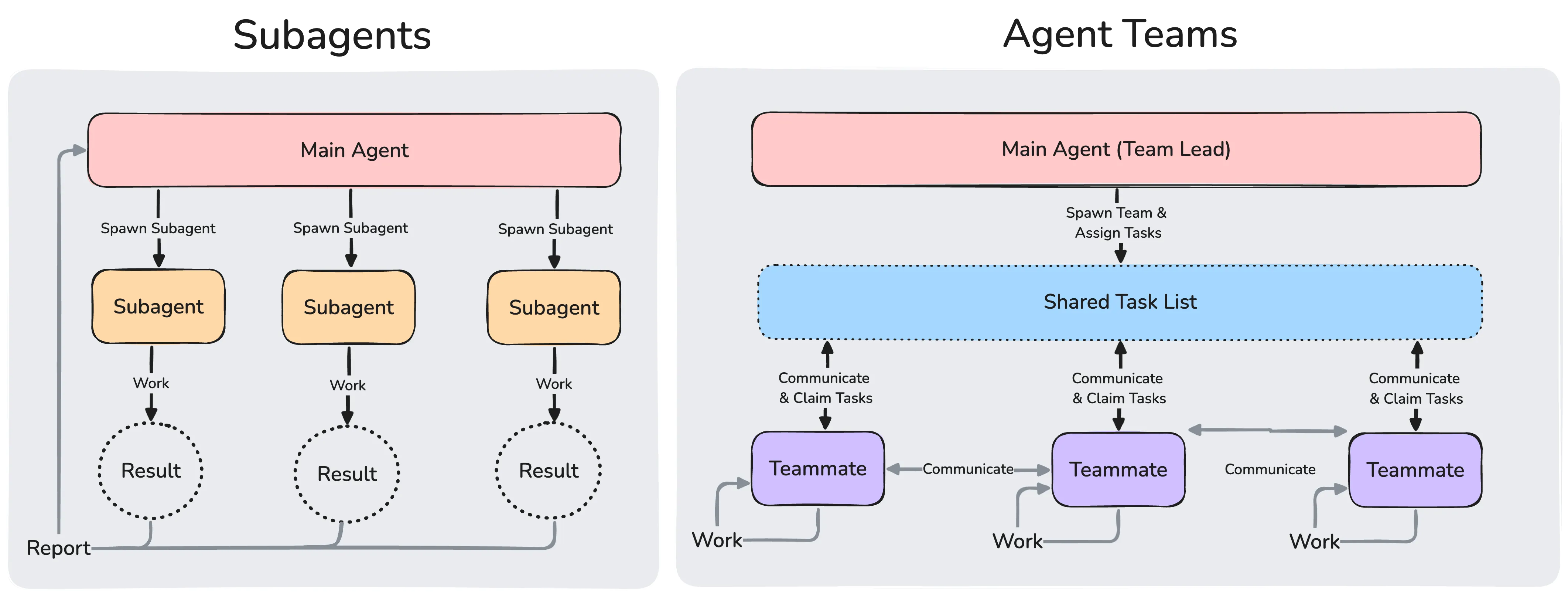
One important note about Anthropic's "agent teams" feature, which is related but distinct. Agent teams are the next step up: a shared task list that multiple Claude Code sessions can read and write to, with explicit dependencies, so Task B can wait on Task A. For a small RIA the simpler sub-agent pattern is the right starting point. Agent teams become useful when the firm has graduated to multi-stage workflows where one sub-agent's output feeds the next. That is a quarter-three problem, not a quarter-one problem.
How to Get Started in the Next Six Weeks
An advisor does not need to rebuild the tech stack to deploy parallel sub-agents. Three sequential pilots over six weeks will reveal which workflows return capital fastest. Resist the urge to do all three at once.
Weeks 1-2: One Friday Quarterly-Prep Run
Pick the next ten clients on the calendar. Build a single Markdown template that defines the firm's one-page brief format. Store it in a Claude project as the house style. Run the parallel quarterly-prep orchestration on those ten as a pilot.
Read the briefs Friday afternoon and mark them up by hand. The first run will need editorial corrections. The second will need fewer. By the fourth Friday, the format is locked and the briefs ship clean.
Weeks 3-4: A Same-Day Thematic Research Note
The next time a client emails an investment-theme question, run the multi-source parallel research orchestration end to end. Time how long it takes from question to client-ready note. Compare that to the firm's typical response time on the same kind of question.
If the answer is back in two hours instead of two days, the workflow earns its keep. If the synthesis pass needs more than thirty minutes of editing, the orchestrator prompt needs sharpening, not the sub-agents.
Weeks 5-6: The First Recurring Compliance Sweep
Run the three-way blotter, suitability, ADV cross-check on the most recent month of activity. The first run will produce a list of false positives the advisor has to triage. That triage is data: it teaches the orchestrator what counts as a real exception versus a formatting artifact.
By the second monthly run the false positive rate drops. By the third, the exception list is short, sharp, and actually worth a CCO's time to review.
What Parallel Sub-Agents Do Not Replace
This is the part the firm needs to be honest about with itself.
Sub-agents do not replace a chief compliance officer. They do not replace an experienced senior associate who can read a client's body language across a conference table. They do not replace the conversation where the advisor explains, slowly and patiently, why selling out at the bottom is the worst thing the client could do. Those are the moments that drive the relationship in a wealth practice and they remain entirely human.
What sub-agents replace is the analyst hours that used to get swallowed by serial, format-heavy work. Reading. Cross-referencing. Compiling. Drafting. The work that is necessary but not the work the client is paying for.
An RIA principal who tries to use sub-agents to cut headcount will frustrate her team and miss the point. An RIA principal who uses sub-agents to give her best people back ten hours a week so they can spend it with clients, prospects, and centers of influence will outperform her competition over a five-year window.
The firms in Highland Park and the rest of the North Shore that quietly compound a service-quality advantage in 2026 will be the ones that figured this out before their competitors did. The technology is shipped. The capability is real. The only question is what the firm decides to do with the hours it gets back.
A Final Note on Timing and Where to Start
Sub-agent capability has been available in Claude Code since the second half of 2025 and the documentation reached its current shape in early 2026. By the second half of this year, every serious RIA in the Chicago market will have run some version of this experiment. The advisors who move now are the ones who get to compound the operating-capacity advantage for the rest of the year.
For an advisor who wants to think through which of the three workflows above is the right first pilot for a specific practice, or who wants a second set of eyes on the orchestrator prompts before running them on real client data, a free 30-minute AI audit is available. In person at a coffee shop in Highland Park or on video. No obligation, no pitch deck. The output is a one-page plan.
The technology is shipped. The question is what the practice does with it before Memorial Day.
Frequently Asked Questions
What is the difference between Claude sub-agents and the Claude Cowork I already use? +
Claude Cowork is the assistant interface most non-developer firms already use for one-off tasks like drafting letters or processing inbox triage. Sub-agents are a feature inside Claude Code, the developer-facing surface, that allows up to ten Claude instances to run concurrently on independent pieces of one larger job. For an RIA, the practical answer is that Cowork handles the breadth of daily work and sub-agent orchestrations handle the moments when the same job needs to happen across fifty clients at once.
Is ten sub-agents really the limit, and what happens if I have fifty clients? +
Ten sub-agents in a single parallel batch is the documented number from the developer community's writing on the split-and-merge pattern. For fifty clients the orchestrator runs five sequential batches of ten. The whole orchestration still completes in a fraction of the wall-clock time of a serial pass and the advisor does not have to babysit it.
Is it safe to point Claude sub-agents at confidential client portfolio data? +
Anthropic's enterprise plans and the Anthropic API do not train on customer data by default. For an RIA that handles non-public personal information under SEC and Reg S-P obligations, the right path is to deploy Claude through a Team or Enterprise tier with a documented data-handling policy, or via the API with appropriate controls in place. Free consumer-tier pasting of client data into a chat box is not appropriate for any regulated firm.
Will sub-agents replace my associate or my outside compliance consultant? +
No. Sub-agents handle the reading, the cross-referencing, and the first-pass drafting. The associate does the work that requires institutional memory and judgment, and the compliance consultant signs off on the exception list the orchestration produces. The right framing is that sub-agents give the people on the payroll back the hours they used to spend on serial format-heavy work, so they can spend those hours on the parts of the job that actually require a person.
What is the difference between sub-agents and Anthropic's "agent teams" feature? +
Sub-agents are the simpler pattern: an orchestrator spawns workers, each does one focused job, each reports a summary back, the orchestrator synthesizes. Agent teams are an experimental Anthropic feature that adds a shared task list with dependencies, so multiple Claude sessions can coordinate across separate sessions and Task B can wait on Task A. For a small RIA, sub-agents are the right starting point. Agent teams become relevant once the firm has graduated to multi-stage workflows where the output of one job feeds into the next.
How much should a small RIA budget for Claude in the first year of running these workflows? +
For a firm running the three workflows above on a recurring schedule across 50 to 200 client households, $300 to $1,500 per month covers the API and seat costs for a small team. Compared with the analyst hours those workflows replace, the return is straightforward. The bigger investment is the time the principal spends in the first six weeks getting the orchestrator prompts dialed in for the firm's house format and voice.
Related Articles

RoundTable Buys a Skincare Brand, and Healthcare Private Equity Meets AI
A Lake Forest firm just bought a skincare brand. The deal is a window into where healthcare private equity is heading with AI, and why it is a strategy problem first.
Lake Forest Hire: Can the Back Office Scale with AI?
Crescent Grove named a 25-year family-office veteran its growth chief. A rainmaker brings relationships. The harder question is whether the back office can scale as fast as the book.
When a CRM Is Truly AI-Ready for RIAs
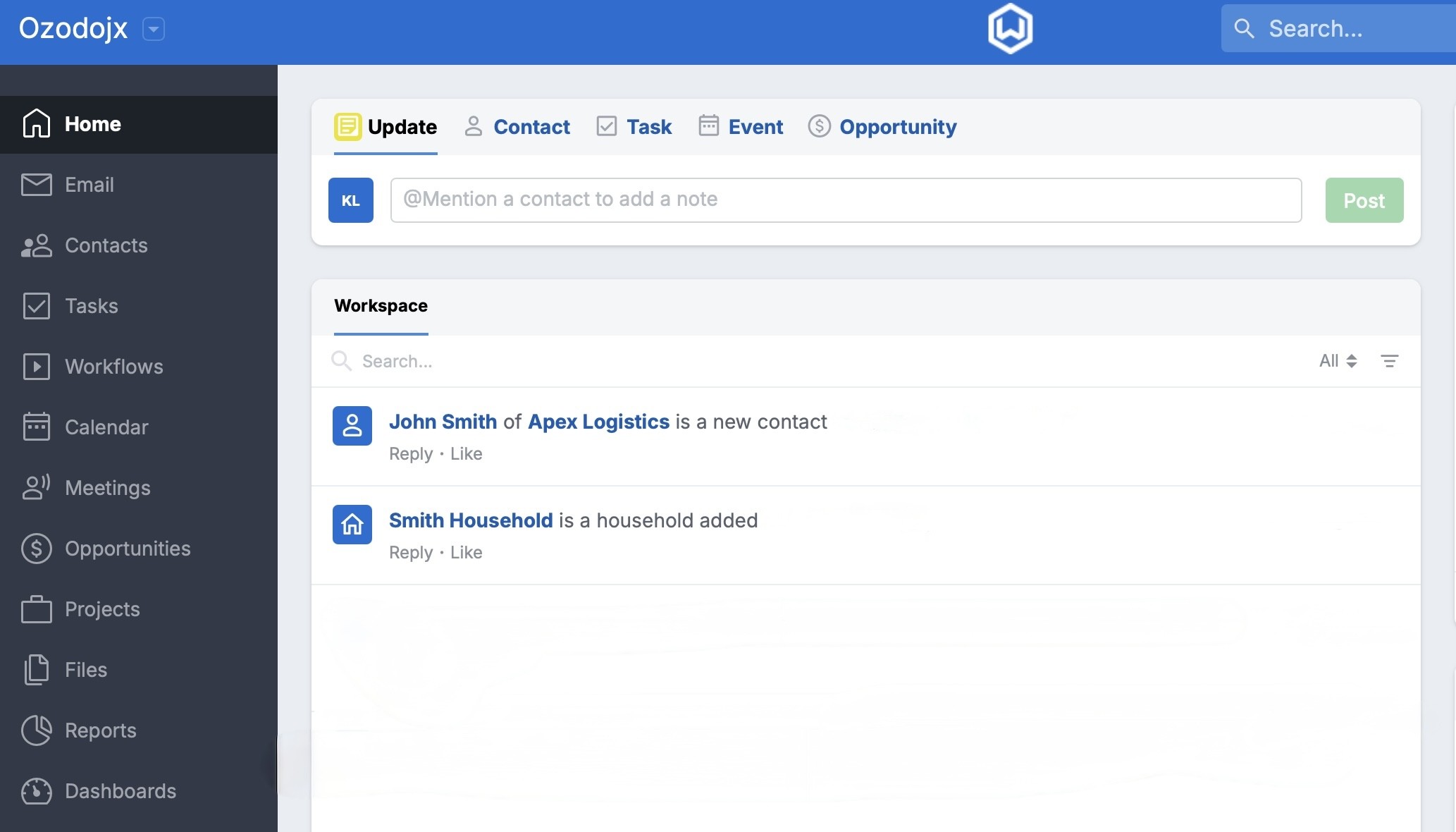
Every CRM demo now says AI. The question that matters is simpler: can a model read your client data and write back to it, under your control? Here are the three tests.
About the author

Written by
Michael Pavlovskyi
Founder, Bace Agency
Michael builds custom Claude and GPT workflows for insurance agencies, law firms, and PE firms on Chicago's North Shore. Speaker at Northwestern and Lake Forest College on practical AI adoption for professional services.
Connect on LinkedInSee it in your firm
Book an audit.
A free 30-minute AI audit. No obligation, no pitch deck.
Book a free AI audit