
Should You Hire a Developer or Use an AI Automation Agency?
Key Takeaways
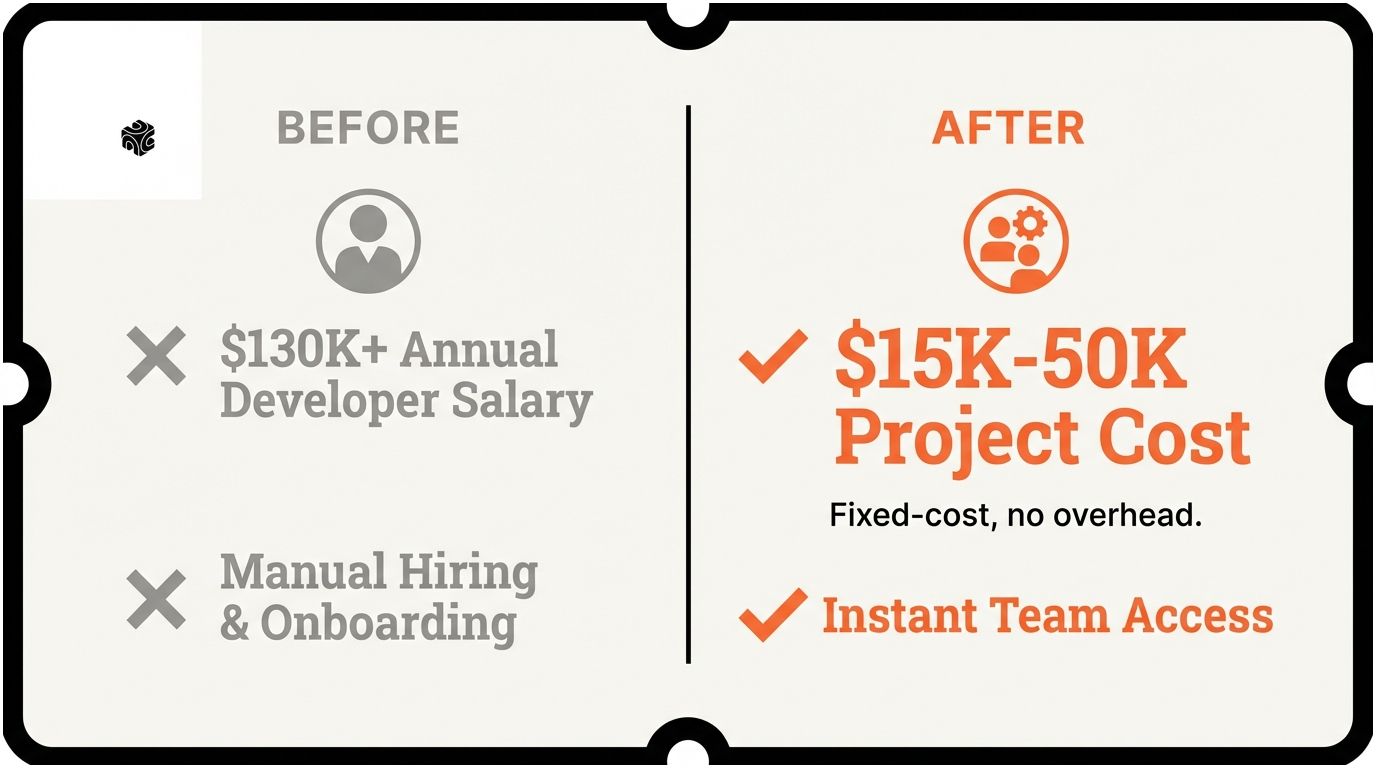
- ✓ In-house developers cost $130K-180K annually while agency projects typically run $15K-50K
- ✓ Agencies deliver first automations in 4-8 weeks vs 3-5 months for new hires
- ✓ Most North Shore firms need 2-4 automations annually, making agencies more cost-effective
Three months ago, a Winnetka law firm asked me a question I hear weekly: "Should we hire our own developer or work with an AI automation agency like yours?"
They'd already posted the job. Full-time AI developer, $120k starting salary. They got twelve applications. Half were junior developers who'd never touched business automation. The other half wanted $140k+ and lived in San Francisco.
Meanwhile, their intake process was drowning them. New client paperwork took 4 hours per case. Their paralegal was working weekends just to keep up.
I told them the truth. Sometimes you need to hire. Sometimes you don't. It depends on your situation, your timeline, and your long-term plans.
Here's how to decide which path makes sense for your firm.
The Real Cost Breakdown
Let's talk money first. Because that's usually what decides things anyway.
A decent AI developer in Chicago costs $100k-140k per year. Add benefits, equipment, and office space. You're looking at $130k-180k total.
But that's just the beginning. They need tools. Claude Pro subscriptions, development software, cloud services, testing environments. Add another $5k-10k annually.
Then there's the learning curve. Your new hire needs 3-6 months to understand your business. How your firm works. What your clients need. Where the bottlenecks are.
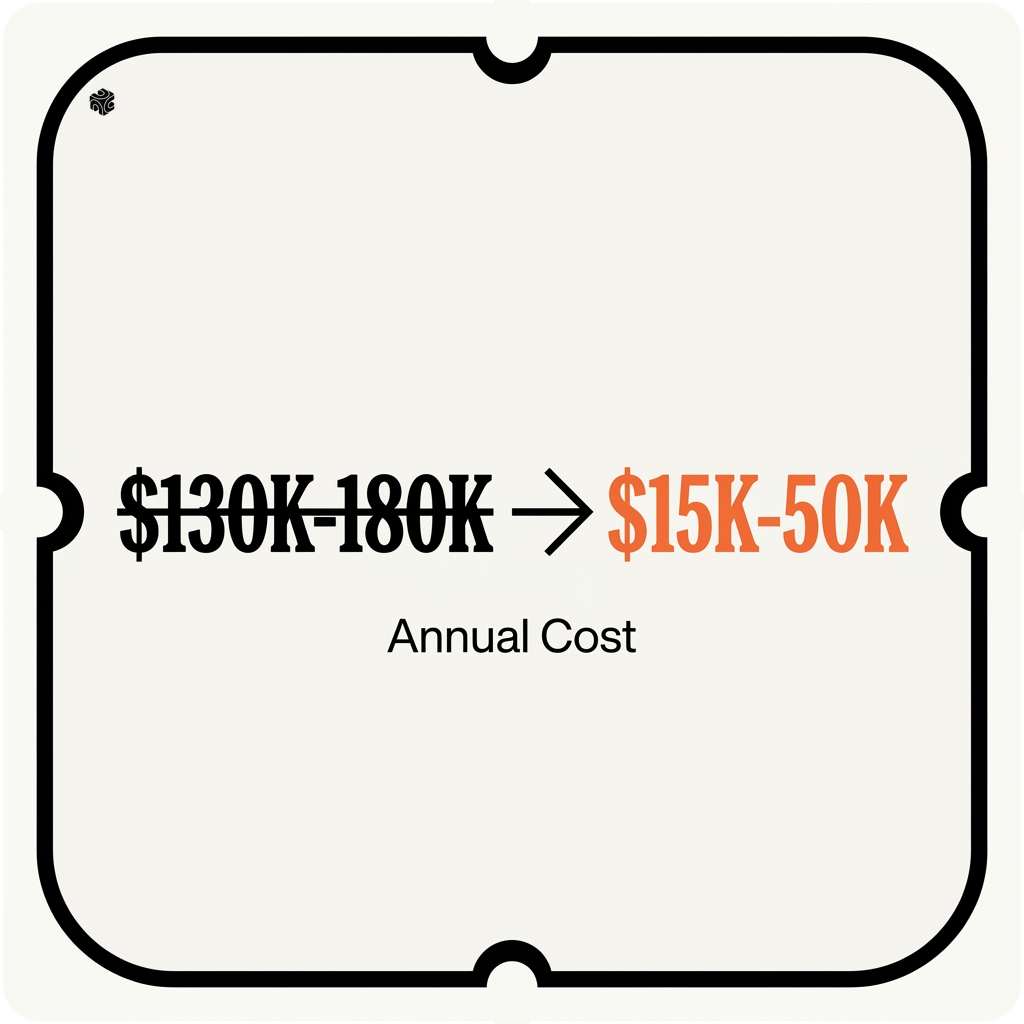
At Bace Agency, our projects typically run $15k-50k. That sounds like a lot upfront. But think about it differently.
A $30k project that saves your staff 10 hours per week pays for itself in 4-5 months. After that, it's pure profit.
I worked with a Highland Park insurance agency last year. They were spending $40k annually on manual data entry across three staff members. We built them an AI system that handles 90% of it automatically.
Total cost: $25k. Time to break even: 7.5 months.
The math gets more interesting when you factor in opportunity cost. While you're spending 6 months recruiting and training a developer, your current inefficiencies keep bleeding money.
That Winnetka law firm I mentioned? They were losing about $3k per month to their slow intake process. Six months of delays would have cost them $18k in lost productivity.
Here's what most firms don't consider: specialized agencies often deliver faster results at lower total cost. We've built hundreds of automation systems. Your new developer will build their first one on your dime.
But cost isn't everything. A full-time developer gives you unlimited projects over time. An agency charges per project.
If you need constant AI work — new automations every month, regular updates, lots of custom integrations — hiring starts to make sense around month 12-18.
For most North Shore firms I work with, the math favors agencies. They need 2-4 major automations per year. Not 20.
Speed and Timeline Reality Check
Speed matters when you're drowning in manual work.
Hiring a developer takes forever. Post the job, screen resumes, conduct interviews, check references, negotiate salary. You're looking at 2-3 months minimum.
Then they need time to learn your systems. Every firm uses different tools. Applied Epic, Clio, Salesforce, whatever. Your developer needs to understand how they all connect.
Add another month for onboarding. Maybe two if your systems are complex.
So you're 3-5 months from posting the job to seeing your first automation.
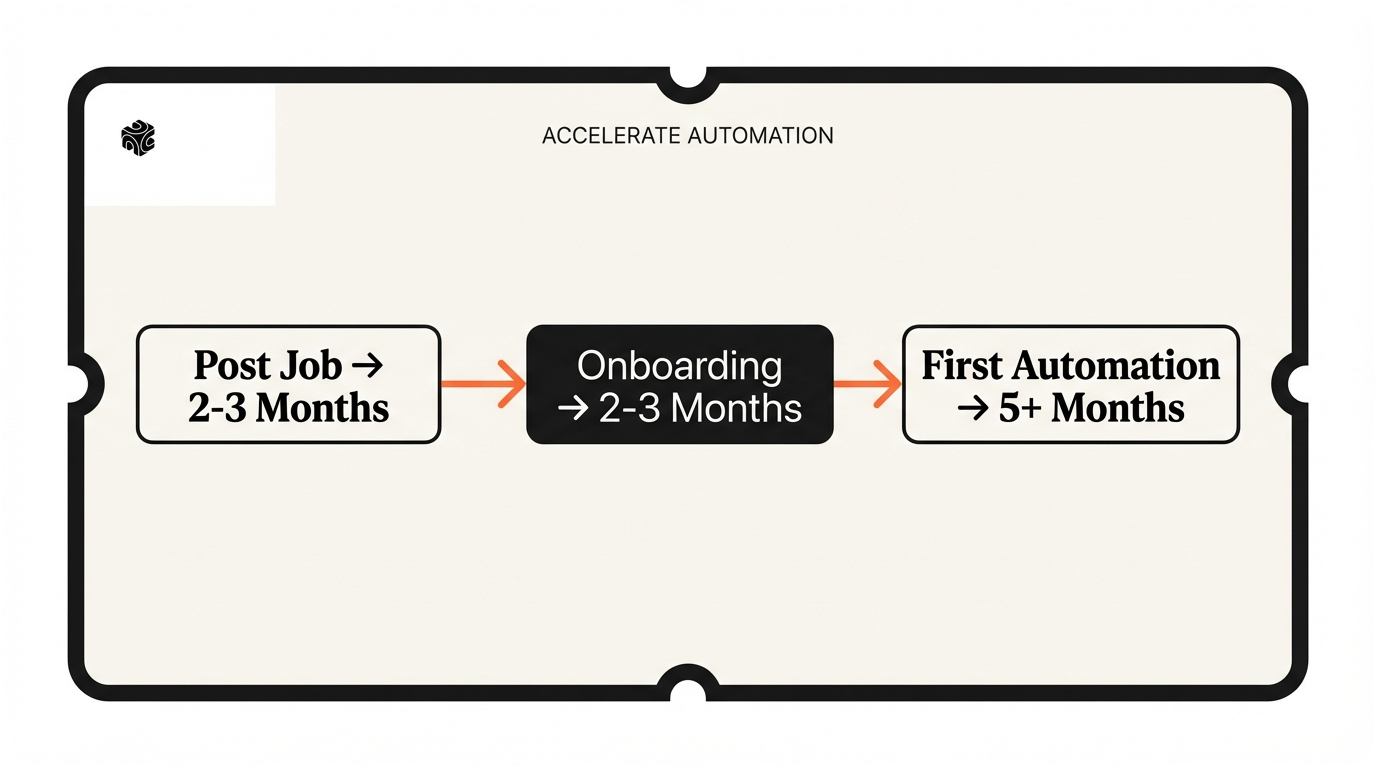
Agencies move faster. At Bace Agency, we typically start within 2 weeks of signing. First automation goes live within 4-8 weeks, depending on complexity.
Why the difference? We're not learning automation from scratch. We've built similar systems for dozens of firms.
I remember a Lake Forest family office that needed their client reporting automated before quarter-end. They called us on a Tuesday in late February.
We had their system running by March 15th. Saved them 40 hours of manual work that quarter.
A new hire couldn't have delivered that fast. Not even close.
But here's the flip side. Once your developer is up and running, they're available immediately. Need a quick tweak to an automation? They can handle it same day.
With agencies, you're competing for attention. We have other clients, other projects. Small changes might take a week to schedule.
The speed advantage depends on your needs. If you need one big automation fast, agencies win. If you need constant small adjustments, in-house wins.
Most firms fall into the first category. They have 2-3 major pain points they want automated. Once those are solved, they're good for 6-12 months.
For those firms, agency speed makes sense. Get your automations live quickly, then maintain them with minimal changes.
Expertise: Generalist vs Specialist
This is where things get interesting.
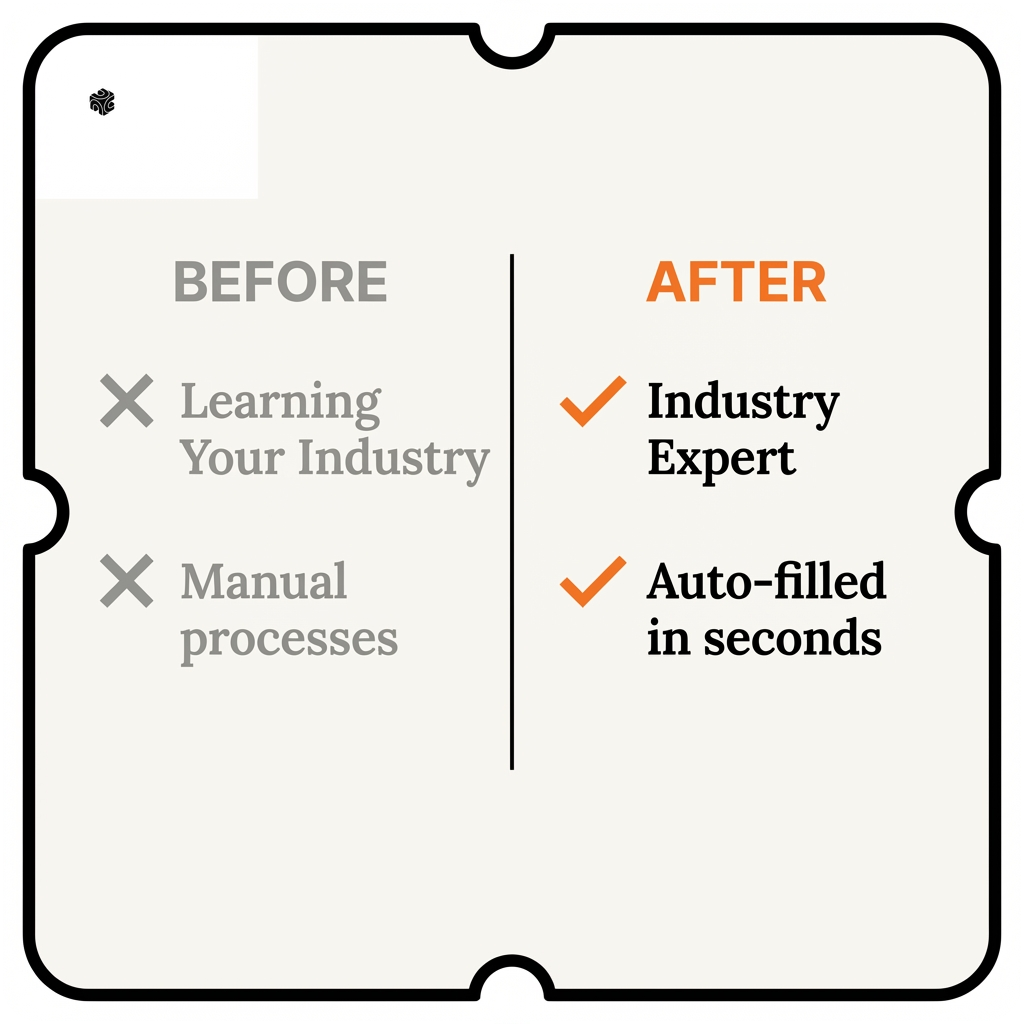
Your hired developer might be brilliant. But they're learning your industry while building your solutions.
Agencies like Bace Agency specialize in specific sectors. We work exclusively with insurance agencies, law firms, financial advisors, and family offices on Chicago's North Shore.
That specialization matters more than you think.
When a Glencoe insurance agency asks us to automate their ACORD forms processing, we know exactly what they're talking about. We've built similar systems for agencies in Wilmette, Lake Bluff, and Kenilworth.
Your new developer? They'll need to learn what ACORD forms are first.
But in-house developers have one huge advantage: deep knowledge of your specific firm.
They attend your team meetings. They understand your unique workflows. They know which client drives you crazy and why.
That intimate knowledge helps them build better solutions over time.
Here's a real example. We built an AI intake system for a Northwestern University area law firm. It worked great for personal injury cases.
Six months later, they started handling more family law. The intake needed different questions, different document routing.
We updated it, no problem. But an in-house developer would have seen that shift coming. They would have built flexibility into the original system.
So who has better expertise? It depends on what kind of expertise you need.
For technical AI knowledge and industry best practices, agencies usually win. We've solved similar problems dozens of times.
For deep understanding of your firm's quirks and future direction, in-house developers win. They're there every day, seeing how things really work.
Most North Shore firms I work with need industry expertise more than firm-specific knowledge. Their processes aren't that unique. They follow standard patterns for their sector.
But if your firm has unusual workflows or complex custom requirements, in-house might serve you better long-term.
Ongoing Maintenance and Support
Here's what nobody tells you about AI automations: they need ongoing care.
Not major overhauls. But small adjustments. Software updates. New integration points. Performance monitoring.
Think of it like your car. It runs great most of the time. But you still need oil changes, tire rotations, occasional repairs.
With an in-house developer, maintenance is included. Part of their job. Something breaks at 3 PM? They fix it before you leave the office.
With agencies, maintenance usually costs extra. At Bace Agency, we offer support packages starting at $500/month. Covers updates, bug fixes, performance monitoring.
Some firms balk at ongoing costs. "We already paid for the system. Why do we need to pay more?"
Because software changes. APIs get updated. Your business grows. Requirements evolve.
I worked with an Evanston financial advisor who tried to avoid maintenance costs. Their client portal integration broke when Redtail updated their API. Took them three weeks to find someone to fix it.
Three weeks of manual data entry. Frustrated clients. Lost productivity.
The maintenance fee would have cost less than the manual work during those three weeks.
95%
Of our clients stay with our support plans after year one
But in-house maintenance has hidden costs too. Your developer spends time on maintenance instead of new projects. Plus, they might not have experience with every tool your automation touches.
When HubSpot changed their API last year, it broke automations across several of our clients. We'd seen similar issues before. Fixed everything within 48 hours.
An in-house developer might have taken a week to figure out the problem.
Here's the reality: maintenance requirements vary by complexity. Simple automations need minimal upkeep. Complex multi-system integrations need regular attention.
Most firms underestimate maintenance needs. They assume automations will run forever without intervention. That's rarely true.
Plan for 10-20% of your original development cost annually for maintenance. Whether you handle it in-house or through an agency.
When Each Option Makes Sense
After working with 97+ firms across the North Shore, I've seen patterns in who succeeds with each approach.
Hire a developer when:
You need constant AI work. New automations monthly. Frequent updates to existing systems. Complex integrations that change regularly.
You have 50+ employees. Larger firms generate enough AI projects to keep a developer busy full-time.
Your processes are highly unique. If your firm operates differently from industry standards, custom solutions make more sense.
You're building proprietary tools. Planning to sell software to other firms? You need in-house development capability.
Use an AI agency when:
You need 2-4 major automations per year. Most firms fall into this category.
You want fast results. Agencies deliver faster because they're not learning on your dime.
You lack technical management experience. Managing developers requires specific skills most firm owners don't have.
You want predictable costs. Project-based pricing is easier to budget than salary, benefits, and equipment.
Here's a real example of each path working well.
A large family office in Lake Forest hired a full-time developer two years ago. They manage portfolios for 200+ clients. They needed constant reporting updates, new client dashboards, integration with multiple custodians.
Their developer stays busy. Builds 2-3 new tools monthly. The investment makes sense.
Meanwhile, a boutique insurance agency in Winnetka works with Bace Agency. They needed three automations: claims processing, client onboarding, renewal notifications.
We built all three in four months. Total cost: $35k. They save 25 hours per week now.
Hiring a developer would have cost them $130k+ annually. For three automations that rarely need updates.
The agency route saved them $95k in year one alone.
Most North Shore firms are more like that insurance agency. They have specific pain points they want solved. Once solved, they're good for months or years.
For them, agencies make more financial sense.
But if you're constantly thinking of new ways to use AI, if you see dozens of potential automations, hiring might be worth considering.
Just remember: good AI developers are expensive and hard to find. Especially ones who understand business automation, not just coding.
Start with agencies to prove value and identify your biggest opportunities. If you end up needing full-time help, you can always hire later with better understanding of what you actually need.
That Winnetka law firm I mentioned at the start? They chose the agency route. We automated their intake process in six weeks. Saved them 20 hours per week.
They're still using that system 18 months later. Barely needed any maintenance. Total investment: $28k.
A full-time developer would have cost them $240k+ over that same period.
Sometimes the smart choice isn't the obvious one.
Ready to explore AI automation for your firm? I offer free 30-minute audits to North Shore businesses. We'll look at your current processes and discuss the best path forward — whether that's working with Bace Agency or finding the right in-house solution. Book your free audit here and get clarity on your next steps.
Frequently Asked Questions
How much does it cost to hire an AI developer vs using an agency? +
An AI developer typically costs $130K-180K annually including salary and benefits, while AI automation agencies like Bace Agency charge $15K-50K per project. For most North Shore firms needing 2-4 automations per year, agencies cost significantly less.
Which option delivers results faster - hiring or using an agency? +
AI agencies deliver much faster results. Hiring a developer takes 2-3 months for recruitment plus 1-2 months onboarding, while agencies can typically start within 2 weeks and deliver first automations in 4-8 weeks.
Do I need ongoing support for AI automations? +
Yes, AI automations need ongoing maintenance for software updates, API changes, and performance optimization. Plan for 10-20% of original development cost annually, whether handled in-house or through agency support packages.
When does hiring an in-house developer make sense? +
Hire a developer when you need constant AI work with new automations monthly, have 50+ employees, operate with highly unique processes, or are building proprietary tools to sell to other firms.
What are the hidden costs of each option? +
In-house developers require equipment, software licenses, benefits, and learning time. Agencies may charge extra for maintenance, small changes take longer to schedule, and you're competing for attention with other clients.
Want to see how AI fits in your firm?
Book a free 30-minute AI audit. No obligation, no pitch deck.
Book a Free AI Audit →