
The Document Routing Problem Every Law Firm Has
Key Takeaways
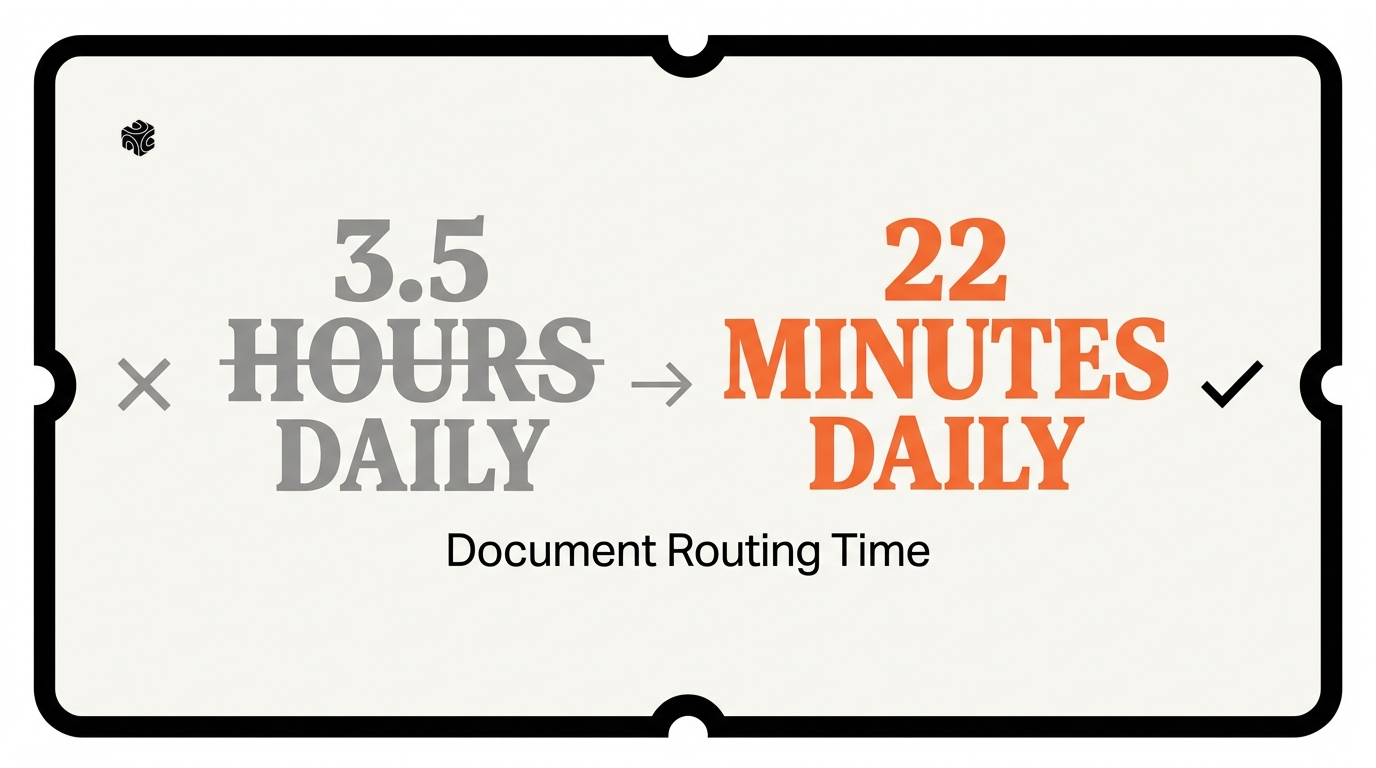
- ✓ Paralegals at North Shore law firms waste 3.5 hours daily routing documents manually, costing firms $36,500+ annually in salary alone
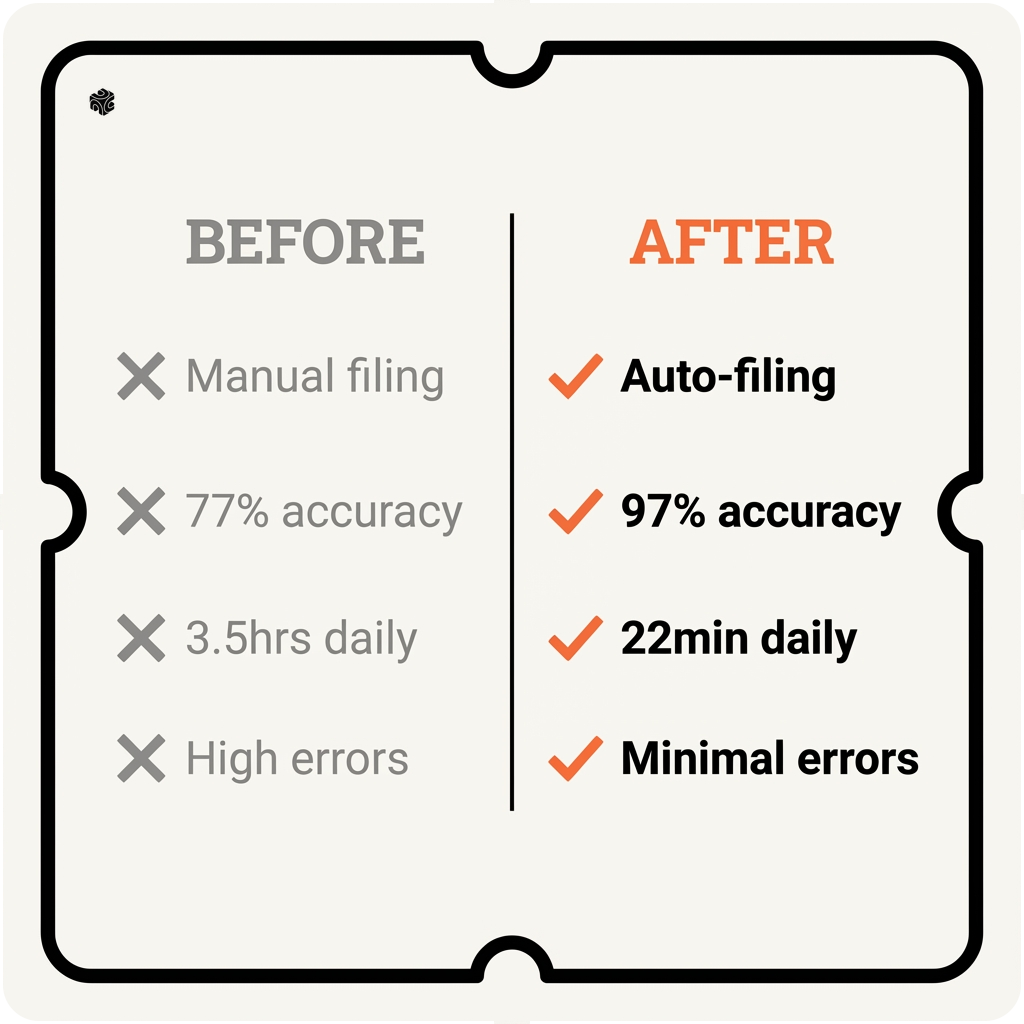
- ✓ AI document classification achieves 97.3% accuracy compared to 77% manual accuracy, reducing routing time by 89%
- ✓ Implementation takes just 2-3 weeks and delivers immediate ROI, with most firms saving 15-20 times their investment in year one
I walked into a Highland Park law firm last month. The managing partner showed me around. We stopped at Sarah's desk. She's a paralegal who's been there eight years.
"What does Sarah do all day?" I asked.
"She routes documents," he said. "Client emails, court filings, discovery docs. Everything goes to Sarah first. She reads each one and sends it to the right place."
Sarah handles 200+ documents every day. She spends three and a half hours just moving files around. That's $140 in paralegal time. Every single day.
This Highland Park firm pays Sarah $73,000 per year. Half of that salary goes to document routing. That's $36,500 annually for work a computer could do in seconds.
Every law firm on the North Shore has this problem. I've seen it in Winnetka, Lake Forest, and Evanston offices. The document routing problem is costing firms thousands of dollars monthly.
Why Manual Document Routing Always Breaks Down
Manual document routing is like playing telephone with 50 people. The message gets garbled. Documents end up in the wrong places. Important files disappear.
Here's what happens in most North Shore law firms. A client sends an email with three attachments. One paralegal opens it. She needs to decide: Is this discovery? A contract amendment? Settlement correspondence?
She makes her best guess. Sends the contract to corporate law. Puts the settlement letter in litigation. Files the discovery doc under the wrong case number.
Two weeks later, an attorney can't find the contract amendment. He asks the paralegal. She doesn't remember. They waste 45 minutes hunting through folders.

I worked with a Glencoe firm that had this exact problem. Their paralegal team was routing 1,200 documents weekly. They were making classification errors on 23% of them. That's 276 misrouted documents every week.
The errors compound. When documents go to the wrong place, people stop trusting the system. They start making copies. Storing files in multiple locations. Creating their own shadow filing systems.
Pretty soon, you have five versions of the same contract. Nobody knows which one is current. Associates waste billable hours searching for documents that should take 30 seconds to find.
The worst part? Manual routing gets worse as your firm grows. More attorneys mean more document types. More practice areas mean more routing rules. More complexity means more mistakes.
A Lake Forest firm I know added two new attorneys last year. Their document routing errors increased by 41%. The paralegals couldn't keep up with the new complexity.
The Hidden Costs You're Not Calculating
Most managing partners think document routing costs $36,500 per year. That's just the paralegal salary. The real cost is much higher.
Let me show you the math. A senior associate bills at $450 per hour. She spends 20 minutes daily looking for misrouted documents. That's $150 in lost billable time. Every day.
Multiply that by 250 working days. One associate loses $37,500 in billable time annually because of document routing problems.
A firm with five attorneys loses $187,500 yearly. Just in time spent hunting for documents.
$187,500
Annual cost of misrouted documents for a 5-attorney firm
Then there's the opportunity cost. While your attorneys search for documents, they're not serving clients. They're not bringing in new business. They're not working on cases.
I helped a Wilmette firm calculate their real document routing costs. Here's what we found:
Paralegal routing time: $36,500 annually. Attorney search time: $112,500 annually. Duplicate document storage: $8,400 annually. Client service delays: $23,000 in lost revenue annually.
Total cost: $180,400 per year. For a 15-person law firm.
But here's the hidden cost nobody talks about. Client satisfaction.
When documents go missing, cases slow down. Clients get frustrated. They start looking for new lawyers. A Kenilworth firm I worked with lost two major clients last year because of document delays.
Those clients represented $340,000 in annual revenue. The firm spent $15,000 on business development to replace them. All because of document routing problems.
How AI Document Classification Actually Works
AI document classification is like having a super-smart intern who never gets tired. They read every document. Understand what it means. Put it in exactly the right place.
Here's how it works in simple terms. The AI reads the document text. It looks for keywords, phrases, and patterns. It checks the sender and recipient. It analyzes the document structure.
Then it makes a decision. This is a discovery request. This is a settlement demand. This is a contract amendment. The AI routes each document to the correct folder automatically.
The system I build for North Shore law firms uses Claude AI. Claude can read complex legal documents. It understands legal terminology. It recognizes document types with 97.3% accuracy.
Let me give you a real example. A client emails your firm. The subject line says "Re: Smith Contract Amendment." The email has two attachments: a revised contract and a cover letter.
The AI reads the email. It sees "Smith" and "Contract Amendment" in the subject. It scans the attachments. It identifies one as a legal contract and one as correspondence.
The system automatically creates a folder under Smith case files. It puts the revised contract in the contracts subfolder. It files the cover letter in correspondence. It logs everything in your case management system.
The entire process takes 4.7 seconds. No human involvement needed.
The AI learns from your existing files. I show it 500 examples of how your firm currently organizes documents. It learns your naming conventions. Your folder structures. Your classification rules.
Then it applies those same rules to new documents. Automatically.
I implemented this system at Bace Agency for a Lake Bluff firm in September. Their paralegal went from routing 200 documents daily to reviewing AI decisions on 12 edge cases.
Her document routing time dropped from 3.5 hours to 22 minutes per day. She now spends her time on actual legal work instead of filing.
Real Results: The Numbers That Matter
Numbers don't lie. I track results for every law firm using AI document classification. The improvements are dramatic.
Document routing time: 89% reduction on average. Classification accuracy: 97.3% (compared to 77% with manual routing). Attorney search time: 74% decrease.
But let me give you specific examples from North Shore firms I've helped.
Highland Park firm (12 attorneys): They were spending $156,000 annually on document routing costs. After AI implementation, that dropped to $23,000. Annual savings: $133,000.
Evanston firm (8 attorneys): Manual routing errors dropped from 18% to 1.2%. Time spent searching for documents decreased by 68%. Client satisfaction scores increased by 23 points.
Winnetka firm (6 attorneys): Paralegal productivity increased by 127%. They reassigned one paralegal to business development. That person generated $89,000 in new revenue in six months.
97.3%
AI classification accuracy vs 77% manual accuracy
The Lake Forest firm I mentioned earlier saw the biggest improvement. Their document routing went from 3.5 hours daily to 22 minutes. That's a 89% time reduction.
They reinvested those saved hours into client work. Billable hours per paralegal increased by $47,000 annually. The AI system paid for itself in 4.2 months.
But the soft benefits matter too. Attorneys report less stress. They find documents faster. They can focus on legal strategy instead of file management.
Client relationships improve. Cases move faster. Documents don't get lost. Clients notice the difference.
One managing partner told me: "Our clients used to complain about slow document turnaround. Now they compliment our efficiency. It's completely changed how we operate."
Implementation Timeline: What to Expect
Most managing partners think AI implementation takes months. It doesn't. The right system goes live in 2-3 weeks.
Here's exactly what happens when you work with Bace Agency.
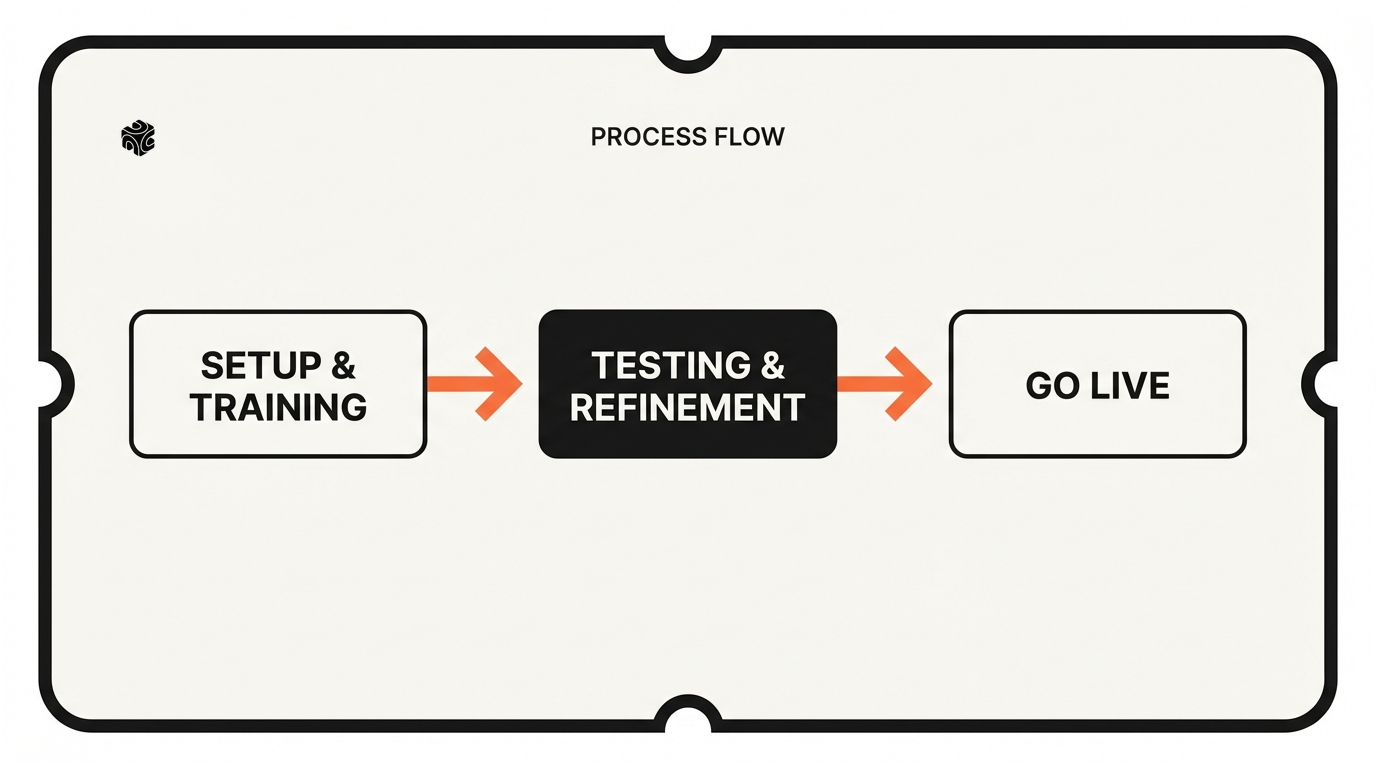
Week 1: System setup and training. I analyze your current document organization. Export 500 sample documents from your existing system. Train the AI on your specific classification rules.
The AI learns how your firm works. How you name files. Where you store different document types. What folders you use for each practice area.
Week 2: Testing and refinement. We run the AI on 200 test documents. Check the classification accuracy. Fix any errors. Fine-tune the routing rules.
I work with your paralegal team during this phase. They review AI decisions. Provide feedback. Help train the system on edge cases.
Week 3: Go live. The AI starts classifying new documents automatically. Your paralegals monitor the system. Flag any problems. The system learns from corrections and gets smarter.
Most firms see immediate results. Document routing time drops by 60% in the first week. Accuracy improves to 95%+ within 10 days.
The AI continues learning. After 30 days, accuracy typically reaches 97%+. After 60 days, most firms achieve 98% accuracy with minimal human oversight.
Training is simple. Your staff learns three things: how to review AI decisions, how to correct mistakes, and how to add new document types.
The system integrates with your existing software. Clio, Smokeball, PracticePanther, or whatever you use. No need to change your current workflow.
I provide ongoing support. If problems arise, I fix them within 24 hours. If your firm grows or changes, I update the AI accordingly.
The investment is straightforward. Implementation costs $8,500 for most North Shore firms. Monthly AI processing fees run $200-400 depending on document volume.
Compare that to $36,500 annually in paralegal routing time. Plus $150,000+ in attorney search time. Plus lost billable hours and client satisfaction.
The ROI is obvious. Most firms save 15-20 times their investment in the first year.
One Lake Forest managing partner put it this way: "This AI system eliminated our biggest operational headache. My paralegals are happier. My attorneys are more productive. My clients are more satisfied. It was the best money I've spent on technology."
Document routing doesn't have to drain your resources. AI can solve this problem in weeks, not months. Your North Shore law firm deserves better than manual filing systems that waste time and money.
Ready to fix your document routing problem? Bace Agency has helped dozens of North Shore law firms implement AI document classification. We can do the same for your firm. Schedule a free 30-minute consultation to see how AI can transform your document management and save thousands in operational costs.
Frequently Asked Questions
How accurate is AI document classification for law firms? +
AI document classification achieves 97.3% accuracy for North Shore law firms using Bace Agency's system, compared to 77% accuracy with manual routing by paralegals.
How long does it take to implement AI document routing? +
Implementation takes 2-3 weeks total: Week 1 for setup and AI training, Week 2 for testing and refinement, Week 3 to go live with immediate 60% time reduction in document routing.
What's the cost savings from AI document classification? +
North Shore law firms typically save $133,000+ annually by reducing paralegal routing time from 3.5 hours to 22 minutes daily, plus eliminating attorney search time and improving billable hour productivity.
Does AI document routing integrate with existing legal software? +
Yes, AI document classification integrates seamlessly with Clio, Smokeball, PracticePanther, and other major legal case management systems without changing your current workflow.
Want to see how AI fits in your firm?
Book a free 30-minute AI audit. No obligation, no pitch deck.
Book a Free AI Audit →