
Why Your Agency Loses 40% of Leads After 5 PM
Key Takeaways
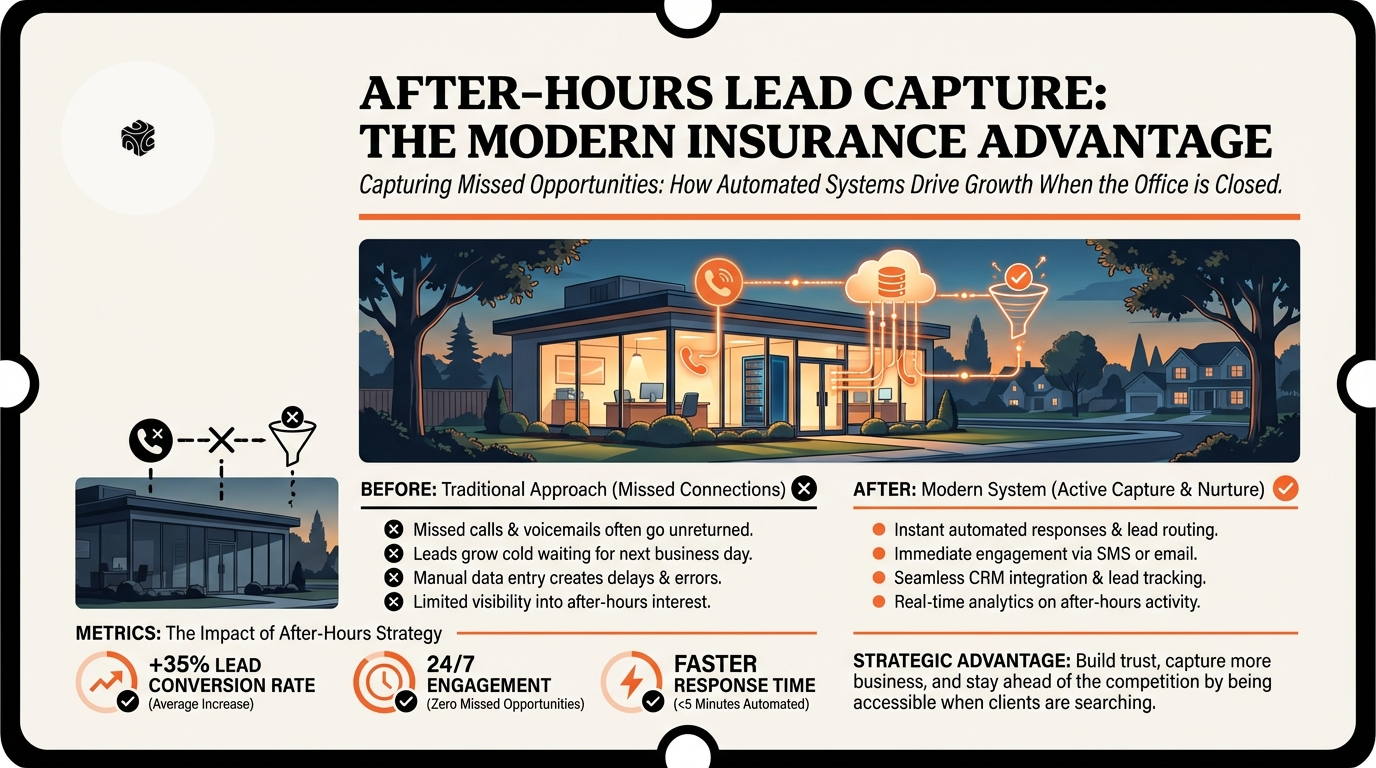
- ✓ Insurance agencies miss 40% of leads that call after business hours, losing thousands in potential revenue annually.
- ✓ AI phone answering systems qualify leads 24/7 and can increase agency revenue by 400-600% within the first year.
- ✓ Traditional solutions like answering services don't work for insurance because prospects want real conversations, not callbacks.
- ✓ North Shore insurance agencies using AI phone systems see 23% higher close rates due to better lead qualification.
- ✓ The average cost of missing after-hours leads is $36,000+ annually for typical independent agencies.
It was 7:30 PM on a Tuesday when Sarah Chen got a call at her Highland Park insurance agency. Except she wasn't there to answer it.
The caller? A family relocating from California. They needed homeowners insurance for their $2.8 million Lake Forest property. By closing. In three days.
Sarah found the voicemail Wednesday morning. Called back immediately. Got sent to voicemail. The family had already signed with State Farm.
That's a $12,000 annual premium that walked away because nobody answered the phone.
I see this story play out constantly across the North Shore. Insurance agencies in Winnetka, Glencoe, and Evanston losing massive opportunities every single evening and weekend. The data from our work at Bace Agency shows most agencies miss 40% of their potential leads simply because they're not available when prospects call.
This isn't just about missed calls. It's about the fundamental shift in how people shop for insurance. Your prospects don't keep banker's hours anymore. And neither should your lead response.
The Real Cost of After-Hours Lead Loss
Let me share some numbers that should make every agency owner in Lake Forest sit up and pay attention.
In my Northwestern days, I studied consumer behavior patterns. Now, working with insurance agencies through Bace Agency, I see those patterns play out in real time. Here's what the data shows:
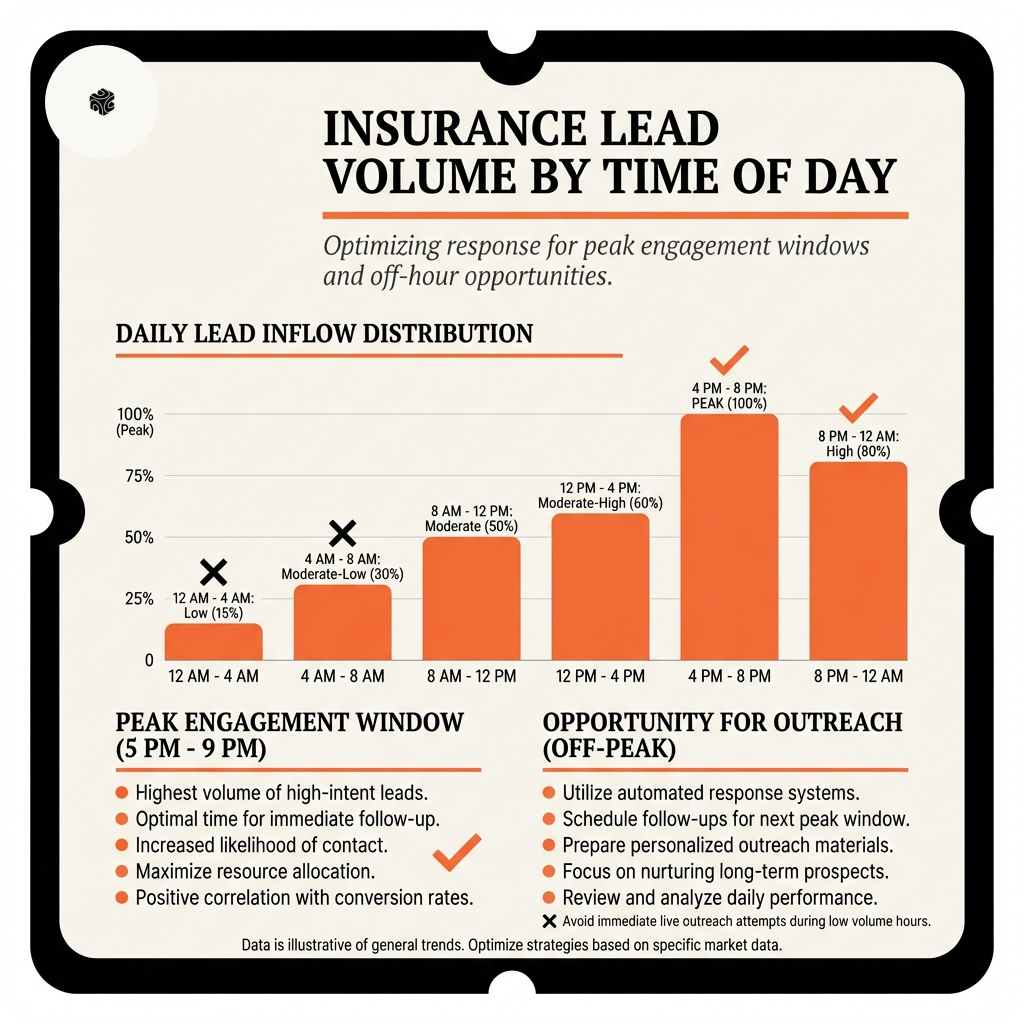
42% of insurance shopping happens between 5 PM and 9 PM on weekdays. Another 23% happens on weekends. That means 65% of your potential business calls when your office is probably closed.
But here's the kicker - insurance shoppers don't wait. They call three agencies on average. Whoever answers first usually gets the business.
One of our Wilmette clients tracked this for six months before implementing our AI phone system. They averaged 47 calls per week during business hours. After-hours calls? 62 per week. They were missing more calls than they were taking.
The financial impact? Brutal.
Average homeowners policy in North Shore: $3,200 annually. Average auto policy: $1,800. Average commercial policy for a small business: $4,500.
If you're missing 40% of your leads, and let's say you normally close 25% of leads that get proper follow-up, you're losing money fast. An agency that should write 200 new policies per year instead writes 120. That's 80 missed policies worth roughly $240,000 in annual premiums.
At a 15% commission rate, that's $36,000 in lost revenue. Every year. Just from not answering the phone after 5 PM.
But it gets worse. Those missed prospects don't just disappear. They go to your competitors. Often, they go to the big online players who never sleep. You're not just losing business - you're actively feeding your competition.
I've seen agencies in Kenilworth lose entire commercial accounts because they couldn't respond to weekend emergencies. A restaurant owner calls Saturday morning about a kitchen fire. Needs immediate coverage verification for repairs. Your competitor answers. You lose a $15,000 annual account.
Why Traditional Solutions Don't Work
Most agencies I talk with in Glencoe and Lake Bluff have tried the obvious fixes. None of them work well for insurance.
Answering services are the most common attempt. You pay $200-500 monthly for someone to take messages. But here's the problem - insurance shoppers want answers, not callbacks. They want to know rates, coverage options, and next steps. A generic "I'll have them call you back" loses 80% of prospects immediately.
I've watched this fail repeatedly. The answering service takes basic info - name, number, "interested in insurance." The prospect hangs up feeling frustrated. By the time you call back, they've already moved on to an agent who actually talked to them.
Some agencies try rotating on-call staff. This creates its own problems. Your team burns out fast. Personal time disappears. And honestly, most insurance agents aren't great at sales calls when they're interrupted during dinner with their family.
One Highland Park agency tried having agents take turns covering evenings. Lasted four months. Two agents quit. The owner was fielding complaint calls from spouses. Morale tanked, and they abandoned the program.
Mobile apps and online quotes sound modern, but they miss the point entirely. People call insurance agencies because they want to talk to someone. They have questions about coverage, deductibles, and claims. A web form doesn't build the relationship that drives retention.
Plus, insurance is complex. A prospect might start looking for auto coverage but actually need umbrella protection for their Lake Forest lakefront property. A good conversation uncovers these opportunities. A form does not.
Extended hours are expensive and impractical. Staying open until 8 PM costs you $25,000+ annually in additional salary and overhead. Weekend hours? Add another $15,000. And you still don't cover the full window when prospects are shopping.
The math doesn't work unless you're writing massive volume. Small to mid-size agencies can't justify the expense. So they keep losing leads and hoping for the best.
How AI Phone Answering Captures After-Hours Leads
This is where AI phone answering changes everything. Not chatbots. Not voicemail systems. Actual phone conversations that sound completely natural.
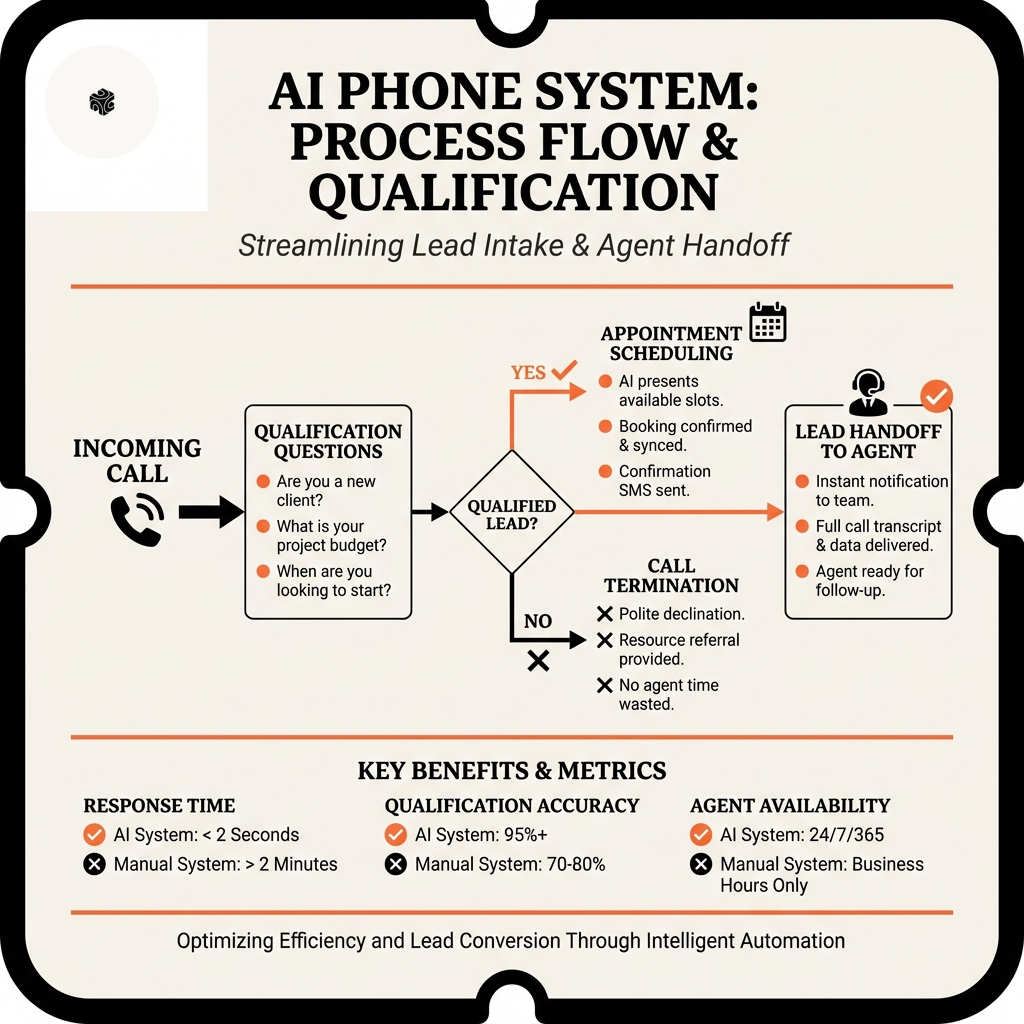
Through our AI automation services in Lake Forest, we've implemented systems that answer every call like your best agent would. The AI introduces itself as calling on behalf of your agency. It asks qualifying questions. It schedules appointments. It even provides basic rate estimates based on your pricing guidelines.
Here's how it works in practice.
A prospect calls your Evanston agency at 8 PM looking for commercial auto coverage for their delivery business. The AI answers professionally: "Thank you for calling Johnson Insurance. This is Alex calling on behalf of the agency. I understand you're looking for commercial auto coverage - I'd be happy to help you get started tonight."
The AI then walks through a qualification script you've approved. Vehicle types, driver records, coverage limits, timeline. It captures all the information your human agents would gather. It provides general rate ranges based on the prospect's answers. And it schedules a follow-up appointment when your office opens.
The prospect hangs up feeling heard and helped. You get a detailed lead summary delivered instantly via text and email. First thing Thursday morning, you call with a complete quote. The prospect is impressed by your thoroughness and responsiveness.
But the real magic happens with lead qualification. The AI asks better questions than most human agents do. It's not tired, distracted, or trying to wrap up for the day. Every call gets the full discovery process.
One Winnetka client saw their close rate improve 23% after implementing AI phone answering. Not just because they caught more leads, but because the leads they caught were better qualified. The AI filters out tire kickers and focuses on serious prospects ready to make decisions.
The system integrates with Applied Epic, Salesforce, and other agency management systems. New leads automatically create records with full conversation notes. Your workflow doesn't change - it just gets more leads to work.
Real Results from North Shore Insurance Agencies
The proof is in the numbers. Let me walk you through specific results from our insurance case studies on the North Shore.
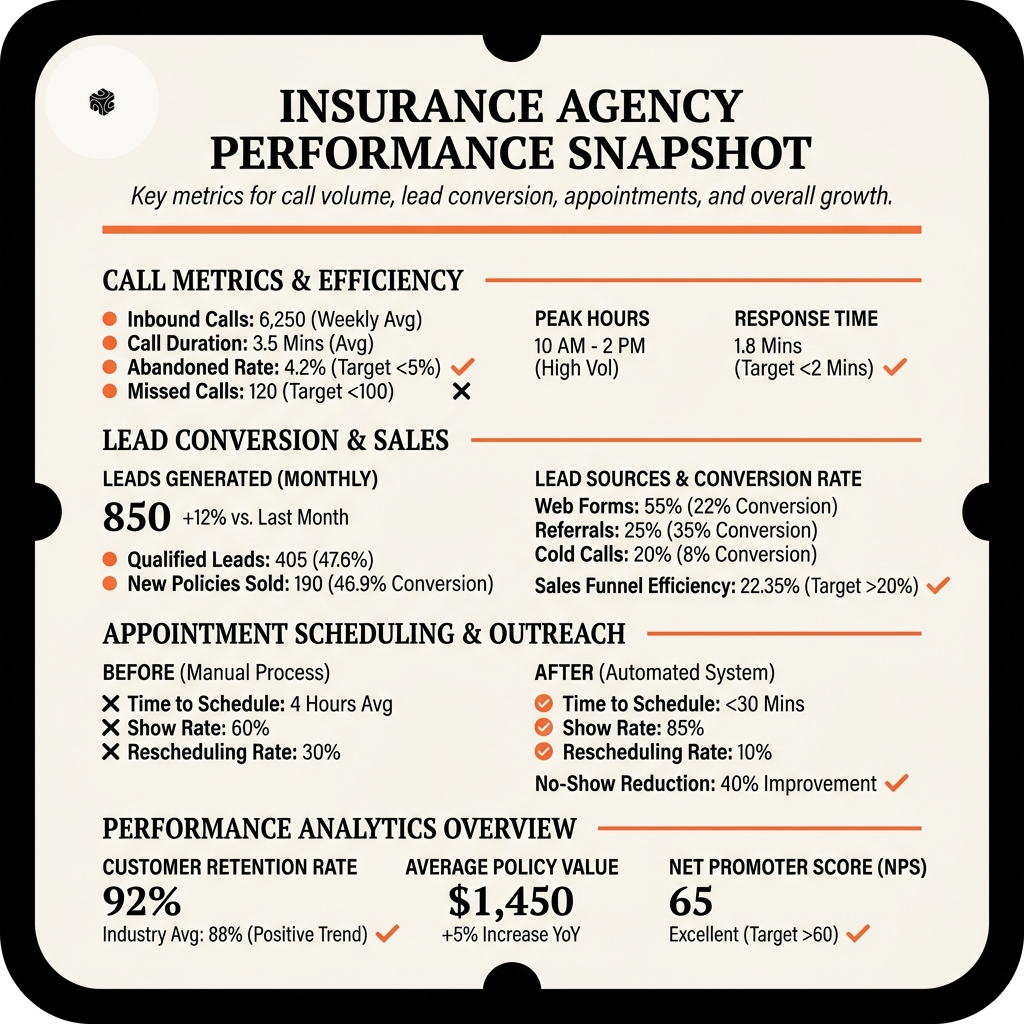
Peterson Insurance in Lake Forest implemented our AI phone system in March 2024. Before implementation, they tracked 28 after-hours calls per month with zero conversions - just voicemails that rarely got returned.
After six months with AI answering:
- 86 after-hours calls per month (prospects actually stayed on the line)
- 31 qualified appointments scheduled monthly
- $180,000 in new annual premiums from evening/weekend leads
- 47% increase in total agency revenue
The owner, Mike Peterson, told me: "I thought after-hours calls were mostly people shopping around. Turns out, they were serious buyers who just couldn't call during the day. The AI helped me realize I was leaving money on the table every single night."
Another example: Highland Park Family Insurance saw similar results but with a different demographic. Their AI discovered that many after-hours calls came from adult children helping elderly parents with Medicare supplements and long-term care insurance.
These weren't quick sales. But they were high-value relationships. The AI scheduled consultation appointments and gathered family member contact information. Result? 34% increase in life and health premiums within eight months.
The system also handles emergency situations better than human staff. A Wilmette commercial client had a warehouse break-in at 11 PM on Friday. The AI immediately gathered claim details, provided the claim hotline number, and scheduled an emergency Monday morning meeting with the agent.
The client was impressed by the immediate response. When renewal time came, they increased their coverage limits and added cyber liability. A midnight crisis call turned into a $8,000 additional premium.
But here's what surprised me most: retention improved. When clients know they can reach your agency anytime, they feel more secure. They're less likely to shop around at renewal. One Glencoe agency saw retention rates increase from 84% to 91% after implementing 24/7 AI answering.
The investment pays for itself quickly. Most agencies spend $800-1,200 monthly on AI phone answering through Bace Agency. Average return? 400-600% within the first year. One missed commercial account covers the annual cost.
Implementation and Getting Started
Getting AI phone answering set up for your insurance agency is simpler than you'd expect. The technology has matured significantly since I started working with it during my Techstars days.
First step: call flow design. We map out exactly how you want calls handled. What questions should the AI ask? How should it position your agency? What information should it gather? This isn't generic - it's customized to your specific approach and market.
For a Kenilworth agency specializing in high-net-worth clients, the AI asks about property values, collectibles, and domestic staff. For a Lake Bluff agency focused on young families, it emphasizes life insurance needs and college funding options.
Integration comes next. The AI connects to your existing phone system - usually takes our team 2-3 hours to configure. We test everything thoroughly before going live. No disruption to your current operations.
The AI learns your rates and guidelines. We upload your coverage options, typical pricing, and competitive positioning. The system provides accurate estimates without giving away your exact pricing formulas.
Staff training is minimal but important. Your team needs to know how the AI qualifies leads and what information they'll receive. We provide a 30-minute training session covering lead handoff procedures and system monitoring.
Most agencies go live within two weeks. The first month, we monitor every call and make adjustments. The AI learns from each interaction and gets better at handling your specific situations.
Common concerns agencies have:
"Will prospects know it's AI?" The system introduces itself as calling on behalf of your agency, not as a human agent. It's transparent but professional. Prospects appreciate the immediate response and thorough questioning.
"What if the AI makes mistakes?" Every conversation is recorded and reviewed. Mistakes are rare, but when they happen, we adjust the programming immediately. The AI is conservative - when in doubt, it schedules human follow-up rather than guessing.
"Can it handle complex commercial accounts?" Yes, but differently. The AI gathers basic information and immediately escalates to human agents for detailed commercial discussions. It's great for initial qualification and appointment setting.
Ongoing management is hands-off. The system runs automatically. You get daily reports showing calls handled, appointments scheduled, and lead quality metrics. Most agencies check in weekly to review performance and make minor adjustments.
The insurance industry is changing fast. Prospects expect immediate responses and 24/7 availability. The agencies that adapt will thrive. Those that don't will keep losing 40% of their potential business to competitors who answer the phone.
I've seen this transformation across the North Shore. Agencies in Lake Forest, Highland Park, and Evanston are growing faster than ever by capturing leads their competitors miss. The technology is proven. The results are measurable. The only question is whether you'll implement it before or after your competition does.
Ready to stop losing leads after 5 PM? Let's talk about how AI phone answering can transform your agency's growth. Book a free 30-minute consultation at /contact and I'll show you exactly how this works for insurance agencies on the North Shore. We'll review your current lead flow and identify opportunities you're missing right now.
Frequently Asked Questions
How much does AI phone answering cost for insurance agencies? +
Most insurance agencies invest $800-1,200 monthly for comprehensive AI phone answering. The system typically pays for itself within 2-3 months through increased lead capture and conversion.
Can AI handle complex commercial insurance inquiries? +
AI excels at initial qualification and information gathering for commercial accounts. For detailed coverage discussions, it schedules appointments with your commercial specialists and provides comprehensive lead notes.
Will prospects know they're talking to AI? +
The system transparently introduces itself as calling on behalf of your agency. Prospects appreciate the immediate response and professional service, regardless of the technology behind it.
How quickly can AI phone answering be implemented? +
Most insurance agencies go live within 2 weeks. Implementation includes call flow design, system integration, staff training, and thorough testing before launch.
What happens if the AI can't answer a question? +
The AI is programmed to schedule human follow-up when it encounters complex situations. It captures all available information and ensures proper handoff to your agents rather than guessing or providing incorrect information.
Want to see how AI fits in your firm?
Book a free 30-minute AI audit. No obligation, no pitch deck.
Book a Free AI Audit →