
How a 5-Person Firm Outworks a 50-Person Competitor

Key Takeaways
- ✓ Small firms using AI automation can outperform much larger competitors by handling the same volume of work with fewer people
- ✓ AI replaces repetitive tasks, not people, allowing professionals to focus on high-value activities like strategy and relationships
- ✓ Early adopters gain insurmountable competitive advantages while larger competitors struggle with bureaucracy and resistance to change
Brad Gerstner just dropped a bombshell on the All-In Podcast. "We've hit peak employment," he said. A major company with $5 billion in operating expenses told him they'll never add another employee again. Instead, they'll grow by increasing "intelligence consumption."

This isn't just Silicon Valley hype. I'm seeing it happen right here on the North Shore. A solo financial advisor in Lake Forest is producing the same volume of research and client reports as a team of five. A 3-person law firm in Highland Park matches the output of a mid-size practice. Small insurance agencies are processing 3x more applications with the same staff.
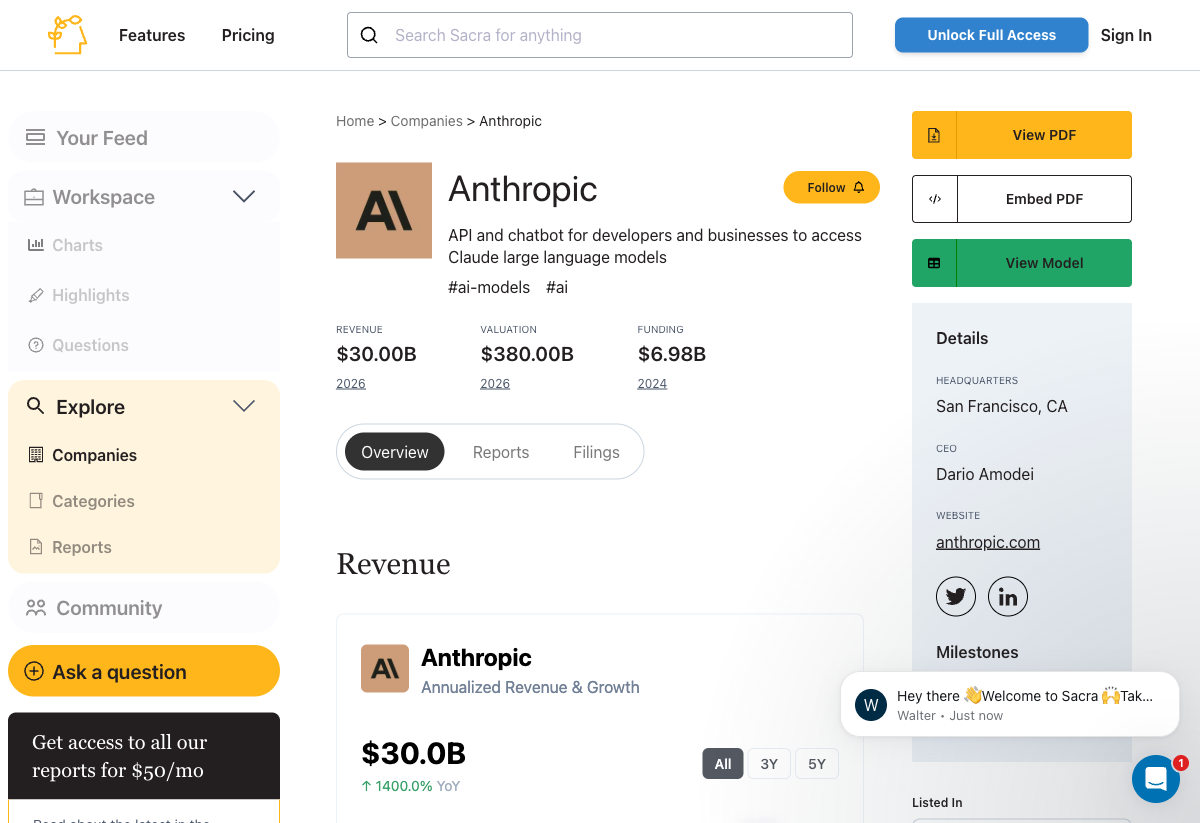
The math is simple. Anthropic generates $30 billion in revenue with 2,500 employees. Google needed 120,000 people to reach that milestone. X/Twitter fired 70% of its staff and the product got better. The era of throwing more bodies at problems is over.
The Peak Employment Revolution
Last month, I walked into a Highland Park insurance agency. Three agents. Handling 400 clients. Five years ago, that would have required at least eight people. Today, AI handles their intake, quoting, and renewal reminders. The agents focus on what humans do best: building relationships and solving complex problems.
This is peak employment in action. Companies stop adding headcount. They add AI instead. It's like having a restaurant that keeps the same number of chefs but gives each one a team of robot sous chefs. The kitchen processes 5x more orders. Quality stays high. Costs stay low.
Brad Gerstner nailed it. We're not replacing people. We're replacing tasks. The boring, repetitive stuff that makes smart people want to quit. Data entry. Document formatting. Initial client screening. Status updates. AI eats these tasks for breakfast.
Think about it like this. You hire a personal trainer. You don't want them counting reps or setting up equipment. You want them designing your program and pushing you to improve. Same with professional services. Clients don't pay for data entry. They pay for expertise, judgment, and relationship.
The small firms that figure this out first will dominate their markets. While big competitors struggle with bureaucracy and overhead, nimble teams using AI will move faster, cost less, and deliver better results. It's David vs. Goliath, but David has a machine gun.
At Bace Agency, I've helped 97+ firms make this transition. The pattern is always the same. First, skepticism. Then, small experiments. Finally, complete transformation. The firms that move fast gain an insurmountable advantage. The ones that wait become obsolete.
This isn't coming in five years. It's happening now. In Winnetka. In Lake Forest. In Glencoe. Small professional service firms are quietly building AI-powered operations that big companies can't match. The question isn't whether this will happen. It's whether you'll be leading the charge or playing catch-up.
How Insurance Agencies Transform
Walk into most insurance agencies and you'll see the same thing. Agents buried in paperwork. Phone calls about COI requests. Emails about policy renewals. Manual data entry from application forms. It's like watching someone dig holes with a spoon when there's a bulldozer sitting right there.
Last week, I met with an Evanston agency owner. She was drowning. Three agents spending 60% of their time on administrative tasks. New client onboarding took 4 hours. Certificate of insurance requests sat in email for days. Policy comparisons required hours of manual research.
We implemented AI automation for five key tasks. Claims intake now happens automatically. AI reads emails, extracts key information, and creates claims files in Applied Epic. What took 45 minutes now takes 4 minutes. Policy comparison shopping that used to take 3 hours happens in 15 minutes. AI pulls rates from multiple carriers and builds comparison tables instantly.
3x
More applications processed with same staff
Renewal reminders became automatic. AI checks policy dates, sends personalized emails, and tracks responses. COI processing went from manual nightmare to automated workflow. Client uploads request, AI generates certificate, system emails it back. Zero human intervention unless there's an exception.
Client communication transformed completely. AI handles 80% of routine questions. "When does my policy renew?" "What's my deductible?" "Can you email my COI?" AI pulls data from the management system and responds immediately. After hours, on weekends, during lunch. Always available, always accurate.
The results shocked everyone. Same three agents now handle 400+ clients instead of 200. Revenue doubled. Stress levels dropped. Agents actually enjoy their jobs again. They spend time solving complex coverage needs and building relationships. The boring stuff happens automatically.
Here's what surprised me most. Clients love it. Faster responses. Fewer errors. Better communication. They get human attention when they need it and instant answers when they don't. It's like having a 24/7 customer service team without the overhead.
The competitive advantage is massive. While other agencies promise to "get back to you," this agency delivers answers instantly. While competitors struggle with COI backlogs, these agents process requests in real-time. While others add staff to handle growth, this agency scales infinitely with AI.
One agent told me it changed her life. "I used to dread Monday mornings. Hundreds of emails to sort through. Forms to process. Now I walk in and everything's organized. AI handled the routine stuff overnight. I can focus on helping clients solve real problems."
Law Firms use AI Power
Legal work used to mean armies of associates doing document review. Junior lawyers spending 80-hour weeks reading contracts. Paralegals drowning in discovery requests. Research that took days. Billing that took hours. It was like building skyscrapers with hand tools when power equipment existed.
Three months ago, I worked with a Lake Bluff law firm. Two partners, one associate. They wanted to take on bigger cases but couldn't handle the document volume. Corporate clients needed contract reviews that would take their small team months. They were turning away good business.
We transformed their practice with AI-powered legal research and document drafting. Contract review that used to take 8 hours now takes 45 minutes. AI reads every clause, flags issues, suggests revisions. The associate reviews AI recommendations instead of reading line-by-line. Quality improved because AI never misses standard problems.
Legal research became superhuman. Instead of spending days in Westlaw, AI finds relevant cases in minutes. It reads thousands of decisions, extracts key holdings, and builds research memos. The lawyer reviews, refines, and adds strategy. Research that took a week now happens in a morning.
Document drafting accelerated dramatically. AI generates first drafts of motions, contracts, and letters. Partners review and customize instead of starting from blank pages. A motion that took 4 hours to write now takes 45 minutes to review and perfect. Discovery responses that paralyzed the practice now happen automatically.
Intake became completely automated. Potential clients fill out smart forms that ask follow-up questions based on their answers. AI evaluates case strength, estimates costs, and schedules consultations. Only qualified prospects reach the lawyers. Time-wasters get filtered out automatically.
Billing transformed from monthly nightmare to automated process. AI tracks time across all systems, categorizes activities, and generates detailed invoices. Partners review and send instead of reconstructing their month from memory. Client communication improved because bills arrive faster with better detail.
The results speak for themselves. Same three-person team now handles cases that would have required eight lawyers. Revenue per attorney tripled. Client satisfaction improved because work gets done faster. Partners actually take vacations without the practice falling apart.
One partner called it "getting my life back." She used to work weekends catching up on administrative tasks. Now AI handles the routine work while she sleeps. She spends days in court and client meetings instead of buried in paperwork. The practice grew 300% without adding overhead.
Clients notice the difference immediately. Faster responses to questions. More thorough document review. Better research behind their cases. They're getting big-firm quality from a small-firm team. It's like having a full legal department at boutique prices.
Financial Advisors Scale Without Staff
Financial advisory used to be a numbers game. More clients meant more staff. Portfolio reviews took hours. Compliance reports consumed entire days. Client meetings required extensive prep work. Communication happened one email at a time. Growth meant hiring expensive analysts and support staff.
Two months ago, I met a solo advisor in Kenilworth managing $150 million in assets. Great guy, smart investor, terrible at operations. He spent 40% of his time on administrative work. Portfolio summaries took 3 hours per client. Compliance reports required weekend work. He was maxed out at 80 clients and burning out fast.
We implemented AI across his entire practice. Portfolio analysis became automatic. AI pulls data from Redtail CRM and custodial accounts, analyzes performance, and generates detailed summaries. What took 3 hours now happens in 10 minutes. Risk assessments that required manual calculations now update automatically.
Compliance reporting went from nightmare to non-issue. AI monitors all accounts for unusual activity, tracks disclosure requirements, and generates required reports. The advisor reviews and files instead of building everything from scratch. A process that consumed full days now takes 30 minutes.
5x
More clients served without adding staff
Meeting preparation became effortless. AI analyzes client portfolios, market conditions, and personal financial goals. It generates talking points, identifies opportunities, and suggests portfolio adjustments. The advisor walks into meetings fully prepared instead of frantically reviewing files.
Client communication scaled infinitely. AI sends personalized market updates, rebalancing notifications, and birthday messages. It answers routine questions about account balances and investment performance. Complex questions get routed to the human advisor. Clients get immediate responses to simple questions and expert attention for important decisions.
The transformation was remarkable. Same solo advisor now manages $400 million across 200 clients. Response times improved dramatically. Client satisfaction scores increased. Revenue quadrupled while stress levels dropped. He hired one part-time assistant instead of three full-time analysts.
Prospecting became systematic instead of sporadic. AI identifies ideal prospects in the North Shore market, tracks their financial milestones, and suggests outreach timing. The advisor focuses on relationship building instead of lead generation logistics.
One interesting side effect: clients became more engaged. When they get instant answers to basic questions, they ask more sophisticated ones. The advisor spends less time explaining account balances and more time discussing financial strategy. Conversations improved because the routine stuff happens automatically.
The competitive advantage is massive. While wirehouse advisors struggle with corporate bureaucracy, this solo practice moves at startup speed. While competitors promise quarterly reviews, this advisor provides real-time analysis. While others scale by recruiting more advisors, this practice scales through intelligence consumption.
Your Competitive Advantage Starts Now
Here's what separates winners from losers in the AI revolution. Winners move fast. Losers wait for permission. Winners experiment daily. Losers plan endlessly. Winners focus on results. Losers worry about perfection. The window for competitive advantage is shrinking every month.
I see two types of firms on the North Shore. Type A firms that embrace AI and transform their operations. Type B firms that watch from the sidelines planning their "going digital strategy." By the time Type B firms get started, Type A firms own the market.
The advantage isn't about technology. It's about speed and execution. While big competitors debate AI strategy in committee meetings, small firms implement solutions overnight. While corporate legal departments worry about compliance, solo practitioners automate their client intake. While large advisory firms study AI impact, small practices triple their client capacity.
Think about it like the early internet. Firms that built websites in 1995 looked unprofessional compared to fancy printed brochures. But they learned, improved, and dominated when everyone else finally went online. Same pattern with AI. Early adopters look rough around the edges. But they're learning, improving, and building insurmountable advantages.
The best part about AI automation is that it levels the playing field. A 3-person law firm using AI can match the research capacity of a 30-person firm still doing things manually. A solo financial advisor with AI tools can provide the same quality reporting as a team of analysts. Small agencies can process more applications than large competitors stuck in old workflows.
At Bace Agency, I've helped firms across the North Shore implement these systems. The pattern is always the same. Skeptical partners become AI evangelists. Overwhelmed staff become productivity champions. Stagnant practices become growth engines. The transformation takes 60-90 days, but the results last forever.
Your competitors are making this decision right now. Some are implementing AI automation. Others are waiting. The ones that move fast will capture market share while others struggle with old processes. The question isn't whether AI will transform professional services. It's whether you'll lead the transformation or get left behind.
The window is closing. Every month you wait, competitors gain ground. Every week you delay, AI gets better and cheaper. Every day you postpone, clients expect more from firms that deliver instant responses and flawless execution.
Ready to build your competitive advantage? Schedule a free 30-minute AI audit and discover how your North Shore firm can outwork much larger competitors. We'll analyze your current processes, identify automation opportunities, and show you exactly how to implement solutions that work. Don't wait for permission. Don't plan endlessly. Start building your AI-powered advantage today.
Frequently Asked Questions
How can a small firm really compete with large established competitors? +
Small firms using AI automation can process the same volume of work as much larger teams. AI handles routine tasks like data entry, document review, and client communication, allowing small teams to focus on high-value activities. We've seen 3-person law firms match the output of mid-size practices and solo financial advisors serve 5x more clients without adding staff.
What specific tasks can AI automate for professional service firms? +
AI excels at repetitive, rule-based tasks. For insurance agencies: claims intake, policy comparisons, COI processing, renewal reminders. For law firms: legal research, document drafting, contract review, client intake. For financial advisors: portfolio analysis, compliance reporting, client communication, meeting preparation. AI handles the routine work so professionals focus on strategy and relationships.
How long does it take to implement AI automation in a small firm? +
Most implementations take 60-90 days from start to finish. We begin with the highest-impact, lowest-risk processes and expand gradually. Firms typically see productivity improvements within the first 30 days. The key is starting with simple workflows and building complexity over time rather than trying to automate everything at once.
Will AI automation eliminate jobs at my firm? +
AI replaces tasks, not people. Your existing team becomes more productive and can handle more clients without working longer hours. Instead of eliminating jobs, AI typically allows firms to grow revenue without proportionally increasing staff costs. Employees spend time on work they're actually good at instead of repetitive administrative tasks.
What's the ROI of implementing AI automation? +
Firms typically see 3-5x productivity improvements in automated processes within 60 days. A solo financial advisor went from managing $150M to $400M in assets with the same time investment. A 3-person insurance agency now handles 400+ clients instead of 200. The ROI varies by firm size and implementation scope, but most see positive returns within the first quarter.
Related Articles
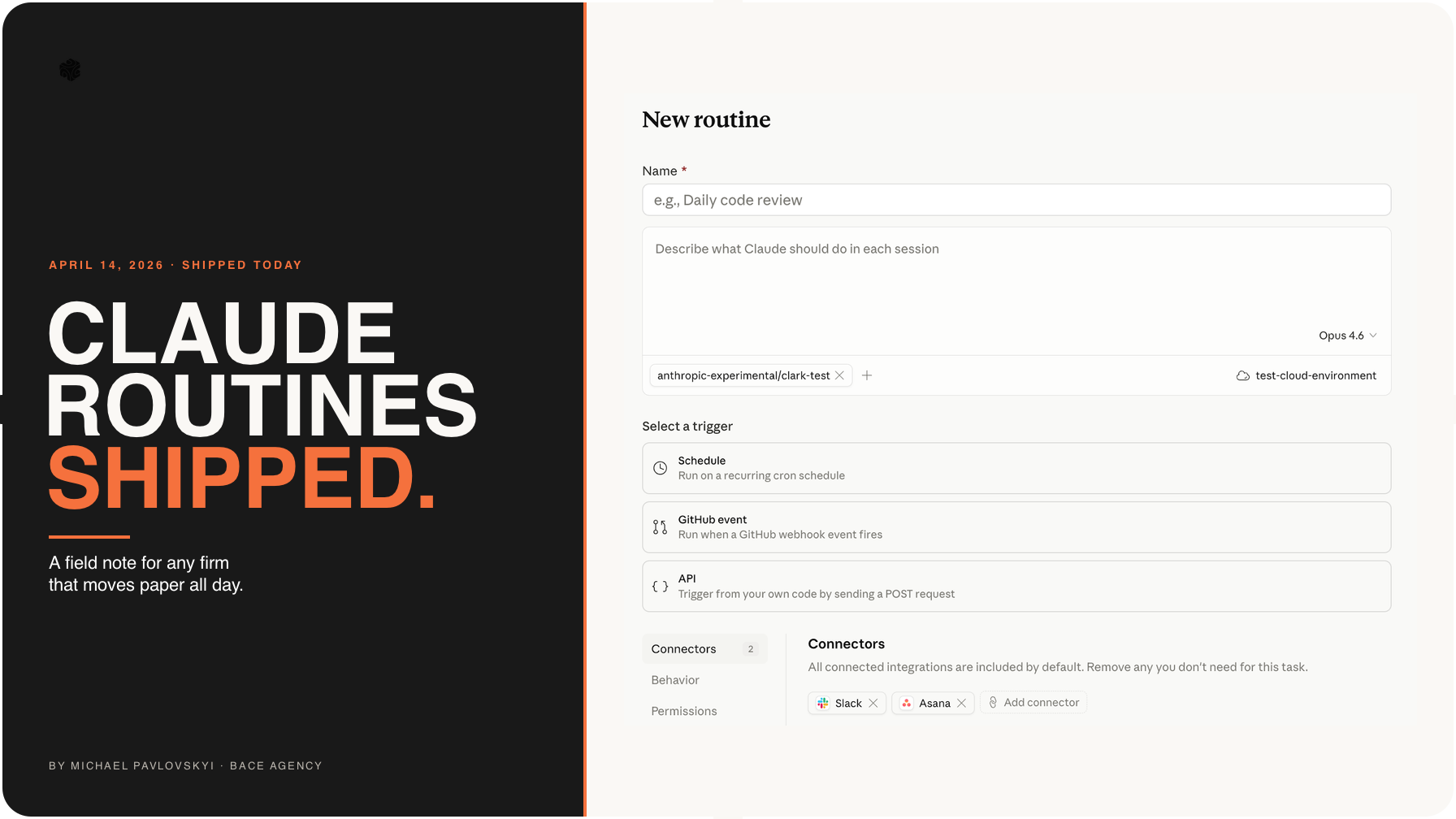
Claude Routines Just Shipped. Here's What It Means.
Anthropic shipped routines yesterday. The coverage is treating it as a developer tool update. That reading is wrong — and if your business is paper, you want the long version.
1,000 Companies Pay $1M+ for AI — Is Your Firm Behind?
Big companies are spending millions on AI while small North Shore firms risk getting left behind. Here's what they're buying and how you can compete for $200-500/month.
Want to see how AI fits in your firm?
Book a free 30-minute AI audit. No obligation, no pitch deck.
Book a Free AI Audit →