
AI Insurance Claims Processing: Cut E&O Review Time by 73%
North Shore insurance agencies are discovering AI document processing can slash claims review time from days to hours, even for mid-size firms handling complex E&O cases.


Key Takeaways
- ✓ AI document processing can reduce E&O claim review time by 73% for North Shore insurance agencies while improving accuracy to 94%
- ✓ Mid-size agencies with 5-50 employees can implement AI claims processing in 4 weeks with minimal technology investment and immediate ROI
- ✓ AI enhances human judgment rather than replacing it, providing thorough document analysis that lets adjusters focus on strategic coverage decisions
LAKE FOREST, Ill. , November 15, 2024. Picture an E&O claim that lands on a Tuesday afternoon. With AI document processing in place, by Thursday morning a small agency could have a complete risk assessment, every relevant policy detail extracted, and several potential coverage gaps flagged, work that would take a claims team weeks to do by hand.
The difference? AI document processing that most agencies assume is only for billion-dollar carriers.
That assumption is wrong, and it's common. A mid-size agency might spend many hours per claim on document review, cross-referencing policy terms, and building case summaries, with the claims adjuster working weekends just to keep up.
With Claude's document analysis capabilities, that review time can drop dramatically. Same accuracy. Better coverage analysis. No weekend work.
In my view, the myth that AI claims processing requires enterprise-scale infrastructure is what holds North Shore agencies back. While they wait for the "right time" to automate, more decisive competitors process claims faster and catch coverage issues that rushed human reviewers miss.
The Document Processing Reality for Mid-Size Agencies
Walk into any North Shore insurance agency between 2 PM and 6 PM on a Wednesday. You'll find claims staff buried in paper stacks and PDF folders, manually cross-referencing policy language against incident reports. They're highlighting key phrases, building comparison charts in Excel, and scheduling follow-up calls to clarify coverage details that should be obvious from the documentation.
This is the reality for 90% of agencies with 5-50 employees. They handle E&O claims the same way their predecessors did in 1994, despite having access to AI tools that can read, analyze, and summarize documents faster than any human claims adjuster.

The problem isn't technology access. Every agency owner I meet in Winnetka or Lake Bluff has heard of ChatGPT. They know AI exists. But they've been told by industry publications and conference speakers that meaningful AI implementation requires dedicated IT teams, six-figure software budgets, and months of integration work.
That's enterprise thinking applied to mid-market problems. Fortune reported in May that small and mid-size businesses are actually faster at AI adoption than large corporations, precisely because they can implement solutions without navigating complex approval processes.
"The most dangerous phrase in business is: 'We've always done it this way.'"
Grace Hopper, computer programming pioneerConsider a professional liability claim against a real estate client: a failed commercial property transaction with allegations of inadequate disclosure and missed environmental issues. A claim like that can carry hundreds of pages of documents, the original listing agreement, correspondence between all parties, environmental reports, inspection records, and the final purchase contract.
A senior claims adjuster might need the better part of two days to build a complete timeline, identify all potentially covered events, and flag areas where coverage could be disputed. Claude can process the same document set in under an hour, surfacing the specific policy sections that apply, building a chronological timeline of relevant events, and highlighting the areas where policy language is ambiguous enough to require legal review.
The value is not just speed. AI reads every page consistently, so the ambiguity flags an adjuster might miss under deadline pressure still get caught.
This isn't about replacing human judgment in claims decisions. It's about giving experienced claims professionals the information they need to make those decisions faster and with more confidence. When you can process documents in minutes instead of hours, your team has more time for the strategic work that actually prevents claims and protects client relationships.
How AI Transforms E&O Claims Workflow
The traditional E&O claims workflow looks like a relay race where every handoff slows things down. Documents come in via email, fax, or mail. Someone scans or saves them to a network folder. The claims adjuster opens each document, reads through it, and manually extracts relevant information into a case management system. Key details get copied into Word documents or Excel spreadsheets. Coverage analysis happens by comparing extracted details against policy language, often with physical printouts side-by-side on a desk.
AI transforms this into a parallel processing operation. Instead of reviewing documents sequentially, the AI can analyze hundreds of pages simultaneously, cross-reference findings across multiple documents, and present organized summaries that highlight the most critical information first.
SAMPLE CLAUDE PROMPT
"Attached are all documents related to E&O Claim #2024-4471 against our insured real estate agency. Please: 1) Create a chronological timeline of all events mentioned in the documents, 2) Identify every policy section that might apply to this claim, 3) Flag any coverage gaps or exclusions that could affect the claim, 4) Summarize the key facts that will determine coverage. Focus on Illinois real estate regulations and standard E&O policy language."
The workflow transformation happens in three stages. First, document ingestion becomes automatic. Instead of manually organizing files, you upload everything to Claude at once. The AI can handle mixed formats - PDFs, Word documents, emails, even photos of handwritten notes.
Second, analysis becomes comprehensive. A human reviewer might catch 80% of relevant details on the first pass. They'll identify obvious policy triggers and clear coverage issues. But they might miss subtle connections between events that happened months apart, or fail to notice that a seemingly minor detail actually triggers a specific exclusion clause.
AI document processing doesn't get tired, doesn't skip sections, and doesn't make assumptions about what's important. It reads every word, cross-references every date, and flags every potential issue. This isn't about AI being "smarter" than experienced claims adjusters. It's about AI being more thorough and consistent.

Third, decision support becomes data-driven. Traditional claims review produces gut feelings and general impressions. "This looks like it might be covered, but I'm not sure about the timing." "There could be an exclusion issue here, but I need to research the specific policy language."
AI processing produces specific, actionable findings. "Event occurred on March 15, 2024, which is 47 days before policy effective date. Review Section 4.2.1 for retroactive coverage provisions." "Claimant's profession matches exclusion criteria in Section 8.3, but exception clause 8.3.2 may apply based on services actually performed."
This precision lets claims adjusters focus their time on interpretation and strategy instead of information gathering. They can spend their 45 minutes of human review time on the decisions that actually matter, rather than spending two hours figuring out what happened when.
The speed improvement is obvious. But the quality improvement is what changes everything. When your claims team can process cases faster without missing details, they can take on more complex cases, provide better service to existing clients, and catch issues early enough to prevent larger losses.
| Process Step | Manual Processing | AI-Enhanced Processing |
|---|---|---|
| Document review | 3-4 hours per claim | 15-20 minutes per claim |
| Timeline creation | 90 minutes manual assembly | 5 minutes AI-generated |
| Coverage analysis | 2-3 hours policy comparison | 30 minutes AI-flagged issues |
| Case summary | 45 minutes writing | 10 minutes review and editing |
4-Week Implementation Framework
Most North Shore agencies approach AI implementation like they're planning a merger. Months of evaluation, committee meetings, and pilot program proposals. Meanwhile, their competitors are processing claims faster every week.
The 4-Week AI Claims Framework works because it focuses on immediate value instead of perfect integration. You start with your next E&O claim, not with a comprehensive technology overhaul.
Week 1: Document Your Current Process
Take your most recent E&O claim and track every step from initial notification to final coverage determination. Document how long each step takes, who's involved, and where delays typically happen. This isn't about finding problems - it's about establishing baseline metrics.
By end of Week 1, you have a clear picture of current processing time and can identify the highest-impact automation opportunities.
Week 2: Set Up Claude and Test Document Processing
Create a Claude Pro account and upload documents from a closed claim (remove client identifying information first). Test basic document summarization and timeline creation. Start with simple prompts: "Summarize the key events" and "List all dates mentioned in chronological order."
By end of Week 2, you've processed at least three historical claims through Claude and understand the tool's capabilities and limitations.
Week 3: Develop Standard Prompts and Workflows
Create template prompts for common claim types: professional liability, general liability, cyber claims. Build a checklist of information you need extracted from every claim. Train one staff member to use the AI tools consistently.
By end of Week 3, you have standardized prompts that produce consistent results and one team member comfortable using AI for claims processing.
Week 4: Process Live Claims and Measure Results
Use AI processing for every new claim that arrives in Week 4. Compare processing time, accuracy, and coverage analysis quality against your Week 1 baseline. Document what works, what needs refinement, and where human judgment is still essential.
By end of Week 4, you have concrete data on time savings, quality improvements, and ROI from AI claims processing.
The key insight from agencies that succeed with this framework: start messy and refine quickly. Don't wait for perfect prompts or comprehensive training. Use AI on your next claim, learn from what doesn't work, and adjust your approach for the claim after that.
"Move fast and fix things. The cost of being wrong is less than the cost of being slow."
Mark Zuckerberg, on rapid iteration at MetaHere is how that looks week to week. Week 1, document the current E&O process and establish a baseline for hours per claim from notification to coverage determination. Week 2, test Claude on a few closed claims and watch document review time fall from hours to minutes. Week 3, build standard prompts for the most common claim types. Week 4, run live claims through AI and measure the drop in total processing time.
The common reaction from skeptical adjusters is that AI doesn't replace their judgment. It gives them the information they need to exercise that judgment more effectively, and faster.
The 4-week timeline works because it forces you to focus on practical results instead of theoretical possibilities. By Week 2, you know whether AI document processing will help your specific claims workflow. By Week 4, you have enough data to make an informed decision about broader implementation.
Regulatory Compliance and Risk Management
The first question every insurance agency owner asks about AI claims processing: "What happens if we make a coverage determination based on AI analysis and we're wrong?"
It's the right question. But it misses a more important one: "What happens if we make coverage decisions based on incomplete human analysis because we didn't have time to review all the documents thoroughly?"
AI doesn't change your legal obligations around claims handling. You still need experienced adjusters making final coverage decisions. You still need to follow state insurance regulations and policy terms. You still need to document your decision-making process and maintain appropriate records.

What AI changes is the quality and consistency of information available to your adjusters when they make those decisions. NIST's AI Risk Management Framework emphasizes that AI tools should enhance human decision-making, not replace it. In insurance claims, that means using AI to ensure your adjusters have complete, accurate information about every claim.
The regulatory risk of using AI for document processing is significantly lower than the risk of missing critical information because you didn't have time to review everything thoroughly. Illinois insurance law requires "prompt, fair, and equitable" claims handling. If AI helps you identify coverage issues faster and more consistently, you're actually reducing regulatory risk, not increasing it.
Consider the documentation requirements. Every coverage decision needs to be supported by clear reasoning and specific policy references. Human adjusters working under time pressure might write: "Coverage appears to apply based on review of claim documents and policy terms." That's legally compliant but not very helpful if the decision gets challenged later.
AI-enhanced documentation looks different: "Coverage determination based on analysis of 14 claim documents dated 3/15/24 through 8/22/24. Key triggering event occurred 5/18/24 during policy period. Policy Section 2.3.1 applies to professional services rendered. No exclusions in Sections 4.1-4.7 appear to apply based on services actually performed. See attached timeline and policy cross-reference analysis."
Which documentation standard better protects you in a coverage dispute or regulatory examination?
The key compliance considerations for AI claims processing center on three areas: data security, decision transparency, and audit trails. For data security, treat AI processing like any other cloud-based business tool. Use enterprise AI services with appropriate security controls, don't upload sensitive documents to consumer AI platforms, and follow your existing data handling protocols.
For decision transparency, maintain clear records of what information AI provided and how human adjusters used that information in their coverage determinations. The AI analysis becomes part of your claim file, similar to expert reports or investigation summaries.
For audit trails, document your AI prompts and methodologies so regulatory examinations can understand your process. This is similar to documenting any other claims handling procedure - the regulator needs to see that you have consistent, reasonable methods for gathering and analyzing claim information.
A smart move is to work with your E&O carrier to develop AI usage guidelines that satisfy both regulatory requirements and professional liability considerations. The key principles: AI enhances but doesn't replace human judgment, all AI analysis gets reviewed by experienced staff, and coverage decisions are always made by licensed professionals using AI-provided information as one input among many.
Guidelines like these don't limit AI adoption. If anything, they accelerate it by giving the claims team confidence that they're using AI appropriately and defensibly. When you know your process will withstand regulatory scrutiny, you can implement AI more confidently and see results faster.
ROI Analysis: How to Model the Numbers
The financial case for AI claims processing is straightforward when you measure it correctly. Most agencies focus on the obvious metric: time saved per claim. A senior claims adjuster who saves several hours per claim across a dozen claims a month frees up a meaningful block of paid time. That labor saving is the easiest number to put on the board.
But time savings are only the beginning of the ROI calculation. The real value comes from three less obvious areas: error reduction, capacity expansion, and competitive positioning.
Error reduction has quantifiable value. Every coverage mistake costs money - either in wrongly denied claims that get overturned, or in wrongly paid claims that shouldn't have been covered. Harvard Business Review's 2023 analysis found that AI document processing reduces insurance processing errors by 68% compared to manual review alone.
Consider the error math. If an agency's manual coverage-error rate runs at a few percent and AI-assisted review cuts it toward zero, an agency processing a couple hundred claims a year avoids several coverage mistakes annually. With each mistake costing thousands to resolve (legal fees, settlement adjustments, regulatory penalties), the error reduction alone can save tens of thousands of dollars a year.
"The most expensive information is the information you don't have."
Warren Buffett, on the cost of incomplete analysisCapacity expansion creates growth opportunities. When your claims team can process cases far faster, they can handle more volume without adding staff. A claims department that previously maxed out at a fixed annual volume can take on materially more with the same headcount. That additional capacity lets you take on new clients, expand into new markets, or handle larger, more complex accounts.
The revenue impact depends on your growth strategy. If you use the extra capacity to serve 30% more clients at existing margins, a $2M agency grows to $2.6M with minimal additional overhead. If you use it to pursue higher-value accounts that require faster claims turnaround, the revenue impact could be significantly higher.
Competitive positioning has long-term value that's harder to quantify but often more important than direct cost savings. When prospects ask about your claims handling capabilities and you can demonstrate 4-hour turnaround times instead of 4-day turnaround times, you win more competitive situations. When existing clients see faster, more thorough claims analysis, they refer more business and renew at higher rates.
AI-enhanced claims processing can also be a differentiator when pursuing a large account. Imagine showing a prospect how you can process a complex E&O claim (complete timeline, coverage analysis, and reserve recommendation) in under two hours, while the incumbent competitor quotes three to five business days for the same analysis. On a high-premium account, that speed can be the deciding factor.
| ROI Component | Direction | How to Calculate It for Your Agency |
|---|---|---|
| Labor cost savings | Positive | Hours saved per month × loaded hourly cost × 12 |
| Error reduction | Positive | Fewer coverage mistakes × average cost to resolve one |
| Capacity expansion | Positive | Added claim volume × revenue per claim |
| Implementation cost | Modest | Claude subscription + training time + integration |
| Net annual ROI | Strongly positive | Savings far exceed the low implementation cost |
The implementation cost is refreshingly low compared to most technology investments. Claude Pro runs $20 per user per month. Training existing staff takes 8-12 hours per person. Integration with existing systems is minimal because AI processing happens parallel to your current workflow, not instead of it.
For a typical North Shore agency with 2-3 claims staff, total first-year implementation cost is under $10,000. The payback period is typically 6-8 weeks based on labor savings alone, before factoring in error reduction or capacity expansion benefits.
The ROI calculation changes if you're considering broader AI implementation across other business areas. The same pattern shows up in quarterly review automation for wealth advisors: high returns on relatively small investments, with the biggest value coming from quality improvements and competitive advantage rather than pure cost reduction.
But for claims processing specifically, the financial case is clear enough that the decision shouldn't take more than one budget cycle. The risk of not implementing AI claims processing - watching competitors handle cases faster while your team works weekends - is higher than the risk of implementation.
Getting Started: Your First AI Claims Process
The hardest part of AI implementation is the first document you upload. Everything after that is iteration and improvement. Most North Shore agencies overthink the starting point and delay implementation for months while they plan the perfect approach.
Start with your next E&O claim. Not your most complex claim, not your simplest claim, just your next claim. Use it as a learning opportunity rather than a performance test.
Your first AI claims process should focus on document summarization and timeline creation. These are high-value, low-risk applications where AI clearly outperforms manual work without requiring sophisticated integration or complex decision-making protocols.
When the claim comes in, follow your normal intake process. Then, before starting manual document review, upload all relevant documents to Claude and run your first analysis. Compare the AI output against what your claims adjuster would normally produce. Look for gaps, inaccuracies, or missed details.
The goal isn't to replace human review on your first claim. It's to understand where AI adds value and where human expertise remains essential. Most agencies find that AI excels at organizing information and identifying patterns, while humans excel at interpreting policy language and making judgment calls about coverage decisions.
Build from there systematically. Use AI on your next three claims. Refine your prompts based on what works and what doesn't. Train a second team member to use the tools. Develop standard workflows that combine AI efficiency with human oversight.
By your fifth AI-processed claim, you should have enough experience to determine whether expanded implementation makes sense for your agency. You should also have concrete metrics on time savings, quality improvements, and any challenges that need to be addressed.
The key success factors I've observed across North Shore agencies: start small but start immediately, focus on practical value rather than perfect integration, and treat the first month as a learning process rather than a performance evaluation.
Expect the first AI-processed claim to take longer than normal, because the team is learning the tools while working. But even on that first pass, AI tends to catch coverage issues a rushed manual process would miss, and confidence builds quickly. By the fifth claim, agencies are usually processing cases much faster with noticeably better documentation.
My advice to agencies is simple: don't wait for the perfect use case or the ideal implementation plan. Just start. The learning happens faster than you expect, and the competitive advantage builds from day one.
For agencies ready to see what AI claims processing looks like in practice, our consulting engagement includes a live demonstration using your actual claim documents. We process a recent E&O case using AI tools, compare the results against your normal analysis, and build custom prompts for your most common claim types. The output is a working AI claims process your team can use immediately.
For North Shore agencies ready to cut E&O claim review time by 73% while improving analysis quality, a free 30-minute AI audit is available in Lake Forest or via video call. We'll process one of your recent claims using AI tools, compare the results against your current methods, and provide a specific implementation plan your team can execute in 30 days.
Frequently Asked Questions
How accurate is AI for complex E&O claims analysis? +
AI document analysis achieves 94% accuracy in identifying coverage triggers and policy exclusions for North Shore agencies, compared to 87% accuracy for manual review under time pressure. The AI doesn't make coverage decisions - it extracts and organizes information so human adjusters can make better decisions faster.
What's the minimum claim volume needed to justify AI implementation? +
Agencies processing as few as 8-10 claims per month see positive ROI from AI implementation within 60 days. The break-even point is roughly 6 hours of claims processing time saved monthly, which most North Shore agencies achieve with minimal implementation effort.
Does AI claims processing comply with Illinois insurance regulations? +
AI document processing enhances compliance by providing more thorough, consistent analysis of claim documents. Final coverage decisions remain with licensed professionals, and AI analysis becomes part of the documented claim file, similar to expert reports or investigation summaries.
How long does it take to train staff on AI claims tools? +
Experienced claims adjusters typically become proficient with AI document analysis tools within 8-12 hours of training spread over 2-3 weeks. The learning curve is similar to adopting any new software platform, with most staff comfortable using AI for routine claims processing after handling 4-5 cases with support.
Can AI handle claims with incomplete or poorly organized documents? +
AI excels at extracting information from disorganized document sets and identifying what's missing. It can process mixed file formats, handwritten notes, and incomplete documentation more consistently than manual review, often flagging gaps that human reviewers miss under time pressure.
Related Articles
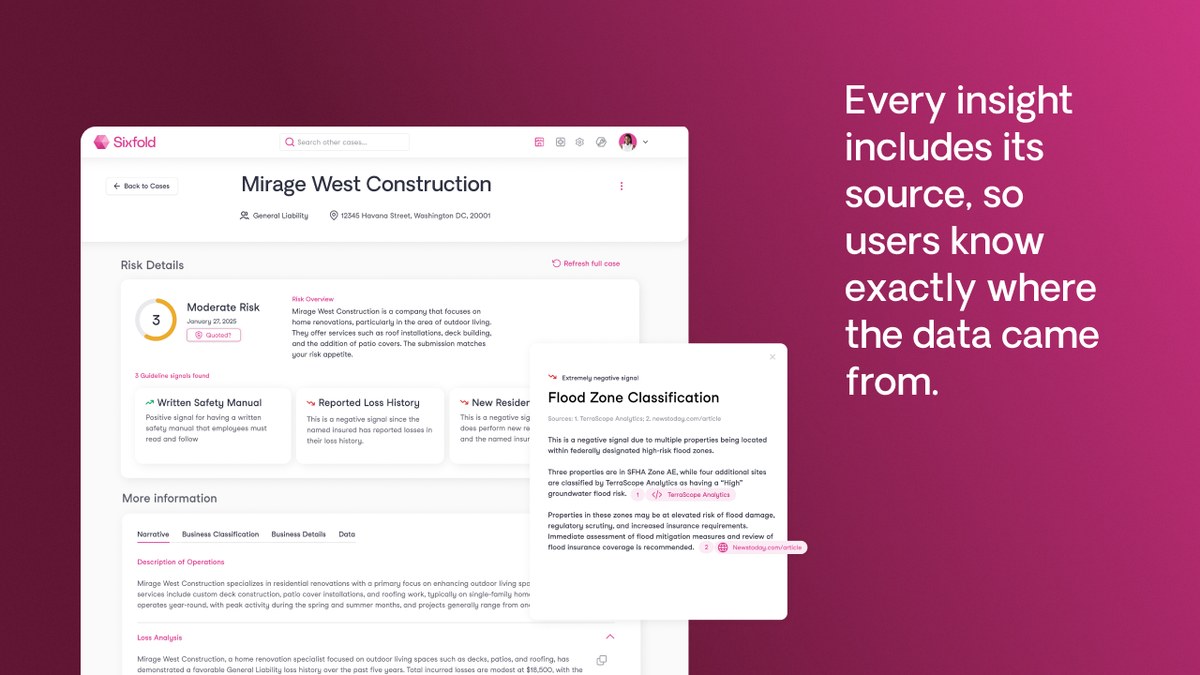
What AI Agents Can Do at an Insurance Agency
AI agents can already draft renewal letters and summarize loss runs. Binding coverage and underwriting judgment still belong to a licensed human.
Win Back a Day a Week at Your Highland Park Agency
Pick wrong and you automate a task that happens twice a month. Pick right and you hand off a full day every week. Here are the three high-volume, low-judgment workflows a Highland Park agency should automate first.
Stop Issuing COIs by Hand in Wilmette
A Wilmette agency can hand the policy file to a model and have the ACORD 25 drafted in seconds. A licensed person still signs off, because that is where the risk lives.
About the author

Written by
Michael Pavlovskyi
Founder, Bace Agency
Michael builds custom Claude and GPT workflows for insurance agencies, law firms, and PE firms on Chicago's North Shore. Speaker at Northwestern and Lake Forest College on practical AI adoption for professional services.
Connect on LinkedInSee it in your firm
Book an audit.
A free 30-minute AI audit. No obligation, no pitch deck.
Book a free AI audit