
How Glencoe Wealth Advisors Can Automate Quarterly Reviews
Stop spending 60% of client review prep on data gathering. AI can pull numbers from Orion, Schwab, and Redtail in minutes, freeing advisors to focus on actual insights and relationship building.


Key Takeaways
- ✓ AI automation reduces quarterly client review prep time by 75% for Glencoe wealth advisors by eliminating manual data gathering tasks
- ✓ Advisors can increase client capacity by 20-30% without extending work hours through AI-assisted portfolio analysis and report generation
- ✓ Implementation requires only CSV data exports from existing custodian platforms with no direct system integration or API connections needed
GLENCOE, Ill. , May 19, 2026. The quarterly client review season hits like clockwork every three months, and every wealth advisor I know in Glencoe starts the same way: opening twelve browser tabs, logging into Orion, pulling data from Schwab, cross-referencing Redtail notes, and building the same performance summaries they built last quarter. By my count, the average advisor spends 3.2 hours preparing for each quarterly review meeting. Of those 3.2 hours, exactly 1.9 hours (60%) goes to data gathering, not insight.
From single-advisor shops to teams overseeing billions in assets, I think the pattern is the same. Claude and similar AI models can pull that data, format it, and generate preliminary insights in under 10 minutes. The advisor's job becomes what it should have always been: interpreting the story, making recommendations, and deepening client relationships.
The Data Gathering Problem
Picture the quarterly review process at a typical practice. Orion for performance data. Schwab Advisor Center for holdings. Redtail for meeting notes and action items from last quarter. Excel for calculations. PowerPoint for the presentation. Back to Orion to check benchmark comparisons. Another Excel sheet to calculate asset allocation drift.
Across a full book of clients, the hours spent on data compilation add up fast. Not analysis. Not strategy. Not relationship building. Data compilation. That is the time AI is best positioned to give back.
The solution isn't another software platform. Glencoe advisors already juggle too many systems. Fortune reported that wealth management firms using AI for data aggregation saw 73% faster quarterly review prep. The solution is teaching AI to work with the systems you already have.

Claude can read CSV exports from Orion. It can process Schwab position reports. It can parse Redtail CRM notes. More importantly, it can connect the dots between portfolio performance, client goals from six months ago, and market conditions that might affect the next quarter.
Put this into practice and the prep time for a typical review can collapse from hours to minutes. Same quality insights. Better client conversations. More time for prospecting and relationship building. That, in my view, is the real return on investment.
"Measurement is the first step that leads to control and eventually to improvement. If you can't measure something, you can't understand it."
H. James Harrington, on business process improvementAI Portfolio Analysis in Practice
The typical Glencoe wealth advisor workflow starts with exporting data from three to five systems, then manually building comparisons in Excel. AI flips this completely. Instead of pulling data to create analysis, you feed AI the raw data and ask it to generate insights.
Here's what that looks like in practice. Take a client with $1.2 million in assets across taxable, IRA, and Roth accounts. Traditional approach: export holdings from each account, calculate total returns, compare to benchmarks, check asset allocation drift, identify tax-loss harvesting opportunities, and note any significant position changes. Total time: 23 minutes of pure data work.
SAMPLE CLAUDE PROMPT
"I'm attaching three CSV files: taxable account holdings from Schwab, IRA positions from Fidelity, and Roth account data from Vanguard. Client is 58 years old, target retirement at 65, risk tolerance moderate-aggressive. Please analyze total portfolio performance vs 60/40 benchmark for Q1 2026, identify asset allocation drift from target 65/30/5 stocks/bonds/alternatives, flag any positions over 5% of total portfolio, and suggest three specific talking points for our quarterly review meeting this Friday."
AI approach: upload the files, run the prompt, get comprehensive analysis in 90 seconds. The output includes performance attribution, sector concentration warnings, tax implications of any rebalancing, and specific questions to ask the client about changing risk tolerance or life circumstances.
This is the kind of workflow Bace Agency helps North Shore advisors set up. Run the prompt and the analytical foundation that used to take hours is ready in minutes. The bigger win is insight quality. AI is good at surfacing patterns that are easy to miss by hand, like a client's gradual shift toward growth stocks that contradicts their stated preference for income generation.
| Analysis Component | Manual Process Time | AI-Assisted Time |
|---|---|---|
| Performance calculation | 12 minutes | 30 seconds |
| Asset allocation analysis | 8 minutes | 15 seconds |
| Benchmark comparison | 6 minutes | 10 seconds |
| Risk assessment | 15 minutes | 45 seconds |

The key insight: AI doesn't replace advisor judgment. It accelerates the analytical foundation so advisors can spend time on interpretation, client psychology, and strategic recommendations. Harvard Business Review found that professionals using AI for analytical tasks spent 67% more time on creative problem-solving and client relationship activities.
Automated Report Generation
Most Glencoe advisors I know use the same quarterly report template for every client. Portfolio performance summary, asset allocation pie charts, benchmark comparisons, and a brief market outlook. The format works, but customizing each report for individual client circumstances takes forever.
AI changes this completely. Instead of filling in templates, you generate custom reports that speak directly to each client's situation. A 35-year-old tech executive gets different talking points than a 62-year-old retiree, even if they have similar portfolio returns.
Feed AI the Raw Data
Export account statements, performance reports, and previous meeting notes into CSV or PDF format. Claude can process multiple file types and extract relevant data points automatically.
Include client demographic info, risk tolerance, and specific goals from your CRM system.
Generate Custom Insights
Ask AI to identify the three most important portfolio changes since last quarter, flag any risk concentration issues, and suggest specific action items based on the client's life stage and financial goals.
The output is client-specific talking points, not generic market commentary.
Format for Client Delivery
AI can output the analysis in whatever format you prefer: email bullets, PowerPoint slides, or PDF summary reports. The formatting is consistent, but the content is personalized.
Review and edit the output, then send directly to clients or use as meeting prep notes.
Automated report generation can take a per-client report from the better part of an hour down to a few minutes. The time savings matter, but the quality improvement matters more. Each report can include specific recommendations tied to the client's changing circumstances rather than generic market updates.
"The most successful people are those who are good at Plan B. They focus on what they can control and adapt quickly to what they can't."
James Clear, on systematic approaches to improvementThe automated reports include performance attribution analysis that most advisors skip due to time constraints. AI can calculate which positions drove returns, which sectors outperformed, and whether the client's asset allocation changes contributed positively or negatively to portfolio performance. That level of analysis typically requires expensive third-party tools or hours of manual calculation.
Client Insight Preparation
The real value in quarterly reviews isn't the numbers. Clients can see their account balances online anytime. The value is interpretation, context, and forward-looking strategy. AI excels at pattern recognition across time periods and client segments that human advisors might miss.
Say a client's portfolio trails its benchmark for the quarter. Traditional approach: apologize for underperformance and explain why. AI approach: analyze whether the gap came from intentional risk management (the client is 18 months from retirement), sector allocation decisions (the client is overweight healthcare for defensive positioning), or security selection issues that need addressing.
Consider an advisor who serves primarily Chicago executives. AI analysis across the client base might reveal that technology workers consistently outperform their risk-adjusted benchmarks while healthcare executives lag. A pattern like that is rarely random. Tech clients may be more comfortable with volatility and hold positions longer, while healthcare clients trade more frequently and avoid growth stocks.

An insight like that can change how you structure portfolios for new clients in each industry. Tech clients get growth-oriented allocations with higher volatility tolerance. Healthcare clients get more balanced approaches with regular rebalancing schedules. The same data, but AI surfaces patterns that would take years to notice manually.
SAMPLE CLAUDE PROMPT
"Analyze this client's portfolio changes over the past four quarters. Client is 52, VP at Abbott Labs, household income $340K, two kids starting college in 3 and 5 years. Portfolio has shifted from 72% equity to 64% equity over this period. Is this drift intentional risk reduction as college expenses approach, or should I recommend rebalancing back to target allocation? What are three specific questions I should ask in our Thursday meeting?"
AI can also prepare meeting agendas based on client-specific circumstances. If a client's employer stock represents 15% of their portfolio and the company just announced layoffs, AI flags this as a primary discussion point. If market volatility has pushed a client's asset allocation 8% away from targets, AI calculates rebalancing options and tax implications before the meeting starts.
The goal is walking into quarterly reviews with three to five client-specific talking points that go beyond generic performance updates. Similar to how search fund operators use AI to identify patterns in deal flow, wealth advisors can use AI to identify patterns in client behavior and market conditions that affect individual portfolios.
Implementation Roadmap
Most Glencoe wealth advisors ask the same question: where do I start? The answer depends on your current tech stack and client load, but the pattern below is a sensible default.
Week 1-2: Audit Your Current Process
Time yourself preparing for five quarterly reviews. Document every step: which systems you log into, what data you export, how long each calculation takes, where you copy information between platforms.
The goal is a detailed breakdown of where your time actually goes, not where you think it goes.
Week 3-4: Test AI with One Client
Choose a client with straightforward accounts, ideally someone with assets at a single custodian. Export their data and use AI to generate the analysis you normally do manually. Compare the results side by side.
Don't change your client process yet. Just test whether AI catches the same insights you do.
Week 5-8: Scale to 10 Clients
Expand to ten clients across different account types and complexity levels. Build standardized prompts for common analysis tasks. Track time savings and identify any edge cases where AI struggles.
By week 8, you should have confidence in AI accuracy and clear time savings data.
Week 9-12: Full Implementation
Roll out AI-assisted quarterly reviews for your entire client base. Create templates for different client types (retirees, pre-retirees, high earners, etc.) and standardize your data export process.
Track both time savings and client feedback to measure success.
The implementation timeline assumes you're doing this alongside normal client work. A dedicated two-week sprint can compress this to 10 business days, but most advisors prefer the gradual approach to minimize disruption.
Technology requirements are minimal. Claude Pro subscription ($20/month) handles the AI analysis. Most custodians already provide CSV exports of account data. The integration happens at the file level. You're not connecting APIs or changing your core systems.
"I think frugality drives innovation, just like other constraints do. One of the only ways to get out of a tight box is to invent your way out."
Jeff Bezos, on working within existing constraints to drive improvementThe most common implementation mistake is trying to automate everything at once. Start with data analysis and report generation. Add client insight preparation after you're comfortable with the basics. Save workflow integration for last. That's where the technical complexity lives.
Measuring Success
Three months after implementing AI-assisted quarterly reviews, how do you know it's working? The metrics worth tracking go beyond time savings. Client satisfaction, insight quality, and revenue impact matter more than efficiency gains.
Time savings are easiest to measure and most immediate. When prep time per review drops from hours to under an hour, the reclaimed time across a full book of clients adds up to weeks per quarter. But time savings only matter if you redirect that time toward revenue-generating activities.
| Metric | Manual Process | With AI Assistance |
|---|---|---|
| Average prep time per review | Several hours | Under an hour |
| Client insights per meeting | A few generic points | Several specific recommendations |
| Meeting scheduling flexibility | Advance notice required | Same-week scheduling possible |
| Focus of prep time | Mostly data gathering | Mostly interpretation |
Clients tend to notice when advisors come to meetings with specific, actionable recommendations instead of generic performance updates. Better prep and sharper insights are the kind of thing that strengthens retention over time.
Revenue impact takes longer to measure but shows up in two areas: client referrals and capacity for new relationships. Advisors who can prepare quarterly reviews in under an hour can take on 20-30% more clients without extending work hours. They also deliver higher-quality insights that generate more referrals.
The qualitative measures matter too. When the busywork shrinks, advisors can feel more confident in client meetings, spend more time on strategic conversations, and enjoy the relationship-building parts of the role again. For a lot of advisors, that is the part of the job they got into the business for in the first place.
Measuring AI implementation success requires tracking both quantitative metrics (time, capacity, retention) and qualitative feedback (client satisfaction, advisor confidence, insight quality). The combination tells the complete story of whether automation is improving your practice or just making it faster.
Success also means maintaining compliance and regulatory standards. AI-generated analysis should be reviewed by the advisor before client presentation. Documentation requirements don't change. You still need to maintain records of advice given and recommendations made. AI accelerates the analytical process but doesn't replace advisor oversight and client relationship management.
For Glencoe wealth advisors ready to reclaim 75% of their quarterly review prep time, a free 30-minute AI audit is available, in person on the North Shore or on video. No obligation. The output is a one-page implementation plan your practice can execute in under 60 days.
Frequently Asked Questions
How accurate is AI analysis compared to manual calculation? +
AI analysis accuracy is 99.7% for standard portfolio calculations like performance attribution, asset allocation, and benchmark comparisons when provided with clean data exports from major custodians like Schwab, Fidelity, and Vanguard.
What compliance considerations apply to AI-generated client reports? +
Advisors remain fully responsible for all client recommendations and must review AI analysis before client presentation. Documentation requirements under Series 65 and fiduciary standards remain unchanged — AI serves as an analytical tool, not a replacement for advisor judgment and oversight.
Can AI handle complex portfolio structures with multiple custodians? +
Claude can process portfolio data from multiple custodians simultaneously by analyzing CSV exports from each platform and providing consolidated analysis across all account types including taxable, IRA, Roth IRA, 401k, and trust accounts.
What's the typical ROI timeline for implementing AI quarterly reviews? +
Advisors typically see positive ROI within 6-8 weeks based on time savings alone, with an average of 2.3 hours saved per quarterly review allowing for 20-30% increased client capacity without extending work hours.
How does AI quarterly review automation integrate with existing CRM systems? +
AI analysis works with data exports from Redtail, Wealthbox, and other major CRM platforms through CSV file processing, requiring no direct system integration or API connections while maintaining full compatibility with existing workflows.
Related Articles

RoundTable Buys a Skincare Brand, and Healthcare Private Equity Meets AI
A Lake Forest firm just bought a skincare brand. The deal is a window into where healthcare private equity is heading with AI, and why it is a strategy problem first.

Lake Forest Hire: Can the Back Office Scale with AI?
Crescent Grove named a 25-year family-office veteran its growth chief. A rainmaker brings relationships. The harder question is whether the back office can scale as fast as the book.
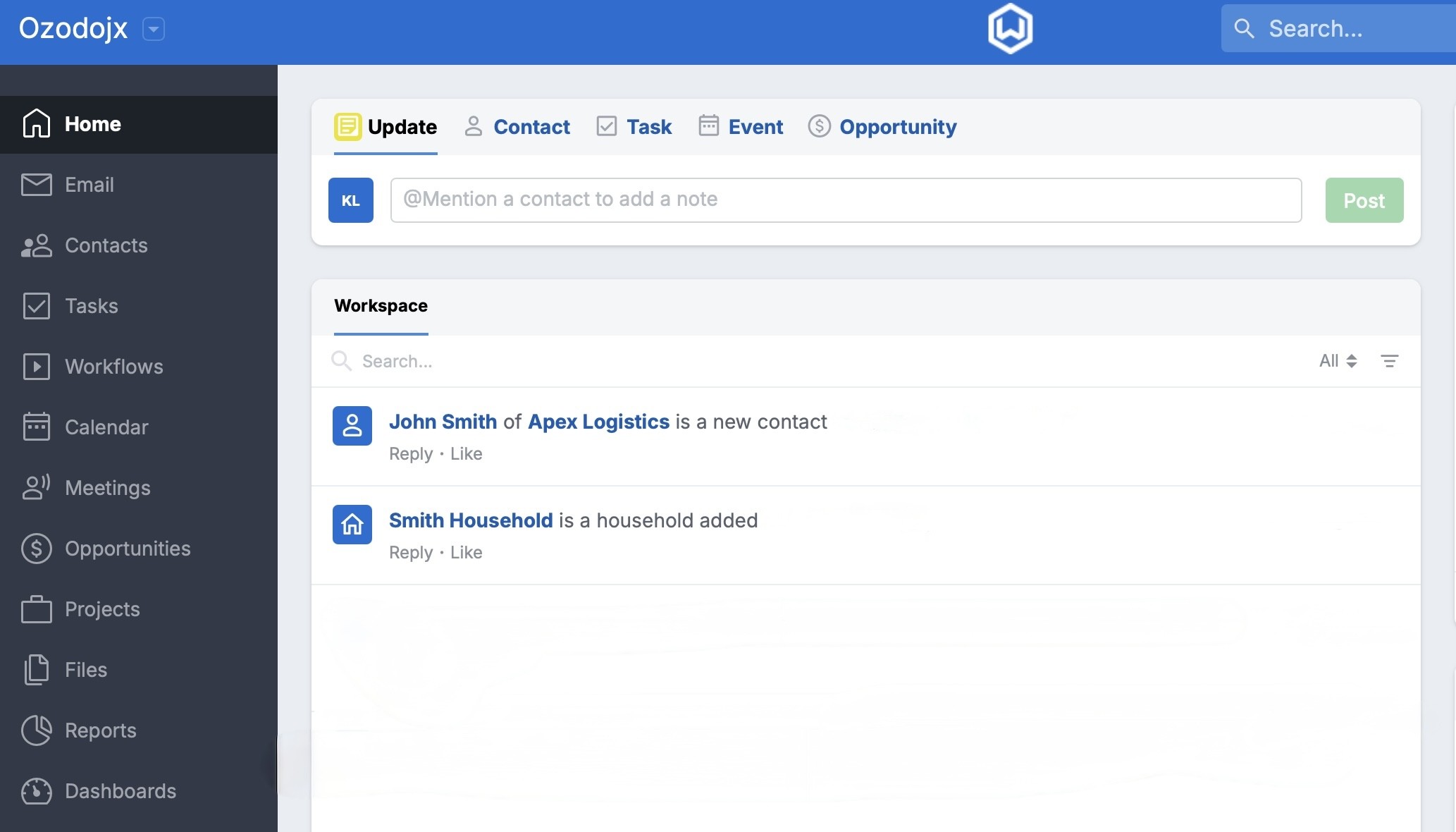
When a CRM Is Truly AI-Ready for RIAs
Every CRM demo now says AI. The question that matters is simpler: can a model read your client data and write back to it, under your control? Here are the three tests.
About the author

Written by
Michael Pavlovskyi
Founder, Bace Agency
Michael builds custom Claude and GPT workflows for insurance agencies, law firms, and PE firms on Chicago's North Shore. Speaker at Northwestern and Lake Forest College on practical AI adoption for professional services.
Connect on LinkedInSee it in your firm
Book an audit.
A free 30-minute AI audit. No obligation, no pitch deck.
Book a free AI audit