
No Hype, Just Building: What LA Tech Week Taught Me About Real AI


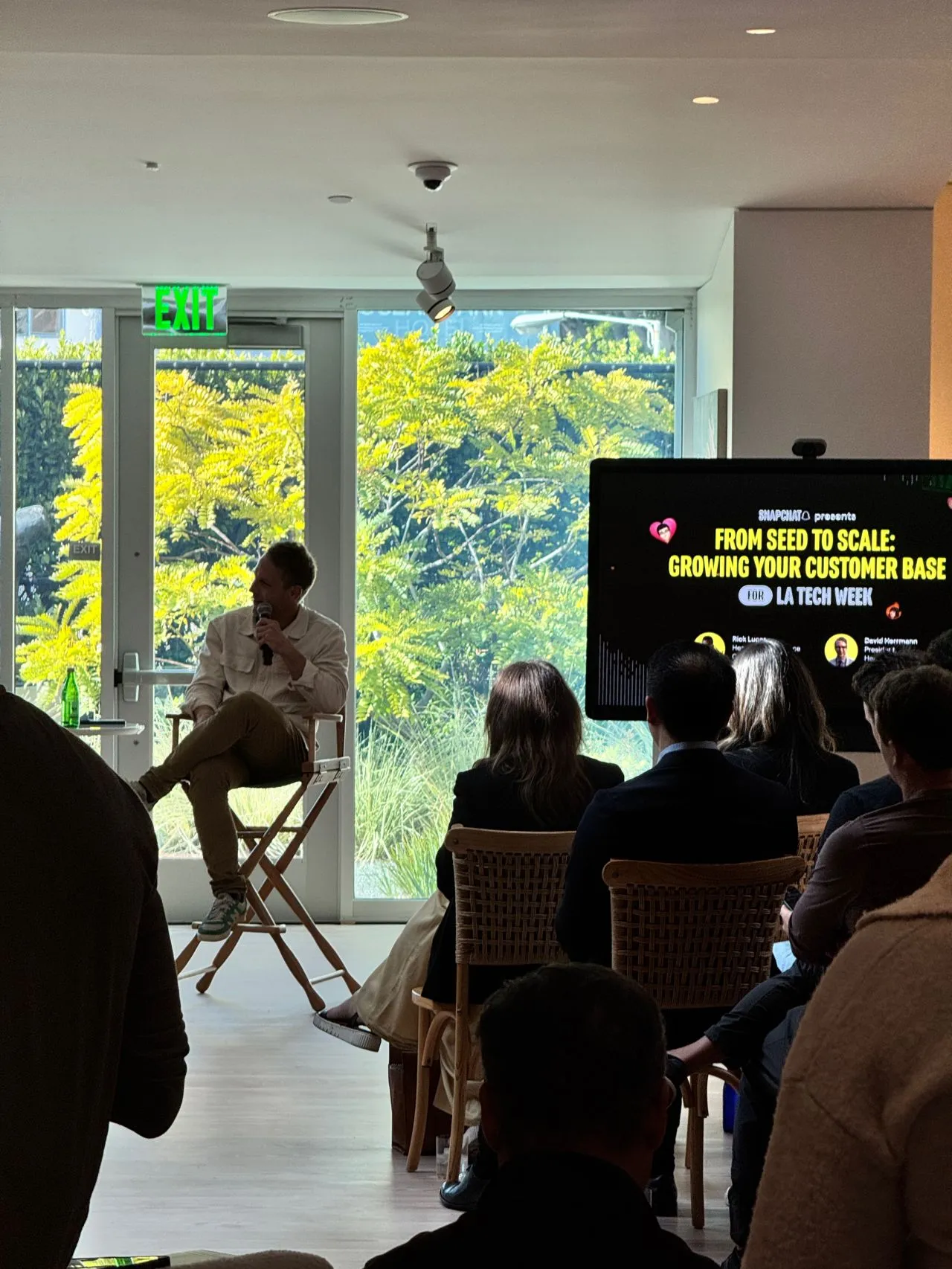
I spent a week in Los Angeles at a16z's LA Tech Week, surrounded by some of the smartest builders in technology. Founders working on healthcare AI. Teams tackling climate tech. Venture capitalists who've backed companies that changed how industries operate. It was, without question, one of the most energizing weeks of my professional life.
But what stuck with me most wasn't the energy or the networking. I kept running into two kinds of people. Builders who could tell you exactly what their tech did. And talkers who had great slide decks and not much else.

I flew back to Chicago with a single phrase repeating in my head: "No hype. Just building." And I realized that the same divide exists right here on the North Shore, in every conversation I have with insurance agency owners, law firm partners, and financial advisors about AI. Some are ready to build. Some are still caught in the hype.
Here's what I learned about the difference, and what it means for your firm.
The Hype vs. Reality Divide
At LA Tech Week, I talked to probably a hundred people about what they were building. The ones who impressed me shared a common trait: they could describe their technology in terms of the specific problem it solved, for a specific person, in a specific situation. There was no hand-waving. No "we're disrupting X." Just clear, concrete explanations of how their work made someone's life better.
The people who lost me? Same thing in reverse: everything was abstract. "We're leveraging AI to transform [industry]." "Our platform uses machine learning to optimize [vague process]." "We're building the future of [category]." It all sounded impressive until you asked the follow-up question: "What does that actually do for the person using it?" And the answers got fuzzy.
I see the same divide playing out in the professional services space. AI vendors are pitching North Shore firms with the same kind of abstract promises. "AI-powered client management." "Intelligent automation platform." "Next-generation workflow optimization." These phrases sound sophisticated. They mean almost nothing.
The question you should always ask is: what does this specifically do for my firm, for my team, on a regular Tuesday?
What the Best AI Companies Have in Common
The founders I connected with at a16z events, the ones actually building things that worked, operated according to three principles that I've adopted as the foundation of how Bace Agency works.
Principle 1: Smart Automation
"Smart automation" was a phrase that kept coming up in conversations with the most impressive builders. The key word is "smart," meaning the automation understands context, handles exceptions, and makes decisions, rather than just blindly following a script.
In the healthcare AI work I was involved with, smart automation meant building systems that could fight waste, fraud, and abuse in the autism therapy industry. Not by applying simple rules (flag any billing over X amount) but by understanding the nuances of session quality, provider behavior patterns, and patient outcomes. The AI was smart enough to tell the difference between a legitimate anomaly and actual fraud.
For your firm, smart automation means the same thing. An AI phone answering system that just plays a recorded message and takes a voicemail isn't smart. An AI phone answering system that understands the caller's needs, asks relevant qualifying questions, captures the right information, and routes the inquiry to the correct person: that's smart automation.
A document processing system that just converts PDFs to text isn't smart. A system that reads the document, classifies it by type, extracts the relevant data, populates the right fields in your management system, and flags anything that doesn't match the expected format: that's smart automation.
The difference is enormous, and it's the difference between AI that saves your team a few minutes and AI that fundamentally changes how your firm operates.
Principle 2: AI Verification
The second principle is verification: making sure the AI's output is correct before it goes anywhere. In healthcare, this was non-negotiable. When an AI system flags a potential fraud case, it needs to provide evidence, not just a score. When it classifies a therapy session as meeting quality standards, it needs to show its work.
The same principle applies to every AI system in a professional services context. When an AI populates a field in your CRM, your team should be able to see exactly where that data came from. When an AI generates a client communication, someone should review it before it goes out. When an AI processes an intake form, the results should be verifiable against the original submission.
Every action the AI takes should be traceable: back to a source, verified by a human. It's about building systems everyone can trust: your clients, your regulators, your team.
At Bace Agency, every workflow we build includes verification checkpoints. Your team can see what the AI did, why it did it, and override it when needed. This isn't optional. It's how responsible AI implementation works.
Principle 3: Transparency
In the healthcare work, transparency was the glue that held everything together. Providers needed to trust the system. Payers needed to trust the providers. Regulators needed to trust everyone. The only way to build that trust was radical transparency: showing exactly how decisions were made, what data informed them, and what the limitations were.
For your firm, transparency means your clients should never feel like they're interacting with a mysterious AI system. If an AI responds to their initial inquiry, the follow-up from your team should reference what was already discussed. If an AI generates a report, the data sources should be clear. If an AI schedules a meeting, the confirmation should feel personal and professional.
Transparency also means being honest about what AI can and can't do. The founders I respected most at LA Tech Week were the ones who were upfront about their limitations. "Our system is great at X, decent at Y, and you'll still need a human for Z."
Red Flags When Evaluating AI Vendors
Based on what I saw at LA Tech Week, and what I see in the professional services AI space, here are the red flags that should make you pause before signing a contract:
- They can't explain what it does in plain language. If a vendor can't describe their solution without jargon, they either don't understand their own product or they're hiding something.
- They promise it "just works" out of the box. Real AI implementation requires understanding your specific workflows, data, and tools. One-size-fits-all solutions rarely fit anyone.
- They won't let you see how it works. Black-box AI is a liability. You should always be able to trace and verify what the system does.
- They lock you into a long contract before proving value. The best AI vendors are confident enough to let results speak for themselves. Long commitments before implementation is a red flag.
- They don't ask about your current workflow. If someone starts selling you a solution before understanding your problem, they're selling. Not solving.
The Cost of Waiting
A theme that came up again and again at LA Tech Week was the cost of waiting. In regulated industries especially, the organizations that adopted AI-driven compliance tools early tended to pull ahead, while the ones that waited often paid more later to catch up and were still behind.
I see the same dynamic playing out on the North Shore. The insurance agencies, law firms, and financial advisors who are implementing AI now are building a compounding advantage. Every month that their system captures leads while a competitor goes to voicemail, they pull further ahead. That advantage compounds.
The firm that's been running AI-powered workflows for two years has two years of optimized processes, trained staff, refined systems, and captured data. A competitor starting from scratch can't buy that. They can only start building it, and they'll be building while the first firm keeps pulling ahead.
I'm not saying this to manufacture urgency. I'm saying it because the pattern is consistent: the firms that move early build benefits their slower-moving neighbors haven't even started to explore. And every month that passes makes the decision to wait a little more expensive.
What Real AI Implementation Looks Like
So what does it actually look like when a North Shore professional services firm implements AI the right way? Let me walk through what a typical engagement looks like, based on how we operate at Bace Agency.
Phase 1: Discovery
We sit down, usually in person at your office, a coffee shop in Lake Forest, wherever's comfortable, and map your current workflows. Not the idealized version. The real version. How does a new client inquiry actually flow through your firm today? Where do things get stuck? Where do balls get dropped? What takes the most time? What drives your team crazy?
This conversation usually takes about an hour. By the end, we have a clear picture of the one or two workflows where AI would have the biggest impact.
Phase 2: Build
We design and implement the automation. This isn't a generic tool with your logo slapped on it. It's a system built specifically for your workflow, integrated with your existing tools: your management system, CRM, and whatever else you're using. We build the smart automation, the verification checkpoints, and the transparency layer.
This typically takes a few weeks, depending on complexity. Throughout the process, you see exactly what we're building and can provide feedback before anything goes live.
Phase 3: Handoff
We train your team on the new system, run it alongside your existing process for a transition period, and make sure everything works as expected. Then we hand it off. You own it. No ongoing consulting fees. No dependency on us to keep the lights on.
This is the same approach we bring to insurance agencies, law firms, and other professional services firms: a system built around how the firm actually works, owned by the firm at the end.
Back to Work
I left LA Tech Week inspired by the people who were genuinely building, solving specific problems for specific people with AI that actually worked. And I came back to the North Shore more committed than ever to bringing that same approach to the firms in my community.
The AI hype isn't going away. If anything, it's getting louder. Every conference, every LinkedIn feed, every vendor pitch is going to be stuffed with promises about how AI will transform your firm. Most of it will be noise.
The signal, the real opportunity, is in the firms that ignore the hype and focus on the work. The ones that map their workflows honestly, skip the flashy demos, and treat AI as a tool for their team, not a replacement.
If that resonates with how you think about your firm, I'd love to have a conversation. Book a free AI audit, 30 minutes, no obligation. We'll talk about where AI actually fits in your firm, based on how your firm actually works. No hype. Just building.

What You Can Do This Week
- Ask any AI vendor to explain what their tool does in one sentence. If they can't describe the specific problem it solves for a specific person without jargon, move on. Clarity is a sign of competence.
- Before buying any AI tool, map the workflow it's supposed to improve. Sit down for 15 minutes and write out every step of the process: who does what, in what order, and where things get stuck. If the vendor hasn't asked you to do this, they're selling, not solving.
- Request a live demo with your actual data. Not a polished slide deck. Not a sandbox with fake numbers. Ask the vendor to show you how their tool handles a real scenario from your firm. If they hesitate, that tells you everything.
- Check for verification and audit trails. Ask how you'll know if the AI made an error. If there's no way for your team to trace, verify, and override the AI's decisions, the tool isn't ready for a regulated environment.
- Talk to one firm that's already using the tool. Not a testimonial on their website, but an actual conversation with a current customer. Ask what worked, what didn't, and what they wish they'd known before signing.
Michael Pavlovskyi is the founder of Bace Agency, an AI workflow automation consultancy based in Lake Forest, Illinois. He works with insurance agencies, law firms, and financial advisors on Chicago's North Shore to eliminate manual work and modernize operations. He also hosts the RedNote Podcast.
Related Articles
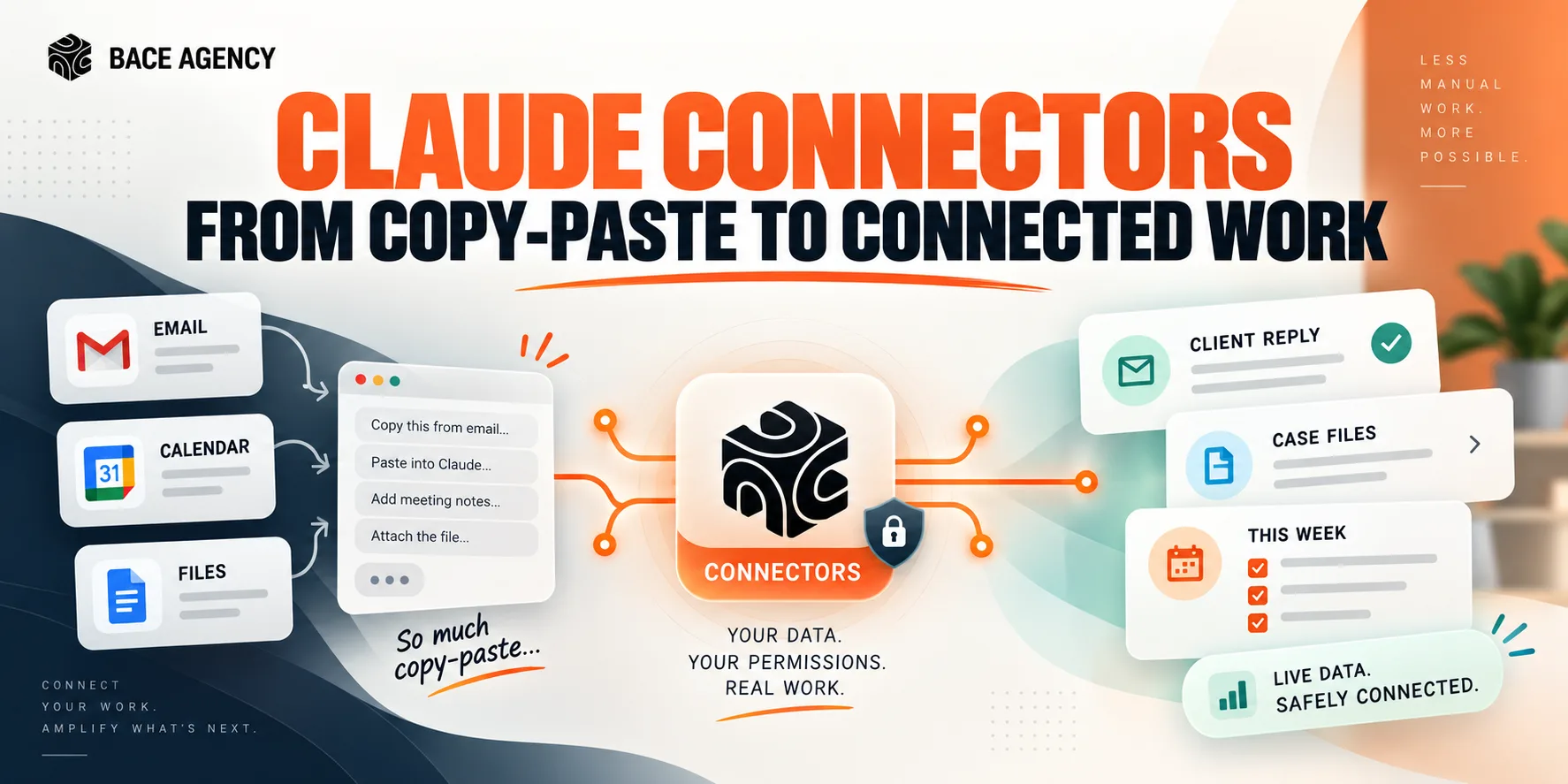
Claude Connectors for Winnetka Accounting Firms
AI stays a clever assistant until it can see your real email, files, and calendar. Connectors are that bridge, and the win depends on connecting narrowly and keeping the writes on approval.
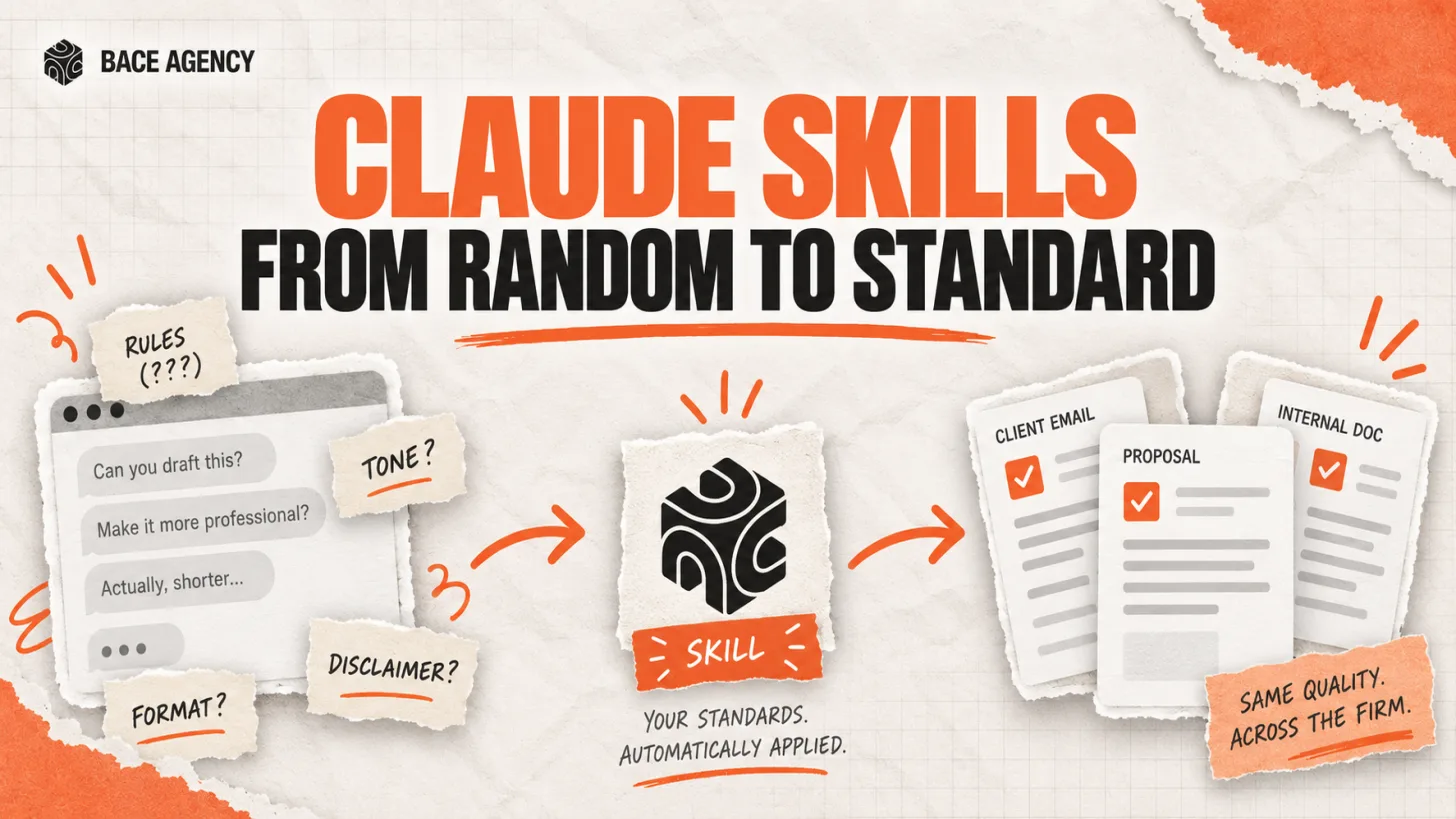
Claude Skills Give a Law Firm One AI Standard
One associate gets sharp drafts, another gets generic filler from the same tool. A Claude Skill turns one person's rules into a standard the whole firm can rely on.
Small North Shore Firms Are Beating Big Ones to AI
While a national firm spends a year debating AI strategy, the small practice down the street already answers clients faster. The gap compounds every week.
About the author

Written by
Michael Pavlovskyi
Founder, Bace Agency
Michael builds custom Claude and GPT workflows for insurance agencies, law firms, and PE firms on Chicago's North Shore. Speaker at Northwestern and Lake Forest College on practical AI adoption for professional services.
Connect on LinkedInSee it in your firm
Book an audit.
A free 30-minute AI audit. No obligation, no pitch deck.
Book a free AI audit