
Eric Schmidt Was Right. The Loom-Smashers Always Lose.
The Class of 2026 booed the former Google CEO for telling them the truth about AI. The data, from Cloudflare's recent layoffs to a doubling of entry-level AI jobs, already shows the students who embrace the technology are pulling ahead of the ones who don't. The firms that refuse to hire them are tomorrow's looms.

Key Takeaways
- ✓ Eric Schmidt was booed at the University of Arizona commencement for telling roughly 10,000 graduates they have the power to shape AI. The booing was the wrong response to a correct argument.
- ✓ The 1811 loom-smashers in Nottingham thought destroying the textile machines would protect their jobs. The machines came anyway. The workers who learned to run them ran the factories. The graduates booing Schmidt are reading from the same playbook.
- ✓ The data already shows the embracers are winning. Entry-level postings calling for AI skills nearly doubled year-over-year. The most AI-fluent young engineers are commanding starting packages north of $300,000. Cloudflare just cut 1,100 roles it calls "measurers" and said it is hiring more "builders" and "sellers" instead.
- ✓ For a North Shore firm (Lake Forest law office, Highland Park wealth practice, Evanston insurance agency, Wilmette family office), the prescription is the same: embrace AI in your own workflow, and hire people who already have. The candidates who can show real AI fluency are the only ones worth interviewing for any role you want to still exist in 2030.
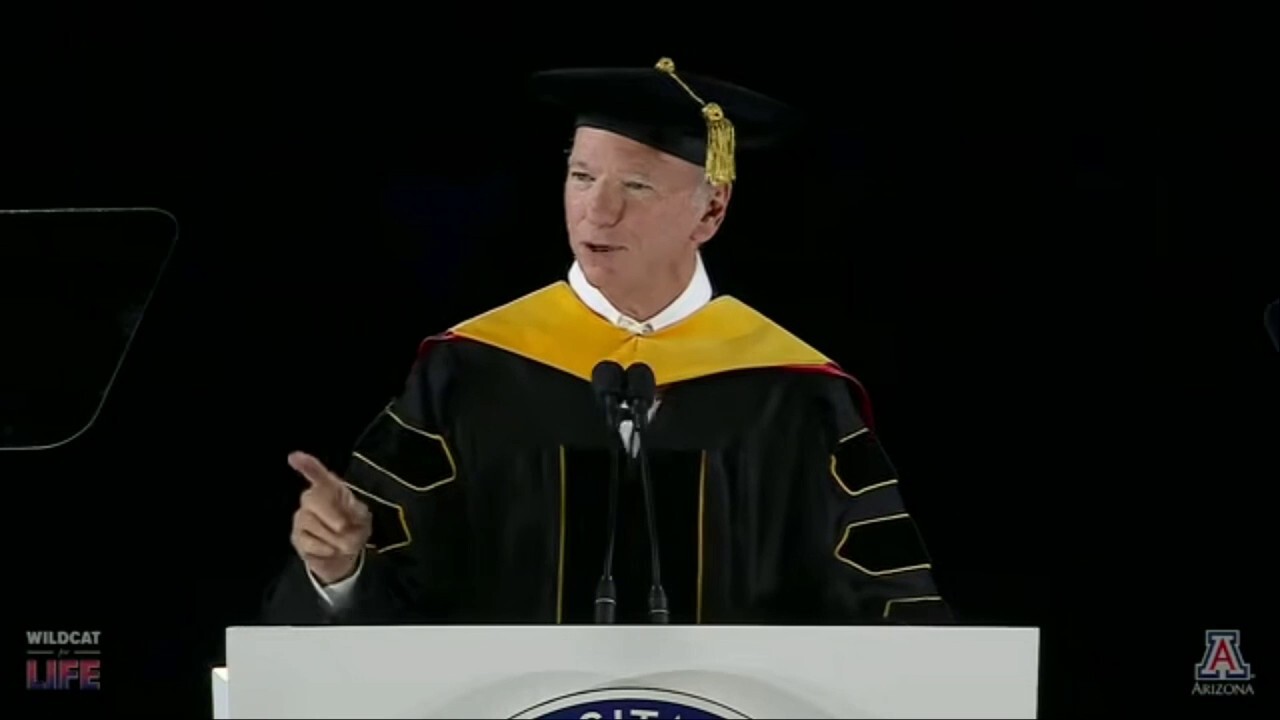
LAKE FOREST, Ill. , May 22, 2026. About ten minutes into Eric Schmidt's commencement address at the University of Arizona on the night of Friday, May 15, the former Google CEO told roughly 10,000 graduates of the Class of 2026 a sentence that probably read as encouraging when he wrote it. He acknowledged the fear in their generation that the machines were coming and the jobs were evaporating, and he said the future remains unwritten. He told them they have the power to shape how AI develops.
That last part, the part where he suggested the graduates were not passive victims of the technology, is the part that drew the loudest noise from the seats. The booing was sustained. NBC News, Fox Business, and a half-dozen other outlets covered it within twenty-four hours.
Here is the part the coverage mostly missed.
Eric Schmidt was right. The booing is the actual problem.
~2×
growth in entry-level US job postings explicitly requiring AI skills, year-over-year (CNBC, April 2026)
$300K+
starting comp some Silicon Valley firms are paying AI-fluent new grads in 2026 (Fortune, March 2026)
1,100
Cloudflare jobs cut in May 2026, the "measurers," replaced by AI usage that grew ~600% in three months
What Schmidt Actually Told the Class of 2026
The speech was not, by speech standards, extreme. Schmidt likened the arrival of capable AI to the arrival of the personal computer four decades ago. He told the graduates the technology is not a fate. The rules of how it gets deployed are still being written, and they have a real seat at that table if they choose to take it. He urged them to embrace what he called the four habits of any working democracy: freedom, open debate, equality, and a willingness to engage with people they disagree with.
What the graduates appear to have heard is a different sentence. They heard: a Silicon Valley billionaire is up there telling us we should be grateful for the technology that is going to take our jobs. So they booed.
That misreading is the heart of the problem. Schmidt was not telling them to be grateful. He was telling them they have agency. The students who interpret that as a brush-off are the same students who will spend the next three years complaining that the technology took their seat at the table instead of pulling up a chair. I made a near-identical argument to a room of Lake Forest College students last fall, and wrote up what I told them and why it matters for your firm. The students in that room mostly got it. The students in Tucson did not.
The Loom-Smashers Are Back
Pause on the historical pattern, because it matters.
In 1811 a group of textile workers in Nottingham, England started destroying mechanical knitting frames. They called themselves Luddites, after a possibly-mythical leader named Ned Ludd, and they argued, correctly in some narrow sense, that the new machines would make their specific skills obsolete. The frames could produce stockings faster and cheaper than a master knitter could. They were right about the threat.
They were wrong about the response.
The mills came anyway. The British government sent in soldiers. By 1813 the movement was over. Within twenty years the entire English textile industry had reorganized around the very machines the Luddites tried to smash. The workers who ran the factories in 1840 (the foremen, the millwrights, the supervisors) were the children and grandchildren of the workers who, in 1811, had decided the technology was the enemy. The Luddites lost on every level. Their jobs vanished. Their skill became a museum piece. And the next generation of working-class textile labor had to start over, learning the machines their parents had tried to burn down.
The students booing Eric Schmidt are running the same play. They have correctly identified that AI changes the work. They have decided that the appropriate response is to express outrage at the messenger. Two hundred and fifteen years of evidence says this ends one way.
"It is not the strongest of the species that survives, nor the most intelligent. It is the one that is the most adaptable to change."
Frequently attributed to Charles Darwin (though the exact phrasing is contested). The underlying idea is from "On the Origin of Species" (1859).The Data Says the Embracers Are Winning
You do not have to take Schmidt's word for it. The 2026 hiring data tells the story without him.
Entry-level US job postings that explicitly require AI skills nearly doubled in the twelve months ending April 2026, according to CNBC's coverage of the latest workforce report. The same report found that roughly thirty-five percent of all entry-level postings now mention AI tooling as a requirement, up from a number that was barely meaningful in 2023. On Handshake, the early-career hiring platform most US college students use, more than ten percent of full-time internship postings in early 2026 mention AI keywords, roughly double the share from spring 2025.
The salary curve is steeper than the posting curve. Fortune reported in March that the most AI-fluent young engineers (the ones who can ship a working product on their own with the help of Claude, Cursor, and the latest agentic coding tools) are being offered starting packages of $300,000 or more by Silicon Valley startups desperate for talent. That is not a typo. A 23-year-old who actually knows how to use modern AI tools as a force-multiplier is, in the current market, worth roughly the cash compensation of a senior partner at a regional law firm.
At the other end of the spectrum: Cloudflare. The cloud infrastructure company posted a record revenue quarter and then, two weeks later, laid off roughly 1,100 employees, about twenty percent of its workforce. CEO Matthew Prince explained the decision in a Wall Street Journal op-ed using a framework borrowed from Peter Drucker. He sorted every job at the company into three buckets (builders, sellers, and measurers), and concluded that internal AI tools had absorbed most of the work the measurers (finance, legal, internal audit, revenue recognition, middle management) used to do. Internal AI usage at the company had grown roughly 600% in the three months before the cuts. Prince was clear that Cloudflare is hiring more builders and sellers, not fewer. He just is not hiring measurers.
Read those data points together. They paint one picture. The professionals who can show real AI fluency are getting paid more, getting promoted faster, and getting hired into the only roles that are growing. The professionals who can't are getting quietly squeezed out. Not because the AI is "taking jobs" in the abstract, but because the AI is making the people who use it three to ten times more productive than the people who don't, and the firms doing the hiring have noticed.
The Shovel or the Excavator
The mental model I use with my clients on Chicago's North Shore is simpler than the data.
Picture a job site in 1935. You are a guy whose job is to dig trenches. A trench is a trench. The county pays you by the linear foot. One morning the foreman shows up with two options. Option one is a shovel, the same one your father used. Option two is a small mechanical excavator. The pay per foot is the same with either tool.
You take the excavator. You always take the excavator.
You take it because in a single shift you finish twenty times as much trench. You take it because the work hurts less. You take it because tomorrow the county may pay you twice as much to run an excavator on a bigger job, and a year from now you may be the foreman of three excavators because nobody else on the crew bothered to learn the machine.
What you do not do is form a committee against the excavator. The excavator is on the worksite whether you sign a petition or not. The next county already bought five. The only question is whether the foreman picks you to run one on Monday, or the kid who came in Saturday and Sunday to figure out the controls.
That is the actual choice in front of a 2026 Lake Forest law associate, a Highland Park insurance broker, a Wilmette wealth advisor, a Winnetka search-fund analyst. The technology is on the worksite. The only meaningful question is who is running it on Monday.
How to Actually Hire AI-Fluent People
The argument so far has been: embrace AI yourself. The companion argument, the one most North Shore principals I work with are slower to internalize, is: hire people who already have. I have written elsewhere about five hiring lessons I learned the hard way running a services business, and this is the sixth.
The first five candidates a Bace Agency client interviews in 2026 will all list "AI tools" or "ChatGPT" somewhere on their resume. The signal is essentially noise. Here is how to separate real fluency from lip service.
First, a working definition. AI fluency is not "I have used ChatGPT." It is the ability to take a real piece of work (a memo, a contract review, a quarterly client letter, a renewal package) and ship a meaningfully better or faster version of it using the current generation of AI tools. The fluent candidate has a workflow. They can describe it. They have an opinion about which tool fits which task. They can show you a before-and-after of work they actually shipped.
| Signal | Fluent candidate | Lip-service candidate |
|---|---|---|
| Tool stack | Names 3 to 5 specific tools and what each is for (Claude for long-context analysis, Cursor for code, NotebookLM for research stacks) | "ChatGPT" and nothing else |
| Concrete example | Walks you through a real workflow on a real piece of work, with the prompt, the output, the edits, and the time saved | "It helps me brainstorm" or "It saves me time" |
| Failure modes | Can name two or three things the tools get wrong and how they catch it | "Sometimes it makes things up" with no follow-through on how they verify |
| Time horizon | Talks about how the tools have changed over the last 6 to 12 months and what they expect next | Static, 2023-era mental model |
The five interview questions I use, in order, are simple:
- Show me the most recent piece of work you used AI to ship. Walk me through the prompt, the output, and the edits.
- What tools are on your stack today and what is each one for?
- Tell me about a time the model was wrong. How did you catch it?
- Pick a task that would normally take you a full day. How would you cut it to two hours using AI?
- What changed in your workflow in the last six months?
Question one filters out roughly seventy percent of candidates by itself. The ones who can't show you the work do not have the work.
SAMPLE CLAUDE PROMPT: for evaluating a candidate's writing sample
"You are an experienced hiring manager at a wealth advisory firm on Chicago's North Shore. Below is a writing sample from a candidate for an associate role. Read it once and tell me: (1) three specific signs the candidate actually uses modern AI tools in their workflow versus signs they are just claiming to; (2) three follow-up interview questions that would surface the real depth of their AI fluency; (3) a 1 to 10 score for AI-tool fluency with a one-sentence justification. Be skeptical. Most candidates over-claim. [Paste writing sample here.]"
The cost of hiring an AI lip-service candidate in 2026 is not just a lost FTE-year. It is the gap that opens between your firm and the firm down the street that hired someone who can actually do four people's worth of work because they know how to use the tools. Compound that gap over twenty-four months and you are not competing for the same clients anymore. If you want a 5-minute first cut on where your own firm stands today, take the AI readiness quiz before your next hire.
The Real Argument
The graduates booing Eric Schmidt are not wrong about the technology. They are wrong about the response. The technology is here. It is going to keep getting better. The honest question facing every working professional under fifty (not just every graduate) is whether they are going to spend the next five years pretending the excavator is not on the worksite, or whether they are going to learn to run it.
If you are a Lake Forest law partner, an Evanston insurance principal, a Highland Park wealth practice owner, a Wilmette family-office CIO, or a Winnetka search-fund operator: embrace AI yourself, and hire only the candidates who already have. The firms that do this in 2026 are the firms that will exist in 2030. The ones that don't are the looms. Let's plan how we can do that.
Frequently Asked Questions
What did Eric Schmidt actually say at the University of Arizona commencement that drew the booing?
Schmidt compared the arrival of capable AI to the arrival of the personal computer four decades earlier. He acknowledged the fear in the graduating class (that the machines were coming and the jobs were evaporating) and then argued that the future of AI is not yet written, and that the graduates have real agency in shaping how it gets deployed. The audience appears to have heard him as dismissive of the threat. They booed at the agency claim, the idea that the people in the seats had meaningful sway over how the technology rolls out. They did not boo at the description of the threat itself.
Are AI-skilled graduates really being hired more, or is that just industry hype?
The hiring data through April 2026 supports the claim at multiple grain sizes. Entry-level US postings explicitly requiring AI skills roughly doubled in the prior twelve months. Roughly 35% of entry-level postings now reference AI tooling, up from a negligible base in 2023. On Handshake, the platform most US college students use to find entry-level work, more than 10% of full-time job postings now mention AI keywords. At the top of the curve, the most AI-fluent young engineers are commanding starting comp of $300,000 or more from Silicon Valley startups. The pattern is broad and consistent across reporting outlets.
How do I tell if a job candidate is actually AI-fluent versus just using buzzwords on their resume?
Ask them to show you a real piece of work they shipped using AI tools: the prompt, the output, the edits. Real fluency comes with a tool stack (three to five specific tools, each with a specific use), a concrete recent example, awareness of model failure modes, and an evolving mental model that has changed in the last six months. Lip-service candidates talk in abstractions ("it saves me time", "it helps me brainstorm") and name only ChatGPT. The five questions in this article will filter out the majority of pretenders in a 30-minute first interview.
What about firms whose clients are skeptical of AI? Does this still apply?
Yes, and arguably more so. A skeptical client is not protected by your firm refusing to adopt AI. They are exposed to the firm down the street that adopts it quietly and delivers the same work in less time at the same fee. The right move with a skeptical client is not to avoid the tools. It is to be transparent about which tools you use, where you keep a human in the loop, and how you protect their data. Bace Agency works with North Shore firms on exactly this conversation. The skepticism is real, but the answer is communication, not abstention.
Related Articles
Small North Shore Firms Are Beating Big Ones to AI
While a national firm spends a year debating AI strategy, the small practice down the street already answers clients faster. The gap compounds every week.

What North Shore Firms Should Not Automate
Most AI consultants will automate anything you point at. Here is the short list I tell clients to leave alone.

What Anthropic's Valuation Means for Small Firms
Anthropic just became the most valuable AI startup at a $965 billion valuation. The fad question is closed. The useful question is where AI fits in your firm, and where it does not.
About the author

Written by
Michael Pavlovskyi
Founder, Bace Agency
Michael builds custom Claude and GPT workflows for insurance agencies, law firms, and PE firms on Chicago's North Shore. Speaker at Northwestern and Lake Forest College on practical AI adoption for professional services.
Connect on LinkedInSee it in your firm
Book an audit.
A free 30-minute AI audit. No obligation, no pitch deck.
Book a free AI audit