
How Winnetka ETA Operators Can Use Claude Opus 4.7 to Grow Revenue After Closing
Anthropic's new flagship model shipped April 16. For entrepreneurs who just acquired a small business through Entrepreneurship Through Acquisition, it quietly changes the math on the first 90 days.


Key Takeaways
- ✓ Anthropic released Claude Opus 4.7 on April 16, 2026 with the same pricing as Opus 4.6 ($5/$25 per million tokens) and meaningful gains in coding, vision, and instruction following.
- ✓ For ETA operators in their first 90 days, the new vision resolution (3.75 megapixels) finally lets Claude read inherited Excel dashboards on the first try.
- ✓ Three concrete workflows: dormant customer reactivation, inherited reporting-stack audit, and tuck-in deal underwriting using new task budgets.
- ✓ Opus 4.7 is not a substitute for hiring. It extends the people already on the payroll and shifts what an operator can do alone in the first 18 months of an SBA-financed hold period.
Winnetka, Ill. , April 19, 2026. You just wired the money. The seller handed you the keys. You walk into the office on a Tuesday morning, and the first thing you notice is that the break-room coffee maker is older than the longest-tenured employee. The second thing you notice is that the QuickBooks file hasn't been reconciled since February, the CRM is a shared Excel sheet on a network drive nobody uses anymore, and the "marketing plan" is a printed PDF taped to the wall.
Welcome to Entrepreneurship Through Acquisition.
If you came out of an MBA program at Kellogg, Booth, Stanford, or Harvard and you have spent the last eighteen months on a search, you already know the deal. ETA is not about discovering unicorns. It is about buying a boring, profitable business, the kind of $2M-to-$5M EBITDA company on the North Shore that nobody in Silicon Valley would ever look at, and turning it into a bigger, more profitable version of itself.
The problem is that the previous owner ran the whole thing out of their head. Tribal knowledge is everywhere. The longest-tenured employee has been there for 22 years and is planning to retire in eight months. And you, the brand-new CEO, have maybe $300K in working capital and a covenant-heavy SBA note telling you that you have about six quarters to prove the thesis before your bank gets nervous.
So when Anthropic released Claude Opus 4.7 on April 16, three days before this article went live, the date matters. This is not an incremental update. It is the biggest practical jump in usable business-capability AI that North Shore operators have seen in the last twelve months. The window to deploy it before competitors is right now.
What follows is what actually changed in Opus 4.7, and three specific, boring, revenue-positive things an ETA operator in Winnetka can do with it this month.
What Actually Shipped in Opus 4.7
Opus 4.7 is Anthropic's newest flagship model. It sits at the top of the Claude product lineup, above Sonnet and Haiku. Any firm already using Claude through Claude Cowork, the Claude.ai web interface, or a custom integration will be automatically moved onto 4.7 over the next few weeks. Opus 4.6 is being deprecated on the API in June, according to Anthropic's release notes.
Four things changed that matter for a Main Street business owner.
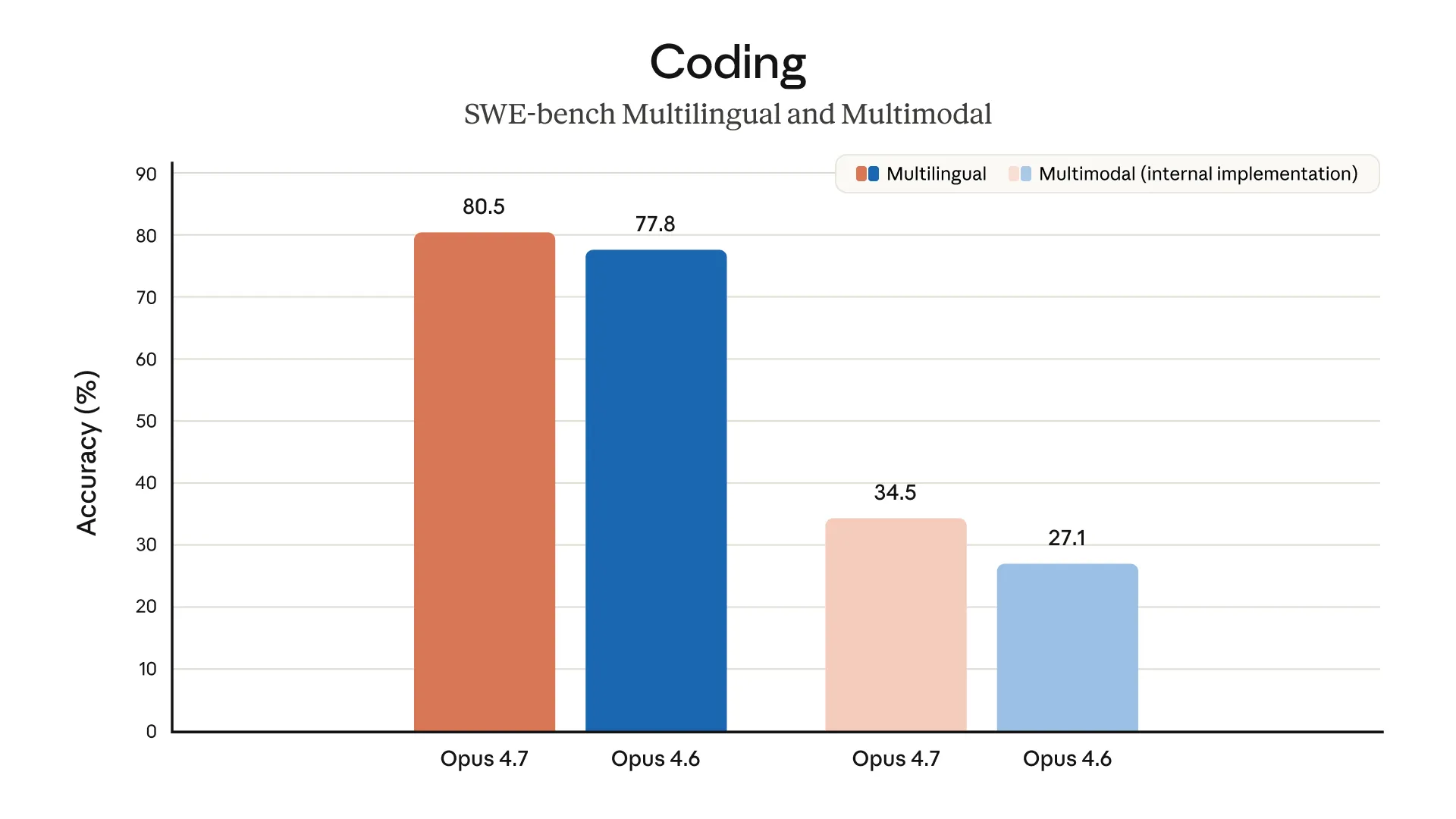
Coding and structured-task capability jumped. SWE-bench Verified, an industry benchmark that measures how often a model can solve a real, previously-unseen software engineering ticket end to end, went from 80.8% on Opus 4.6 to 87.6% on 4.7. SWE-bench Pro, the harder variant, went from 53.4% to 64.3%. In plain English, the model is now reliably good enough to do first-draft technical work that, twelve months ago, required a developer.
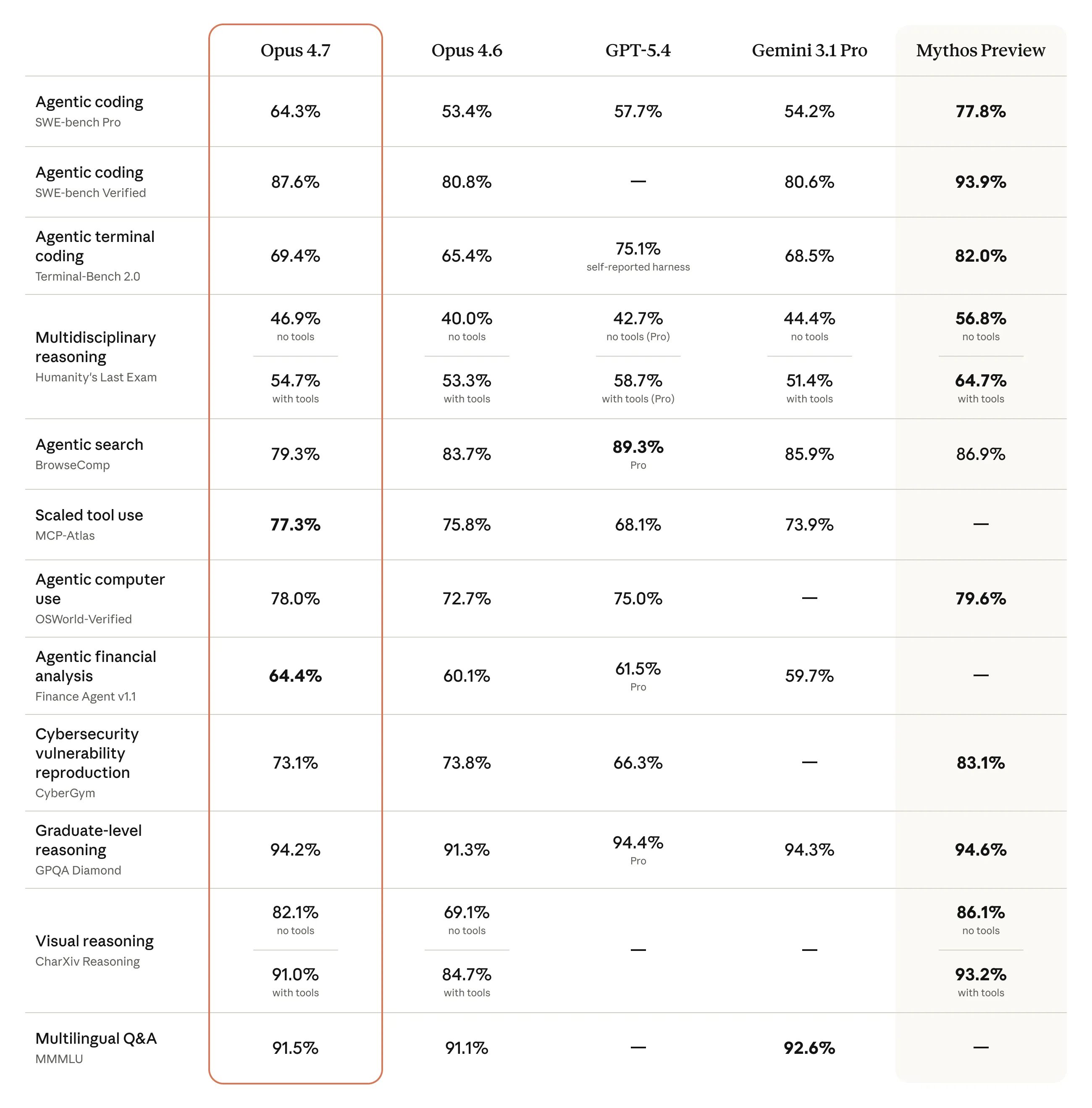
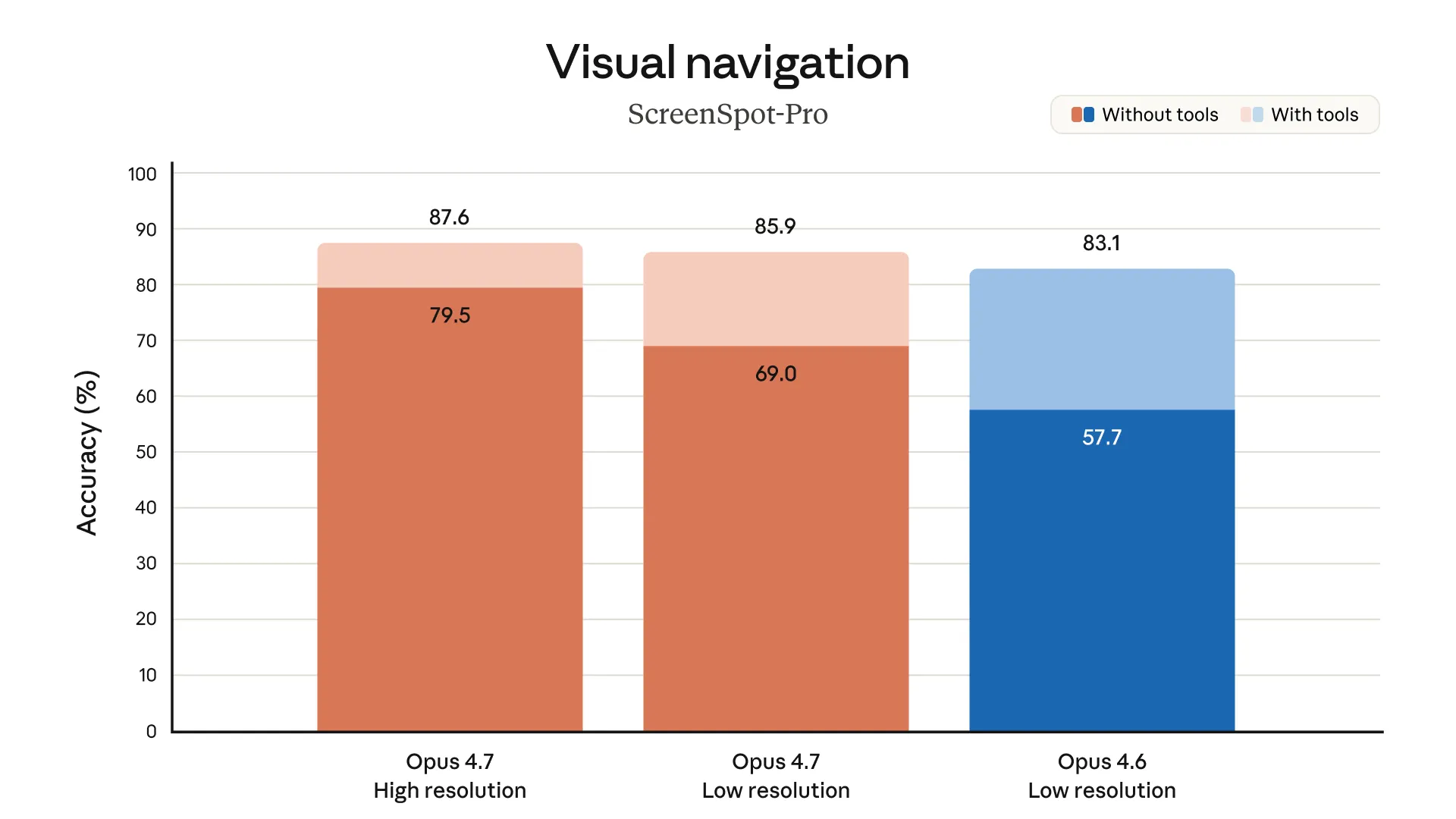
Vision resolution tripled. Opus 4.7 can now process images up to 2,576 pixels on the long edge, roughly 3.75 megapixels, according to Anthropic. That is about three times what previous Claude models could handle. On the "visual navigation" benchmark, which tests whether the model can look at a screenshot of a software interface and understand what is on the screen, Opus 4.7 scored 79.5% compared to 57.7% for 4.6. That is the single number to remember. It means Claude can now look at the Excel dashboard your controller emails you every Friday and actually read it correctly on the first try.
Task budgets are new. This beta feature lets a user tell Claude, at the start of a long job, roughly how many tokens it is allowed to consume before stopping and asking for permission. For an owner paying per-token, this prevents a "Claude got stuck in a loop and burned $40 of API credit" situation. It also means overnight automated workflows can run safely without babysitting.
The /ultrareview command. Inside Claude Code, the developer-facing version of Claude, a new slash command called /ultrareview spawns a multi-agent code review. No ETA operator is ever going to type this command directly. But the consultant, freelance developer, or AI agency you hire will, and it matters because it means a single developer can now do the work that used to require a small team.
Pricing did not change. Five dollars per million input tokens, twenty-five per million output. This is the single most underrated part of the release. Anthropic is providing a meaningfully better model at the same price, which means any ROI calculation an operator ran on Opus 4.6 just got better.
"We are continuing to drive progress on software engineering, agentic tasks, and multimodal understanding, while keeping pricing flat."
Anthropic, in its April 16 release notesFor independent verification: the Help Net Security coverage and the GitHub changelog announcement published the same day.
Why This Release Matters Specifically for ETA Operators
There is a particular kind of math an ETA operator has to do in the first 90 days after close.
The business was bought for, let us say, 4.5x EBITDA. 70% was financed with an SBA loan carrying a personal guarantee. The first principal-plus-interest payment is usually three months after close. The lender is looking at monthly financials and mentally modeling the debt-service coverage ratio. If that DSCR falls below about 1.25x for more than a quarter or two, the lender starts asking uncomfortable questions, the kind that put a personal residence, signed over as collateral, into the conversation.
At the same time, any seller note is usually due to start amortizing in month 13 or month 24. Equity investors, if outside capital came in, expect 15% to 25% annual EBITDA growth for the five- to seven-year hold. Missing the first year makes every subsequent year harder.
So in the first 90 days, an ETA operator has to do three things simultaneously: stop the bleeding on anything the previous owner was doing badly, find the revenue the previous owner was leaving on the table, and build operating capacity to grow without proportionally growing headcount.
Traditionally, this is why ETA operators hire a business-improvement consultant or bring on a 2IC, a second-in-command, in month three or four. That is $120K to $180K in fully-loaded cost for the 2IC, or $25K to $75K for a short consulting engagement.
Claude Opus 4.7, deployed intelligently, is not a substitute for a great hire. But it is a substitute for a lot of the work that a junior analyst, a part-time marketing coordinator, a financial analyst, or an operations associate would do. In the first 90 days, that substitution is often the difference between proving the thesis on schedule and triggering a covenant.
Three specific use cases illustrate the point.
Use Case 1: Finding Revenue in Dormant Customer Data
The seller's bottom-80% customers represent the most under-priced asset in most ETA acquisitions.
A pattern shows up across almost every post-close situation. The seller had a customer list. It has between 400 and 4,000 customers on it, depending on the business. The top 20% drove 80% of revenue for the last three years, and the seller was entirely focused on keeping them happy. The bottom 80%, who collectively represent somewhere between 10% and 25% of historical revenue, have not been touched in two years.
That is the first pool of found money.
The problem with reactivating dormant customers is not that nobody knows they exist. The problem is that re-engaging 2,000 customers you have never met, each of whom has a different purchase history and a different reason for going dormant, is a genuinely hard, time-consuming task. To do it well by hand would take a full-time junior hire the better part of four months.
The Opus 4.7 workflow replaces that.
The operator exports three files: a CRM contact list (usually from HubSpot, Salesforce, or more often in an ETA acquisition a shared Excel sheet), an invoice history from QuickBooks or whatever accounting software the previous owner used, and a year of email archive with customer communications. All three go into a Claude project. Opus 4.7's expanded context window, up to 1 million tokens on the enterprise tier, lets the model load substantially more raw data than previous versions. The operator gives it one prompt.
SAMPLE CLAUDE PROMPT
"I just acquired this business. Attached is our CRM export, two years of invoice history, and the email archive from the previous owner. Identify the 50 customers who had the highest lifetime value but have not purchased in the last 14 months. For each, pull out what they bought, what they paid, what they were saying in email at the time they stopped buying, and write me a short personalized outreach note I can send from my new-owner email address introducing myself and asking what changed."
On Opus 4.6, a prompt like that would have worked maybe 70% of the time. It would often miss fields, misread dates, or get confused by inconsistent formatting in the CRM export. On 4.7, with the improved instruction following and the higher-resolution vision reading spreadsheet screenshots when needed, this works on the first pass the vast majority of the time.
The output is 50 personalized notes, each with the customer's history embedded, that the new owner can send over the course of three weeks. Reactivation rates on this kind of outreach typically run 8% to 14% for a well-run campaign. If the average dormant customer represented $3,500 in annual revenue at the acquired business, reactivating 5 of them pays for a year of Claude at the enterprise tier. Reactivating 15 of them is the kind of result that belongs on a first quarterly investor update.
Two things make this work specifically on 4.7. First, the instruction-following improvement. Opus 4.7 now refuses to silently generalize a request from one customer to another, which means the notes are actually personalized rather than five variations of a template. Second, the vision upgrade means if the operator needs to show Claude a screenshot of the old POS system or a PDF invoice the previous owner kept in a drawer, the model reads it correctly.
Use Case 2: Making Sense of the Inherited Reporting Stack
Every ETA operator has the same story about their first month. They asked the controller for a "financial dashboard" and what they got was a 12-tab Excel file with links to three other workbooks, two SQL queries that run against the accounting system, and a line in the seller's handover notes that says "ask Linda about the inventory adjustments."
In the old world, the two options were to spend six weeks learning the spreadsheet yourself, or to hire someone to rebuild it. The first option steals time from revenue work. The second costs money and takes months.
There is now a third option.
The operator takes screenshots of every tab in the inherited Excel file. Screenshots of the two SQL query results. Drops them into Claude, along with a one-paragraph description from the controller of what the business actually does. Then asks Opus 4.7 to map the entire reporting stack: where every number comes from, what the dependencies are, and where the reporting logic could be simplified.
This specific workflow did not work reliably on Opus 4.6. The vision resolution was too low. The model could not read the numbers in a typical Excel screenshot, so manual transcription was required, which defeated the point. On 4.7, at 3.75 megapixels, an entire Excel worksheet can be screenshotted and the model will read it correctly.
The output is a document that does three things. It explains, in plain English, what every metric on the dashboard actually measures. It flags every place the seller's spreadsheet is doing something questionable, including double-counting, rolled-up assumptions, and hard-coded values that should be formulas. And it gives the operator a prioritized list of the five to ten things to fix first to have a financial picture that can actually be trusted.
That output is worth, conservatively, the first month of a $90K-per-year financial analyst. The ETA operator does not have to hire the analyst in the first 90 days. They can wait until month 6 or month 9, when cash is more comfortable, and bring someone in who inherits a clean reporting environment rather than spending their first three months untangling what Linda left behind.
The single biggest unlock for small-business operators in Opus 4.7 is vision. You can photograph the piece of paper on the wall, drop it into Claude, and have a working first draft of whatever it is by lunch.
Paired with Claude Cowork's scheduled-task feature, the operator can go further: set up a recurring job that every Friday at 5 PM reads the updated Excel dashboard, compares it to the previous week, writes a two-page variance explanation in the operator's voice, and emails it for Monday morning review. That is the work a junior financial analyst does, at closer to $50 a month than $7,500.
Use Case 3: Underwriting the Next Deal Without a Tuck-In Team
Most ETA operators do not plan to own just one business for seven years. The real plan is to buy one company, stabilize it, and then do two to four tuck-in acquisitions of smaller competitors or complementary operators over the next three to five years. That is where the real equity value is created, and it is how the model has evolved on the North Shore. The area is, structurally, full of owner-operator businesses at a generational inflection point, as covered in this guide on what Lake Forest business owners should know about AI in 2026.
The problem with tuck-ins: underwriting one is genuinely hard, and most ETA operators do not have a full corp-dev team. The operator is a CEO, a controller, and maybe a part-time ops person. Every deal looked at takes 20 to 40 hours of time that is not going into growing the core business.
Task budgets in Opus 4.7 change this math.
Here is the workflow. A CIM, or confidential information memorandum, arrives from a broker about a tuck-in target. Historically, handing that CIM to Claude produced a decent summary, but a proper underwriting pass required running Claude against the full data room once it opened: financials, customer contracts, employee records, the whole thing. That analysis could run for hours and consume a frankly unpredictable amount of API spend.
With task budgets, the operator can set up the job like this:
SAMPLE CLAUDE PROMPT
"Here is the full data room for the tuck-in target. Produce a full underwriting memo: standalone financials, adjustments and add-backs I should challenge, customer concentration analysis, employee retention risk, working-capital needs, a recommended bid range, and three questions I should ask in the first management meeting. Budget: 200,000 tokens total. Stop and check in with me if you need to go over."
The model runs. It works through every document in the data room. It produces an underwriting memo that, a year ago, would have cost $15,000 to $35,000 from a boutique transaction advisor. It does it in an afternoon, not three weeks. And because of the task budget, the operator knows the API spend in advance: in this case, about $5 in input tokens and maybe $8 in output tokens.
Is the memo as good as what a partner at a lower-middle-market advisory firm would produce? No. It is, however, usually better than what the operator would produce alone in the same amount of time. It gives a starting framework to iterate on with a CFO or financial advisor.
For the first two tuck-in deals after a platform acquisition, this is more than enough. Once the operator is doing larger add-ons or more complicated carve-outs, human advisors come back into the loop. But for the first 18 months of the hold period, when the pressure is to move fast on small deals, Opus 4.7 meaningfully extends the range of opportunities that can be evaluated.
How to Get Started in the First Two Weeks
An operator does not need to rebuild the tech stack. Two or three small pilots run over 14 days will reveal which ones return capital fastest. The sequence below is the one I would run first.
Week 1: Audit What You Inherited
Take screenshots of every dashboard, every spreadsheet, every reporting artifact the previous owner used. Drop all of it into a Claude project along with a one-paragraph description of the business. Ask Opus 4.7 to produce a reporting-stack map: what every number measures, where it comes from, and what is questionable.
You will come out of Week 1 knowing more about your own financials than the previous owner did, with a prioritized list of what to fix first.
Week 2: Run the Customer-Reactivation Pass
Export the CRM, invoice history, and email archive. Use the customer-reactivation prompt above. Have Claude produce 50 personalized notes. Send them yourself over the next three weeks, not from a generic "info@" address, from your new-owner email, signed by you.
Track reactivation rate. For a well-run win-back campaign, 8% to 14% is a typical industry range. If the result is below 5%, the list itself has a problem. Come back and refine the targeting.
Week 3 Onward: Institutionalize One Workflow Per Month
Pick the single workflow from Week 2 that returned the most cash, and turn it into a recurring Claude Cowork scheduled task. Then pick the next one. By month six, four or five recurring automated workflows should be handling customer outreach, weekly financial variance analysis, vendor contract review, and one other thing specific to the industry.
Resist the urge to build a platform. An ETA operator is not a software company. Keep the toolset small and replaceable.
What This Does Not Replace
A direct note about something that goes wrong regularly.
Claude Opus 4.7 does not replace hiring. It does not replace a great controller, a great operations manager, or a great salesperson. An operator who thinks of Opus 4.7 as a headcount substitute will miss the point and frustrate the team.
What it does is extend the capability of the people already on the payroll. The controller gets a smart analyst sitting next to them, whispering in their ear. The operations manager gets a pattern-recognition engine that reads every piece of data that comes through the business. The new owner gets a junior associate who will do the boring parts of any analysis at 2 AM without complaining.
The businesses on the North Shore that are going to outperform in this cycle are not the ones that fire their teams and "replace them with AI." They are the ones that use AI to let the team they have focus on the specifically-human work, the client relationship, the judgment call, the negotiation, the mentorship, while the model handles the paperwork, the drafting, and the first-pass analysis.
For searchers still in the search phase who have not closed a deal yet, the same argument applies during diligence. The deal that wins is the one that gets under an LOI fastest and executes cleanest. A single searcher working with Opus 4.7 can now do the diligence and underwriting that used to require a team of three associates.
A Final Note on Timing
Opus 4.7 dropped on April 16. The window in which using it produces a genuine edge over the competing business down the road is approximately six months. By October or November, every serious operator on the North Shore will have figured some version of this out. The operators who move now are the ones who get to compound those gains for the rest of their hold period.
For operators who want to think through what the right first workflow is for a specific business, or want a second set of eyes on how to structure the roll-out so it sticks, a free 30-minute AI audit is available. In person in Winnetka or on video. No obligation, no pitch deck. The output is a one-page plan.
The technology shipped. The question is what an operator does with it in the next 90 days.
Frequently Asked Questions
What is the difference between Claude Opus 4.7 and Opus 4.6 for a small-business owner? +
For a non-technical owner, the three practical differences are: (1) Opus 4.7 reads screenshots about three times more clearly, so a photo of an Excel dashboard or a printed report works on the first try; (2) it follows complex instructions more literally and will not silently generalize; and (3) it has new "task budgets" that prevent runaway API spend on long jobs. Pricing is unchanged at $5/$25 per million tokens.
Do I need to do anything to switch my business to Opus 4.7? +
If you use Claude through Claude.ai, Claude Cowork, or a third-party integration, you will likely be moved to 4.7 automatically over the coming weeks. Anthropic has said Opus 4.6 will be deprecated on the API in June. If you have a custom integration built by a developer or agency, ask them when they plan to test and switch.
Is Claude Opus 4.7 safe to use with my business's confidential data? +
Anthropic's enterprise plans, and the API, do not train on customer data by default. For ETA operators handling sensitive financial, employee, or customer information, the right path is to use Claude through a Team or Enterprise plan, or through the API with your own data-handling policies. Avoid pasting confidential data into a free consumer tier of any AI tool.
How much should an ETA operator budget for Claude in the first year? +
For most acquired businesses in the $2M to $5M EBITDA range, $200 to $800 per month covers a single owner-operator using Claude across the workflows described in this article. Adding 3 to 5 staff seats brings that to $1,500 to $3,000 per month. Compared to a single $90,000 financial analyst, the ROI is straightforward.
Will Opus 4.7 replace my controller or my operations manager? +
No. Opus 4.7 extends the capability of the people already on your payroll. It handles the paperwork, drafting, and first-pass analysis so the human team can focus on relationships, judgment calls, and negotiations. Operators who try to use it as a headcount substitute typically frustrate their teams and miss the actual productivity gains.
Related Articles

RoundTable Buys a Skincare Brand, and Healthcare Private Equity Meets AI
A Lake Forest firm just bought a skincare brand. The deal is a window into where healthcare private equity is heading with AI, and why it is a strategy problem first.

Lake Forest Hire: Can the Back Office Scale with AI?
Crescent Grove named a 25-year family-office veteran its growth chief. A rainmaker brings relationships. The harder question is whether the back office can scale as fast as the book.
When a CRM Is Truly AI-Ready for RIAs
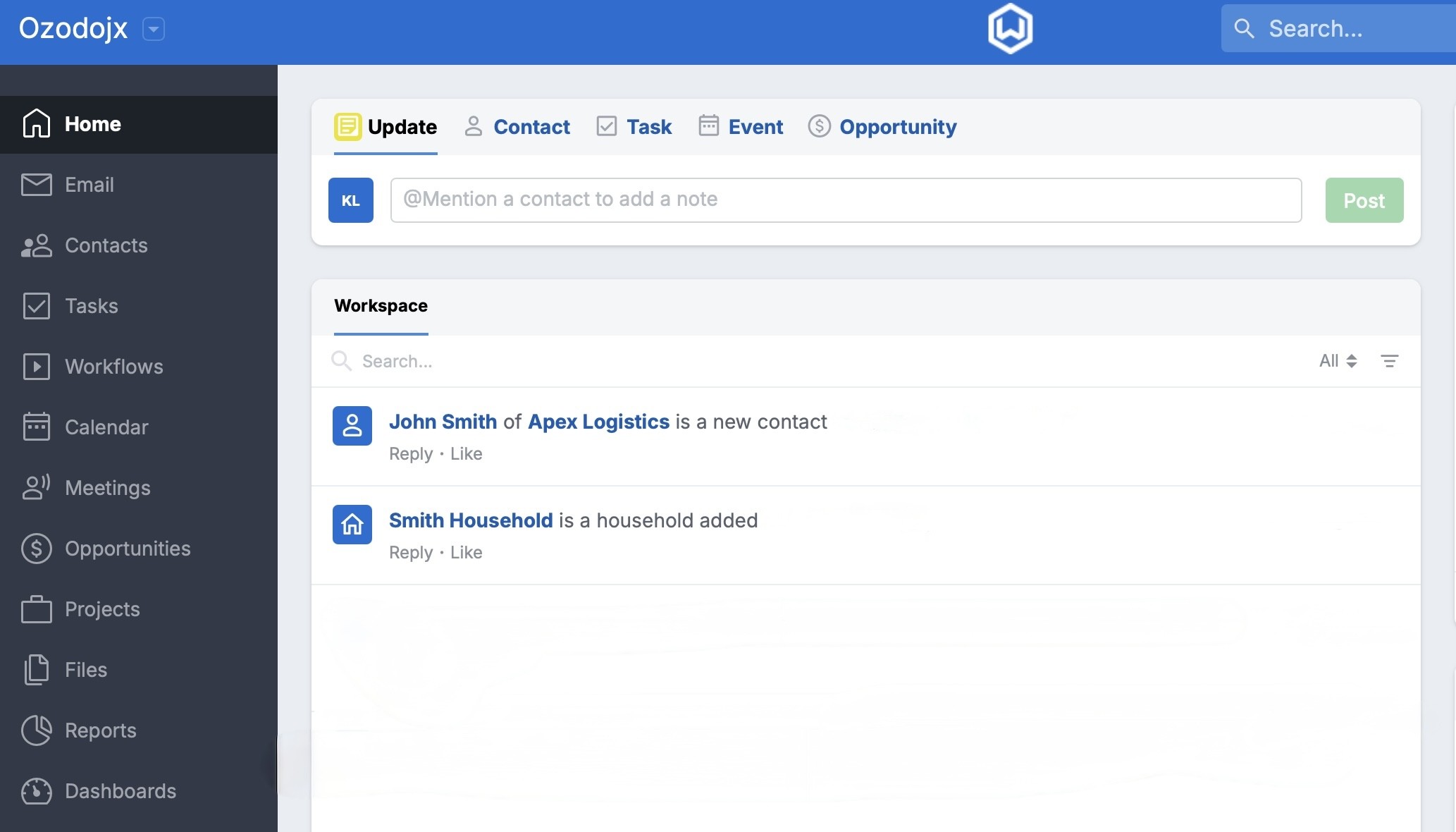
Every CRM demo now says AI. The question that matters is simpler: can a model read your client data and write back to it, under your control? Here are the three tests.
About the author

Written by
Michael Pavlovskyi
Founder, Bace Agency
Michael builds custom Claude and GPT workflows for insurance agencies, law firms, and PE firms on Chicago's North Shore. Speaker at Northwestern and Lake Forest College on practical AI adoption for professional services.
Connect on LinkedInSee it in your firm
Book an audit.
A free 30-minute AI audit. No obligation, no pitch deck.
Book a free AI audit