
Generic Proposals Cost Commercial Lines Brokers Accounts
Highland Park brokers who personalize every commercial submission with AI-extracted risk data close at rates that generic template shops cannot match.


Key Takeaways
- ✓ AI can read a commercial application and draft a personalized proposal narrative in minutes, addressing the prospect's specific exposures, loss history, and coverage gaps that generic templates ignore.
- ✓ Personalized proposals win on information, not just price. The broker who demonstrates they read the application closely is the broker who earns the account and keeps it at renewal.
- ✓ No agency management system replacement is required. The AI step sits between Applied Epic and your existing proposal template, with the broker reviewing before anything goes to the client.
- ✓ The renewal advantage of personalized proposals is as significant as the initial close rate. Clients who received specific, informed coverage explanations at acquisition renew at higher rates.
If your commercial lines proposals still open with a carrier logo and a premium grid, you are sending the same document your prospect already dismissed from the last broker. In Highland Park, where commercial accounts run real businesses and evaluate multiple submissions, a generic proposal is not neutral. It signals that you did not read the application closely enough to say anything specific.
AI gives commercial lines brokers a way to personalize every proposal to the prospect's actual risk profile: their specific industry exposures, prior loss experience, subcontractor arrangements, and coverage gaps, all pulled directly from the application. Brokers who build this process close more accounts and retain them at renewal, because the work of understanding the client is visible from the first page.
Why Personalized Proposals Win Commercial Lines Accounts
The commercial lines broker who wins the account is rarely the one with the lowest premium. It is the one who convinces the prospect that they understand the business. That is what a personalized proposal does. It demonstrates that you read the application, identified the real exposures, and made specific coverage decisions for this client, not a category of clients.
Personalization is a documented advantage in competitive B2B sales. McKinsey's research on B2B personalization has found that buyers across professional services consistently favor vendors who demonstrate specific knowledge of their situation over those who send a standard deck. In commercial insurance, the proposal is the first signal of how the broker will handle claims, renewals, and the working relationship. A generic document signals a generic relationship.
The obstacle has always been time. Pulling industry-specific coverage notes, cross-referencing loss history with the proposed program, and writing a narrative that speaks to this prospect's situation takes two to three hours per submission. Most commercial producers do not have that time for every quote. So they send a template, and they lose accounts they should have won.
Claude and similar AI models collapse that gap. A well-prompted model can read a commercial application, extract the key underwriting signals, and draft a personalized proposal narrative in minutes. The broker reviews and refines the draft. The prospect receives something that reads like two hours of careful preparation, because it took a short AI run and fifteen minutes of broker attention.
"You've got to start with the customer experience and work backwards to the technology."
Steve Jobs, on designing products that actually serve the person buying themWhat Can AI Pull From a Commercial Insurance Application?
A standard ACORD 125 commercial lines application contains more underwriting information than most proposals ever use. Here is what a well-prompted AI model extracts from a typical commercial submission:
- Industry-specific exposures: A landscaping contractor and a general contractor both buy GL, but their exposure profiles differ significantly. AI reads the description of operations and identifies the relevant hazards for each.
- Prior loss indicators: The loss history section tells you which coverages the prospect has actually needed. A personalized proposal addresses those losses directly, showing how the proposed program responds to the documented exposure.
- Subcontractor and vendor arrangements: Unendorsed subcontractor liability is among the most common gaps in small commercial GL policies. AI reads the application's subcontractor section and flags whether the proposed policy needs an endorsement.
- Revenue and payroll trends: Changes in revenue or payroll affect premium audits and coverage adequacy. AI notes these trends so the broker can address them in the proposal narrative.
- Coverage gaps against the application data: If the prospect listed equipment valued at a certain amount but the proposed Inland Marine limit is notably lower, AI catches that disconnect before the proposal goes out.
None of this requires custom software. Applied Systems' Applied Epic already holds the application data for most commercial brokers. The AI step sits between that data and the proposal document, reading what is there and writing coverage narrative that references it specifically. You review the output and send the proposal. The prospect receives a document that reads as if you personally worked through every line of their application.
SAMPLE CLAUDE PROMPT
"I am a commercial lines broker preparing a proposal for a [industry] client with [number of employees, annual revenue]. Their application lists the following key details: [paste relevant sections from ACORD 125]. Their prior losses include [summary from loss runs]. Draft a personalized proposal narrative that: (1) addresses their specific industry exposures, (2) explains why the deductible structure and limits were chosen for their loss history, (3) flags any coverage gaps between their application and the proposed program, and (4) closes with a clear explanation of what happens if they have a claim. Keep the tone direct and avoid insurance jargon the client will not recognize."
How Do You Build an AI-Personalized Proposal Workflow?
This does not require an IT project. A commercial broker can build a working AI-personalized proposal process in an afternoon. Here is the sequence:
Extract the application data
Pull the ACORD 125 and supplemental applications from Applied Epic or your agency management system. Copy the key sections into Claude: description of operations, loss history, revenue and payroll figures, equipment values, and any endorsements the prior broker listed. You are giving the model the same information a good underwriter would read.
Run the personalization prompt
Use the sample prompt above as your starting template, adjusted for the specific industry. The AI produces a first draft that references the application data, addresses the loss history, and flags coverage gaps. This takes under five minutes from the time you paste the data.
Review and add your judgment
The AI draft is a starting point, not a final document. Read it as you would review any draft. Add anything the model missed. Correct anything that does not match your knowledge of the account or the carrier appetite. This review typically takes fifteen to twenty minutes, not two hours.
Format and send
Drop the narrative into your existing proposal template. The structure, carrier logo, and premium section stay the same. The prose is now specific to this client. Send it. Track the close rate on these accounts against your prior baseline over the following two weeks.
Brokers writing more than ten commercial submissions a month will see the impact within the first two weeks. For those writing fewer, the advantage per submission is even sharper, because each account matters more to the book.
Brokers who want to go further can explore Bace Agency's automation services for full workflow integration, including pulling application data from Applied Epic automatically and routing drafts for review without manual copying and pasting.
Personalized vs. Generic Proposals: A Side-by-Side Look
Here is what the difference looks like in practice on a commercial GL submission. The left column is what most commercial producers send. The right column is what the same underlying data produces when AI has read the application first:
| Proposal Element | Generic Proposal | AI-Personalized Proposal |
|---|---|---|
| Opening narrative | "We are pleased to present coverage for your business." | "Your GL application lists exterior remodeling as your primary operation. The $2M occurrence limit was selected to match the largest single-project exposure you reported." |
| Loss history reference | None | "Your three-year loss run shows two minor liability claims. The proposed deductible structure keeps your premium competitive while your underlying frequency remains low." |
| Coverage gap flag | None | "Your application lists significant owned tools and equipment. We recommend confirming the proposed Inland Marine limit matches current replacement value before binding." |
| Subcontractor section | None | "You report using subcontractors for specialty trades. The proposed policy includes a blanket additional insured and waiver of subrogation endorsement. Certificate requirements are enclosed." |
| Claims process | Carrier contact information | "If a claim arises, here is the reporting sequence, the carrier's claims contact for your region, and what to document at the scene. Your policy includes 24-hour claims reporting." |
The generic proposal is not wrong. The AI-personalized one is right in a way that is visible and demonstrable. That is what the prospect notices, and that is what wins the account.
For a broader look at how AI is changing insurance production on the North Shore, see how North Shore insurance agencies are adapting to AI.
Minutes
How long AI takes to read a commercial application and draft personalized coverage narrative, compared to two to three hours done manually by the producer
5+
Data points from a standard ACORD 125 that AI surfaces and applies to the proposal, including loss history, industry exposures, and coverage gaps most templates never address
Renewal
Where personalized proposals pay the longest dividend: clients who received specific, informed coverage explanations at acquisition renew at higher rates and generate more referrals
Where to Start This Week
You do not need to overhaul your agency management system to do this. The practical starting point for a Highland Park commercial broker is straightforward: pick your next three commercial submissions. For each one, copy the description of operations, the loss history summary, and the key property values into Claude. Use the sample prompt from this article. Read the output, adjust for anything the model missed or got wrong, and send the proposal. Compare the close rate on those three accounts with your prior baseline over the following two weeks.
Here is where I think most brokers get this wrong: they treat AI as a drafting tool for simple correspondence and assume it cannot handle the nuance of a real commercial submission. It can. The model reads the application data you provide and produces narrative that is specific to that data. Your job is to review it as you would review any draft, not to rewrite it from scratch.
The broader question for most Highland Park commercial brokers is not whether AI can personalize proposals. It clearly can. The question is whether your brokerage builds this process before the firm across town does. In a market where every prospect has multiple submissions in their inbox, being the broker who demonstrably did the work is a real and durable advantage.
Take the Bace Agency AI Readiness Quiz to see where your commercial lines operation stands and which workflows are most ready for AI assistance. Ready to build a proposal workflow specific to your Highland Park brokerage? Schedule a free 30-minute AI audit with Bace Agency and we will map out the exact process for your book of business.
Frequently Asked Questions
Can AI accurately read a commercial insurance application well enough to use for proposals? +
Yes. Current AI models including Claude can read structured documents such as ACORD 125 commercial applications and extract key underwriting data: description of operations, loss history, property and equipment values, revenue and payroll figures, and subcontractor arrangements. The broker reviews the AI-drafted narrative before sending, catching any misinterpretation. This review takes fifteen to twenty minutes rather than two to three hours of manual writing from scratch.
Do I need to replace Applied Epic or my agency management system to use AI for proposals? +
No. The most practical workflow uses your existing agency management system as the source of application data. Copy the relevant sections from Applied Epic or your current system into Claude, run the personalization prompt, and paste the output into your existing proposal template. Full integration between the agency management system and the AI model is possible for higher-volume brokerages, but it is not required to start. Most commercial brokers begin with copy and paste and automate later.
How do I make sure the AI is not inventing coverage details the application does not mention? +
The AI works from the application data you provide in the prompt. It cannot invent coverage details that are not in the data you gave it. The main risk is misinterpretation of the data, not fabrication of facts it was not given. Your review step before sending catches those cases. Treat the AI output as a detailed first draft from a capable but fallible assistant, not a final document ready to send without reading.
Which commercial accounts benefit most from AI-personalized proposals? +
Medium-complexity accounts benefit most: contractors, manufacturers, restaurants, professional services firms, and any business with notable property exposures, multiple liability lines, or a loss history worth addressing directly in the proposal. Simple BOP accounts with minimal exposures see a smaller advantage because there is less application data to personalize against. The more complex the submission, the more visible the personalization advantage when the proposal goes out.
Is there an E&O or compliance risk to using AI in the commercial proposal process? +
The broker remains responsible for the accuracy of every proposal, whether it was drafted manually or by AI. AI-generated proposal content must be reviewed by a licensed producer before going to the client, the same standard that applies to any other drafting method. Using AI to draft and then reviewing the output carefully is no different from using a template and reviewing it, with the advantage that the AI draft is specific to the account rather than generic.
Related Articles
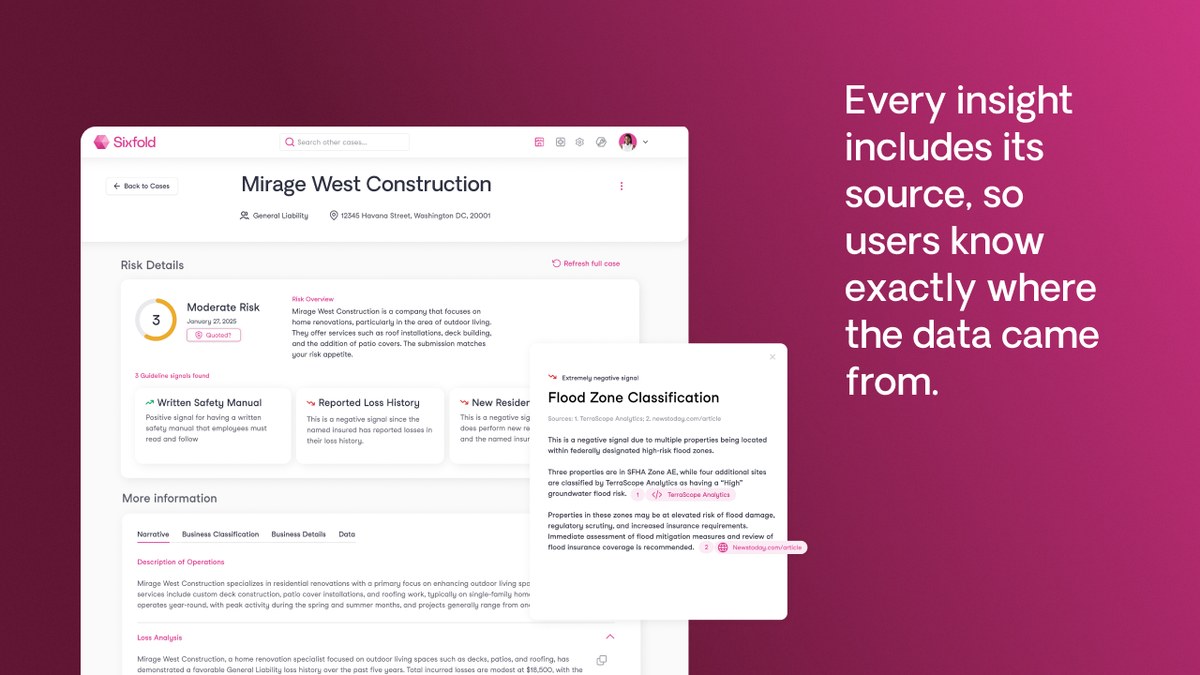
What AI Agents Can Do at an Insurance Agency
AI agents can already draft renewal letters and summarize loss runs. Binding coverage and underwriting judgment still belong to a licensed human.
Win Back a Day a Week at Your Highland Park Agency
Pick wrong and you automate a task that happens twice a month. Pick right and you hand off a full day every week. Here are the three high-volume, low-judgment workflows a Highland Park agency should automate first.
Stop Issuing COIs by Hand in Wilmette
A Wilmette agency can hand the policy file to a model and have the ACORD 25 drafted in seconds. A licensed person still signs off, because that is where the risk lives.
About the author

Written by
Michael Pavlovskyi
Founder, Bace Agency
Michael builds custom Claude and GPT workflows for insurance agencies, law firms, and PE firms on Chicago's North Shore. Speaker at Northwestern and Lake Forest College on practical AI adoption for professional services.
Connect on LinkedInSee it in your firm
Book an audit.
A free 30-minute AI audit. No obligation, no pitch deck.
Book a free AI audit