
AI Deal Sourcing for Search Funds
Chicago search funds and Lake Forest growth equity firms are trading manual target lists for AI screening that costs less than one enterprise database seat.


Key Takeaways
- ✓ AI deal sourcing pairs a database like Grata, SourceScrub, or PitchBook with a model like Claude to rank targets and draft first-pass research, not just find names.
- ✓ A flat Claude Pro plan costs $20 a month per seat, according to Anthropic's pricing page, which is far less than a single enterprise seat on most sourcing platforms.
- ✓ Never let a model send outreach unsupervised. Use it to draft, then have a person edit and send.
- ✓ Treat every AI-generated company profile as a first draft. Verify the numbers against a primary source before they reach a letter of intent.
If you run a Chicago search fund hunting for a platform company, or you screen add-ons for a Lake Forest growth equity shop, the sourcing grind eats the calendar you should spend on diligence. AI will not pick the company you buy. It can replace the weeks of scrolling databases and cold-calling brokers to build the shortlist worth judging.
AI deal sourcing pairs a database such as Grata, SourceScrub, or PitchBook with a model like Claude to build, rank, and research acquisition targets faster than a manual search. For a Chicago search fund or a Lake Forest growth equity firm, it can turn months of list-building into a shortlist ready for outreach within weeks.
What Is AI Deal Sourcing?
AI deal sourcing is the practice of using language models and machine learning tools to find, rank, and research acquisition targets instead of relying only on manual list-building and cold outreach. A search fund, by design, spends its early life doing nothing but this one task, and many searchers run a year or more before they sign a letter of intent. Any tool that cuts that runway changes the fund's whole timeline, and the investors backing it notice.
Dedicated platforms such as Grata, SourceScrub, and PitchBook already use natural language search and predictive matching to surface private companies that fit a thesis. What changed in the past two years is that a general-purpose model like Claude can now read a full exported target list, cross-reference it against your investment criteria document, and draft the first-pass memo, not just search for names. That is the part worth paying attention to: the model does research work now, not only search work.
"Your margin is my opportunity."
Jeff Bezos, on why operators who ignore a cheaper way of working get undercutMost sourcing setups on the North Shore already include a database seat. Few have added the second layer: a model that reads what the database found. That gap is where the time actually gets saved.
How Chicago Search Funds Can Use AI to Find Off-Market Targets
Most searchers run a version of the same playbook: write a target criteria document, buy a database seat, and spend months emailing owners and brokers. AI does not skip that playbook. It compresses it.
Turn Your Investment Thesis Into a Screening Prompt
Write down your real criteria: revenue range, EBITDA margin, geography, industry, and the succession situation you are looking for. Export a raw target list from SourceScrub or PitchBook.
Feed both to Claude and ask it to rank the list against your criteria and flag the top candidates with a short reason for each ranking.
Automate the First-Pass Research
For each shortlisted company, have Claude pull together a one-page profile from public filings, Illinois Secretary of State records, news mentions, and the company website.
You walk into the first call informed instead of guessing, and your associate spends the saved hours on the companies worth a second look.
Draft the Outreach, Do Not Auto-Send It
Use Claude to draft a first email that references something specific about the business, then have a person read it, edit it, and send it.
A generic AI-sounding note kills response rates with owner-operators who built the business by hand. The judgment stays yours; the model just gets you to a draft faster.
SAMPLE CLAUDE PROMPT
"I am running a search fund based in Chicago looking for a home services or commercial services business with $3 million to $8 million in EBITDA in the Midwest. Attached is my investment criteria document and a list of 40 companies exported from SourceScrub. Rank them against my criteria, flag any with a likely succession situation based on owner age or public information, and write a two-sentence rationale for each of the top 10."
If building this into a repeatable process feels like a bigger lift than a weekend project, that kind of buildout is exactly what our AI consulting practice does for firms that would rather not learn prompt design from scratch.
Where Lake Forest Growth Equity Firms Get More Value From AI Screening
Growth equity is a volume game before it becomes a judgment game. A Lake Forest firm evaluating a dozen add-ons a quarter needs to screen for fit before an associate spends a week on any single one. That is where the cost of the tool matters as much as the sourcing platform behind it.
Compare that to what a single enterprise seat on a dedicated sourcing platform runs, and the math favors adding an AI layer before adding another database. According to Anthropic's pricing page, a flat monthly plan covers the reading, ranking, and drafting work a growth equity associate would otherwise do by hand. The database still finds the company. The model does the reading.
"Our favorite holding period is forever."
Warren Buffett, on screening for durability over a quick growth numberThat is the discipline worth building into an AI screening step: ask the model not just whether a company fits the thesis, but what would make the business durable in a downturn. A similar screening buildout, from the family office side of the table, is covered in our family office case study.
How Much Does AI Deal Sourcing Software Cost?
The honest answer: it depends. Which layer are you pricing? A sourcing database and an AI model solve different problems, and most firms need both, not one instead of the other.
| Layer | Typical Pricing Model | What It Actually Does |
|---|---|---|
| Grata, SourceScrub, PitchBook | Enterprise license, usually quoted per seat, per year | Builds and searches the underlying database of private companies |
| Claude (Pro or Team plan) | Flat monthly subscription per seat | Reads, ranks, and drafts research on the list you already have |
| Both together | Database seat plus a flat AI plan | Full pipeline: find candidates, then research and draft on top of them |
Use a dedicated database when you need the underlying company data itself: ownership signals, growth indicators, or contact records you cannot get any other way. Use a model like Claude when the bottleneck is reading and writing, not finding. Most search funds and growth equity shops on the North Shore need both, but few need to pay for a second enterprise seat just to get the reading done. If you are not sure where your firm's bottleneck actually sits, our AI readiness quiz is a five-minute way to find out.
What to Watch Before You Build an AI Sourcing Process
Two risks matter more than the rest. First, a model can state a company's revenue or ownership history with total confidence and still be wrong. Treat every AI-generated profile as a first draft that gets checked against a primary source before it reaches diligence, let alone a letter of intent. Second, confidential deal information deserves the same handling rules you already apply to a data room: know what a tool retains and for how long before you paste anything an NDA covers into it.
The NIST AI Risk Management Framework is a useful checklist for thinking through both of these before you build a process around a model, even for a firm with no regulatory obligation to use it.
This week, take one investment criteria document you already have and run it against a target list you already own. That single prompt tells you whether this is worth building into your process, before you touch a source's confidential financials or a broker's exclusive list.
For search funds and growth equity firms ready to build this properly, a free 30-minute AI audit is available, in person on the North Shore or on video. No obligation, just a plan for where AI actually saves your team time.
Frequently Asked Questions
Can AI actually find acquisition targets on its own? +
Not on its own. A model like Claude does not maintain a database of private companies, so it works best paired with a sourcing platform such as Grata, SourceScrub, or PitchBook that already indexes them. The model's job is to rank, research, and draft on top of the list the database finds.
What is the difference between AI deal sourcing and a database like PitchBook? +
PitchBook and similar platforms build and search a database of private companies using their own matching technology. AI deal sourcing adds a second layer on top: a model that reads the exported list, checks it against your investment criteria, and writes the first-pass research memo, work a database alone does not do.
How much does it cost to add AI to a search fund's sourcing process? +
A Claude Pro plan runs $20 a month per seat, according to Anthropic's published pricing, which is far less than a single annual seat on most enterprise sourcing platforms. Most firms still need a sourcing database for the underlying company data; the AI layer is the cheaper addition, not a replacement.
Is it safe to put confidential deal information into an AI tool? +
Only after you check what the tool retains and for how long. Treat an AI model the same way you would treat a data room vendor: read the data handling terms before pasting anything covered by an NDA into it, and lean on frameworks such as the NIST AI Risk Management Framework to structure that review.
Should a small growth equity firm build its own AI sourcing tool or use Claude directly? +
Most firms do not need custom software. Claude, used directly with a clear investment criteria document and an exported target list, handles the ranking and research work a small firm needs without a development project. A custom tool only makes sense once the manual, prompt-based process outgrows what a person can manage by hand.
Related Articles
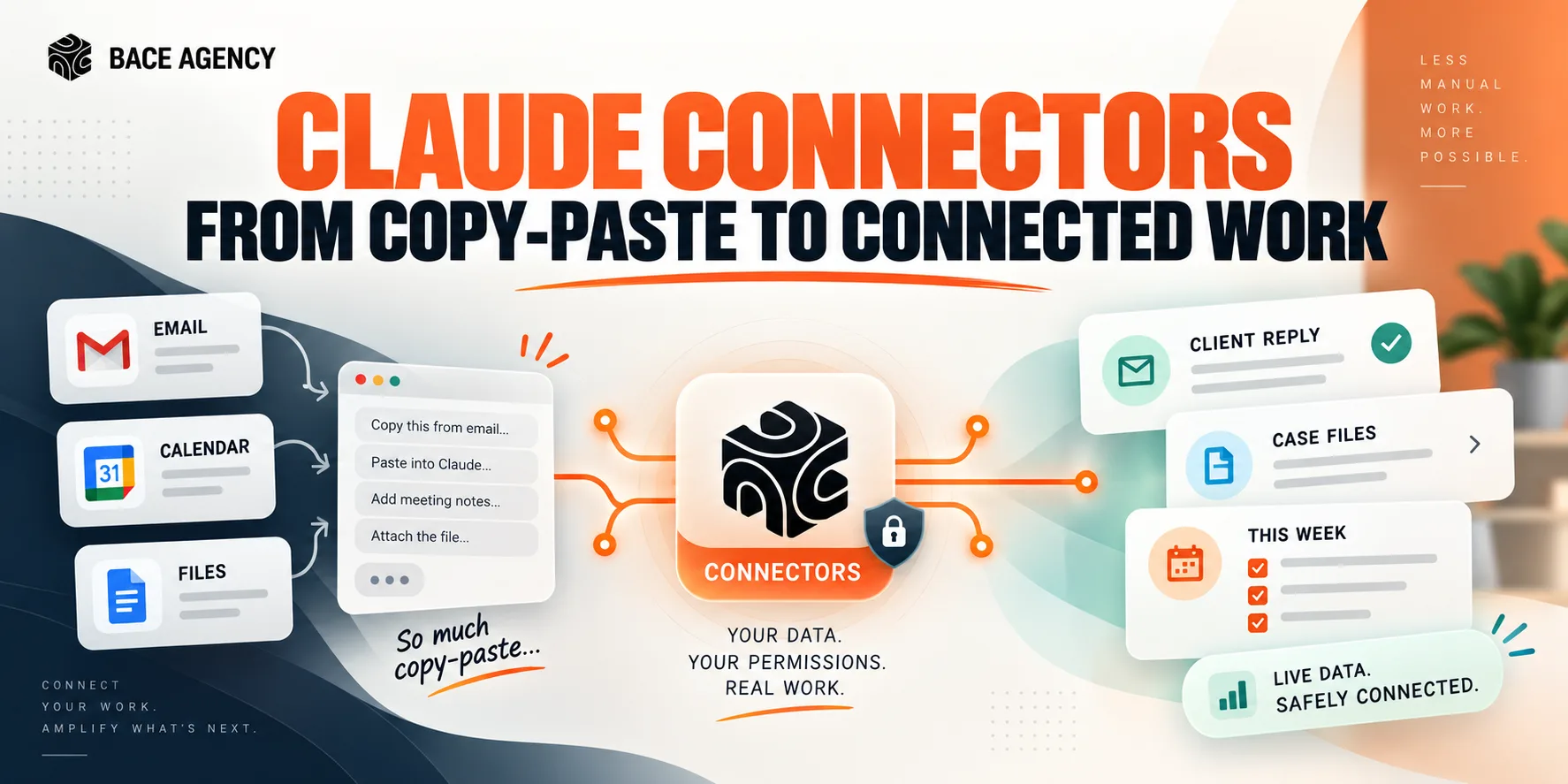
Claude Connectors for Winnetka Accounting Firms
AI stays a clever assistant until it can see your real email, files, and calendar. Connectors are that bridge, and the win depends on connecting narrowly and keeping the writes on approval.
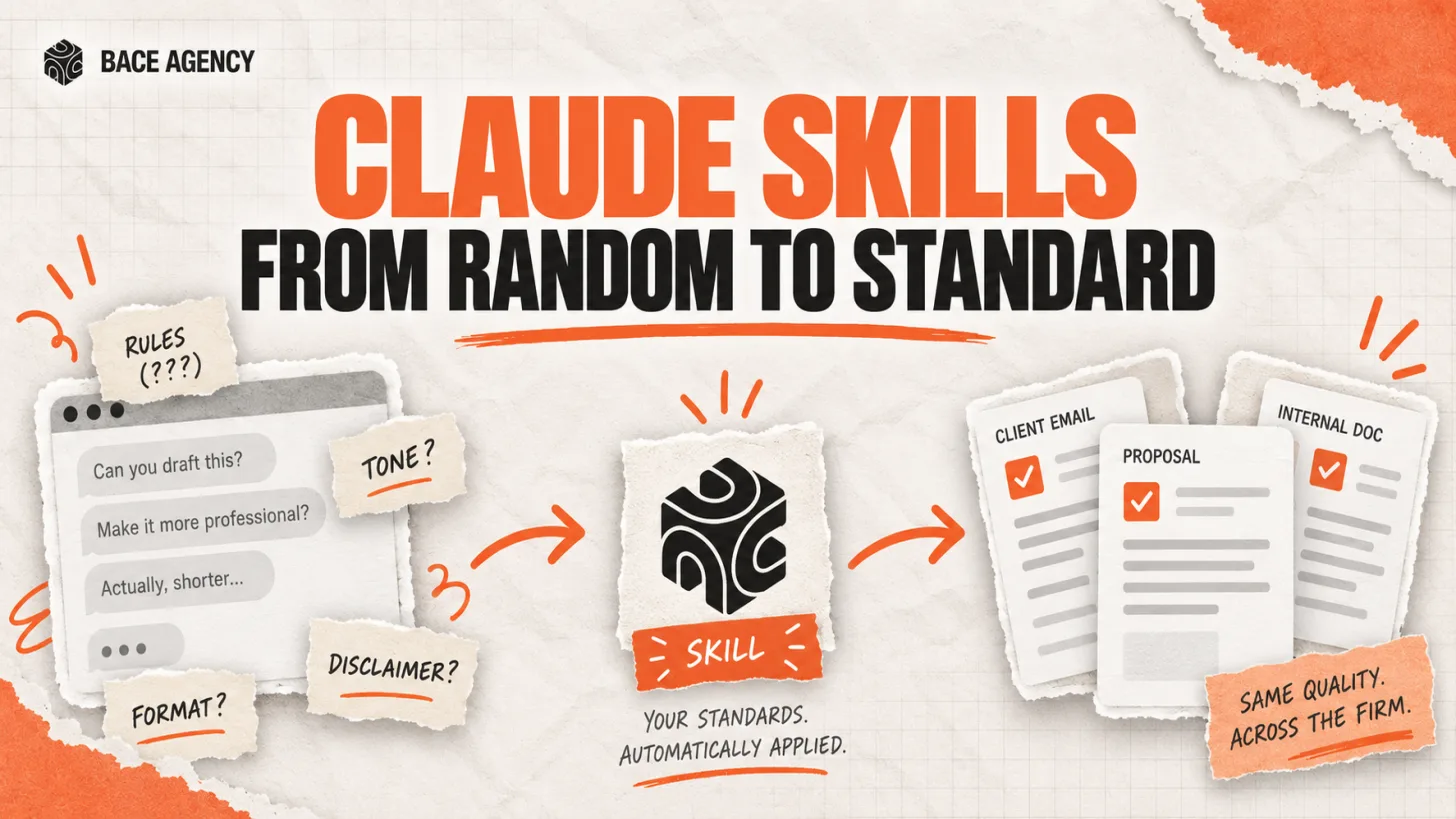
Claude Skills Give a Law Firm One AI Standard
One associate gets sharp drafts, another gets generic filler from the same tool. A Claude Skill turns one person's rules into a standard the whole firm can rely on.

Small North Shore Firms Are Beating Big Ones to AI
While a national firm spends a year debating AI strategy, the small practice down the street already answers clients faster. The gap compounds every week.
About the author

Written by
Michael Pavlovskyi
Founder, Bace Agency
Michael builds custom Claude and GPT workflows for insurance agencies, law firms, and PE firms on Chicago's North Shore. Speaker at Northwestern and Lake Forest College on practical AI adoption for professional services.
Connect on LinkedInSee it in your firm
Book an audit.
A free 30-minute AI audit. No obligation, no pitch deck.
Book a free AI audit