
AI Due Diligence for Search Fund Operators
A searcher buys one company with a small team and borrowed money. AI lets a solo operator run diligence at a depth that used to need a deal team.

Key Takeaways
- ✓ A searcher buys one company in their career, with a small team and an SBA loan or investor capital. Diligence has to be thorough on a budget that does not support a full deal team.
- ✓ AI does not replace your accountant, your attorney, or your own judgment. It reads large volumes of documents faster and more thoroughly, so risks surface before they turn into expensive mistakes.
- ✓ The value is not the model. It is the workflow built around it: how documents come in, what gets extracted, how findings are ranked, and where they go next. That is what Bace builds.
- ✓ The starting point is the data room you already have. No new platform, no change to how your CPA or lender works. The AI review runs before they do and tells them where to look.
A search fund operator is in an odd spot. You raise a small amount of capital, spend up to two years looking, and then buy one company that you plan to run for a decade. The median deal in the 2024 Stanford Search Fund Study sold for $14.4 million at about 7.0 times EBITDA. That is a real company with real employees, and you get one shot to diligence it.
The problem is resources. A private equity firm puts a team on every deal. A searcher in Lake Forest or anywhere else is often one person, maybe two, working nights against a signed letter of intent and a diligence clock. The financials arrive as a stack of PDFs and QuickBooks exports. The contracts arrive as a shared drive with no index. Reading all of it carefully is exactly the kind of work that gets cut when time runs short. That is where deals go wrong.
$14.4M
Median acquisition price in the 2024 Stanford Search Fund Study. Down from $16.5 million in the prior study, on tighter credit.
7.0x
Median EBITDA multiple paid. At that price, a single misread on recurring earnings or customer concentration moves the deal math, per the same Stanford study.
681
Search funds tracked since 1984 in the Stanford data set. Most operators in that group ran their first and only acquisition diligence with a very small team.
What an AI Diligence Workflow Actually Does
Set the hype aside. The useful function here is narrow and real. Modern AI models read PDFs directly, including the tables, charts, and scanned pages that fill a small company's records. They take a large volume of documents at once and return a structured answer: a list of contracts with their renewal dates, a recast earnings table, a set of flags ranked by how much they matter. The model is the engine. The value sits in the workflow built around it.
That distinction matters, because the model you use today will not be the popular one in two years. A diligence workflow is not a tool you buy. It is a defined process: how documents arrive, what fields get pulled from each, how findings are ranked, what gets checked by a person, and where the output lands. The model swaps out underneath. The workflow stays.
None of it is a decision. It is reading and extraction at a speed and consistency a tired person at midnight cannot match. You still decide what the findings mean. The workflow just makes sure you saw them. For a one-person buyer, that shift, from hoping you did not miss anything to having a checklist of what is in the documents, is the whole point.
This is the work Bace does, and diligence is not a special case of it. It is the same problem we already solve for financial advisors, family offices, insurance agencies, and legal teams across the North Shore: a large volume of documents, repetitive review work, a need to extract structured information and flag the risks and exceptions, with a person still in control of every decision. We build the AI document and automation workflows behind that, turn a document-heavy task into a defined input and a defined output, and connect it to the systems a firm already uses. For buyers who need deal files to stay on their own hardware, we deploy private local AI so nothing confidential leaves the building. A data room is just that same pattern, at higher stakes, on a deadline.
"AI does not tell you whether to buy the company. It tells you what is in the data room before your money is on the line. That is the difference between a checklist and a guess."
Michael Pavlovskyi, Bace AgencyWhy This Matters for Search Fund Operators
A searcher's economics are tight in a way a fund's are not. You cannot spend $40,000 on outside diligence advisers across three deals that fall apart before the one that closes. Most of that early read has to be done by you, fast, and cheaply. When a formal quality of earnings report is warranted, it usually comes later, often during lender underwriting on an SBA 7(a) acquisition loan, where closing costs can be financed into the loan rather than paid upfront. AI does not replace that report. It makes your own first pass good enough that you only pay for the formal report on a deal worth closing.
It also catches the quiet risks. Customer concentration is the classic one. A common rule of thumb among small-company buyers is that no single customer should sit above roughly 10 percent of revenue, and a top handful above a quarter of revenue is a flag worth pricing. Finding that pattern means reading every customer contract and tying it back to the revenue detail. A person doing it by hand on a deadline misses things. A model reading all of it at once does not get tired on contract number forty.
The same logic carries through our AI consulting engagements. The goal is never to hand judgment to a machine. It is to make sure the human judgment is working from complete information.
Use Case 1: Recasting the Seller's Financials
Small company financials are built for taxes, not for a buyer. An AI pass produces a clean recast and a list of add-backs to verify, before your CPA bills an hour.
An owner-operated business runs personal expenses through the company and reports earnings to minimize tax. Your job is to find the real, transferable earnings: strip out the owner's above-market salary, the family member on payroll who does not work there, the personal vehicle, the one-time legal settlement. That is the adjusted EBITDA the whole deal price hangs on.
The workflow takes the profit and loss statements, the general ledger detail, and the tax returns, and returns a normalized earnings table plus a list of every adjustment it made, with the source line for each. You then verify each add-back. The system does the assembly. You do the judgment on what is legitimate and what the seller is hoping you will accept. The instruction set that drives the step looks like this.
AI DILIGENCE WORKFLOW
"Act as a financial diligence step for the buyer of a small business. From the attached profit and loss statements, general ledger, and tax returns, build a normalized EBITDA table for the last three years. List every adjustment separately (owner compensation above market, non-business expenses, one-time items, related-party costs) with the source document and line reference for each. Do not conclude what the business is worth. Flag any adjustment where the supporting detail is missing or unclear so it can be requested from the seller."
Use Case 2: Contract and Concentration Review
The risk that kills small deals is hidden in the contracts. An AI pass reads all of them and ties customers to revenue, so concentration and change-of-control terms surface before close.
Two questions decide whether the revenue you are buying survives the sale. Who are the customers, and how concentrated are they. And what happens to the key contracts when ownership changes. A change-of-control clause can let a major customer or supplier walk the day you sign. Buyers find these late, by reading contracts one at a time, often after the price is set.
The workflow takes the full set of customer agreements, supplier contracts, the lease, and any financing documents, and extracts each counterparty, term, renewal date, termination right, and change-of-control provision into one table. It then ranks the customers by share of revenue using the financial detail. What took a weekend of reading becomes a sortable list you check against the numbers. This is the same document-to-structure work Bace builds for firms that process contracts and statements at volume, described across our other articles on AI document processing.
AI DILIGENCE WORKFLOW
"Act as a contract review step for the buyer of a small business. From the attached customer and supplier contracts, extract a table with these columns for each agreement: counterparty, contract type, start date, term length, renewal terms, termination rights, and any change-of-control or assignment clause. Quote the exact change-of-control language where present. Then, using the attached revenue detail, list the top ten customers by share of total revenue. Flag any single customer above 10 percent and any contract a buyer should renegotiate before closing. Do not advise on legal enforceability."
Use Case 3: A Data Room Red Flag Log
Most diligence findings are not dramatic. They are small gaps that add up. An AI pass over the whole data room builds one running issue list ranked by how much it matters.
By the time a data room is open, you have hundreds of files: financials, contracts, employee records, tax filings, permits, insurance, litigation history. The danger is not one obvious problem. It is the slow accumulation of missing documents, expired licenses, an unrecorded lien, a lawsuit nobody mentioned. A solo buyer reading sequentially loses the thread.
A structured workflow runs over the entire room and produces a single issue log: each finding, the document it came from, a category (financial, legal, customer, employee, tax, regulatory), and a severity rank from one to five where five could change the price or kill the deal. Missing or expired items count too: a lapsed license, an absent contract, a gap in the financials. The list comes back sorted by severity, with a set of specific questions to send the seller, attorney, or accountant. You work it top down instead of handing your advisers a vague request to review everything, and that focus is what keeps outside fees down. This is the kind of recurring document review Bace automates: a North Shore family office we worked with reclaimed 32 hours a week applying the same approach.
How to Get Started
Start with the financials on a live deal
Do not try to automate the whole process at once. Take the seller financials from your current letter of intent and run the recast pass first. It is the highest-stakes document set and the easiest to check, because you can verify the add-backs against the source lines yourself.
Use a private API, not a consumer chatbot
Seller financials and contracts are confidential and often under an NDA. Do not paste them into a free consumer tool. Run the work through a direct API connection where inputs are not used for training under standard enterprise terms. For deals that need files to stay on your own hardware, a private local AI setup keeps everything in house.
Verify every number before you rely on it
Treat the AI output as a first draft, not a finding. Spot-check the recast against the source documents, confirm the concentration numbers, and read the contract language the model flagged. The point is to direct your attention, not to replace your review or your advisers' sign-off.
What This Does Not Replace
AI handles reading and extraction. It does not handle the decision. It will not tell you whether the owner is the real reason the business works, whether the customers stay after the founder leaves, or whether the price is right for a company you will run for ten years. Those are the questions that matter most, and they stay with you.
It also does not replace your professionals. A quality of earnings report from a CPA, a legal review of the purchase agreement, an environmental check where the business needs one: those still get done by licensed people who carry the accountability. The AI pass makes their work faster and your questions sharper. It does not sign anything.
The Bottom Line
Here is the whole argument in one place. A searcher buys one company, with a small team and borrowed money, against a diligence clock. Reading every document carefully is exactly the work that gets cut when time runs short, and that is where the expensive surprises hide: the customer who is 40 percent of revenue, the contract that ends at change of control, the earnings that do not transfer. Manual diligence on a one-person budget cannot read all of it, every time, without missing things. A well-built AI workflow can. It does not replace your accountant, your attorney, or your judgment on whether to buy. It makes sure that when those people and that judgment go to work, they are working from the complete picture, and that the risks show up before your money does. For a search fund operator, who gets one shot at this, that is the difference that matters.
That workflow is what Bace builds. We design the document processing, the AI review agents, the automation that ties it together, and, for firms that need tighter control of their data, the private local AI deployments that keep everything on their own hardware. All of it tied to how a buyer actually works, not a tool we are trying to sell. If you want to map this to a deal you are working on now, a free 30-minute AI audit is available in person on the North Shore or by video. Bring a live deal and we will walk the workflow against it.
Frequently Asked Questions
Can AI replace a quality of earnings report?
No. A quality of earnings report is prepared by a CPA or financial diligence professional and is often required by SBA 7(a) lenders during underwriting. AI does your own first pass on the financials so you only commission the formal report on a deal worth closing. It supports the process, it does not stand in for the report or the CPA.
Is it safe to put confidential deal documents through an AI tool?
Not through a free consumer tool. Seller financials and contracts are usually under an NDA. Run the work through a direct API connection where inputs are not used for model training under standard enterprise terms, or a private local setup where files stay on your own hardware. The standard is the same as for any third-party software touching confidential deal data.
Will AI miss things a human would catch?
It can, which is why every output is a first draft you verify, not a finding you rely on. The value is the reverse: a model reading hundreds of documents at once does not get tired or skip the last folder at 1 a.m. Used well, it catches what a solo buyer on a deadline misses, and you catch what it misses.
How much technical skill does this take to set up?
Less than people expect for the first use cases, more than a weekend for a repeatable workflow across multiple deals. A searcher can run the financial recast and contract review with a tested prompt and an API connection. Building it into a reliable, secure process you trust on every deal is where outside help usually pays for itself.
Does this work for a self-funded search or only a traditional fund?
It fits a self-funded searcher better than anyone, because the budget for outside advisers is smallest and the operator is doing the most diligence alone. The deal sizes in the Stanford study skew larger than a typical self-funded deal, but the document problem is identical at any size.
Related Articles

RoundTable Buys a Skincare Brand, and Healthcare Private Equity Meets AI
A Lake Forest firm just bought a skincare brand. The deal is a window into where healthcare private equity is heading with AI, and why it is a strategy problem first.
Lake Forest Hire: Can the Back Office Scale with AI?
Crescent Grove named a 25-year family-office veteran its growth chief. A rainmaker brings relationships. The harder question is whether the back office can scale as fast as the book.
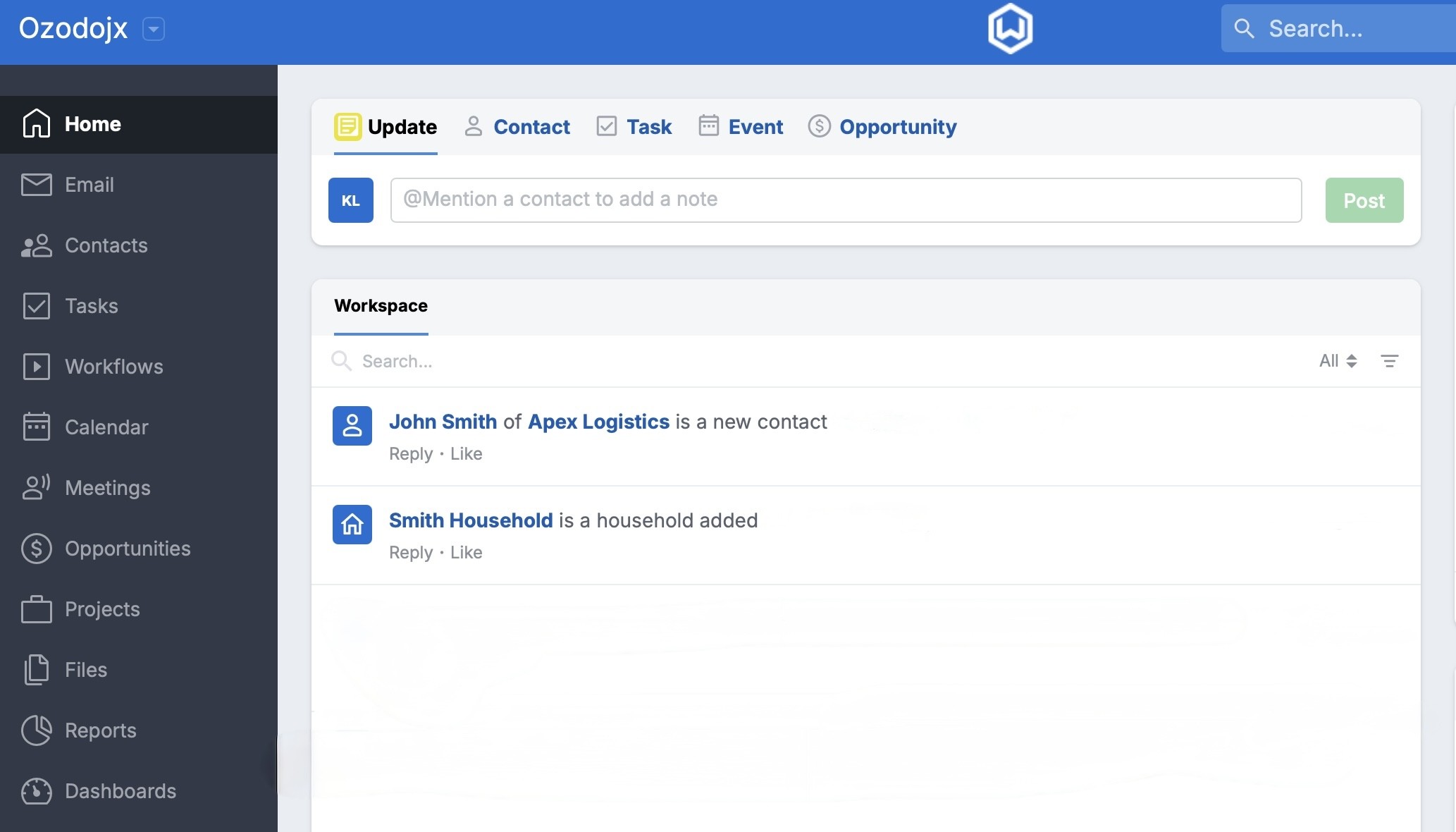
When a CRM Is Truly AI-Ready for RIAs
Every CRM demo now says AI. The question that matters is simpler: can a model read your client data and write back to it, under your control? Here are the three tests.
About the author

Written by
Michael Pavlovskyi
Founder, Bace Agency
Michael builds custom Claude and GPT workflows for insurance agencies, law firms, and PE firms on Chicago's North Shore. Speaker at Northwestern and Lake Forest College on practical AI adoption for professional services.
Connect on LinkedInSee it in your firm
Book an audit.
A free 30-minute AI audit. No obligation, no pitch deck.
Book a free AI audit