
RoundTable Buys a Skincare Brand, and Healthcare Private Equity Meets AI
RoundTable's Colorescience deal is its ninth consumer-healthcare platform. The harder question is which firms turn AI into an operating plan.


Key Takeaways
- ✓ RoundTable Healthcare Partners, based in Lake Forest, acquired the premium skincare brand Colorescience on February 2, 2026. It is the firm's third platform from Equity Fund VI and its ninth consumer-healthcare platform.
- ✓ RoundTable has raised $4.25 billion across nine funds since 2001 and made 98 investments, all in healthcare, which makes it one of the most disciplined operating buyers on the North Shore.
- ✓ Bain reports more than 60 percent of interviewed private equity firms use at least one AI tool for sourcing, screening, or diligence, and 21 percent of M&A practitioners now use generative AI in their deal work, up from 16 percent in 2023.
- ✓ The firms winning with AI redesign workflows and data foundations instead of bolting tools onto existing processes. That makes it a strategy problem before it is a technology one.
A Lake Forest private equity firm just bought a skincare company, and the deal is a useful window into healthcare private equity AI. On February 2, 2026, RoundTable Healthcare Partners acquired Colorescience, a mineral-based skincare and sun-protection brand sold through dermatologists, plastic surgeons, and med spas, from a shareholder group led by 1315 Capital. Terms were not disclosed. RoundTable called it the firm's ninth consumer-healthcare platform.
I read deals like this the way an operator would, not the way a headline does. RoundTable is a serious buyer with a long healthcare track record. The interesting question is not the brand. It is what the next round of value creation looks like across a portfolio like this, and where AI actually fits once the lawyers are done.
What RoundTable Actually Bought in Carlsbad
RoundTable bought a profitable, channel-driven consumer-healthcare brand. Colorescience, founded in 2000 and based in Carlsbad, California, sells mineral-based sunscreen and skincare through a professional channel of dermatologists, plastic surgeons, aestheticians, and med spas, plus direct-to-consumer and e-commerce. Its current management team has built the brand since 2013. RoundTable acquired it from a shareholder group led by 1315 Capital, and according to the firm's deal announcement, it is the third platform from RoundTable's $800 million Equity Fund VI.
The firm itself is the part worth sitting with. RoundTable was founded in 2001, is based in Lake Forest, and invests only in healthcare. It has raised $4.25 billion across nine funds and made 98 investments. That is not a tourist in the space. It is a buyer with repeat-CEO relationships and a real operating playbook, which is exactly the kind of firm where an AI conversation should start with the workflow, not the tool.
Why Does a Disciplined Healthcare Buyer Care About AI Now?
Because the value-creation playbook has changed, and a brand like Colorescience is data-heavy in every place that matters. A consumer-healthcare brand runs on professional-channel relationships, direct-to-consumer marketing, inventory planning, and clinical claims. Each of those is a data problem before it is a marketing problem. That is where AI shows up first, not in some moonshot.
The broader market has already moved. In its Private Equity Midyear Report 2026, Bain calls AI one of the most important value-creation opportunities across the portfolio, and calls inaction a strategic choice rather than a neutral one. Execution is the hard part. In its Asia-Pacific Private Equity Report 2026, Bain reports that about half of general partners in that region say AI initiatives in their portfolio companies are meeting expectations, while the rest say results have fallen short. That gap is not about model access. It is about execution discipline, which is the thing operating-oriented firms are supposed to be good at. For the longer argument on why operating improvement now drives returns, see our piece on how AI has become private equity's new return engine.
"For private equity, AI is rapidly becoming one of the most important value-creation opportunities across the portfolio. Inaction, in fact, has become a strategic choice, not a neutral decision."
Bain & Company, Private Equity Midyear Report 2026Where AI Lands First in a Consumer-Healthcare Portfolio
AI lands first on the repeatable, data-heavy work that sits underneath the brand. For a company like Colorescience, that means demand forecasting and inventory across both the professional channel and direct-to-consumer, surfacing reorder and churn signals in the dermatologist and med-spa account base, compressing diligence and 100-day planning at the deal level, and standardizing reporting across portfolio companies so the operating partner sees the same numbers everywhere. None of that replaces judgment. It clears the desk so judgment has room.
The firms getting real results are not the ones that bought the most tools. Bain's midyear read is that the companies seeing the greatest impact are not layering AI onto existing processes; they redesign workflows and strengthen the data foundation first, then bring AI to it. Bolting a tool onto a broken process just gives you a faster broken process. This is the same point we make about where AI agents actually help an advisory practice: the workflow is the product, and the software is the container.
| Where the firm starts | Bolting on tools | Building an operating plan |
|---|---|---|
| Starting point | A tool a vendor pitched | A ranked opportunity map |
| Data | Assumed clean | Assessed first |
| Ownership | An IT pilot | Operating partner plus portfolio leadership |
| Measure of success | Usage | EBITDA impact |
| Typical outcome | A stalled pilot | A few funded wins |
Three Ways a Healthcare PE Firm Could Put AI to Work
Hypothetical workflows a firm could run, each with a prompt you can paste into Claude today.
Use Case 1: An AI-Opportunity Map Across the Portfolio
Rank the candidates by return before you fund a single pilot.
A healthcare PE firm could commission an audit that ranks AI opportunities across each portfolio company by return and effort, so the operating team funds the few that move EBITDA instead of scattering pilots that go nowhere. The point of the map is to argue about priorities on one page, before money moves.
SAMPLE CLAUDE PROMPT
"You are an operations analyst for a healthcare-focused private equity firm. I will paste a portfolio company's revenue mix, headcount by function, and a list of its core software systems. Produce a ranked table of 8 to 12 AI-opportunity candidates. For each, give the workflow it touches, the rough annual hours or cost at stake, an effort rating (low, medium, high), a build-versus-buy lean, and a one-line risk note. Rank by estimated return and flag anything that needs clean data before it can work."
Use Case 2: A 100-Day AI Plan for a Newly Acquired Brand
Sequence AI work behind the integration, not on top of it.
Right after a deal closes, an operating partner might want a phased 100-day plan that places AI work behind the existing integration priorities rather than competing with them. The plan has to be realistic for a team that is also handling the integration, which means every item gets an owner, a target, and a dependency.
SAMPLE CLAUDE PROMPT
"Act as a value-creation lead writing a 100-day plan for a newly acquired consumer-healthcare brand sold through dermatologists, med spas, and direct-to-consumer channels. I will paste the integration priorities and current pain points. Draft a phased plan that places AI work into weeks 1 to 30, 30 to 60, and 60 to 100, with each item tied to an owner, a measurable target, and a dependency on data or systems. Keep it realistic for a team that is also handling the integration."
Use Case 3: A Build-Versus-Buy Brief Before Any Tool Purchase
Weigh buying against building against doing nothing, on two pages.
Before a portfolio company signs with an AI vendor, a firm could ask for a short brief that compares buying, building, and waiting. Most firms should buy or partner for commodity capability and build only where their data is a real moat. A two-page brief forces that decision into the open instead of letting a vendor demo make it. If a team does decide to build, the tooling has matured fast, as we cover in our look at the Claude Agent SDK for a Lake Forest private equity shop.
SAMPLE CLAUDE PROMPT
"You are advising a private equity operating team on a build-versus-buy decision for an AI capability in a portfolio company. I will describe the workflow, the data available, and two vendor options. Write a two-page brief that compares buy, build, and wait. For each path give a cost range, time to value, switching risk, and the data or talent it assumes. End with a single recommendation and the three questions we should answer before committing."
How Should a Firm Decide What to Build Versus Buy?
Start with an audit and an opportunity map, not a contract. Adoption is compounding: Bain's 2025 Generative AI in M&A report found that 36 percent of the most active acquirers already use generative AI for M&A, and more than half of practitioners expect to integrate it into their dealmaking by 2027. None of that settles who should build, and this is where firms burn money. Building in-house is expensive, ties up engineering talent a portfolio company rarely has, and races vendor roadmaps that improve every month. The sensible default is to buy or partner for commodity capability and build only where the firm's own data is a genuine moat.
This is the heart of an AI Consulting and Strategy engagement: an operational audit, an AI-opportunity map ranked by return, a clear build-versus-buy call, and a phased roadmap before anyone signs a vendor. That is the work we do at Bace Agency, and it is the cheapest insurance against funding a pilot that never ships. A disciplined buyer like RoundTable already runs deals this way. The AI version is the same instinct, pointed at a newer set of tools.
What This Does Not Replace
AI does not replace the operating judgment that made RoundTable a 98-investment firm. It does not pick the platform, set the thesis, or manage a CEO relationship. It does not sign off on a clinical claim or a label. What it does is take the repeatable work around those decisions, the forecasting, the reconciliation, the first-pass diligence read, and do it faster so the operating team spends its hours on the calls that actually move a number. The firm that treats AI as a way to free up judgment, not replace it, is the one that gets the return.
Watch the next platform RoundTable adds, and watch whether the firms competing with it on the next deal show up with an operating plan that already has AI sequenced into it. If you run a North Shore firm weighing the same question, the first step is small: map where the hours go and rank the opportunities by return. We can do that in a free 30-minute AI audit, in person on the North Shore or by video, whether or not you work with us afterward.
Frequently Asked Questions
Who is RoundTable Healthcare Partners? +
RoundTable Healthcare Partners is an operating-oriented private equity firm based in Lake Forest, Illinois, founded in 2001 and focused exclusively on healthcare. The firm has raised $4.25 billion in committed capital across nine funds and has made 98 investments. Colorescience is its ninth consumer-healthcare platform.
What did RoundTable acquire from 1315 Capital? +
On February 2, 2026, RoundTable acquired Colorescience, a Carlsbad, California mineral-based skincare and sun-protection brand, from a shareholder group led by 1315 Capital. Terms were not disclosed. It is RoundTable's third platform investment from its $800 million Equity Fund VI.
How are healthcare private equity firms using AI? +
Bain reports that more than 60 percent of interviewed private equity firms use at least one AI tool to improve sourcing, screening, or diligence. Inside the portfolio, AI is moving into demand forecasting, customer and reorder signals, diligence support, and standardized reporting. Results depend on execution and data quality, not on the tool itself.
Should a PE firm build its own AI tools or buy them? +
Most firms should buy or partner for commodity capability and build only where their own data is a genuine moat. The decision belongs after an operational audit and an opportunity map ranked by return, so the firm knows what a tool must do before it signs. That call is the core of an AI Consulting and Strategy engagement.
What is the first step before investing in AI across a portfolio? +
An operational audit and an AI-opportunity map ranked by return, so capital goes to the few projects that move the number. That is where an AI Consulting and Strategy engagement starts. A firm weighing this can begin with a free 30-minute AI audit.
Related Articles

Lake Forest Hire: Can the Back Office Scale with AI?
Crescent Grove named a 25-year family-office veteran its growth chief. A rainmaker brings relationships. The harder question is whether the back office can scale as fast as the book.
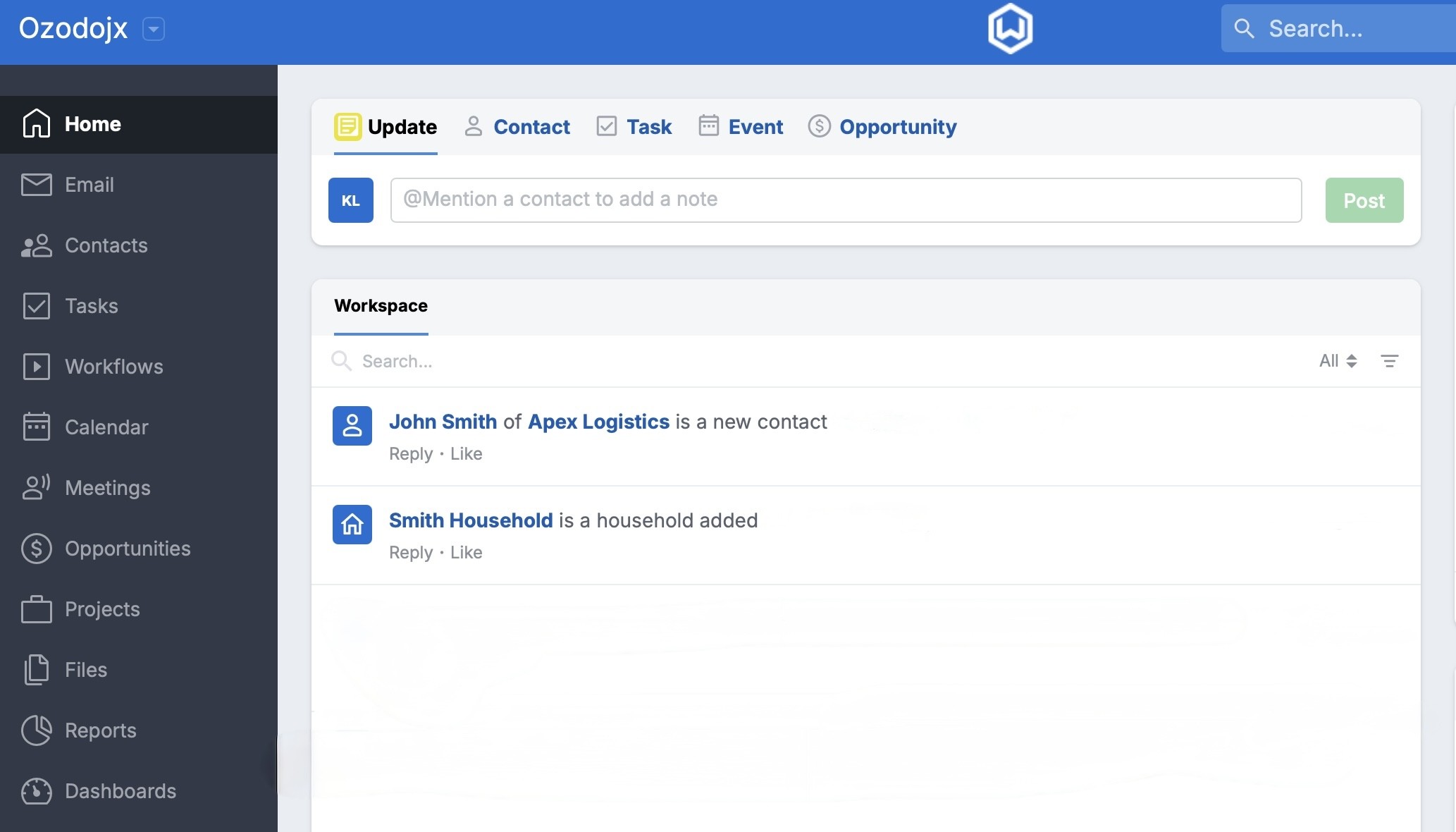
When a CRM Is Truly AI-Ready for RIAs
Every CRM demo now says AI. The question that matters is simpler: can a model read your client data and write back to it, under your control? Here are the three tests.
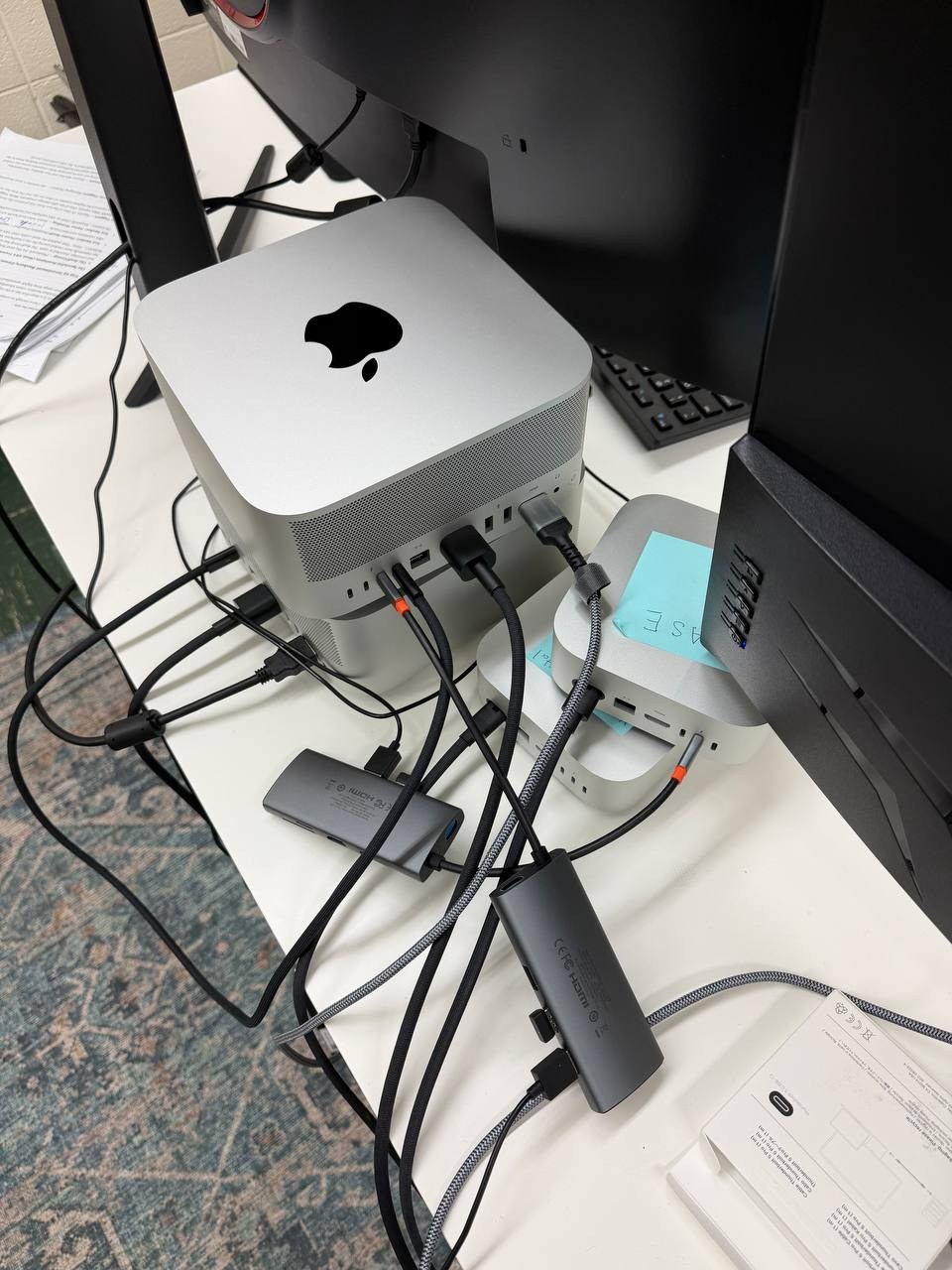
We Spent $20,000 to Run AI Locally
We bought two Mac Studios to run open models in house and stop renting AI by the token. The hardware worked. The economics, and the intelligence gap, did not.
About the author

Written by
Michael Pavlovskyi
Founder, Bace Agency
Michael builds custom Claude and GPT workflows for insurance agencies, law firms, and PE firms on Chicago's North Shore. Speaker at Northwestern and Lake Forest College on practical AI adoption for professional services.
Connect on LinkedInSee it in your firm
Book an audit.
A free 30-minute AI audit. No obligation, no pitch deck.
Book a free AI audit