
Your Judgment Is the Job AI Can't Do
As Claude absorbs the paperwork, the advisors who win are the ones who never let admin work stand in for advice.


Key Takeaways
- ✓ AI is removing the data entry and admin work that used to fill an advisor's day, not the advisor's job itself.
- ✓ Judgment, reading what a client actually needs and standing behind the recommendation, is work no model performs.
- ✓ Firms that redirect AI-freed time into client conversations and proactive outreach build the relationship the fee is actually paying for.
- ✓ Every AI-drafted recommendation still needs a human's fiduciary sign-off before it reaches a client.
If you run a wealth management practice in Lake Forest or anywhere else on the North Shore, you already know how much of your week disappears into re-keying the same client numbers between a custodian statement, your planning software, and a follow-up email. That work is vanishing fast. It is not your job that is vanishing with it.
Claude can now read a client's full account history, draft the meeting note, and flag what changed since the last review, often before you have finished your coffee. What is left for you is the part that was always the actual job: deciding what a client should do with that information, and standing behind the call when markets do not cooperate. That is judgment. No model performs it, and it is worth more, not less, now that AI has taken the busywork off your desk.
AI is removing the data entry, statement reconciliation, and note-taking that used to fill an advisor's day, not the advisor's job. Claude can draft and organize client information in minutes. What is left, judging what a client should do with that information, and the trust that makes a client accept the call, is work no model performs.
What Is AI Actually Taking Off an Advisor's Plate?
Start with what is actually changing, because the worry usually runs ahead of the fact. In November 2024, Anthropic announced Claude for Financial Services, built with partners across the industry to read filings, reconcile portfolio data, and draft research summaries at a scale no back office matches by hand. That is the layer of the job disappearing: account aggregation, statement reconciliation, first drafts of the meeting note, and the compliance file nobody enjoyed building anyway.
CRM platforms built for advisors, Wealthbox and Redtail among them, are already wiring AI drafting into the workflow you use every day. Hand Claude a client's account statement and last quarter's notes, and it will draft the update memo in the time it takes you to pour coffee. None of that requires you in the room.
Here is the definition worth pinning down before going further. A financial adviser is a professional who helps a client manage money and plan toward financial goals, a role that has always mixed information gathering with a judgment call about what to do with it. AI is eating the first half. It has not touched the second.
Why Judgment Is the Advisor's Real Moat
Judgment is the decision a reasonable person could make two different ways, informed by data but not determined by it. When a client wants to sell an appreciated position this year instead of spreading the gain across two, you can get Claude to lay out the tax math in seconds. What no model can do is read that this particular client is more scared of running out of money than of paying tax this April, and price your recommendation to that fear instead of to the spreadsheet. That read comes from years sitting across the table from your client, not from any file a model can open.
"The most important contribution management needs to make in the 21st century is to increase the productivity of knowledge work and knowledge workers."
Peter Drucker, Management Challenges for the 21st CenturyDrucker wrote that in 1999, well before anyone was drafting client memos with AI, and the North Shore advisor is exactly the knowledge worker he meant. Claude's largest context window can now hold a client's full plan, tax returns, and years of correspondence at once, which sounds like it replaces the advisor's memory. It replaces the filing cabinet. Your memory was never really about recall, it was about knowing which fact in that file mattered this quarter and which one did not.
What Are Clients Really Paying an Advisor to Do?
Ask a client why they still pay an advisor instead of running their own numbers through a robo-advisor, and the honest answer is rarely the trade execution. Think back to March 2020, or the fall of 2022: the clients calling wanted to sell everything, and what they paid for was the conversation that talked them off that decision, not the download of a trade ticket. A financial adviser's value has always leaned harder on that conversation than on the paperwork behind it, and AI just made the paperwork nearly free.
That is not a threat to the fee. It is the argument for it. If a flat AI subscription now handles the reconciliation and the first-draft research, the fee has to be earned entirely in the room, on the calls that carry real consequences. Our AI consulting work is built around exactly that shift: clear out the admin, then make sure the time it frees actually goes toward the client conversations that justify the fee, not toward more admin.
"Risk comes from not knowing what you are doing."
Warren Buffett| Task | Before AI | After AI |
|---|---|---|
| Client account data entry and reconciliation | Most of the week | Minutes, reviewed rather than re-typed |
| Meeting notes and follow-up emails | End-of-day catch-up | Drafted before the client leaves the room |
| Portfolio and plan updates | Manual re-entry across systems | Auto-drafted, advisor checks the judgment calls |
| Client conversations and planning | Squeezed between admin | The main event |
Where to Redirect the Time AI Frees Up
Freeing five or ten hours a week only matters if you point them somewhere better than a longer lunch. McKinsey's research on financial services keeps landing on the same theme: the moves that raise a firm's value touch the client relationship directly, not the back office. Three places to put the freed time:
First, proactive check-ins timed to volatility: the call a client remembers is the one you made before they called you. Second, deeper planning conversations: estate coordination with an attorney, tax coordination with a CPA, the work that needs a human to weigh three professionals' opinions into one plan. Third, actual business development: the conversations that grow the practice instead of just maintaining it.
SAMPLE CLAUDE PROMPT
"Attached are my notes from today's client review and the client's current allocation summary. Draft a concise memo for the file: key discussion points, decisions made, and follow-up items with owners and dates. Flag anything that needs my sign-off before it goes to the client, and do not draft investment recommendations yourself."
Try that exact prompt this week on one real meeting. Read the draft before you send anything, but notice how much of the file work is already done.
If you are not sure where your practice's admin load is heaviest, our AI readiness quiz is a fifteen-minute way to find out. See how this played out in our North Shore family office case study: the bottleneck was never the investment process itself, it was everything running around it.
The Way Advisors Get This Backward
Two mistakes are equally easy to make here. The first is ignoring AI entirely and letting a competitor down the street cut their admin time to a fraction of yours while you still bill hours you spend re-keying data. The second, more dangerous mistake, is the opposite: letting the model make the judgment call instead of just doing the drafting. Fiduciary duty is the legal obligation to act in a client's best interest ahead of your own, and that duty does not transfer to a language model no matter how good its draft reads.
Claude can draft a rebalancing recommendation. It should never be the last check before that recommendation reaches a client. Read every draft. Correct the ones that miss a client's actual situation, the ones a model has no way to know because it was never in the room for the conversation that revealed it. The advisor who treats an AI draft as a finished answer is not modern. That advisor is just handing off the part of the job the client is actually paying for.
Watch how the next round of AI releases handles longer documents and harder reasoning. Anthropic is not slowing down, and neither are the advisors who figure out early that the tool clears space for judgment, it does not substitute for it. This week, pick one recurring task, meeting notes, statement reconciliation, or plan updates, and hand it to Claude for seven days. Keep your hand on every judgment call it drafts. Then look at what happened to your calendar.
If you want help figuring out exactly where your practice's admin time is going and what to do with the hours AI frees up, a free 30-minute AI audit is available, in person on the North Shore or on video. No obligation. The output is a one-page plan your team can act on this quarter.
Frequently Asked Questions
Will AI replace financial advisors? +
AI is unlikely to replace financial advisors because it cannot take on fiduciary judgment or build the trust a client relies on during volatile markets. Tools like Claude are replacing the manual data entry, statement reconciliation, and note-drafting that used to fill an advisor's day, freeing that time for the judgment calls and conversations clients actually pay for.
What is Claude for Financial Services? +
Claude for Financial Services is a set of tools Anthropic announced in November 2024, built with industry partners to help financial professionals read filings, reconcile portfolio data, and draft research summaries faster than manual review allows.
How should a wealth advisor start using AI without risking compliance? +
Start with drafting, not deciding: use Claude to draft meeting notes, summarize account changes, or prepare a first-pass research memo, then have the advisor review and approve every judgment call before it reaches a client. Never let a model issue an investment recommendation without a human sign-off.
What should an advisor do with the time AI frees up? +
Redirect it toward the work that grows the relationship: proactive check-ins timed to market volatility, deeper planning conversations that coordinate a client's CPA and attorney, and business development conversations that grow the practice instead of just maintaining it.
Related Articles
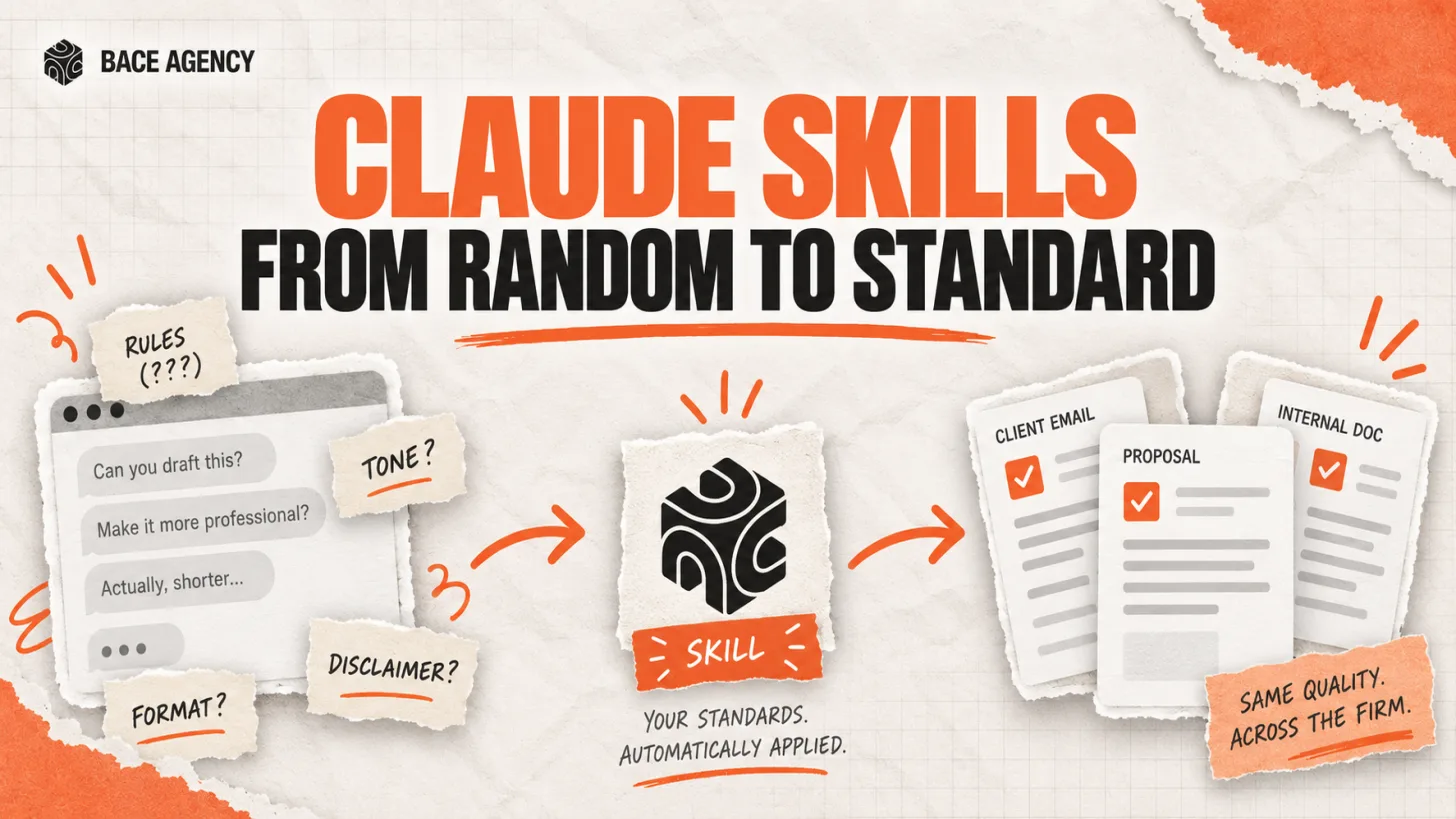
Claude Skills Give a Law Firm One AI Standard
One associate gets sharp drafts, another gets generic filler from the same tool. A Claude Skill turns one person's rules into a standard the whole firm can rely on.

Small North Shore Firms Are Beating Big Ones to AI
While a national firm spends a year debating AI strategy, the small practice down the street already answers clients faster. The gap compounds every week.
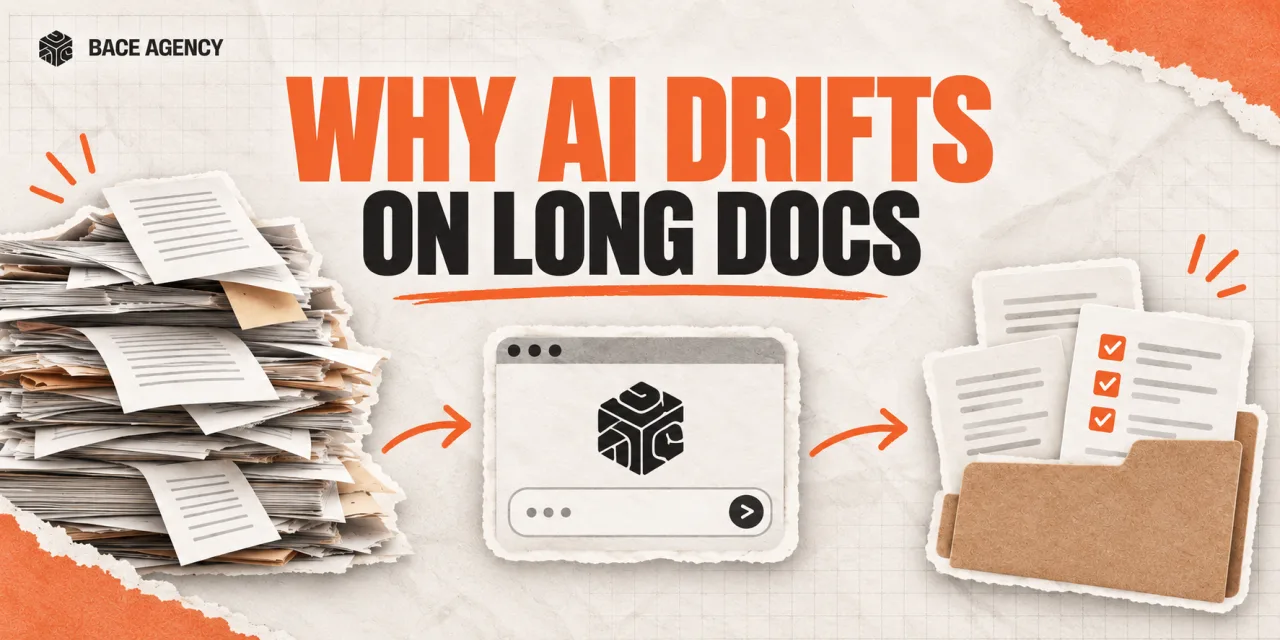
Context Windows: Why AI Drifts on Long Documents
AI answers a short question brilliantly, then gets lost in a forty-page contract. The reason is one concept, the context window, and it changes how you should feed it documents.
About the author

Written by
Michael Pavlovskyi
Founder, Bace Agency
Michael builds custom Claude and GPT workflows for insurance agencies, law firms, and PE firms on Chicago's North Shore. Speaker at Northwestern and Lake Forest College on practical AI adoption for professional services.
Connect on LinkedInSee it in your firm
Book an audit.
A free 30-minute AI audit. No obligation, no pitch deck.
Book a free AI audit