
AI Reconciliation for North Shore Family Offices
Matching a trust's cash to a dozen custodial statements by hand is one keystroke from a real error, and Claude now reads every statement at once.


Key Takeaways
- ✓ Multiple legal entities are a structural feature of the family office exemption, not a filing error, and each one needs its own reconciliation.
- ✓ Campden Wealth's 2025 North America Family Office Report ranks manual, spreadsheet-based processes as family offices' top operational risk.
- ✓ Claude's million-token context window lets a model read a full month of statements across many entities in one pass instead of one file at a time.
- ✓ AI reconciliation speeds up the matching work; it does not replace a controller's judgment on what an unresolved mismatch actually means.
If your Lake Forest family office runs money through a dozen trusts, LLCs, and investment partnerships, closing the books each month usually means someone on staff copying numbers between eight or ten different bank and custodial statements, then chasing the one transfer that got booked twice. None of that is analysis. It is data entry with real stakes, and a model like Claude can now take it off a controller's desk.
AI multi-entity reconciliation uses a model like Claude to read bank, custodial, and ledger statements across every trust and LLC a family office runs, matching transactions and flagging mismatches in one pass instead of a controller doing it by hand across a dozen spreadsheets. It does not replace the sign-off. It removes the matching.
What Is Multi-Entity Reconciliation, and Why Is It So Hard?
Multi-entity reconciliation is the process of matching every transaction, transfer, and balance across a family's trusts, LLCs, and investment vehicles until each entity's own books tie out to its own bank and custodial statements. For a single operating company, that is an afternoon task. For a family office running twenty or thirty entities, each with its own account, its own custodian format, and its own loans to the others, it becomes a standing job for at least one full-time controller.
The hard part is not the arithmetic. Addition and subtraction are not the problem. The problem is tracing which trust actually owns the wire that landed in a holding company's account, then confirming the matching debit shows up correctly in the trust's own ledger a month later, in a PDF formatted nothing like the custodian's. When Campden Wealth's 2025 North America Family Office Report asked family offices to name their biggest operational risk, manual processes and spreadsheet dependence topped the list, ahead of cybersecurity and staff turnover.
Why Your Family Office Ended Up With So Many Entities
None of this complexity is an accident. The SEC's family office compliance guide explains why: an office keeps its exemption from investment adviser registration only by managing a single family's money and staying wholly owned and controlled by that family. Every new trust set up for a grandchild, every LLC formed to hold one property apart from the operating business, every vehicle created for a deal that closed years ago adds one more set of books that never gets closed out.
Crain Currency reported on one family office managing nearly 300 legal entities across more than 20 trusts, a structure built up over decades of estate plans and deals no one went back to simplify. Benjamin Lees, who manages family office reporting at William Blair, told Crain Currency that a usable dashboard has to show the full structure: holdings by entity, and each family member's pro-rata ownership, not a single rolled-up total. The reporting side ends there. Reconciliation is the unglamorous work that has to happen first, before any of those numbers can be trusted. For a real example of this kind of cleanup, see our North Shore family office case study.
The 1M figure matters more than it sounds. Anthropic announced Claude Sonnet 4's move to a million tokens of context in 2025, enough to hold years of ledger entries, custodial statements, and K-1s in a single request instead of feeding a model one file at a time and hoping it remembers the last one.
How Claude Reads Across Trusts, LLCs, and Custodians
Claude for Financial Services is Anthropic's push into exactly this kind of work. According to Anthropic's announcement, the offering gives finance teams direct connectors to real-time market data and portfolio analytics, layered on top of the long-context reading that lets Claude hold a full account history in a single request. S&P Global's own announcement of its data integration with Claude points the same direction: the vendors are betting that reading and cross-referencing financial documents, not summarizing them, is where the real work is.
For your family office, the practical version looks like this. Feed Claude the trust's bank statement, the custodian's monthly report, and the general ledger export from whatever system your controller already runs. Sage Intacct, QuickBooks, and NetSuite all export in formats Claude can read directly (connecting these systems is exactly the kind of setup our AI consulting work covers). Ask it to match every transaction across the three documents, flag anything that does not tie out, and show its work instead of returning a single pass or fail verdict. This is the part that matters. A reconciliation tool your controller cannot audit is nothing more than a black box holding your family's money.
SAMPLE CLAUDE PROMPT
"Attached are the bank statement, custodial statement, and general ledger export for [Trust Name] for [Month]. Match every transaction across the three documents by date, amount, and counterparty. List any transaction that appears in one document but not the others, and any amount that does not match exactly. For each mismatch, state which document you found it in and why it looks unresolved. Do not mark anything reconciled unless it matches in all three sources."
How Much Does AI Reconciliation Cost, and Where Should You Start?
Cost here is directional, not a menu. Claude for Financial Services runs on the same models available through a standard Claude plan; there is no separate reconciliation product to buy. An office that already pays for a Claude subscription can start testing this against one entity's books this month, without a new procurement cycle. If you are not sure whether your firm's current AI setup even supports this kind of document work, our AI readiness quiz is a fast way to find out.
The real cost is volume. Reading full statements for two dozen entities every month adds up fast on a plan billed by the token. A flat Claude subscription caps that at a predictable monthly number instead of billing per statement fed in, which is the same math that makes flat plans the better fit for any high volume document task, not just reconciliation.
Week 1: Map Every Entity to Its Accounts
Before Claude can reconcile anything, someone has to write down which bank accounts, custodial accounts, and ledger codes belong to which trust or LLC. Most family offices carry this knowledge in one controller's head. Get it into a spreadsheet everyone can see.
By the end of Week 1, you have a single reference map covering every entity your office runs.
Week 2: Run One Entity Through Claude
Pick the entity with the highest monthly transaction volume, not the simplest one. Feed Claude that entity's bank, custodial, and ledger documents for the last closed month and compare its output against what your controller already reconciled by hand.
By the end of Week 2, you know whether the gap between Claude's output and your controller's is measured in minutes or in real dollars, and that tells you how fast to roll it out to the rest of the entities.
| Step | Manual Reconciliation | Claude-Assisted Reconciliation |
|---|---|---|
| Matching transactions across statements | Controller cross-references line by line | Claude matches by date, amount, and counterparty in one pass |
| Formats handled | One custodian format at a time | Multiple PDF and CSV formats read together |
| When mismatches surface | Found at month-end close | Found and cited to a source document before close |
| Sign-off | Controller reconciles and signs | Controller reviews flagged items and signs |
Where Human Judgment Still Wins
Claude will tell you two entries do not match. It will not tell you whether a missing $40,000 wire is a data entry error or the first sign a trustee moved money without the family's knowledge. Peter Drucker had exactly this distinction in mind when he separated the two disciplines that matter in any organization.
"Efficiency is doing things right; effectiveness is doing the right things."
Peter Drucker, on management and knowledge workAutomated matching is efficiency. Deciding what an unresolved mismatch means for a family's trust, and who needs to hear about it, is effectiveness, and that still belongs to your controller and your outside counsel. Offices that get this wrong treat AI reconciliation as a replacement for the sign-off. The ones that get it right treat it as the thing that gets a controller to the judgment calls faster, instead of losing the first three weeks of every month to data entry.
The next thing worth watching is not a bigger context window. It is whether your custodians start exposing structured data feeds instead of PDF statements, since a clean feed removes the last manual step in this chain. Until then, the fastest place to start is the entity map from Week 1.
For family offices ready to see this against their own books, a free 30-minute AI audit is available, in person on the North Shore or on video. No obligation. The output is a one-page plan your controller can act on inside a quarter.
Frequently Asked Questions
What is AI multi-entity reconciliation? +
AI multi-entity reconciliation is the use of a model like Claude to read bank, custodial, and general ledger statements across every trust, LLC, and partnership a family office runs, matching transactions and flagging discrepancies in one pass instead of a controller doing it by hand across a dozen spreadsheets.
Can Claude replace my family office controller for reconciliation? +
No. Claude can match transactions and flag what does not tie out, but deciding what an unresolved mismatch means for a family's trust, and who needs to know about it, still requires a controller's judgment and sign-off.
How much does AI reconciliation cost for a family office? +
There is no separate reconciliation product to buy. Claude for Financial Services runs on the same models available through a standard Claude plan, so an office already paying for a subscription can test this against one entity's books without a new purchase. A flat subscription also caps the cost of reading many statements every month, compared to billing per document on a pay-per-token plan.
What documents does Claude need to reconcile multiple entities? +
At minimum, the bank statement, the custodial statement, and the general ledger export for each entity, for the same period. Claude can read these directly from common formats exported by Sage Intacct, QuickBooks, and NetSuite.
Is family financial data safe to use with Claude for reconciliation? +
Anthropic's enterprise terms state that customer data submitted through its business products is not used to train its models by default, but every family office should confirm the specific data handling terms in its own agreement before uploading account numbers or statements.
Related Articles
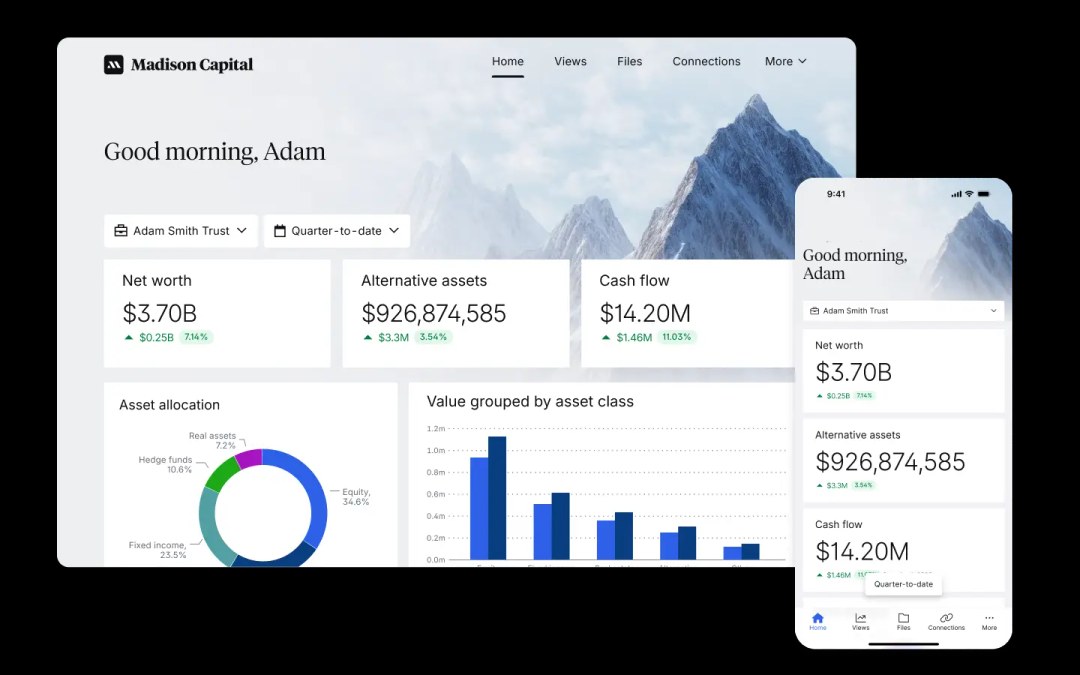
How AI Helps Family Offices Talk to Heirs
Most family offices spend years preparing the legal and tax side of a wealth transfer and almost no time preparing the next generation to understand it. Claude can help close that gap.
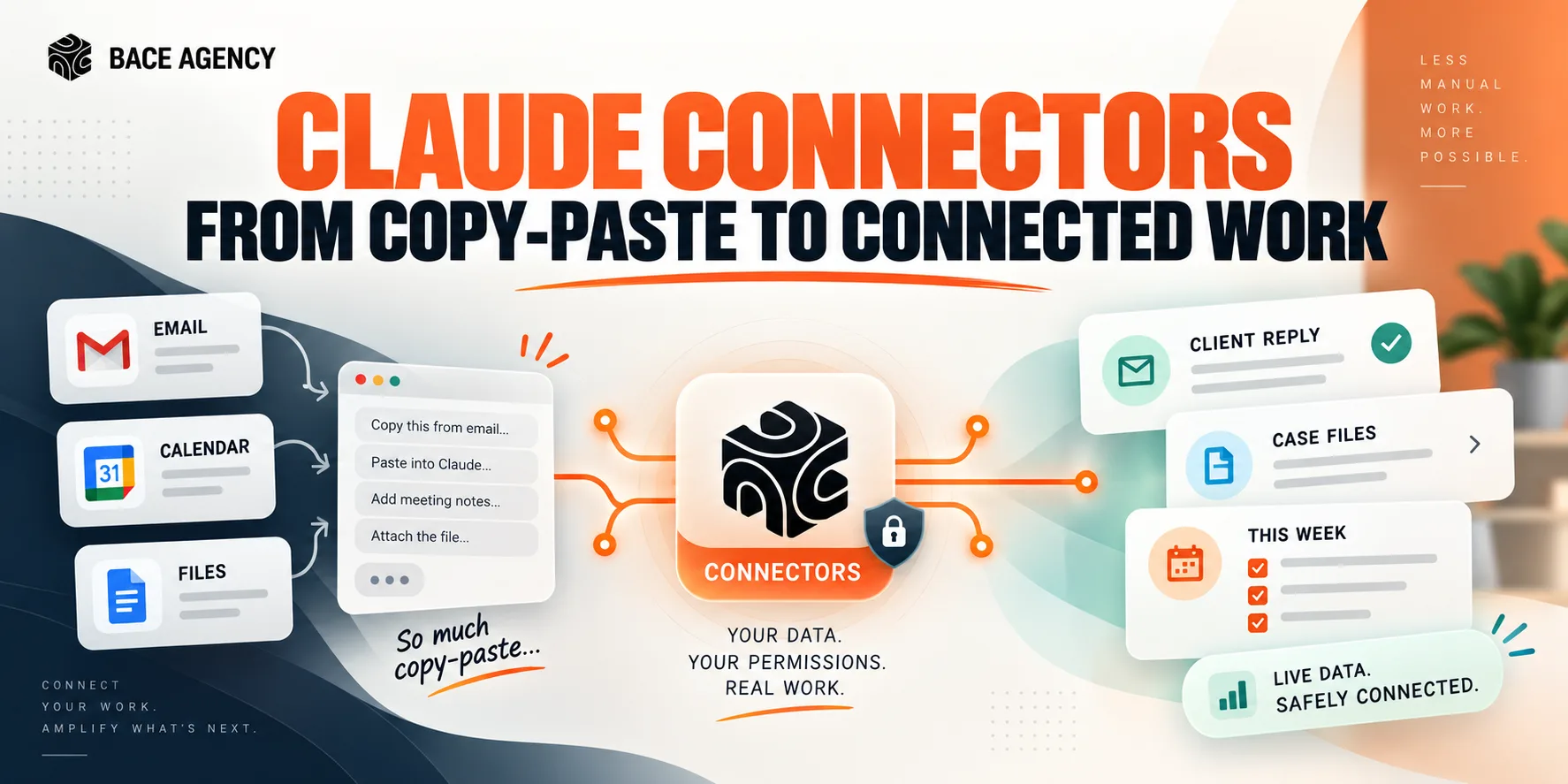
Claude Connectors for Winnetka Accounting Firms
AI stays a clever assistant until it can see your real email, files, and calendar. Connectors are that bridge, and the win depends on connecting narrowly and keeping the writes on approval.
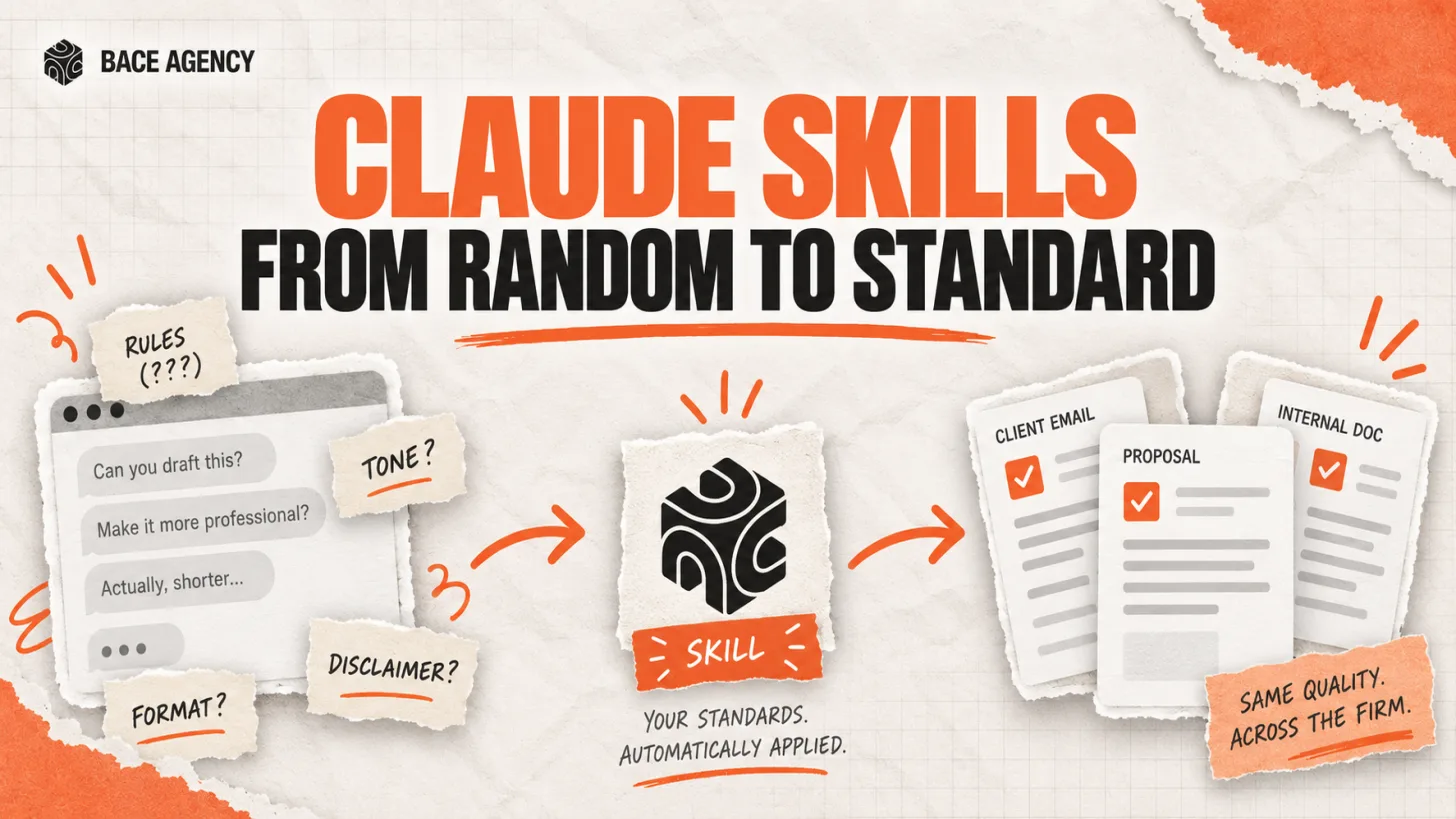
Claude Skills Give a Law Firm One AI Standard
One associate gets sharp drafts, another gets generic filler from the same tool. A Claude Skill turns one person's rules into a standard the whole firm can rely on.
About the author

Written by
Michael Pavlovskyi
Founder, Bace Agency
Michael builds custom Claude and GPT workflows for insurance agencies, law firms, and PE firms on Chicago's North Shore. Speaker at Northwestern and Lake Forest College on practical AI adoption for professional services.
Connect on LinkedInSee it in your firm
Book an audit.
A free 30-minute AI audit. No obligation, no pitch deck.
Book a free AI audit