
How AI Helps Family Offices Talk to Heirs
North Shore family offices that let Claude translate the trust document are the ones heirs still call ten years from now.


Key Takeaways
- ✓ The biggest risk in a wealth transfer is not the tax bill. It is the next generation not understanding, or trusting, the plan.
- ✓ Claude can turn a forty-page trust into a plain-language memo an heir actually reads before the next family meeting.
- ✓ Family offices that document decisions as they happen, not just at signing, keep the next generation's trust through the transfer.
- ✓ A flat-rate Claude plan lets a family office translate every long document without metering the bill per page.
If your Lake Forest family office still hands the family's revocable trust to a twenty-eight-year-old heir and calls that preparation, you already know how the next conversation goes. It goes nowhere. The document sits unread in an inbox, the meeting gets rescheduled twice, and the advisor who spent a decade building that family's plan starts wondering whether the relationship survives the transfer at all.
That is the real risk in a wealth transfer. Not the tax bill. Not the asset allocation. The risk is a next generation that never understood the plan well enough to trust it, and an advisor with no good way to close that gap before the money actually moves.
AI can help family offices bridge the wealth transfer conversation by turning dense trust and investment documents into plain language memos heirs actually read, prepping advisors for generational meetings, and keeping a running record of family decisions in one place. Used well, it does not replace the advisor relationship. It protects it.
The Wealth Transfer Every North Shore Family Office Is Facing
A family office is a private organization that manages the investments, tax planning, and long-term financial affairs of a single wealthy family, according to Wikipedia. Lake Forest, Winnetka, and Glencoe all have them, quietly, often run out of a small office with a handful of staff who have known the family for twenty years.
Those staff built their systems for the person who founded the wealth, or the generation right after. A large share of the money currently sitting inside family offices nationally will move to a new generation over the next two decades, whether that generation is ready to receive it or not. Estate planning handles the legal mechanics of that move. It does almost nothing to prepare the person receiving the money to understand what they are getting, why it is structured the way it is, or what their parents actually wanted for it.
That gap is not new. What is new is that a family office finally has a practical way to close it without hiring a full-time next-gen education staff member.
Why Next-Gen Heirs Tune Out Their Family's Advisors
Heirs in their twenties and thirties did not grow up reading forty-page trust documents. They grew up texting, skimming, and expecting an answer in one paragraph, not twelve. When an advisor hands over a document written for a tax attorney and asks a twenty-nine-year-old to have opinions about it, the conversation stalls before it starts.
"The most important thing in communication is hearing what isn't said."
Peter Drucker, on management and communicationWhat usually is not being said: the heir does not understand the document, feels embarrassed to admit it, and nods through the meeting instead of asking. The advisor reads the nodding as agreement. Six months later the family office gets a call from a different firm.
How Does AI Help Family Offices Talk to the Next Generation?
AI, and specifically Claude, closes that gap by doing the translation work an advisor does not have time to do by hand for every heir, every document, every quarter. Feed it the trust, the investment policy statement, and the estate plan, and it can produce a plain-language memo pitched at whatever level the heir actually needs, without changing what the document legally says.
According to Anthropic's product page, Claude can hold a full trust and its cover memo in a single conversation without losing earlier context. Its Projects feature keeps a workspace open across sessions. Last quarter's family meeting notes are still there. Unlike a metered API tool, a flat consumer or Team plan charges the same whether you translate one document a month or twenty.
What Can Claude Actually Do for a Family Office This Quarter?
Most family offices already run portfolios through a platform like Addepar or a CRM like Wealthbox, with documents sitting in whatever folder structure the outside law firm set up years ago. None of that has to change. Claude sits on top of it, not instead of it.
Three uses fit almost every family office without a big rollout:
- Turn the trust and investment policy statement into a two-page plain-language memo for each heir, at the reading level and financial literacy that heir actually has.
- Draft the advisor's talking points for the next family meeting, flagging which provisions usually generate the most questions from a first-time heir.
- Keep a running, searchable record of what was decided and why at each family meeting, so the reasoning survives even after the advisor who built it retires.
"Someone's sitting in the shade today because someone planted a tree a long time ago."
Warren Buffett, on long-term thinkingThe real job of a next-gen wealth conversation is making sure the person sitting in the shade understands who planted the tree, and why. I covered a related version of this problem in our family office case study, where the same translation gap showed up around investment reporting, not just estate documents.
SAMPLE CLAUDE PROMPT
"Here is our family's revocable trust and the most recent quarterly investment summary. Acting as a translator for a first-time heir with no legal or finance background, rewrite the key provisions in plain English, flag anything that needs a family decision in the next 12 months, and list three questions I should ask our advisor before the next meeting."
A 3-Step Plan to Start This Quarter
Pick One Document, Not All of Them
Choose the single document that causes the most confusion at family meetings, usually the trust or the investment policy statement. Run it through Claude and produce a two-page plain-language version.
By the end of the week, you have one memo you can hand to the next heir before, not during, the meeting.
Run the Meeting Prep Test
Before the next family meeting, ask Claude to draft talking points aimed specifically at the heir attending, not a generic agenda. Compare it against what the advisor planned to say.
If the two versions read differently, that gap is exactly what the heir has been missing.
Put Someone in Charge of the Record
Assign one person, inside the family office or the family itself, to keep a running Claude workspace of what was decided at each meeting and why. Update it the same week as the meeting, not months later.
A year in, that record is worth more to the next generation than another slide deck.
The next model release out of Anthropic will only make the document side of this easier. The harder part, deciding what your family actually wants the next generation to understand, was never something software could do for you. Start with one document this month. See if the person who inherits it can explain it back to you in plain English. That is the real test, not the signature page.
If your family office wants a second opinion on where AI fits into your next-gen process, an AI readiness check or a look at our broader AI consulting work is a reasonable place to start. For firms ready to see what this looks like in practice, a free 30-minute AI audit is available, in person on the North Shore or on video. No obligation.
Frequently Asked Questions
What is a family office? +
A family office is a private organization that manages the investments, tax planning, and long-term financial affairs of a single wealthy family, often across more than one generation.
How can AI help with next-gen wealth transfer conversations? +
AI tools like Claude can translate dense trust and investment documents into plain-language memos pitched at an heir's actual level, draft meeting talking points personalized to that heir, and keep a running record of family decisions across sessions.
Is it safe to put family financial documents into Claude? +
Claude's Team and enterprise plans include data controls built for handling sensitive business information, but a family office should still redact account numbers where possible and confirm the plan and settings in use with its own IT or compliance advisor before uploading full trust documents.
What is the biggest risk in a family wealth transfer? +
The biggest risk is usually not the tax bill or the asset allocation. It is a next generation that never understood the plan well enough to trust it, which often costs the advisor the relationship even after the legal transfer goes through cleanly.
Where should a family office start with AI this quarter? +
Start with one document: run the trust or investment policy statement through Claude to produce a plain-language version, then test whether the heir receiving it can explain it back in their own words.
Related Articles
AI Reconciliation for North Shore Family Offices
North Shore family offices juggle dozens of trusts, LLCs, and custodians every month. Here is how Claude's document reading cuts the manual reconciliation work without adding to the back office.
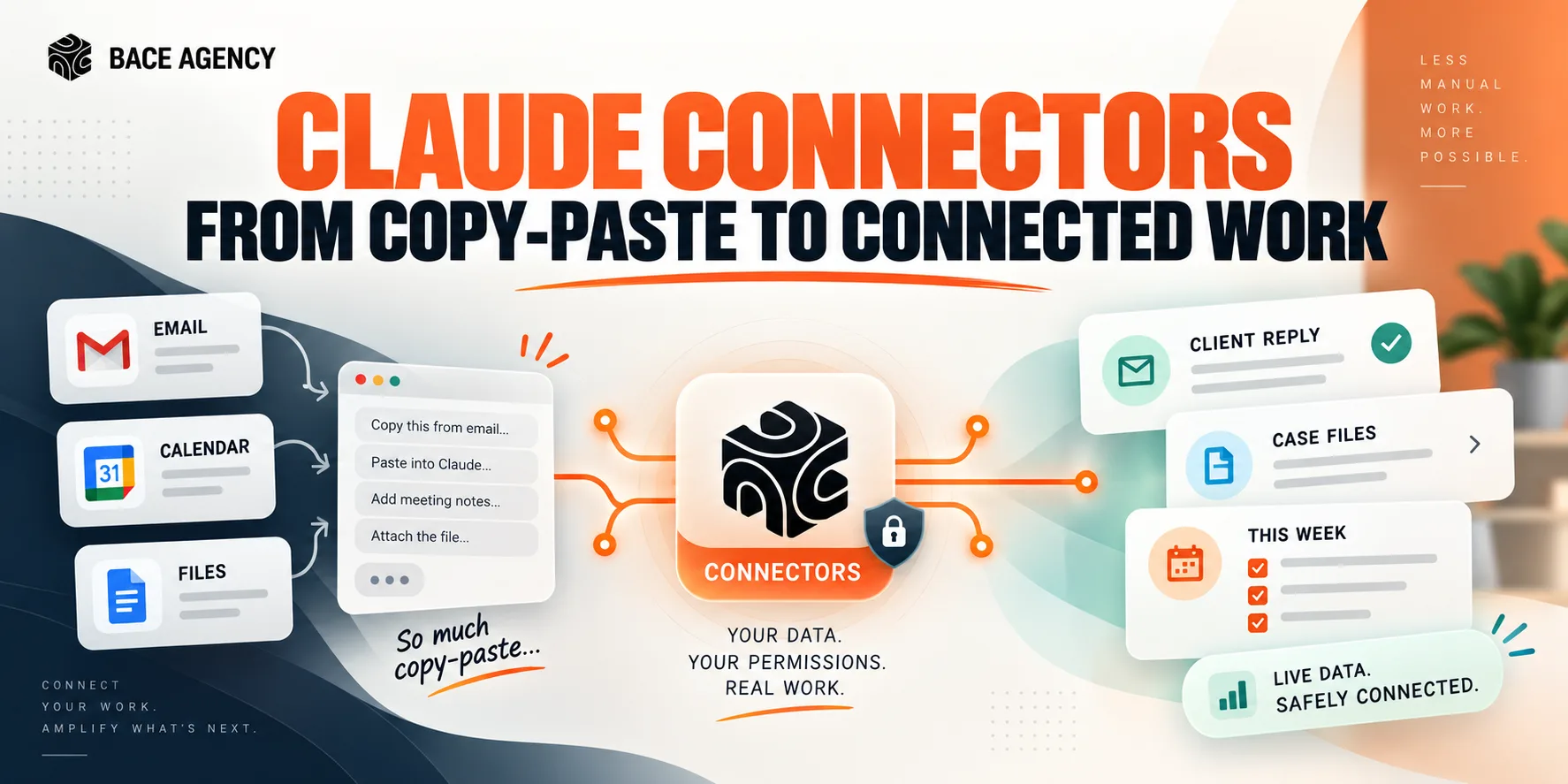
Claude Connectors for Winnetka Accounting Firms
AI stays a clever assistant until it can see your real email, files, and calendar. Connectors are that bridge, and the win depends on connecting narrowly and keeping the writes on approval.
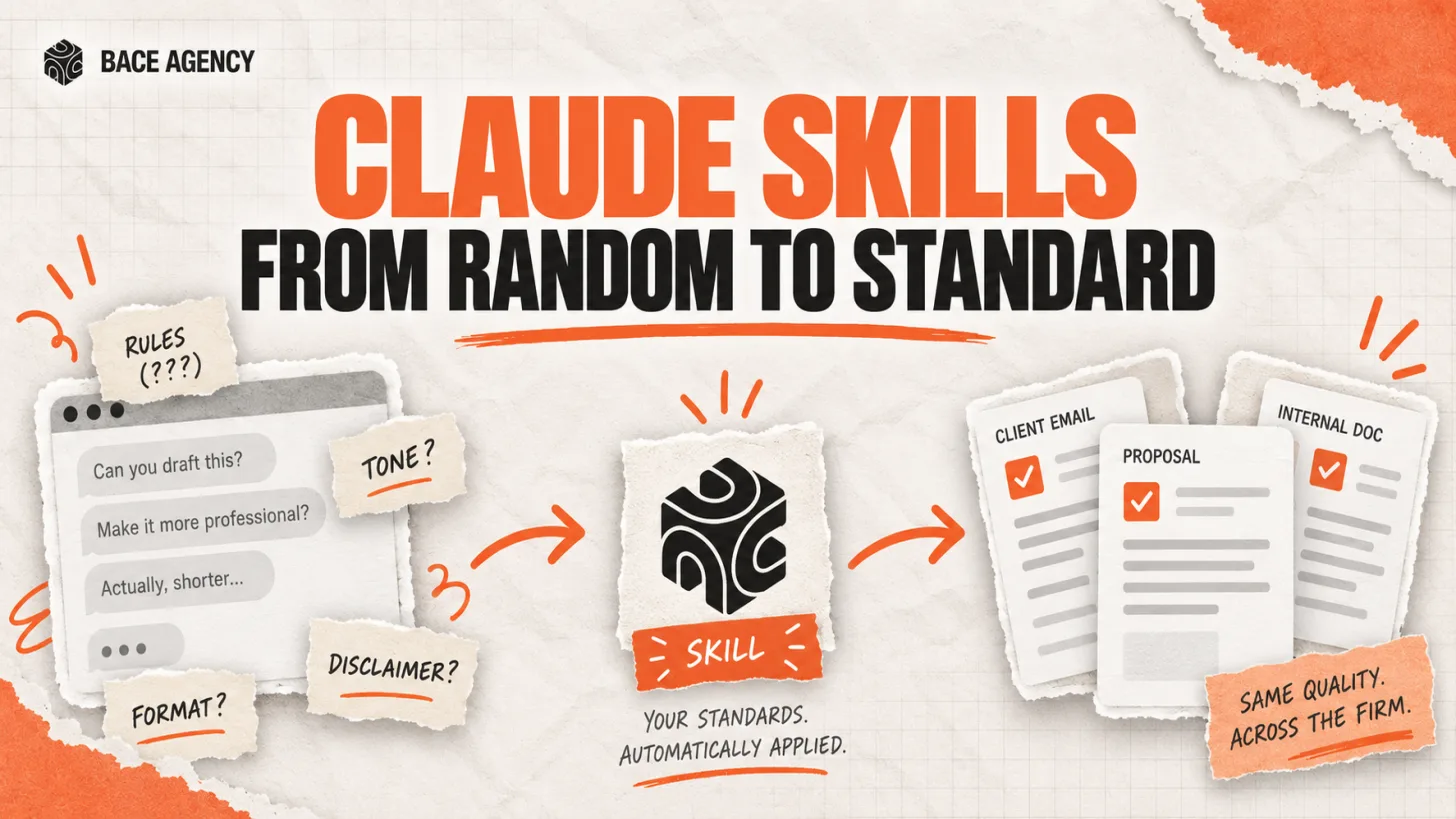
Claude Skills Give a Law Firm One AI Standard
One associate gets sharp drafts, another gets generic filler from the same tool. A Claude Skill turns one person's rules into a standard the whole firm can rely on.
About the author

Written by
Michael Pavlovskyi
Founder, Bace Agency
Michael builds custom Claude and GPT workflows for insurance agencies, law firms, and PE firms on Chicago's North Shore. Speaker at Northwestern and Lake Forest College on practical AI adoption for professional services.
Connect on LinkedInSee it in your firm
Book an audit.
A free 30-minute AI audit. No obligation, no pitch deck.
Book a free AI audit