
AI Portfolio Monitoring for Growth Equity Firms
Lake Forest funds tracking a dozen minority stakes are trading the quarterly spreadsheet review for a model that reads every reporting package the day it lands.


Key Takeaways
- ✓ AI portfolio monitoring flags KPI variance within days of a reporting package arriving, instead of waiting for the next quarterly board meeting.
- ✓ Claude's largest context window runs to 1 million tokens, enough to hold years of a single portfolio company's reporting and its original investment memo in one pass.
- ✓ Growth equity funds hold more minority positions per partner than buyout funds do, which is exactly why manual monitoring falls behind first.
- ✓ SEC recordkeeping rules for registered investment advisers apply to AI-assisted portfolio analysis the same way they apply to an analyst's own notes.
If your Lake Forest growth equity fund still waits for the quarterly board deck to learn that a portfolio company's churn spiked, you are finding out about the problem a full quarter late. Growth equity investors on the North Shore typically hold minority stakes across more companies per partner than a buyout shop does, and most of them still review portfolio KPIs the way private equity did a decade ago: a spreadsheet, an email thread, and a board meeting once every 90 days.
AI changes the cadence, not the underlying work. Feed the same monthly reporting packages that already land in your inbox into Claude, and you can flag a revenue miss or a burn rate spike the week it happens instead of the week before the board convenes.
AI portfolio monitoring uses a model like Claude to read portfolio company financials, board decks, and KPI reports as they arrive, then flag variances against the investment plan within days instead of a quarterly cycle. For a growth equity fund tracking a dozen minority positions, that turns monitoring from a calendar event into a running check.
What Is AI Portfolio Monitoring?
Growth capital, more often called growth equity, is private investment in a company that already generates revenue and needs cash to expand, not to survive, according to Wikipedia's overview of growth capital. That distinction matters here. A buyout fund controls the board and often installs its own finance team inside the company. A growth equity investor usually holds a minority seat and a set of information rights, which means the fund depends on the company sending clean, timely reporting, and depends on someone at the fund actually reading it closely.
AI portfolio monitoring is the practice of routing that reporting, monthly financial packages, KPI dashboards, cap tables, and board decks, straight into a model that reads all of it and compares it against the plan set out in the original investment memo. I built fraud-detection AI used by Blue Cross Blue Shield across North Carolina, South Carolina, California, and Florida before starting Bace Agency, and the underlying task is close to identical: find the pattern that breaks from the baseline before a human reviewer would catch it on a manual pass.
Why Growth Equity Firms Still Monitor by Spreadsheet
Ask a growth equity partner why monitoring still runs on a spreadsheet and the honest answer is usually headcount. Nobody budgeted for it. A buyout fund can staff a portfolio operations team because it owns the company outright. A growth equity fund holding a 20 percent stake in 8 or 10 companies rarely has the same budget for dedicated monitoring staff, so the job falls to whichever associate has a free afternoon before the board meets.
McKinsey's private equity practice has written for years about the shift from annual portfolio reviews toward continuous, data-driven tracking, and the firms making that shift are not doing it by hiring more analysts. They are pointing existing reporting at software that reads faster than a person and never skips a section because it is Friday afternoon. I covered a related version of this problem in a family office case study, where the constraint was the same: too few people, too much reporting, and too long a gap between when a number moves and when someone notices.
"What gets measured gets managed."
Often attributed to Peter Drucker, on the discipline of measurement in managementGrowth equity portfolios move faster than the quarterly cycle was ever built for. A company burning cash a third faster than plan will not wait politely for the next board meeting to say so.
How Claude Reads a Data Room and Flags Variance
The mechanics are simpler than most partners expect. Claude's largest context window now runs to 1 million tokens, enough to hold years of a single portfolio company's monthly reporting packages, its original investment memo, and its covenant terms in one conversation. The standard context window on Claude's other models is 200,000 tokens, still large enough to hold a full data room chapter without splitting files apart. Claude also reads native Excel workbooks and PDFs directly, so a reporting package does not need to be converted to a CSV before anyone can ask a question about it.
That means the actual workflow looks like this: upload the current month's reporting package alongside the prior quarter's board deck and the investment memo, then ask Claude to flag every metric that moves more than an agreed threshold away from plan. Nothing about that requires new software. It requires a habit.
SAMPLE CLAUDE PROMPT
"Attached are this month's reporting package, last quarter's board deck, and our original investment memo for this portfolio company. Compare current KPIs, revenue, gross margin, burn rate, and net revenue retention, against the plan in the memo. Flag every metric that has moved more than 10 percent off plan, note the direction, and list which covenants in the memo are closest to being tripped."
What Changes When Monitoring Runs Continuously?
The table below is not a claim about what any specific fund has measured. It describes the structural difference between a quarterly review and a continuous one.
| Monitoring task | Quarterly spreadsheet review | Continuous AI-assisted review |
|---|---|---|
| When a variance surfaces | At the next board meeting | Within days of the reporting package arriving |
| Who reads the full package | Whichever associate has time | Every page, every month, by the same standard |
| Covenant tracking | Manually cross-checked before the meeting | Checked against the memo every time new numbers arrive |
"Our favorite holding period is forever."
Warren Buffett, on why long-term investors still have to watch the business closely along the wayContinuous does not mean unsupervised. A partner still reads the flagged items and decides what matters. The change is that the flags show up before the board meeting instead of during it.
How Much Does AI Portfolio Monitoring Cost?
Most growth equity funds already pay more for monitoring than they realize, just in analyst hours instead of a line item. Claude's published pricing runs on flat monthly seats rather than the per-call API pricing that scared off funds that tried this two years ago and found the bill unpredictable. Check the current page before you budget; Anthropic updates it as new models ship.
The bigger cost question is compliance, not the software bill. A registered investment adviser has recordkeeping obligations under the Investment Advisers Act, and the SEC's Division of Investment Management treats an AI-assisted analysis the same way it treats an analyst's notes: it is a business record, and it needs to be retained and handled the way any other portfolio file is. That is a policy question your compliance officer should answer before the first data room gets uploaded anywhere, not after. We work through exactly that setup in our AI consulting engagements, and firms that want a faster gut check on where they stand can run our AI readiness quiz first.
Pick one portfolio company this week. Export its last two monthly reporting packages and the original investment memo, and run the sample prompt above against them. 30 minutes will tell you more about where your monitoring actually breaks down than another year of watching the spreadsheet slip further behind the board calendar.
For funds ready to build this into a real process instead of a one-time test, a free 30-minute AI audit is available, in person on the North Shore or on video. No obligation. The output is a one-page plan your team can act on before the next board meeting.
Frequently Asked Questions
What is AI portfolio monitoring for growth equity firms? +
AI portfolio monitoring is the practice of routing portfolio company financials, board decks, and KPI reports into a model like Claude so it can flag variances against the investment plan as new reporting arrives, instead of waiting for the next quarterly board meeting to review the numbers by hand.
How does Claude read a portfolio company's financial reporting? +
Claude reads native Excel workbooks, PDFs, and CSV files directly, and its largest context window holds up to 1 million tokens, enough to hold multiple years of a single portfolio company's monthly reporting packages, its original investment memo, and its covenant terms in one conversation, per Anthropic's published model documentation.
Is it safe for a registered investment adviser to run portfolio data through AI? +
It can be, but the same recordkeeping rules under the Investment Advisers Act that apply to an analyst's notes apply to an AI-assisted analysis. A fund's compliance officer should set the retention and access policy for portfolio data used with AI before the first file gets uploaded, not after.
Does AI portfolio monitoring cost more than hiring a portfolio operations analyst? +
Usually not. Claude's published pricing runs on flat monthly seats rather than unpredictable per-call charges, and most funds already pay for monitoring indirectly through the analyst hours spent building spreadsheet variance reports by hand before every board meeting.
Can AI portfolio monitoring replace board reporting entirely? +
No. It changes when a partner sees a problem, not who decides what to do about it. A partner still reviews every flagged variance and decides what belongs in the board deck; the model just removes the lag between when a number moves and when someone notices.
Related Articles
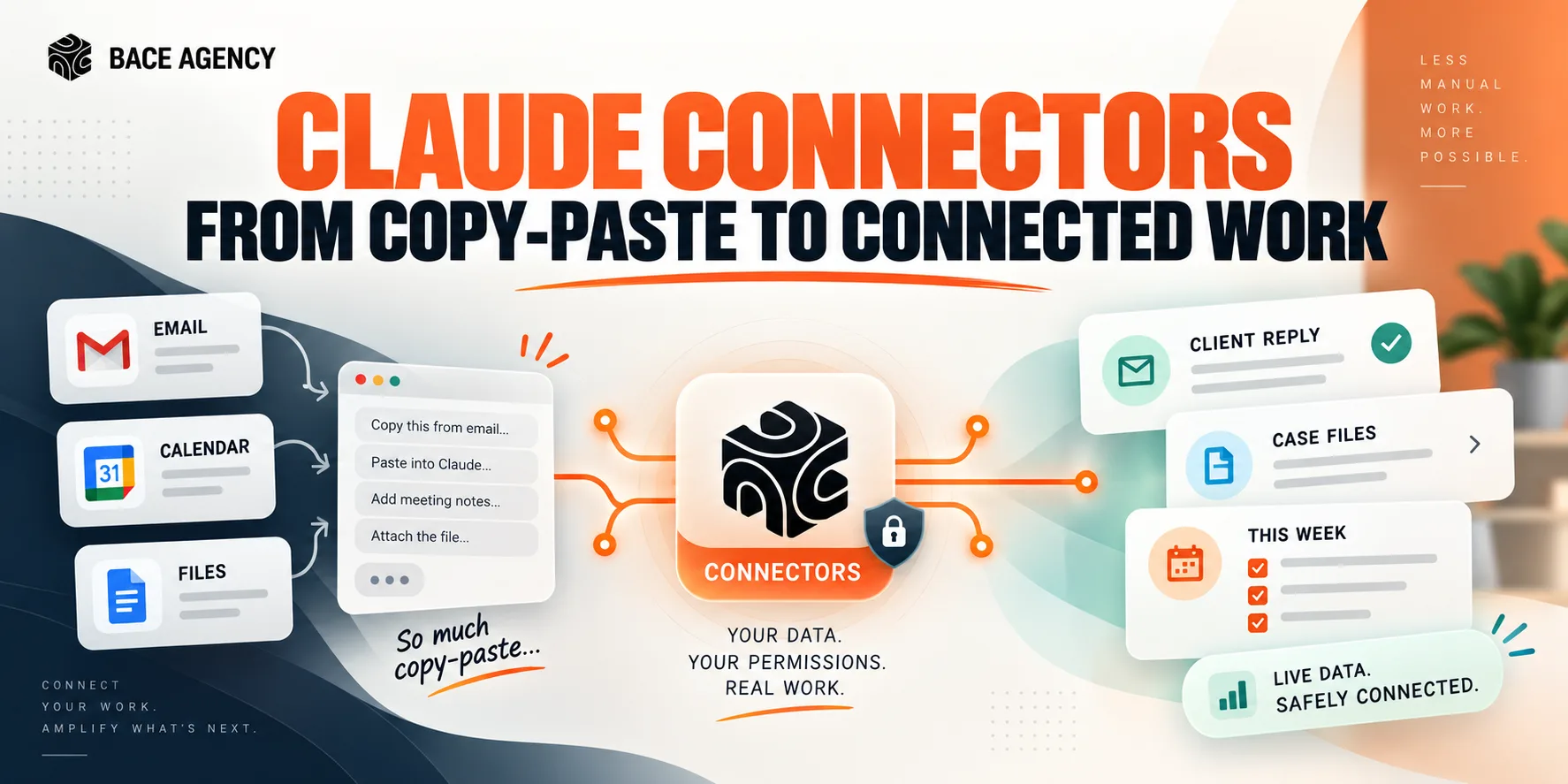
Claude Connectors for Winnetka Accounting Firms
AI stays a clever assistant until it can see your real email, files, and calendar. Connectors are that bridge, and the win depends on connecting narrowly and keeping the writes on approval.
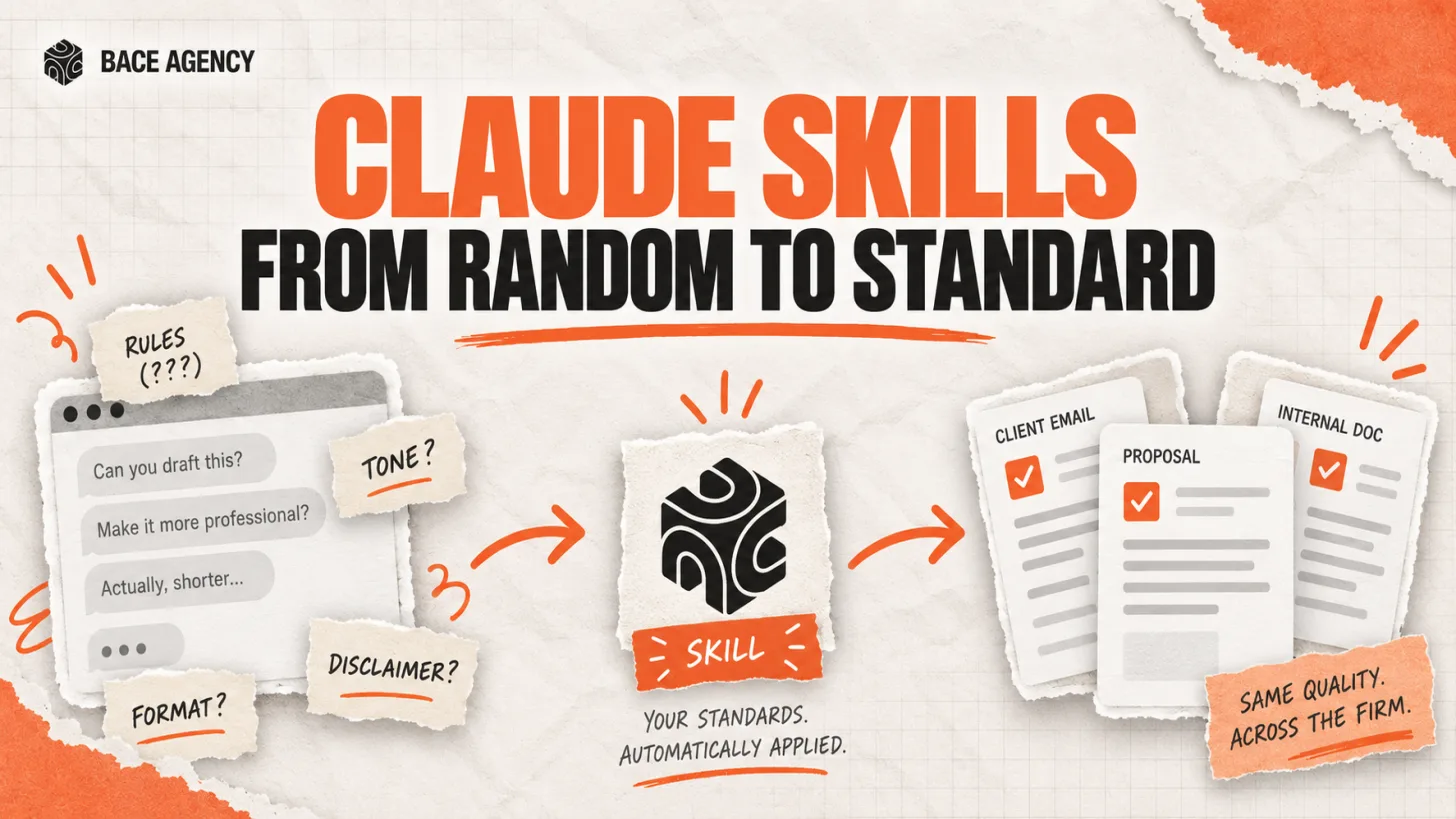
Claude Skills Give a Law Firm One AI Standard
One associate gets sharp drafts, another gets generic filler from the same tool. A Claude Skill turns one person's rules into a standard the whole firm can rely on.

Small North Shore Firms Are Beating Big Ones to AI
While a national firm spends a year debating AI strategy, the small practice down the street already answers clients faster. The gap compounds every week.
About the author

Written by
Michael Pavlovskyi
Founder, Bace Agency
Michael builds custom Claude and GPT workflows for insurance agencies, law firms, and PE firms on Chicago's North Shore. Speaker at Northwestern and Lake Forest College on practical AI adoption for professional services.
Connect on LinkedInSee it in your firm
Book an audit.
A free 30-minute AI audit. No obligation, no pitch deck.
Book a free AI audit