
Small PE Firms Don't Need More Associates
AI now runs the sourcing and diligence work an associate class used to own, and headcount no longer caps how fast a lean deal team can move.


Key Takeaways
- ✓ A two-person deal team can now run sourcing, diligence, and monitoring work that used to require a full associate class, because AI does the reading and drafting, not the judgment calls.
- ✓ Anthropic's Claude Private Equity plugin and a 200,000-token context window let a small fund hold an entire data room in one prompt, per Anthropic's own product pages.
- ✓ Headcount is no longer what caps deal throughput at a small PE or growth equity fund. Partner judgment and relationships are.
- ✓ The cost structure has flipped from a per-associate salary to a flat monthly subscription, a bigger change for small funds than for megafunds that already run in-house operating groups like KKR Capstone.
If your Lake Forest fund still budgets a new associate every time deal flow picks up, you are solving a problem AI already solved. A two-person team can now run the sourcing, diligence, and monitoring work that used to require a full research bench. Headcount used to be the ceiling. Now it is not. The number of deals you can chase no longer depends on how many people you can hire.
A two-person private equity or growth equity deal team can now run the research capacity of a much larger fund because AI tools like Claude read data rooms, draft screening memos, and track portfolio company financials continuously. The bottleneck used to be headcount. Today it is judgment, the one thing that still requires a partner.
What Changed for a Two-Person Deal Team
A research bench is the group of analysts and associates a fund uses to source targets, build diligence models, and track portfolio companies before a partner signs off on a deal. For most of private equity's history, that bench scaled with headcount. More deal flow meant another associate class, another year of training, another line on the budget.
That link just broke. Anthropic built a Claude plugin specifically for deal teams, and Anthropic's product page for Claude in private equity lists the exact workflows a junior associate class used to own: screening targets, building comparables, and drafting the first pass of an investment memo. None of that requires a person anymore. It requires a subscription and someone willing to check the work.
KKR did not wait around to find out whether AI would replace its associate class. It built Capstone, an in-house group that pushes AI-assisted diligence and portfolio work down into its holdings, and KKR's own description of Capstone reads like a preview of what every fund's operating model eventually looks like. The difference for a fund on the North Shore is that you do not need Capstone's budget or its headcount. You need a subscription and the discipline to use it well.
"If you can't feed a team with two pizzas, it's too large."
Jeff Bezos, on why small teams outperform larger onesHow Much Research Capacity Does AI Actually Add?
Money is the simplest way to see the shift. Anthropic's pricing page lists Claude Pro starting at $20 a month, per seat. That is not a discount off an associate's salary. It is a different category of cost, one that scales with how many seats you add rather than how many resumes you sort through.
Context window matters just as much as price. Anthropic's product page for Claude lists a standard context window of 200,000 tokens, room enough to hold a full data room index, a CIM, and three years of financials in a single conversation. An associate would need a legal pad and a long week to hold that much detail at once. Claude holds it before you finish your coffee.
The same capacity extends to monitoring. A fund watching fifteen portfolio companies used to need an associate dedicated to chasing down monthly financials and formatting them into a board deck. Claude can read the same financials the moment they land in an inbox and draft the variance commentary before the partner's morning coffee is done. The partner still decides what the numbers mean. The model just stops the numbers from sitting in a folder for two weeks first.
I walked through the mechanics of this for search fund operators in my earlier piece on AI due diligence, and the pattern holds for growth equity too. The model does the reading. The partner does the deciding.
Where the Associate Bench Still Earns Its Keep
None of this makes associates obsolete. It makes the job different. AI reads faster than any twenty-four-year-old with a fresh CFA study guide, but it cannot sit across from a founder and read the room. It cannot call a reference and hear the hesitation in someone's voice. Those judgment calls still belong to a person, and probably always will.
According to Bain & Company's Global Private Equity Report 2026, the multiple expansion that carried the industry for two decades has largely dried up. Returns now come from operational improvement inside portfolio companies, the kind of work that still needs a person with authority, relationships, and the standing to walk into a portfolio company's offices and change how it runs.
"The most important thing in communication is hearing what isn't said."
Peter Drucker, on the judgment data alone cannot replaceWhat This Means for Deal Throughput on the North Shore
Put the two pieces together and deal throughput stops being a headcount problem. A lean fund based in Lake Forest or Winnetka can screen more targets, run diligence on more of them at once, and keep closer tabs on portfolio companies, without adding a single associate. That is a genuinely different cost structure than the one most funds were built around.
| Deal Function | Traditional Associate Bench | Two-Person AI-Augmented Team |
|---|---|---|
| Sourcing | Associates screen inbound CIMs and cold outreach lists by hand | Claude drafts a first-pass target screen from public filings and data feeds overnight |
| Diligence | Associates build a data room index and comparables over several days | Claude reads the full data room in one pass and flags inconsistencies for a partner to check |
| Portfolio monitoring | Associates assemble quarterly board decks by hand from portfolio company reports | Claude drafts a first-pass variance memo directly from the underlying financials |
| Cost structure | Salary and bonus per associate, scales with headcount | A flat monthly subscription, scales with seats, not resumes |
Smaller funds have the most to gain here, and that is the part most industry coverage misses. A megafund with a hundred associates was never capacity constrained in the first place. A two-person or five-person fund on the North Shore was. Closing that gap is not a small improvement. It changes how many targets a small fund can credibly chase in a year.
The honest version of this argument, covered in more detail in my piece on AI and EBITDA growth, is that AI does not hand you better returns automatically. It hands you more capacity. What you do with that capacity, more deals reviewed, deeper diligence on the ones you pursue, tighter monitoring of the ones you own, is still a partner's call. Our AI consulting work with North Shore firms mostly comes down to helping a small team decide where to point that extra capacity first.
How Should a Lean Deal Team Start Using This?
Start with one workflow you already do by hand every week. For most funds, that is the first-pass screen on an inbound deal, or the quarterly variance memo on a portfolio company. Feed Claude the same materials an associate would get, and compare the draft against what a person would have produced. I also covered how a small fund can build its own repeatable version of this in my piece on the Claude Agent SDK for Lake Forest PE firms.
SAMPLE CLAUDE PROMPT
"Attached is the data room index and the target's last three years of financials. Acting as a private equity associate, draft a first-pass investment memo: business overview, key financial trends, three risks a partner should probe in diligence, and two questions to ask management before we move to the next stage. Flag anything in the financials that looks inconsistent or needs a source document to confirm."
If you are not sure which of your fund's workflows are worth automating first, our free AI readiness quiz takes about ten minutes and points at the places worth starting.
The next place to watch is how fast Anthropic and its competitors keep extending context windows and adding plugins built for specific industries. Every extension shifts more of the reading and first-draft work off a junior associate's desk and onto a subscription. Track it. Then plan your next hire, or your next non-hire, accordingly.
For funds ready to see what this looks like in practice, a free 30-minute AI audit is available, in person on the North Shore or on video. No obligation. The output is a one-page plan your team can act on before your next deal committee meeting.
Frequently Asked Questions
How many people do you need to run private equity due diligence with AI? +
A two-person deal team can now run sourcing, first-pass diligence, and portfolio monitoring that used to require a full associate class, because AI tools like Claude do the reading and first drafting. A partner still reviews every judgment call before capital moves.
Can AI replace private equity associates entirely? +
No. AI handles the reading, drafting, and first-pass analysis that used to fill an associate's week, but judgment calls like reading a founder in a room or weighing a reference call still need a person. The associate role is changing, not disappearing.
What does a Claude subscription cost for a private equity deal team? +
Anthropic's pricing page lists Claude Pro starting at $20 a month per seat, with Team and Enterprise plans priced differently for larger groups. Either way, the cost scales with the number of seats a fund adds, not with associate salaries and bonuses.
Is AI-assisted due diligence secure enough for confidential deal data? +
Enterprise AI plans typically include data retention controls and no-training-on-your-data agreements, but the specific terms vary by vendor and plan tier. Review the actual agreement for the plan you use before running a live data room through it.
Where should a small deal team start with AI research tools? +
Start with one workflow you already do every week, such as a first-pass target screen or a quarterly portfolio company variance memo, and compare the AI draft against what a person would produce. A short readiness assessment can also point at the highest-value starting place for your specific fund.
Related Articles
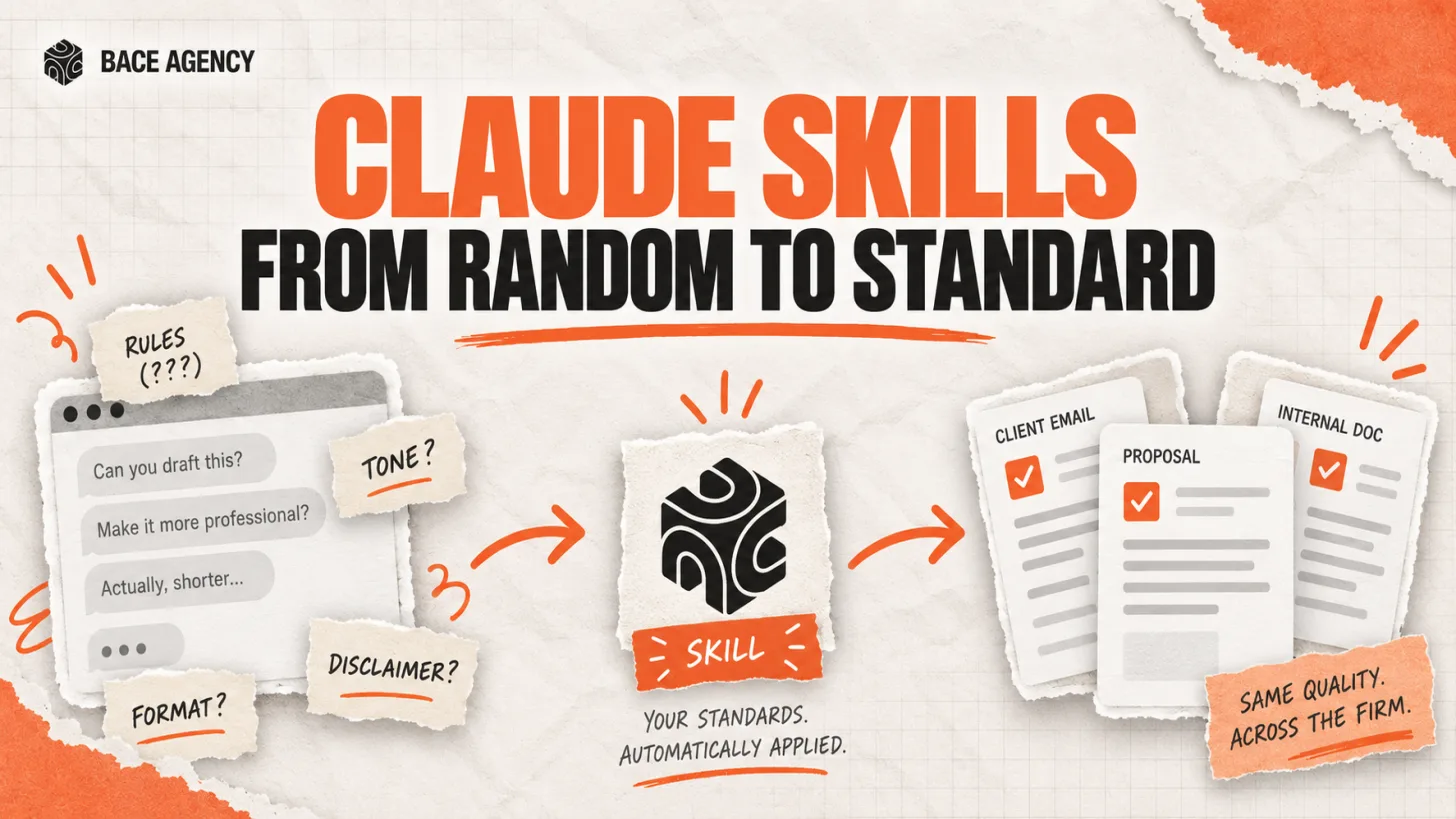
Claude Skills Give a Law Firm One AI Standard
One associate gets sharp drafts, another gets generic filler from the same tool. A Claude Skill turns one person's rules into a standard the whole firm can rely on.
Small North Shore Firms Are Beating Big Ones to AI
While a national firm spends a year debating AI strategy, the small practice down the street already answers clients faster. The gap compounds every week.
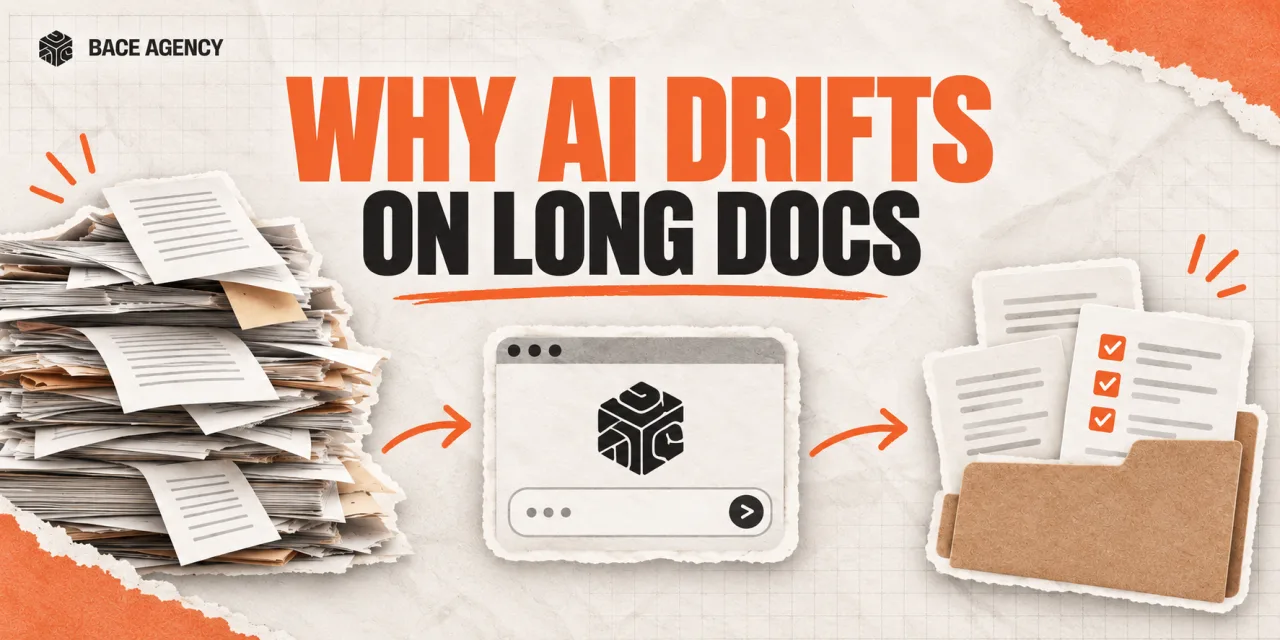
Context Windows: Why AI Drifts on Long Documents
AI answers a short question brilliantly, then gets lost in a forty-page contract. The reason is one concept, the context window, and it changes how you should feed it documents.
About the author

Written by
Michael Pavlovskyi
Founder, Bace Agency
Michael builds custom Claude and GPT workflows for insurance agencies, law firms, and PE firms on Chicago's North Shore. Speaker at Northwestern and Lake Forest College on practical AI adoption for professional services.
Connect on LinkedInSee it in your firm
Book an audit.
A free 30-minute AI audit. No obligation, no pitch deck.
Book a free AI audit