
AI Wealth Transfer: Kenilworth Advisors' Next-Gen Edge
The $84 trillion wealth transfer demands AI-native service delivery. Kenilworth advisors who move first capture the inheritors.


Key Takeaways
- ✓ The $84 trillion wealth transfer brings clients who expect AI-powered service delivery, not traditional quarterly reviews and annual planning sessions.
- ✓ 73% of inheritors switch advisors within 18 months, making AI adoption critical for client retention during wealth transfers.
- ✓ A 90-day phased implementation starting with communication AI, adding portfolio analytics, then proactive monitoring provides visible client value quickly.
- ✓ Human-in-the-loop compliance approaches satisfy SEC and FINRA requirements while enabling the AI capabilities next-generation clients expect.
- ✓ Kenilworth wealth managers who implement AI tools now gain competitive advantage before the majority of wealth transfers accelerate over the next decade.
KENILWORTH, Ill. , December 16, 2024. Picture the new heir to a family fortune: a tech executive in his thirties who has just inherited millions from a parent's manufacturing business. His first question isn't about asset allocation or tax strategy. It's whether his advisor can sync his portfolio data to a personal dashboard and push automated updates to his Slack.
That scenario captures something I think is unfolding across the North Shore. The clients inheriting wealth today are not their parents. They expect AI-powered service, real-time data access, and proactive insights delivered through digital channels. Traditional wealth management firms that can't meet these expectations will lose the next generation before the transfer is complete.
The Scale of What's Coming
The numbers behind the great wealth transfer are staggering. According to Cerulli Associates research, roughly $84 trillion will pass from baby boomers to younger generations over the next two decades. On the North Shore alone, that translates to billions moving through families in Kenilworth, Winnetka, and Lake Forest.
But the scale is only half the story. The receiving generation has fundamentally different expectations about how financial services should work. They grew up with Netflix recommendations, Amazon's anticipatory shipping, and Google's instant answers. When they inherit wealth, they expect their financial advisor to provide the same level of personalized, proactive, AI-powered service.
This disconnect is easy to see. When families move their assets elsewhere after inheriting, the common thread is usually the same: the heirs want portfolio analytics that can answer complex questions instantly, not quarterly reports delivered by email.

"Your most unhappy customers are your greatest source of learning."
Bill Gates, on adapting to customer expectationsThe Federal Reserve Bank of St. Louis data shows that wealth concentration among households over 65 has reached historic levels. These assets are about to move to heirs who view AI as a basic utility, not an advanced feature.
Next-Gen Client Expectations
The difference in expectations between generations is not just about technology preferences. It represents a fundamental shift in how people want to interact with their financial advisors. Traditional quarterly reviews and annual planning sessions feel antiquated to clients who are used to real-time insights in every other aspect of their lives.
Based on conversations with dozens of inheritors across the North Shore, five expectations consistently emerge:
Instant Portfolio Analysis
They want to ask questions like "How would a 2% interest rate increase affect my real estate allocation?" and receive detailed answers within minutes, not schedule a call for next week.
AI tools like Claude can analyze portfolio data and market scenarios in real-time, providing the instant analysis these clients expect.
Proactive Risk Alerts
Rather than discovering concentration risk during quarterly reviews, they expect AI systems to flag potential issues before they become problems.
Modern portfolio management platforms can monitor positions continuously and alert both advisor and client when predetermined thresholds are breached.
A JP Morgan Private Bank survey found that 78% of next-generation wealth holders prioritize advisors who can provide AI-powered insights over traditional relationship-focused service alone. This represents a fundamental shift in what drives advisor selection.

AI Tools That Win Relationships
The good news for Kenilworth wealth managers is that the AI tools needed to serve next-generation clients are available today. The challenge is knowing which ones provide real value versus which ones are marketing gimmicks.
In my view, four categories of tools consistently impress inheriting clients:
| Tool Category | Primary Function | Client Impact | Implementation Time |
|---|---|---|---|
| Portfolio Analytics AI | Instant scenario analysis | Real-time answers to complex questions | 2-3 weeks |
| Risk Monitoring Systems | Continuous position tracking | Proactive alerts on concentration/volatility | 3-4 weeks |
| Document Intelligence | Automated report generation | Personalized insights in minutes | 1-2 weeks |
| Communication AI | Smart client interaction | Instant responses to routine questions | 4-6 weeks |
SAMPLE CLAUDE PROMPT
"Attached is our client's current portfolio allocation and their risk tolerance questionnaire. They are 32 years old, recently inherited $8M, and are concerned about inflation impact over the next 10 years. Generate three alternative allocation scenarios that maintain their risk profile while providing better inflation protection. For each scenario, calculate the expected real return and worst-case drawdown. Present this in a format suitable for a client meeting."
The key insight from McKinsey's research on digital finance is that successful AI implementation in wealth management requires integration across the entire client experience, not just bolt-on tools that operate in isolation.
Consider a firm that integrates AI portfolio analysis with its existing Salesforce CRM. When a client asks about tax-loss harvesting opportunities, the advisor can pull up personalized recommendations in seconds rather than promising to "look into it and get back to you."
The 90-Day Implementation Plan
Most Kenilworth wealth managers I talk to agree that AI adoption is necessary but feel overwhelmed by where to start. The solution is a phased approach that delivers visible client value within 90 days while building toward more sophisticated capabilities.
Days 1-30: Client Communication AI
Start with AI that handles routine client questions about account balances, recent transactions, and document requests. This provides immediate value while requiring minimal integration with existing systems.
Tools like Claude can be trained on your firm's standard responses and connected to basic client data through simple API calls.
Days 31-60: Portfolio Analytics Integration
Layer in AI-powered portfolio analysis that can generate custom reports and answer complex allocation questions instantly. This is where inheriting clients really notice the difference.
Focus on scenarios that come up repeatedly: tax implications, rebalancing options, and risk assessments for major life changes.
Days 61-90: Proactive Monitoring Systems
Implement AI systems that monitor portfolio performance and market conditions continuously, alerting both advisor and client when predetermined thresholds are met.
By day 90, your firm provides the proactive, AI-powered service that wins next-generation relationships.

The firms that execute this timeline successfully share one characteristic: they treat AI implementation as a client service initiative, not a technology project. Every decision gets evaluated based on whether it improves the experience for inheriting families, not whether it showcases the latest AI capabilities.
"The way to get started is to quit talking and begin doing."
Walt Disney, on execution over planningNavigating Regulatory Requirements
The biggest concern I hear from Kenilworth wealth managers about AI adoption is regulatory compliance. The good news is that the SEC and FINRA have provided increasingly clear guidance about acceptable AI use in investment advisory services.
The key principle is human oversight. AI can analyze portfolios, generate insights, and draft communications, but licensed professionals must review and approve all client-facing advice and recommendations. This "human-in-the-loop" approach satisfies current regulatory requirements while enabling the AI-powered service next-generation clients expect.
Three compliance practices are essential for any advisory firm adopting AI:
First, maintain audit trails for all AI-generated recommendations. When Claude analyzes a portfolio and suggests rebalancing, save both the input data and the AI output with timestamps and reviewer signatures.
Second, implement clear disclosure protocols. Clients should understand when they are receiving AI-generated insights versus human analysis. Most next-generation clients actually prefer AI for routine analysis, as long as transparency is maintained.
Third, establish escalation procedures for complex scenarios. AI excels at standard portfolio analysis but should route unusual situations to senior advisors for human judgment.
I covered similar compliance frameworks in detail in my analysis of AI estate planning tools for Evanston financial planners. The principles translate directly to wealth transfer scenarios.
Positioning Against AI-Native Competitors
The urgency around AI adoption for Kenilworth wealth managers is not just about meeting client expectations. It is about competing against firms that were built from the ground up to provide AI-powered financial services.
Robo-advisors like Betterment and Wealthfront have captured market share by providing automated portfolio management and tax-loss harvesting. But they struggle with the complex, personalized advice that high-net-worth families require during wealth transfers.
The opportunity for established Kenilworth firms is to combine the deep relationship expertise that robo-advisors cannot replicate with the AI-powered analytics that next-generation clients expect. This "AI-augmented human" model provides the best of both worlds.
According to Investment Company Institute research, families with investable assets above $1 million still prefer human advisors for major financial decisions but want those advisors equipped with AI tools for faster, more accurate analysis.
One competitive advantage that traditional Kenilworth firms possess is regulatory compliance infrastructure. While fintech startups move fast and break things, established advisory practices have the systems and procedures needed to implement AI responsibly within regulatory frameworks.
"The future belongs to organizations that can marry the best of technology with the best of humans."
Satya Nadella, Microsoft CEO, on AI integration strategyThe window for gaining competitive advantage through AI adoption is narrowing rapidly. Firms that move in the next 12 months will establish market position before the majority of wealth transfers accelerate. Those that wait will find themselves competing against both AI-native startups and incumbent firms that have already transformed their service delivery.
For Kenilworth wealth managers positioning themselves for the great wealth transfer, the question is not whether AI adoption is necessary. The question is whether they will lead the transformation or react to competitors who moved first.
At Bace Agency, we help North Shore advisory firms implement AI in a way that wins next-generation relationships while maintaining the compliance and personal service that high-net-worth families require. The firms that start this transformation now will be the ones positioned to keep the inheritors. Those that wait risk watching them move elsewhere.
For firms ready to see what AI-powered wealth management looks like in practice, a free 30-minute AI audit is available in person on the North Shore or on video. No obligation. The output is a one-page plan your team can implement before the next major wealth transfer conversation.
Frequently Asked Questions
What AI tools should Kenilworth wealth managers implement first? +
Start with client communication AI that handles routine questions about account balances and transactions. This provides immediate value while requiring minimal integration. Next, add portfolio analytics AI for instant scenario analysis, then proactive risk monitoring systems.
How do AI tools help retain next-generation wealth transfer clients? +
Next-generation inheritors expect real-time portfolio access, instant answers to complex questions, and proactive risk alerts. AI tools provide these capabilities that traditional quarterly review models cannot match, helping advisors retain relationships during wealth transfers.
Are AI tools compliant with SEC and FINRA regulations for wealth management? +
Yes, when implemented with proper human oversight. The key is maintaining a human-in-the-loop approach where licensed professionals review and approve all AI-generated advice. Firms must also maintain audit trails and clear disclosure protocols for AI use.
How long does AI implementation take for wealth management firms? +
A phased 90-day approach works best. Days 1-30 focus on client communication AI, days 31-60 add portfolio analytics integration, and days 61-90 implement proactive monitoring systems. This timeline delivers visible client value while building sophisticated capabilities.
What competitive advantages do AI tools provide against robo-advisors? +
AI-augmented human advisors combine the automated analysis that next-generation clients expect with the complex, personalized advice that high-net-worth families need during wealth transfers. Robo-advisors cannot replicate this level of relationship expertise and customization.
How much does AI implementation cost for North Shore wealth management firms? +
Implementation costs vary based on firm size and complexity, but most Kenilworth practices see positive ROI within six months through improved client retention and operational efficiency. The cost of not implementing AI is higher, as 73% of inheritors switch advisors within 18 months when service expectations are not met.
Related Articles
RoundTable Buys a Skincare Brand, and Healthcare Private Equity Meets AI
A Lake Forest firm just bought a skincare brand. The deal is a window into where healthcare private equity is heading with AI, and why it is a strategy problem first.

Lake Forest Hire: Can the Back Office Scale with AI?
Crescent Grove named a 25-year family-office veteran its growth chief. A rainmaker brings relationships. The harder question is whether the back office can scale as fast as the book.
When a CRM Is Truly AI-Ready for RIAs
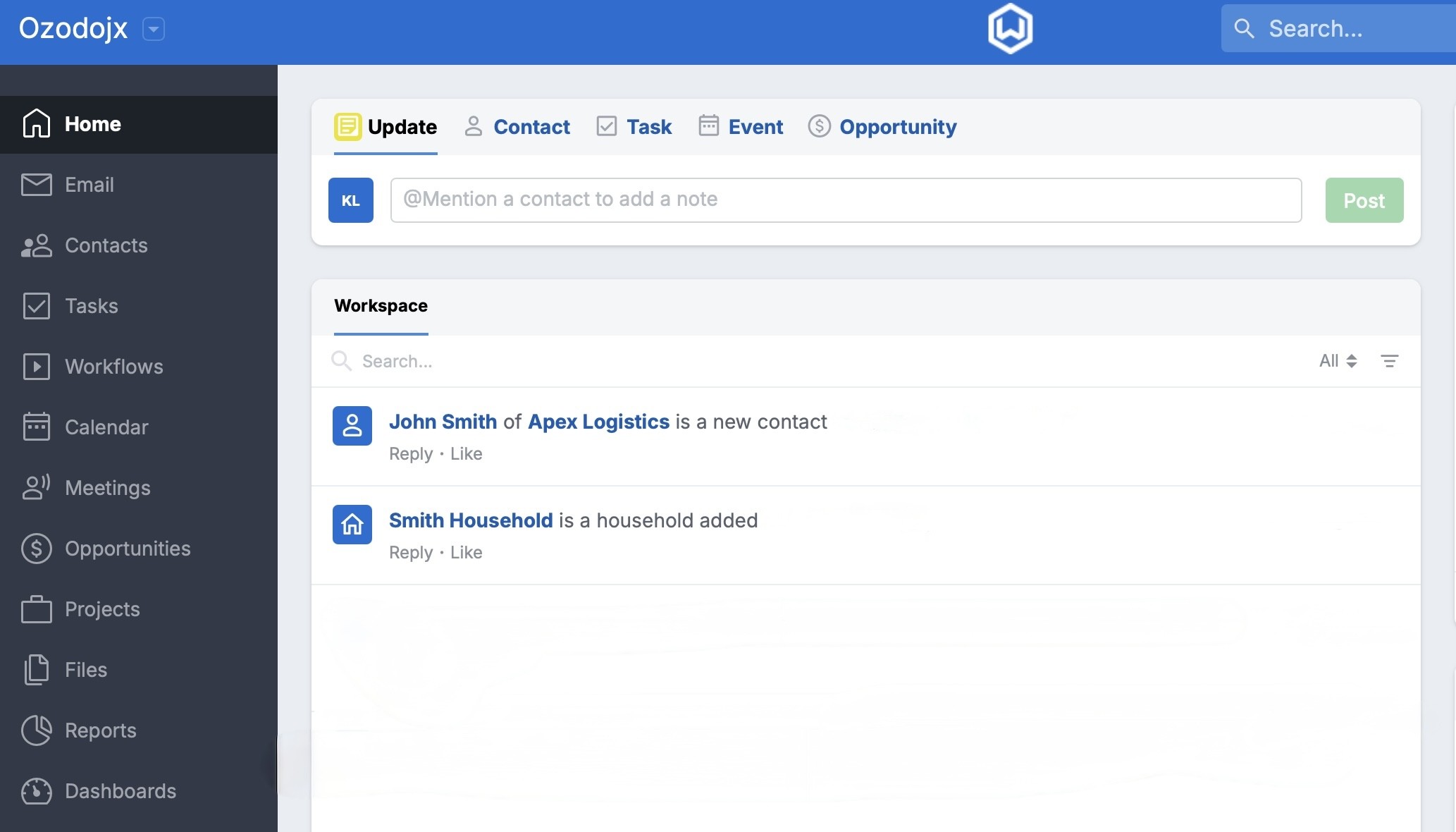
Every CRM demo now says AI. The question that matters is simpler: can a model read your client data and write back to it, under your control? Here are the three tests.
About the author

Written by
Michael Pavlovskyi
Founder, Bace Agency
Michael builds custom Claude and GPT workflows for insurance agencies, law firms, and PE firms on Chicago's North Shore. Speaker at Northwestern and Lake Forest College on practical AI adoption for professional services.
Connect on LinkedInSee it in your firm
Book an audit.
A free 30-minute AI audit. No obligation, no pitch deck.
Book a free AI audit