
Compliance Automation Is a Profit Center
Wilmette insurance agencies that treat compliance monitoring as overhead are measuring the wrong thing.


Key Takeaways
- ✓ Compliance monitoring is a revenue function when it protects carrier appointments and commission tiers. Agencies that pass market conduct exams clean have a credentialing argument that agencies with findings do not.
- ✓ AI compliance monitoring flags producer license expirations, claims documentation gaps, and policy issuance inconsistencies in real time, before Illinois DOI examiners see them during a market conduct exam cycle.
- ✓ A clean market conduct exam history is a competitive credential in carrier appointment negotiations. Agencies with documented, systematic compliance processes have a fundamentally different carrier conversation than ones showing findings.
- ✓ The fastest starting point for Wilmette agencies is a producer license audit: pull your active producers against the IDOI database this week, find the gaps, and then automate the check so it runs continuously.
If you oversee compliance at a Wilmette insurance agency, you have heard the pitch before: compliance is unavoidable overhead, a line item to minimize, a drag on the business. That framing costs agencies real money. The ones getting ahead on the North Shore have figured out the opposite.
AI compliance monitoring for insurance agencies scans policy files, producer licensing records, and claims documentation continuously to flag irregularities before regulators find them. For a Wilmette agency, catching one failing finding before an Illinois Department of Insurance market conduct exam pays for years of automation. That is the actual economic case, and it has nothing to do with avoiding fines.
Why Agencies Measure Compliance Costs Wrong
The standard compliance budget line covers staff hours, continuing education tracking software, and the occasional outside counsel review. It does not capture the revenue consequences of exam findings, the cost of losing a preferred carrier relationship, or the E&O exposure that builds quietly inside a file cabinet of unreviewed policy documents.
The National Association of Insurance Commissioners publishes a Market Regulation Handbook that spells out exactly what state examiners look for: policy issuance consistency, claims handling timeliness, producer licensing accuracy, and underwriting file documentation. These are not obscure edge cases. They are routine operations that slip when your agency is busy writing new business.
Illinois market conduct exams can produce findings across any of these categories. A finding does not always mean a fine. But it does mean remediation, follow-up reporting, and a record that carriers can see. The agencies that pass clean have an argument for better appointments and higher commission tiers. The ones that come in with a list of findings do not. That gap is the real compliance cost that never shows up in the compliance budget.
"You can't manage what you can't measure."
Peter Drucker, management theorist and authorDrucker's point applies to compliance the same way it applies to revenue. Most Wilmette agencies can tell you their loss ratio and their retention rate. Very few can tell you their documentation error rate or their producer license lapse rate in real time. The first set of numbers lives in the agency management system. The second lives in a pile of spreadsheets, if anyone is tracking it at all.
When you cannot measure those gaps, you cannot close them before an exam. AI compliance monitoring changes that. Read more on the broader opportunity in what AI is changing for North Shore insurance agencies.
What AI Compliance Monitoring Actually Does
AI compliance monitoring is not a chatbot that answers questions about regulations. It is an automated review layer that runs continuously against your active data, the same files your staff produces every day in your agency management system.
Here is what a working system does inside an Applied Epic environment:
- Producer license monitoring. Every active producer in your agency has a license that expires on a state-specific schedule. An AI layer checks those dates against current state databases automatically, flags approaching expirations, and logs renewals. Manual tracking fails because it depends on a spreadsheet someone updates when they remember to.
- Policy issuance consistency checks. Market conduct examiners look at whether the policies you issue match the rates you filed and the applications you received. An AI system compares those records at issuance, not six months later during a manual audit.
- Claims file documentation review. Timeliness of claims acknowledgment is one of the most common exam findings in Illinois. An AI layer flags claims files missing required documentation or outside the required acknowledgment window before they age into findings.
- E&O exposure tracking. Policy changes, endorsements, and coverage recommendations that are not confirmed in writing are the raw material of E&O claims. An automated review flags undocumented coverage conversations before they become problems.
45+
states conduct regular market conduct examinations of insurance agencies and producers, per NAIC oversight records
Top 3
exam finding categories are consistently producer licensing, claims handling timeliness, and policy issuance accuracy, per NAIC market regulation guidance
Ongoing
carrier audits of agency compliance practices have increased in frequency as markets tighten and appointment access gets more competitive
The categories that draw exam findings are consistent and predictable year over year. That is the insight that makes them automatable. If the same documentation gaps keep showing up in market conduct exams across the country, the fix is not better manual review cycles. The fix is a system that catches those gaps at the point where the file is created.
Does Compliance Automation Pay for Itself?
Here is the comparison most compliance officers have not run explicitly.
| Factor | Manual Compliance Tracking | AI-Powered Monitoring |
|---|---|---|
| Producer license review | Monthly spreadsheet audit, prone to gaps between update cycles | Continuous, flags expirations 90, 60, and 30 days out automatically |
| Claims file review | Sampled manually, misses outliers between audit periods | Scans every file, flags documentation gaps at creation before they age |
| Policy issuance consistency | Checked at audit, findings discovered late in the cycle | Cross-checked at issuance, corrected before they compound into a pattern |
| Exam readiness | Scramble 60 days before exam notice arrives | Exam-ready continuously, findings addressed in real time |
| Staff time | Significant hours per week on manual review and exception chasing | Exceptions only; staff reviews flagged items rather than hunting for them |
The cost side of AI compliance monitoring is straightforward: a monthly subscription to a monitoring platform, plus the time to configure it against your Applied Epic data and your state's regulatory requirements. The revenue side is less obvious but more significant.
A clean market conduct exam creates a credentialing argument. When you pitch a new carrier for an appointment or negotiate commission tiers, your compliance history is part of the file. Carriers that have to chase agencies for remediation documentation do not look at those agencies the same way. The ones with nothing to remediate have a different conversation. That difference in carrier relationship quality is a revenue line, not a compliance line.
There is also the E&O angle. Your E&O carrier underwrites your compliance posture. An agency that can demonstrate a systematic monitoring process has a different risk profile than one relying on annual manual audits. That is a conversation worth having at renewal.
SAMPLE CLAUDE PROMPT
"I am a compliance officer at an insurance agency in Illinois. Review the following claims file documentation checklist and Illinois DOI market conduct exam requirements, then identify the three most common documentation gaps that lead to exam findings and what a pre-exam review workflow should look like. Be specific about what reviewers should look for in each file category and what constitutes a clean file versus a file with a finding risk."
Claude can read NAIC Market Regulation Handbook sections and Illinois DOI market conduct standards, then generate a pre-exam checklist calibrated to what Illinois examiners actually look for. That is a morning's research project completed in an hour. The underlying model capabilities that make this possible are documented at Anthropic's Claude product page.
"Risk comes from not knowing what you're doing."
Warren Buffett, investor and Berkshire Hathaway chairmanBuffett's point lands directly in the compliance context. Agencies that do not run continuous monitoring do not know where their files stand until an examiner tells them. The risk is not the exam itself. The risk is the finding that surfaces something you could have known about and fixed six months earlier, before it became a pattern and before a carrier heard about it.
How to Start This Week
You do not need a full compliance platform deployment to begin. Start with the area where your current process has the most obvious gaps, then build from there.
Run a producer license audit this week.
Pull every active producer from your AMS and check their license expiration dates against your state database. If you find one expired or lapsed license, you have found your starting point for automation. The Illinois Department of Insurance maintains a producer license lookup online. Run it manually now. Then automate it so you never have to run it manually again.
Map your claims acknowledgment lag time.
Illinois requires claims acknowledgment within specific timeframes depending on the line of business. Pull your last 90 days of claims and check how many missed the required window. If the answer is that you do not know, that is your gap. Claims timeliness is also the easiest category to automate because the trigger is a date, not a judgment call. The system flags it; a human clears it.
Take the AI readiness assessment before committing to a platform.
Before selecting a compliance monitoring platform, understand where your agency's systems and data are ready for automation and where they need groundwork first. Bace Agency's free AI readiness quiz walks you through the key variables in about 10 minutes and gives you a prioritized starting point for your agency specifically.
The compliance officer who treats monitoring as a profit function is the one who shows up to the carrier conversation with a clean record, a documented process, and a story about how the agency identifies and closes gaps before they escalate. That is a different career conversation than defending findings after an exam. It is also a different business outcome for your agency.
If you want a direct conversation about what an AI compliance monitoring setup looks like for a Wilmette agency specifically, reach out at baceagency.com/contact for a free 30-minute AI audit.
Frequently Asked Questions
What is AI compliance monitoring for insurance agencies? +
AI compliance monitoring is an automated review layer that scans policy files, producer licensing records, and claims documentation continuously to flag irregularities before state regulators find them. For Illinois agencies, it runs against data in systems like Applied Epic and checks that record against NAIC market conduct exam requirements and Illinois DOI standards, flagging gaps in real time rather than at the next manual audit cycle.
How does compliance automation help Wilmette agencies pass market conduct exams? +
Market conduct examiners from the Illinois Department of Insurance look at producer licensing accuracy, policy issuance consistency, and claims handling timeliness. An AI monitoring system flags gaps in each category as they occur, so a Wilmette agency can close them before an exam rather than explaining them after. The result is an agency that arrives at every examination with a clean, documented record rather than a remediation list.
What does AI compliance monitoring cost versus manual compliance tracking? +
AI compliance monitoring replaces a cycle of manual audits and spreadsheet reviews with continuous automated checks against your active data. The economic comparison is not software fees versus staff hours. It is software fees versus the compounded cost of exam findings, E&O exposure from undocumented coverage conversations, and carrier relationship risk that manual monitoring consistently misses between audit cycles.
Can Claude help with insurance compliance documentation preparation? +
Claude can read regulatory requirements including the NAIC Market Regulation Handbook and Illinois DOI market conduct standards, then generate a pre-exam checklist calibrated to what Illinois examiners actually look for in each file category. It can also review your existing documentation checklists against current requirements and flag gaps. It does not replace a licensed compliance consultant, but it compresses the research and drafting time for routine compliance work from hours to minutes.
Related Articles
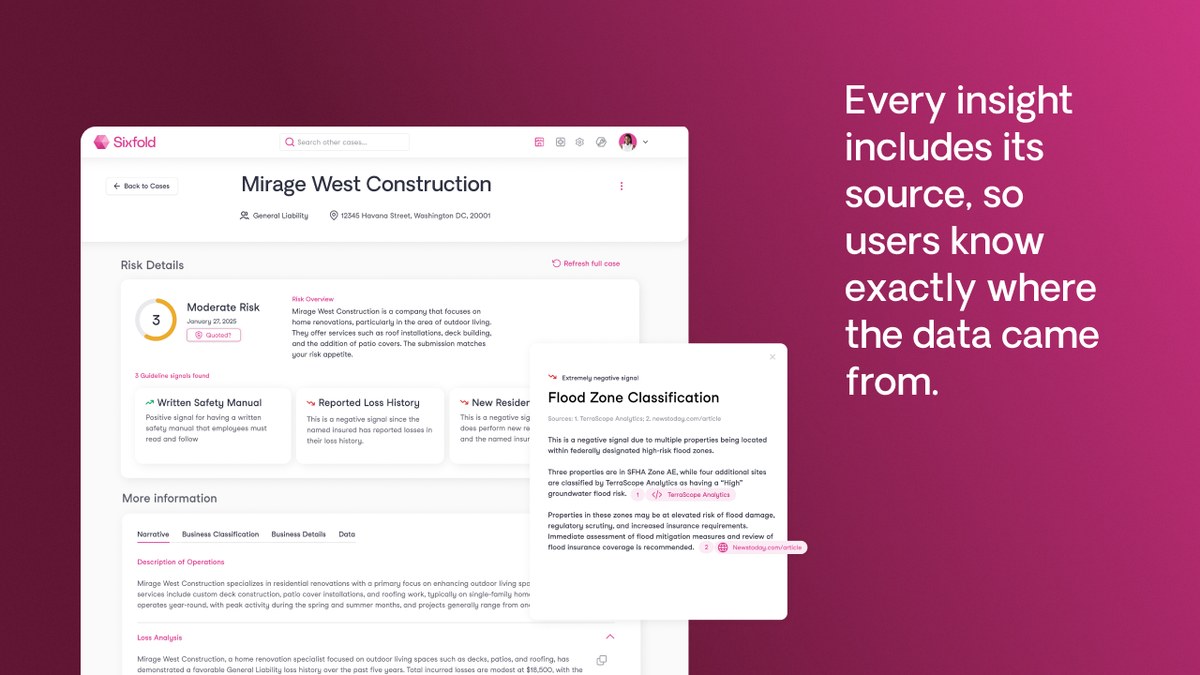
What AI Agents Can Do at an Insurance Agency
AI agents can already draft renewal letters and summarize loss runs. Binding coverage and underwriting judgment still belong to a licensed human.
Win Back a Day a Week at Your Highland Park Agency
Pick wrong and you automate a task that happens twice a month. Pick right and you hand off a full day every week. Here are the three high-volume, low-judgment workflows a Highland Park agency should automate first.
Stop Issuing COIs by Hand in Wilmette
A Wilmette agency can hand the policy file to a model and have the ACORD 25 drafted in seconds. A licensed person still signs off, because that is where the risk lives.
About the author

Written by
Michael Pavlovskyi
Founder, Bace Agency
Michael builds custom Claude and GPT workflows for insurance agencies, law firms, and PE firms on Chicago's North Shore. Speaker at Northwestern and Lake Forest College on practical AI adoption for professional services.
Connect on LinkedInSee it in your firm
Book an audit.
A free 30-minute AI audit. No obligation, no pitch deck.
Book a free AI audit