
Put One AI Agent to Work This Quarter
Renewal prep is the safest place for a North Shore agency to hand Claude real work, with one human checkpoint before anything leaves the building.


Key Takeaways
- ✓ An AI agent is a fixed workflow a model runs end to end, not an open-ended assistant, per Anthropic's own framing of the term.
- ✓ Renewal prep is the safest first workflow for most agencies because errors get caught in an internal review, not in front of a client.
- ✓ A Claude Pro seat costs about $20 a month, cheap enough to give a single named reviewer their own account and a clean audit trail.
- ✓ The one rule that makes this safe: nothing the agent drafts reaches a client or carrier without a named person approving it first.
If your Lake Forest agency still preps every renewal by hand, an adjuster opening three systems, retyping the same client data, hunting for last year's endorsements, you are running a process built for a headcount you no longer have to add. That headcount is not coming. Agencies from Highland Park to Winnetka are finding that one focused AI agent, not a full tech stack rebuild, is enough to take the first real bite out of that workload.
The easiest way to put an AI agent to work in an insurance agency this quarter is to pick one repeatable task, renewal prep is usually the best starting point, hand Claude the policy file and your renewal checklist, and require a human to review and approve every output before it reaches a client or a carrier.
What Counts as an AI Agent in an Insurance Agency?
An AI agent is software that carries a task from start to finish using a model's judgment at each step, not a single question you type in and read an answer from. Nothing more mystical than that. It reads a document, decides what it needs next, drafts an output, and hands that draft to a person for review.
Anthropic's own engineering team draws a useful line here. In its widely read Building Effective Agents post, Anthropic argues that most real business problems are better served by a fixed workflow, a defined sequence of steps a model runs through in order, than by a fully autonomous agent making open-ended decisions on its own. For a first project inside an insurance agency, that is the right instinct. Pick a task with a clear start and a clear end, not an open-ended assistant that can do anything.
That is why this guide walks through one workflow, not a general plan to add AI. Renewal prep has a start, the expiring policy lands in your pipeline, and an end, the renewal submission goes to the carrier or the client. A fixed sequence like that is what a model handles well today, and what a small agency can actually manage without hiring a developer.
Renewal Prep or Certificates: Pick the One Workflow That Repeats
Two candidates come up in almost every conversation about this: renewal prep and certificate of insurance requests. A certificate of insurance is a document that verifies a policyholder's coverage to a third party, usually a landlord, lender, or general contractor asking for proof before work starts or a lease signs. Both tasks repeat every week, both start with pulling data out of an existing policy, and both currently eat hours a producer or account manager would rather spend on the phone with a client.
Renewal prep is the better first project for most agencies, for one reason: the stakes of a small error are lower and more visible before anything leaves the building. A missed endorsement on a renewal draft gets caught in your own internal review. A wrong certificate handed to a landlord on a tight deadline is a service failure the client remembers. Start with the workflow that gives your team the most room to catch a mistake before it matters.
McKinsey's Insurance 2030 report makes a related point: carriers and agencies that automate repeatable back-office work first, rather than customer-facing conversations, tend to capture value faster and with less risk. Renewal prep is exactly that kind of back-office task.
If your book runs heavier on habitational or construction risk, where certificate volume is the bigger daily pain point, the setup below applies almost exactly the same way, you just swap in the certificate template and the source fields. We walked through a similar setup for a North Shore agency's habitational book in our insurance case study. The pattern barely changes between the two workflows.
How Do You Set Up Claude to Handle Renewal Prep?
Setting up an agent for renewal prep is closer to writing a detailed job description than installing software. Here is the process, in four steps.
Pick the Workflow and Set the Boundary
Write down exactly what the agent may touch and what it may never touch. For renewal prep, that usually means: read the expiring policy file, compare it against last year's, draft the renewal submission and a summary of what changed.
It never means binding coverage, sending anything to a client or carrier, or changing a rate. Put that boundary in writing before you open Claude for the first time.
Gather the Three Inputs It Needs
A renewal agent needs the current policy declarations, last year's renewal notes if your agency keeps them, and your standard renewal checklist, the fields you always confirm: limits, named insureds, endorsements, loss history.
If those live in Applied Epic, AMS360, or EZLynx, export the policy as a PDF. Claude reads PDF and Word files directly, no reformatting required.
Write the Standing Prompt, Then Test It on Five Real Files
The prompt below is a starting template, not a finished one. Run it against five renewals you already know the right answer for, a mix of clean and messy files, and see where it gets confused: a missed subjectivity, an overlooked inland marine schedule.
Rewrite the prompt each time it gets something wrong, instead of correcting the output by hand. That habit is what turns a one-off use of Claude into an actual repeatable agent.
SAMPLE CLAUDE PROMPT
\"Attached is [Client Name]'s expiring policy declarations page and our agency's standard renewal checklist. Compare this year's policy to the prior term and flag every change in limits, endorsements, exclusions, or named insureds. Draft a renewal submission email to the carrier and a one-paragraph summary of what changed for the account manager to review. Do not send anything and do not make any coverage decisions. Flag anything you are unsure about instead of guessing.\"
Log Every Correction as a Prompt Update
When a reviewer catches an error, do not just fix that one output. Add a line to the standing prompt: always check inland marine schedules against the prior year, or whatever the actual pattern was.
After a few weeks the prompt reflects your agency's real renewal checklist, not a generic one, and the correction rate against your own review starts to drop.
Where the Human Checkpoint Belongs
The single rule that keeps this safe: nothing Claude drafts reaches a client, a carrier, or your system of record without a named person approving it first. That is not a suggestion, it is the design. An agent that drafts is an assistant. An agent that sends without review is a liability if nobody is actually checking its work.
In practice, the checkpoint is one extra step in your existing pipeline. The agent produces a draft renewal submission and a short change summary. That draft lands in one specific person's review queue, not a shared inbox nobody owns. That person signs off before it moves anywhere else. Anthropic's pricing page shows a Claude Pro seat running about $20 a month, cheap enough that the reviewer runs it under their own account rather than a shared login, which keeps the audit trail of who approved what much cleaner.
\"What gets measured gets managed.\"
Peter Drucker, on why a process needs a clear owner and a clear metric before it scalesTrack one number against this workflow from week one: how many of the agent's drafts needed a real correction versus a rubber stamp. That number tells you when the prompt is actually working and when a person is still rewriting most of the output by hand.
Jeff Bezos built Amazon's culture around staying in what he called Day 1, resisting the moment a company defends its existing process instead of questioning it. Treat renewal prep the same way. It is Day 1 for your agency's use of agents, not the finished plan.
What Changes by the End of the Quarter
None of this requires a new platform or a signed contract with a systems integrator. It requires one workflow, one prompt you keep improving, and one named reviewer. Here is what that setup actually costs and looks like once it is running.
| Renewal Prep Task | Manual Process | Claude-Assisted Process |
|---|---|---|
| Pulling policy and endorsement data | Adjuster reopens the file in Applied Epic or AMS360 and retypes key fields by hand | Agent reads the exported PDF and extracts the same fields in one pass |
| Comparing this year to last | Caught only if the reviewer remembers to check the prior term side by side | Agent flags every limit, endorsement, or exclusion that changed since last renewal |
| Drafting the renewal submission | Written from a blank template each cycle | Drafted from the standing prompt and your agency's checklist, then handed to a reviewer |
| Who approves the final version | Whoever remembers to check it before it goes out | A named reviewer, every time, before anything reaches the carrier or client |
By the end of the quarter, the goal is not a fully autonomous agency. It is one workflow that runs the same way every time, with a person who can explain exactly why they approved what went out the door. If it works on renewal prep, certificate requests are the natural second project, followed by claims intake or loss-run summaries once your team trusts the pattern.
Not sure whether your agency's current setup can support even this first step? Our AI readiness quiz takes five minutes and tells you where to start. And if you would rather have someone build the first workflow with you instead of doing it alone, that is exactly what our AI consulting practice does for North Shore agencies.
For agencies ready to see this in practice, a free 30-minute AI audit is available, in person on the North Shore or on video. No obligation. The output is one workflow you can put to work before the quarter ends.
Frequently Asked Questions
What is the easiest AI agent workflow for an insurance agency to start with? +
Renewal prep is usually the easiest first workflow because the stakes of a small error are lower and caught inside the agency's own review, before anything reaches a client or carrier. Certificate of insurance requests are a close second and follow the same setup pattern.
Can Claude read an insurance policy PDF directly? +
Yes. Claude reads PDF and Word documents directly, so an agency can export a policy declarations page from Applied Epic, AMS360, or EZLynx and hand it to Claude without reformatting the file first.
How much does it cost to run an AI agent for one insurance workflow? +
A single Claude Pro seat runs about $20 a month, according to Anthropic's pricing page. Most agencies do not need an enterprise contract or a developer to start one repeatable workflow like renewal prep.
Do I need a developer to set up this kind of AI agent? +
No. Setting up Claude for a single workflow like renewal prep is closer to writing a detailed job description than writing code. The work is choosing the right inputs and testing the prompt against real files, not software development.
What should the human checkpoint look like for an AI agent handling renewals? +
A named reviewer, not a shared inbox, should read every draft the agent produces and approve it before it reaches a carrier or client. That single rule is what keeps a drafting agent from becoming a liability.
Related Articles

AI Loss Run Analysis Finally Works
Claude can read a scanned loss run, pull every claim into one table, and flag the patterns a manual review usually catches too late. Here is how North Shore P&C agencies can start this week.
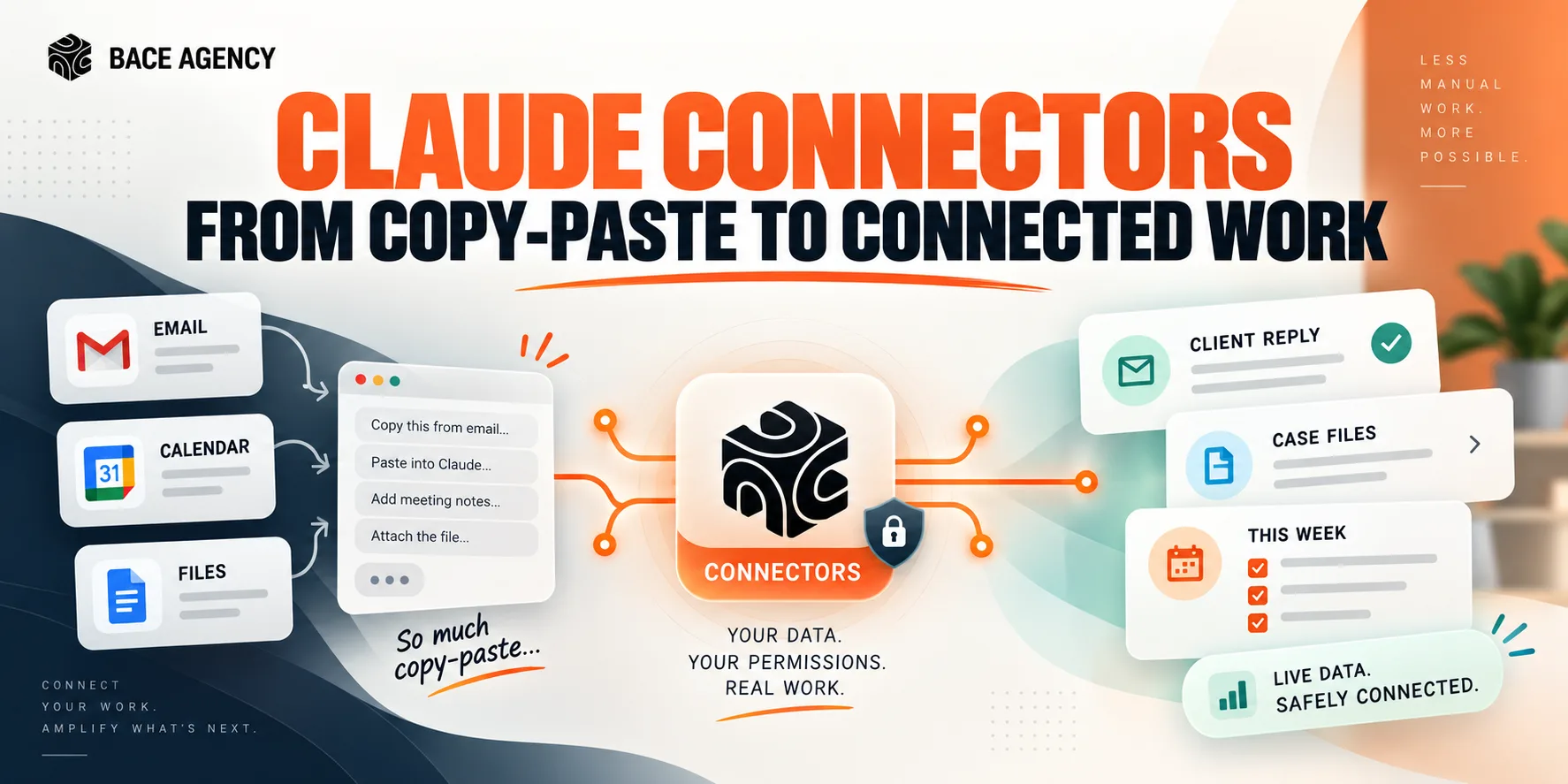
Claude Connectors for Winnetka Accounting Firms
AI stays a clever assistant until it can see your real email, files, and calendar. Connectors are that bridge, and the win depends on connecting narrowly and keeping the writes on approval.
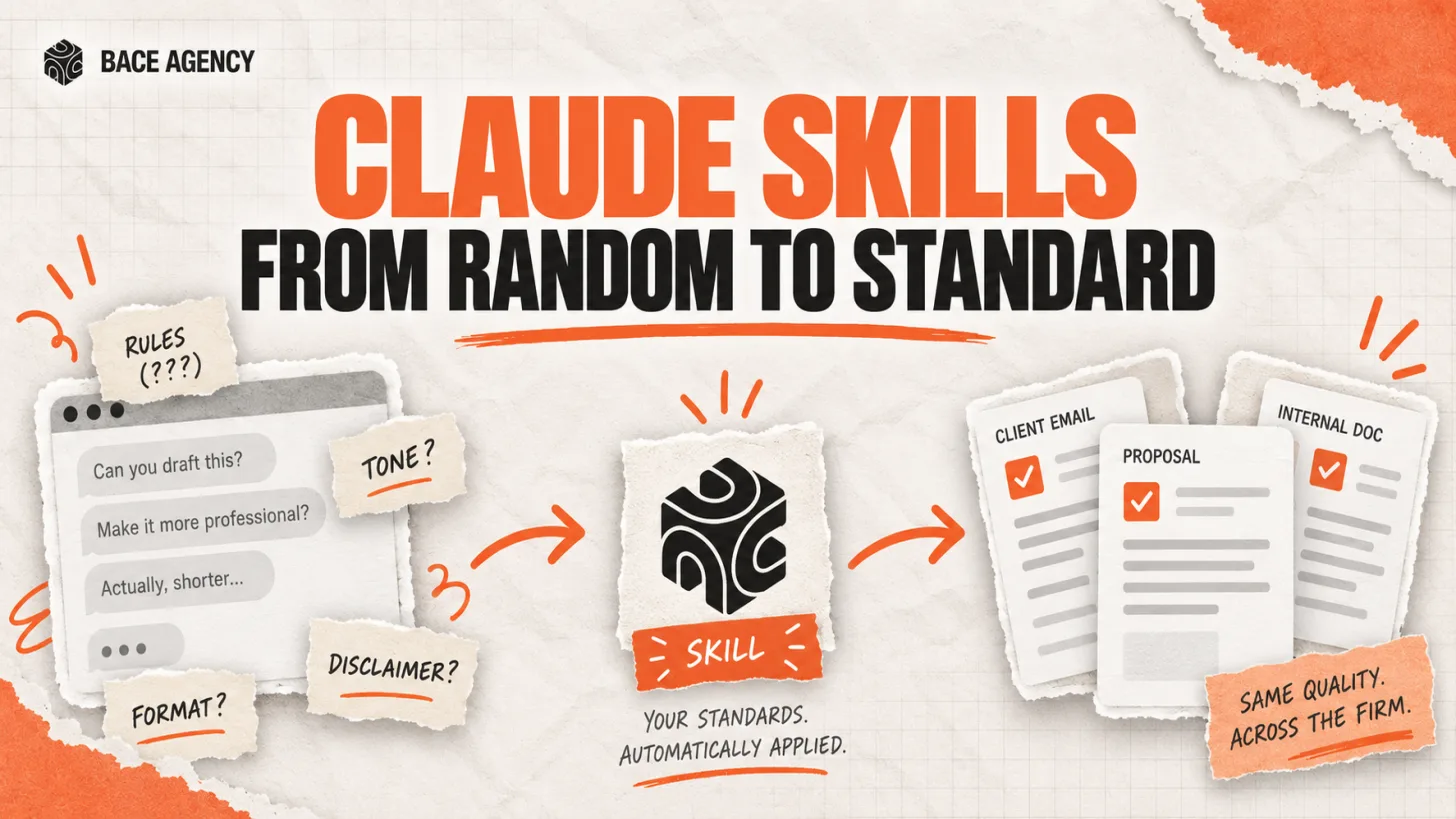
Claude Skills Give a Law Firm One AI Standard
One associate gets sharp drafts, another gets generic filler from the same tool. A Claude Skill turns one person's rules into a standard the whole firm can rely on.
About the author

Written by
Michael Pavlovskyi
Founder, Bace Agency
Michael builds custom Claude and GPT workflows for insurance agencies, law firms, and PE firms on Chicago's North Shore. Speaker at Northwestern and Lake Forest College on practical AI adoption for professional services.
Connect on LinkedInSee it in your firm
Book an audit.
A free 30-minute AI audit. No obligation, no pitch deck.
Book a free AI audit