
Automate Vendor Renegotiation After ETA Acquisitions
Most ETA operators inherit vendor contracts they never read. AI can analyze 200-page agreements in minutes and identify renegotiation opportunities worth six figures in Year One savings.


Key Takeaways
- ✓ Most ETA operators inherit 40+ vendor contracts they never fully review, missing six-figure savings opportunities in the first year.
- ✓ AI contract analysis can identify renegotiation opportunities across an entire vendor portfolio in 4-6 hours versus months of manual review.
- ✓ The 4-week automated renegotiation workflow combines AI analysis with human relationship management for systematic cost reduction.
WINNETKA, Ill. , May 19, 2026. The email came at 11:47 PM on a Tuesday from an ETA operator who had just discovered a $180K annual overpay buried in a vendor contract inherited from his recent acquisition.
He had owned the business for eight months. The contract was 147 pages of legal language. His team was drowning in integration work. Nobody had time to read every inherited agreement until an offhand comment from the previous owner revealed the pricing was "probably negotiable."
This is the hidden cost of ETA deals. You buy the business, inherit 40 vendor relationships, and assume the previous owner got competitive pricing. Harvard Business Review research shows that 60% of acquirers never review inherited contracts in the first year. That assumption costs real money.
Why ETA Operators Inherit Contract Blindness
Most ETA acquisitions happen fast. You have 60 to 90 days from LOI to close. Due diligence focuses on revenue quality, customer concentration, and obvious cost reduction opportunities. Vendor contracts get a surface-level review for term length and cancellation clauses.
The result is contract blindness. You inherit agreements signed in different market conditions, with different negotiating use, and different business needs. The previous owner might have been relationship-focused where you are cost-focused. They might have signed multi-year deals to get volume discounts that no longer make sense at your scale.
I see this pattern repeatedly with Lake Forest search fund operators. They close on a profitable business, focus on growth and operations, and only discover vendor cost reduction opportunities when someone mentions in passing that "pricing has changed since we signed that deal."
The traditional approach is to hire a consultant or dedicate internal resources to contract review. Both options are expensive and slow. A better approach is to put AI to work reading contracts while you focus on running the business.

AI Contract Analysis in Practice
Claude 3.5 Sonnet can read a 200-page vendor agreement in under two minutes and extract every pricing clause, cancellation term, and renegotiation trigger. More importantly, it can identify patterns across your entire vendor portfolio that suggest systematic overpayment or unfavorable terms.
The key is structured analysis. Instead of asking Claude to "review this contract," you give it a specific framework for extracting actionable intelligence.
SAMPLE CLAUDE PROMPT
"Attached is a vendor agreement from our recent acquisition. Extract the following data points into a structured table: (1) Current pricing vs market benchmarks, (2) Auto-renewal clauses and notice periods, (3) Volume discounts we may now qualify for, (4) Termination rights and associated costs, (5) Price escalation formulas, (6) Performance guarantees or SLAs. Flag any clauses that suggest the previous owner had different negotiating use or business needs than we do today."
This approach transforms contract review from a legal exercise into a business intelligence project. Instead of reading contracts to understand what you agreed to, you are mining contracts for renegotiation opportunities.
The output is a prioritized list of vendor relationships ranked by potential savings, ease of renegotiation, and business risk. You spend your time on the contracts with the highest ROI, not reading every agreement cover to cover.
"The most dangerous phrase in business is 'we've always done it this way.' In acquisitions, it's 'the previous owner negotiated this.'"
Warren Buffett, on inherited assumptions
The 4-Week Automated Renegotiation Workflow
Most ETA operators think contract renegotiation requires months of back-and-forth with vendors. The reality is that many vendors expect renegotiation after ownership changes. They would rather adjust terms than lose the relationship entirely.
Here is the workflow that works for operators in Winnetka and across the North Shore:
Week 1: AI Contract Audit
Upload all vendor contracts to Claude. Use the structured prompt above to extract pricing, terms, and renegotiation triggers. Generate a prioritized list ranked by potential annual savings and ease of renegotiation.
Output: Master spreadsheet with every vendor relationship ranked by opportunity size and execution difficulty.
Week 2: Market Research and Benchmarking
For the top 10 vendors by potential savings, research current market pricing and competitive alternatives. Claude can help draft RFP templates and analyze competitor pricing from their public materials.
Output: Market benchmarks and alternative vendor options for your highest-cost relationships.
Week 3: Outreach and Initial Negotiations
Contact vendors directly. Lead with the ownership change and your commitment to long-term partnerships. Present market data and request pricing adjustments to reflect current market conditions and your business scale.
Output: Active negotiations with clear timelines and fallback options.
Week 4: Documentation and Implementation
Finalize new agreements with improved pricing or terms. Update your vendor management system with new pricing, contract dates, and renegotiation schedules. Set calendar reminders for future renewal dates.
Output: Documented cost savings and systematic approach to future vendor management.
The key insight is that AI handles the analytical work (contract review, market research, benchmarking) while you focus on the relationship work (vendor conversations, negotiations, decisions). This division of labor is where the time savings compound.

Implementation Guide for Winnetka Operators
The technical setup is straightforward. You need Claude Pro (for unlimited usage), a cloud storage system for contract files, and a spreadsheet for tracking opportunities and progress. Bace Agency has helped operators automate this exact workflow across the North Shore.
Start with your highest-cost vendors. Focus on relationships where you spend more than $25K annually or where the previous owner seemed particularly loyal to specific suppliers. These relationships often have the most negotiation potential because they were based on personal relationships rather than pure economics.
The biggest implementation risk is vendor relationship damage. Some suppliers will push back on renegotiation requests, especially if they had close relationships with the previous owner. The solution is transparency about your ownership transition and focus on long-term partnership rather than short-term cost cutting.
| Contract Type | Typical Savings Opportunity | Renegotiation Difficulty | Timeline |
|---|---|---|---|
| Software licenses | 15-25% on annual fees | Low | 2-4 weeks |
| Professional services | 10-20% on hourly rates | Medium | 4-6 weeks |
| Equipment leases | 5-15% on monthly payments | High | 8-12 weeks |
| Insurance policies | 20-30% with updated risk profile | Low | 2-3 weeks |
For operators who want to move faster, the AI readiness assessment identifies which vendor categories in your specific business have the highest automation potential. The assessment takes 10 minutes and generates a custom implementation roadmap.
ROI Calculation and Risk Management
The math on vendor renegotiation automation is compelling. Most ETA deals generate 10-20% of annual cost reduction opportunities from inherited vendor relationships. On a business with $5M in annual vendor spending, that translates to $500K to $1M in potential savings.
The cost of AI-powered contract analysis is minimal. Claude Pro costs $20 per month. The time investment is roughly 40 hours across four weeks (10 hours per week for one person). Compare that to hiring a consultant at $200 per hour or dedicating a full-time employee to contract review for three months.
Risk management comes down to vendor relationship preservation. The NIST framework recommends documenting all vendor communications and maintaining clear audit trails for any contract modifications. This protects both parties if disputes arise later.
The broader risk is inaction. Every month you delay vendor renegotiation is money left on the table. Most vendor contracts have annual escalation clauses that compound the cost of waiting. Starting the process in Month 6 post-acquisition versus Month 12 can double your savings opportunity.
"In business, what gets measured gets managed. In acquisitions, what gets renegotiated gets improved."
Peter Drucker, on post-acquisition integrationFor ETA operators ready to turn inherited vendor relationships from cost centers into profit opportunities, a free 30-minute AI audit is available in person on the North Shore or on video. No obligation. The output is a one-page implementation plan your team can execute in the next quarter.
Frequently Asked Questions
How long does AI contract analysis take for a typical ETA acquisition? +
Claude can analyze a 200-page vendor agreement in under two minutes. For a typical ETA deal with 40 vendor relationships, the complete contract audit takes 4-6 hours spread across one week, including time to organize files and create the prioritized opportunity list.
What percentage of inherited vendor contracts typically have renegotiation opportunities? +
Roughly 60-70% of inherited vendor relationships have some renegotiation potential, with 20-30% offering significant savings opportunities above $10K annually. Software licenses and professional services contracts tend to have the highest savings potential.
Do vendors typically cooperate with renegotiation requests after ownership changes? +
Most vendors expect renegotiation after ownership transitions and prefer adjusting terms to losing the relationship entirely. Leading with transparency about the ownership change and commitment to long-term partnership typically generates positive vendor response.
What tools beyond Claude are needed for automated vendor renegotiation? +
The core toolkit includes Claude Pro for contract analysis, cloud storage for contract files, and a spreadsheet for tracking opportunities. Optional tools include RFP templates, market research databases, and vendor management software for ongoing relationship tracking.
How do you protect vendor relationships during aggressive renegotiation? +
Focus on market-rate adjustments rather than arbitrary cost cutting, maintain clear communication about ownership transition goals, and document all negotiations for transparency. The key is presenting renegotiation as business alignment rather than cost reduction pressure.
Related Articles

RoundTable Buys a Skincare Brand, and Healthcare Private Equity Meets AI
A Lake Forest firm just bought a skincare brand. The deal is a window into where healthcare private equity is heading with AI, and why it is a strategy problem first.

Lake Forest Hire: Can the Back Office Scale with AI?
Crescent Grove named a 25-year family-office veteran its growth chief. A rainmaker brings relationships. The harder question is whether the back office can scale as fast as the book.
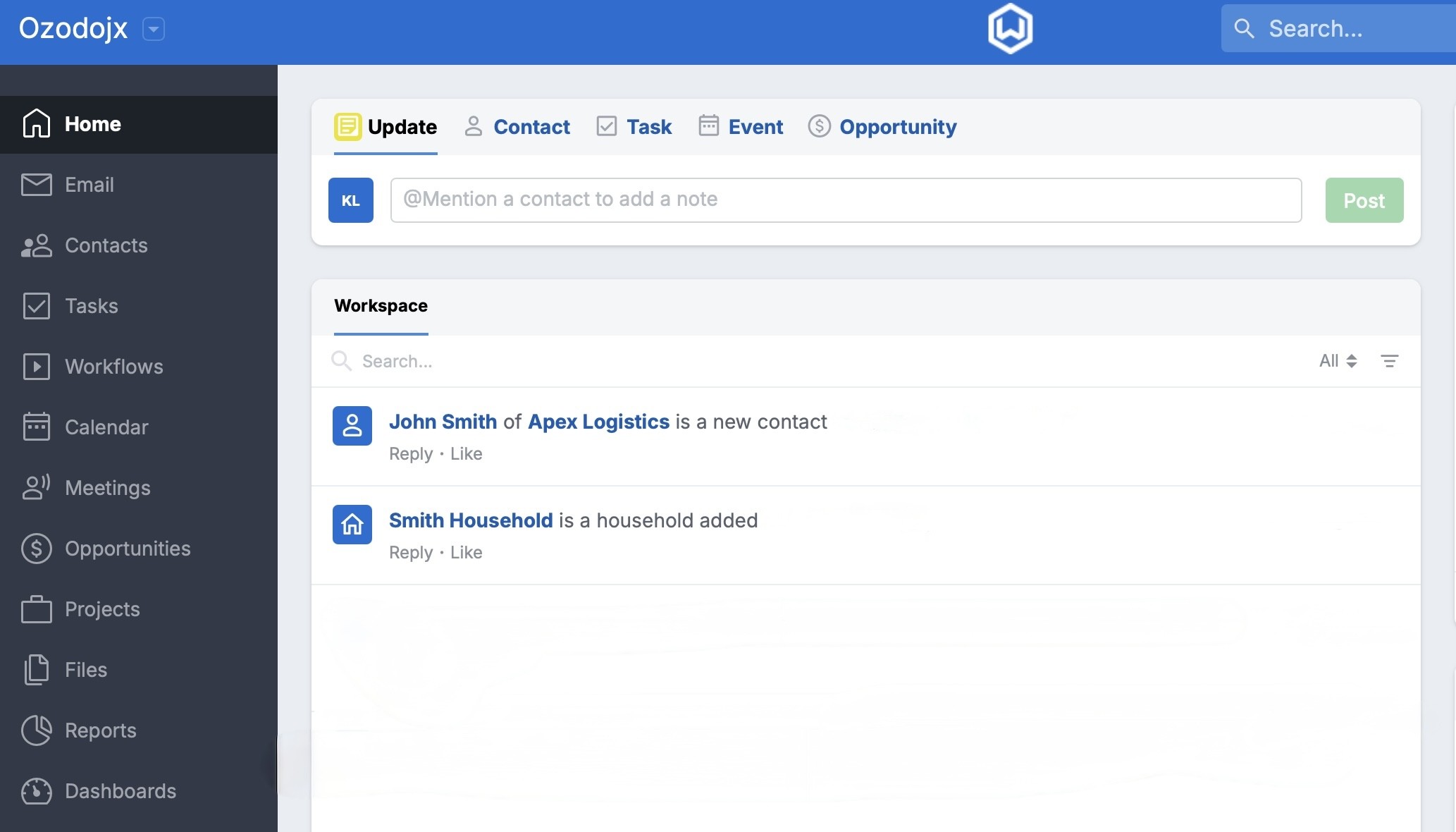
When a CRM Is Truly AI-Ready for RIAs
Every CRM demo now says AI. The question that matters is simpler: can a model read your client data and write back to it, under your control? Here are the three tests.
About the author

Written by
Michael Pavlovskyi
Founder, Bace Agency
Michael builds custom Claude and GPT workflows for insurance agencies, law firms, and PE firms on Chicago's North Shore. Speaker at Northwestern and Lake Forest College on practical AI adoption for professional services.
Connect on LinkedInSee it in your firm
Book an audit.
A free 30-minute AI audit. No obligation, no pitch deck.
Book a free AI audit