Washington Is Governing AI by Fear
The government just switched off the AI model I had been building with this week. The real question is who is steering this technology, and whether they understand it at all.

Key Takeaways
- ✓ On June 12, 2026, the federal government ordered Anthropic to cut off its two newest models, Claude Fable 5 and Mythos 5, for any foreign national. The company could not apply that order narrowly, so it switched both off for every customer, worldwide.
- ✓ The trigger was a coding task. The cited jailbreak, in Anthropic's own words, "essentially consists of asking the model to read a specific codebase and fix any software flaws." That is close to the work I had been doing with the model all week.
- ✓ For the first time, the United States aimed an export control at a live commercial AI model rather than at chips or hardware. The software itself is now the controlled asset.
- ✓ The deeper problem is not this one decision. It is that the people steering AI policy are reacting to fear without hands-on understanding of what these systems do, while the technology moves faster than they can see.
Lake Forest, Illinois, June 13, 2026. The AI model I had spent the week building with is, as of yesterday afternoon, switched off. Not deprecated, not rate limited, not repriced. Switched off, by order of the federal government.
I had been using Anthropic's Claude Fable 5, the most capable model the company had released to the public, to build internal software for my agency. On Friday afternoon the government instructed Anthropic to suspend access to Fable 5 and its more powerful sibling, Mythos 5, for any foreign national, whether inside or outside the United States, including the company's own foreign-national employees. Because Anthropic had no way to apply that order selectively, it disabled both models for everyone, everywhere. I found out the way most people did, by trying to use a tool that had stopped working.
I want to tell you what I was actually doing with it, because the gap between that and the reason it was pulled is the whole story.
What I Was Actually Building
I run a consulting and implementation agency. We build practical AI systems for professional services firms, and the work I do for clients I also do for myself. Over the past week most of that building ran through Fable 5 in a heavy multi-agent mode, where you point a coordinated fleet of AI workers at a problem instead of a single assistant. It is the closest thing I have used to having a small engineering team that never sleeps and never loses the thread.
Two systems came out of that week. The first is an operations cockpit, a dashboard that sits over the business and shows me, at a glance, what is planned, what shipped, what failed, and what needs a decision from me today. Before, that picture lived in my head and in a dozen scattered files. Now it lives on one screen.
The second is a self-extending internal agent. It runs on a schedule on a Mac in my office, on an ordinary consumer subscription, with no special infrastructure behind it. It reads the state of the business, drafts the work that needs doing, and stages every change for my approval before anything leaves the building. It cannot send, publish, or deploy on its own. When it runs into something it cannot do, it proposes a new capability and waits for me to say yes. Nothing about it is exotic. It is bounded, supervised, and mundane in the best sense. It does the repetitive parts so I can spend my attention on the parts that need a person.
Here is the part worth underlining, because it matters later. The durable logic of both systems lives in plain code that I own and can read. The model is the builder, not the building. That distinction is what let me keep working after the model disappeared, and it is the one practical lesson in this whole episode that I would hand to any firm building on these tools.
To make this concrete, here is the kind of task I was handing the model. Read it closely, because it is, almost exactly, the capability the government just decided was too dangerous to leave in foreign hands.
A TASK I GAVE THE MODEL
"Read the module that builds and sends our scheduled work. Walk it end to end. Find the places where a failure would be silently swallowed, or where a record could be processed twice. Propose the smallest fix for each one. Do not change any behavior I have not flagged. Show me a diff and explain the risk you found before you touch anything."
Read a codebase. Find the flaws. Propose the fixes. A person reviews and approves. That is the work. Now here is the reason the model that did it for me is gone.
What Happened, and Why
The directive reached Anthropic on Friday, June 12, at 5:21 in the afternoon, Eastern time, in a letter from Commerce Secretary Howard Lutnick. It instructed the company to suspend all access to Fable 5 and Mythos 5 for any foreign national, anywhere, including the company's own foreign-national employees. Anthropic, which could not enforce a foreign-national restriction selectively across a product used by hundreds of millions of people, switched both models off for all customers to comply.
The stated concern was a jailbreak, a method of getting around the model's safeguards. An administration official told Axios the government moved after a different company claimed it had found a way to jailbreak Mythos. Anthropic reviewed the demonstration and described it as "a narrow, non-universal jailbreak, which essentially consists of asking the model to read a specific codebase and fix any software flaws." The vulnerabilities it surfaced were minor and already known. The company disagreed with the remedy, arguing that a narrow jailbreak should not justify recalling a commercial model used by hundreds of millions of people, and that the same capability is "widely available from other models," including OpenAI's GPT-5.5, which face no comparable restriction.
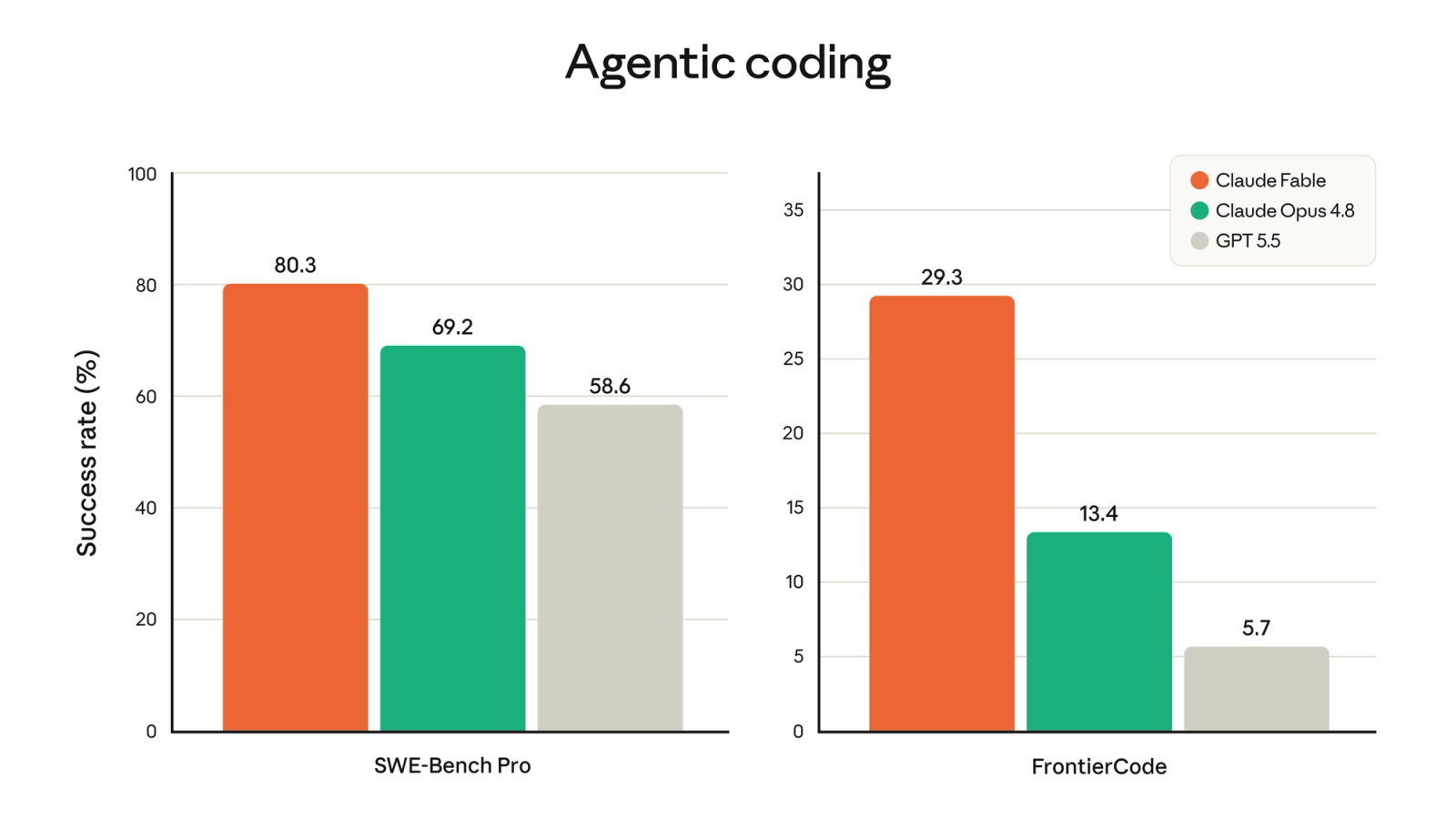
I introduced Fable 5 to readers of this blog the week it launched, as Anthropic's most powerful public model. It was public for four days before the order to pull it arrived.
This Did Not Come Out of Nowhere
The order did not appear from a clear sky. Washington and Anthropic have been openly at odds for months, and this export control is the sharpest turn yet in a relationship that has curdled into suspicion.
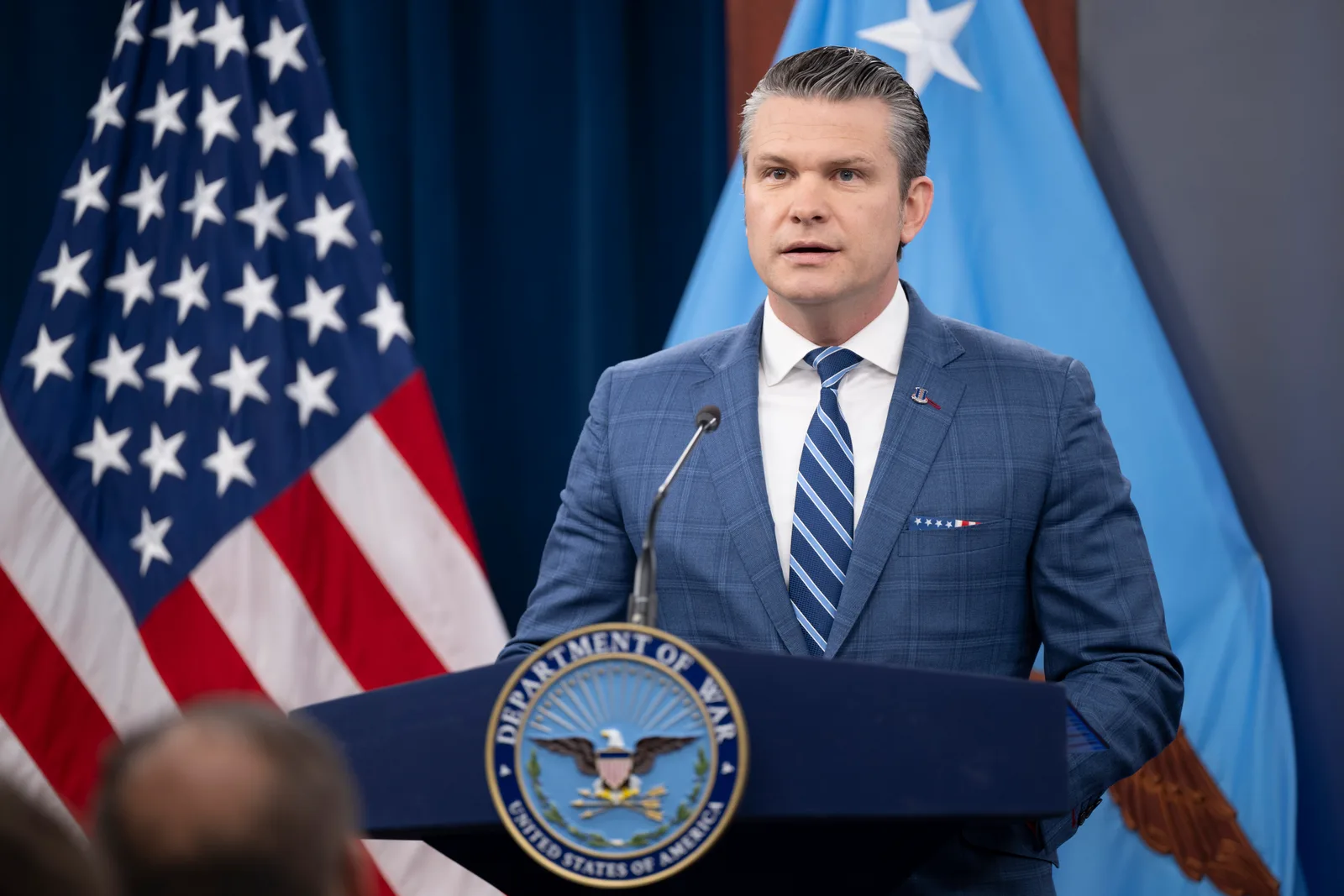
Earlier this year the Secretary of War, Pete Hegseth, went after the company in public after it refused to let the Pentagon use its AI without limits, including for domestic surveillance and autonomous weapons. He moved to label Anthropic a supply chain risk, a designation that threatens the government contracts it relies on. Hegseth, pictured at the top of this piece, has become the most vivid face of how hostile that relationship has turned.
The White House AI czar, David Sacks, has spent the past year making a different case against the same company, accusing Anthropic of fearmongering and of pursuing regulatory capture, the idea that a lab talks up danger in order to invite rules that lock in its own lead.
You do not have to take a side in any of those fights to see the pattern. The people building the most capable models and the people who would govern them no longer trust each other. This export order, signed by a different official for a different stated reason, is what that distrust looks like when it finally reaches for a lever.
Washington Used to Ban Chips. Now It Bans Models.
For most of the last decade, when Washington wanted to slow a rival's progress in technology, it reached for hardware. It restricted the sale of advanced chips. It put controls and tariffs on equipment. The thing being controlled was a physical object you could count at a border, load onto a ship, or stop at a port.
This is different in kind, not just degree. The controlled asset is now the model itself, a piece of software already running on servers and laptops around the world. That is a real shift in how the government sees this technology. It is no longer treating AI only as an input to strategic industries. It is treating a specific model as a strategic asset in its own right, something closer to a weapons system than a productivity tool.
I understand the instinct behind that, more than the angriest reactions online would suggest. It would be easy, from where I sit as someone who builds with these tools every day, to wave the whole thing away as technophobia. I do not think that is fair.
The Fear Is Not Baseless
These models are genuine dual-use tools, and the dual-use part is not hypothetical. The model at the center of this order is Mythos 5. Anthropic itself decided Mythos was too capable to release openly and described it as able to find flaws in every major operating system and web browser. I wrote about that decision in April, when the disclosure first landed, and what it meant for firms holding sensitive files.
The same skill that lets my agent find the silently swallowed failure in my own code lets a bad actor find the open window in someone else's. That is the uncomfortable truth of this generation of tools. The capability that makes them extraordinary for builders is the same capability that makes them dangerous in the wrong hands. A government looking at that honestly has something real to worry about. The fear is not baseless.
So I am not going to pretend the people who issued this order saw a ghost. They saw something real. The problem is what they did about it.
Fear Is Not a Policy
The jailbreak that triggered a worldwide shutoff was, by Anthropic's own account, narrow, non-universal, and reproducible on other models that were left untouched. A remedy that pulls one company's product for every user on earth, while leaving the same capability available elsewhere, does not reduce the danger. It relocates it, and it punishes the company that was transparent about the risk.
That is what happens when the people making the call have felt the fear of these systems without having spent real time inside them. They have watched a capability curve bend upward, quarter after quarter, and they have reacted to the slope. What they have not done is the unglamorous work of understanding what the tool does on an ordinary Tuesday, which is read code, draft letters, summarize documents, and propose small fixes for a person to approve.
"If you describe your product as a munition in every press release, eventually a government takes you at your word."
Peter Girnus, security researcher, on the Fable 5 and Mythos 5 orderThere is a hard lesson in that line for the industry, too. Anthropic spent months telling the world that its most powerful model was so dangerous it had to be withheld. That was probably true, and I respect the candor. It was also an open invitation. When you market capability as menace, you should not be surprised when the people with the power to regulate decide to treat it as exactly that. The safety message and the export control are two ends of the same rope.
The Pace Nobody Outside Can See
Here is the part that should sit with you. Mythos, the model at the center of a national security order, was previewed to the public only about two months ago. Fable 5, the public version, shipped on June 9. The order to pull both arrived on June 12. The entire public life of these models, from launch to shutdown, fit inside a few days.
Frontier labs do not show you their newest work. They show you the version they have decided is safe enough to talk about. So I will offer a read, and I want to be clear that this is my opinion rather than a reported fact: it is reasonable to assume that Anthropic, or one of its competitors, already has something more capable than Mythos running behind closed doors right now. The thing the government just reacted to is not the frontier. It is the part of the frontier that became visible.
That is the real gap. Policy moves in months. These models move in weeks. By the time a directive is written about the capability you saw, the capability has already moved past it. You cannot govern a thing you are two releases behind on, and right now the people writing the rules are further behind than that.
What Has to Change
I am not arguing for no rules. A technology this powerful will be governed, and it should be. I am arguing that fear is a poor governor. It overreacts to what is visible and ignores what is not, and it cannot tell the difference between a narrow jailbreak and a genuine threat.
We need people steering this who have used the tools at depth, who can read a capability claim and know whether it describes a real danger or a marketing line, and who can write rules that target misuse without breaking the ordinary, productive uses for everyone else. Right now that expertise sits almost entirely inside the labs, and the labs are the very parties the rules are meant to check. That is not a stable arrangement. If it does not change, expect more orders like this one, each triggered by the same mix of real capability and unfamiliar fear.
For those of us who build on these tools, there is a smaller and more practical lesson. The model you depend on can disappear overnight, and not because the vendor chose to retire it. Mine did. My work survived because the durable parts, the logic, the records, and the approval steps, live in code I control, and the model is a worker I can swap out. I moved to another model the same afternoon and kept building. If your operation cannot survive losing one model, you have not built an operation. You have rented one.
If you run a firm on the North Shore and you are trying to build on these tools without betting the business on a single vendor's weather, a free 30-minute AI audit is where I start. In person or by video, with no obligation. The output is a plain list of where AI helps your firm first, and how to build it so it keeps working when the ground moves under it.
Frequently Asked Questions
What did the US government actually ban? +
On June 12, 2026, the federal government issued an export control directive ordering Anthropic to suspend access to its two newest models, Claude Fable 5 and Mythos 5, for any foreign national, whether inside or outside the United States. Anthropic had no way to apply that restriction selectively across a product used by hundreds of millions of people, so it disabled both models for every customer, worldwide. Access to Anthropic's other models was not affected.
Why did a "jailbreak" lead to a worldwide shutdown? +
The government cited a jailbreak, a way to get around the model's safeguards. Anthropic reviewed the demonstration and described it as narrow and non-universal, essentially asking the model to read a codebase and fix software flaws, surfacing minor and already known vulnerabilities. The worldwide effect came from the shape of the order, not the size of the flaw. Because the directive applied to any foreign national and could not be enforced selectively, the only way to comply was to switch the models off for everyone.
Can my firm still use Claude? +
Yes. The order affected only Claude Fable 5 and Mythos 5. Anthropic's other models remained available, as did models from other providers. For most professional services firms, day-to-day work was uninterrupted if it was not pinned to those two specific models. The practical takeaway is portability. A workflow that depends on one named model is fragile. A workflow where the model is a swappable component keeps running when one option goes away.
Does this mean these AI models are dangerous? +
They are dual-use, which is a more useful word than dangerous. The same ability to read code and find flaws that makes these models valuable for builders also makes them useful to bad actors, and Anthropic withheld its most powerful model, Mythos, for exactly that reason. The everyday reality for a normal business is bounded and supervised: the model drafts and proposes, and a person reviews and approves. The risk that worries governments is misuse at scale, not a law firm or an advisory practice using the tool to draft documents faster.
What should a firm building on AI take away from this? +
Do not architect your operation around a single named model. Keep the durable logic, your data, your records, and your approval steps in systems you control, and treat the model as a component you can replace. When Fable 5 went away, the systems I had built kept working because the model was a worker, not the foundation. I switched to another model and continued the same day. Build so that losing one vendor's model is an inconvenience, not a shutdown.
Related Articles
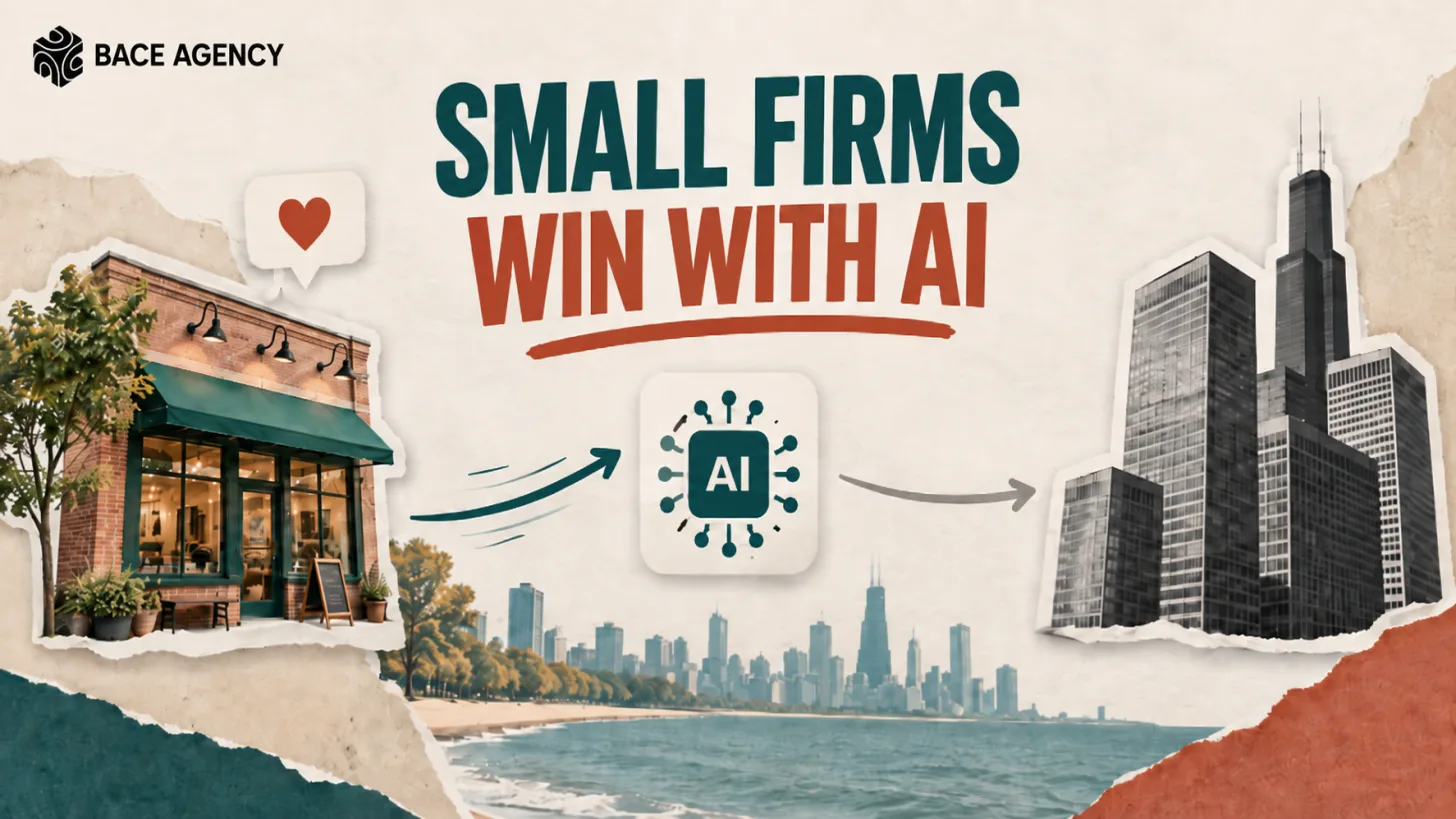
Small North Shore Firms Are Beating Big Ones to AI
While a national firm spends a year debating AI strategy, the small practice down the street already answers clients faster. The gap compounds every week.

What North Shore Firms Should Not Automate
Most AI consultants will automate anything you point at. Here is the short list I tell clients to leave alone.

What Anthropic's Valuation Means for Small Firms
Anthropic just became the most valuable AI startup at a $965 billion valuation. The fad question is closed. The useful question is where AI fits in your firm, and where it does not.
About the author

Written by
Michael Pavlovskyi
Founder, Bace Agency
Michael builds custom Claude and GPT workflows for insurance agencies, law firms, and PE firms on Chicago's North Shore. Speaker at Northwestern and Lake Forest College on practical AI adoption for professional services.
Connect on LinkedInSee it in your firm
Book an audit.
A free 30-minute AI audit. No obligation, no pitch deck.
Book a free AI audit