
AI Document Processing for Financial Advisors
Quarterly statements, onboarding packets, and compliance files arrive as unstructured PDFs. An automated pipeline converts them into structured CRM data. No new software required.

Key Takeaways
- ✓ AI document processing is not a chatbot. It is a pipeline that reads a PDF, extracts specific fields, checks for completeness, and outputs a structured record to your CRM or spreadsheet.
- ✓ The three document types that absorb the most time at a typical RIA: quarterly custodian statements, new client onboarding packets, and compliance files. All three are automatable today with a tested API connection and a defined prompt.
- ✓ Under SEC Rule 204-2, RIAs must retain specific records for five years, with the first two years in an accessible location. A document pipeline that captures and stores files at intake supports that requirement.
- ✓ The entry point is one document type and one API connection. You do not need to replace existing CRM or portfolio management software. The pipeline sits in front of those systems and hands off clean, structured data.
Financial advisors on Chicago's North Shore manage accounts across multiple custodians. Each quarter, PDF statements arrive from Schwab, Fidelity, Pershing, and others. Each new client generates a packet of forms: account application, suitability questionnaire, investment policy statement, W-9, beneficiary forms. Each year, compliance documentation needs to be current and retrievable.
None of that processing requires an advisor's judgment. It requires reading a document and moving specific fields into the right place. An API-connected document pipeline does that automatically, at scale, with a consistent output format every time.
What AI Document Processing Actually Does
The term covers a specific technical function. A vision-capable large language model reads a document the way a person reads it: identifying tables, parsing handwritten fields, recognizing document sections, and extracting specific data points. Tools like Claude accept a PDF as input and return structured output, typically JSON or a formatted summary, in seconds.
For a financial advisor, the output is a structured record: account value, asset allocation, flagged activity, missing form fields, compliance items for review. The source document is retained. The extraction is already done. What previously required a staff member opening files and copying values now runs as an automated step in the workflow.
This is not a conversation interface. A chatbot answers questions. A document pipeline processes a defined input and returns a defined output, every time, on a schedule or triggered by a file arriving in a folder or inbox.
"One document type. One API connection. One tested prompt. That is the starting point for every advisory firm I work with on the North Shore."
Michael Pavlovskyi, Bace AgencyWhy This Matters for Financial Advisors
RIAs operate under document-heavy regulatory requirements. SEC Rule 204-2 sets specific retention requirements across account records, trade records, client communications, and compliance files. FINRA Rule 4511 sets the equivalent books-and-records obligation for broker-dealers.
A manual document workflow creates two problems. First, it consumes staff time on work that does not require professional judgment. Second, it produces inconsistent records: files named differently, fields stored in different places, versions that are hard to find during an exam. An automated pipeline standardizes the output and the storage location at the same time it eliminates the manual step.
For more on how to build AI infrastructure that meets data security standards, see our piece on AI agent security for North Shore professional services firms.
Use Case 1: Quarterly Statement Processing
Custodian PDFs from Schwab, Fidelity, and Pershing follow consistent layouts. An automated pipeline extracts key fields into a structured record without manual intervention.
Advisory firms aggregating accounts across multiple custodians process the same statement data every quarter: account owner, account number, total value, asset allocation, and any flagged activity. The PDF layouts vary by custodian but are consistent within each one. A well-prompted vision model extracts the target fields from each format reliably, returning a JSON record that maps directly to CRM fields or a reporting spreadsheet.
The advisor reviews the output before client calls. The pipeline handles the extraction step so that review is the only manual task remaining.
SAMPLE CLAUDE PROMPT
"You are a document processing assistant for a registered investment advisor. Read the custodian statement below and extract the following fields in JSON format: account_owner, account_number, custodian_name, statement_date, total_account_value, asset_allocation (as a list of asset class and percentage pairs), and any_notable_activity (large withdrawals, new positions, or account changes). If a field is not present in the document, return null for that field. Do not include financial advice or interpretation."
Use Case 2: New Client Onboarding Review
A complete onboarding packet requires ten or more documents. An AI review step checks completeness and flags missing fields before the packet goes to operations or compliance.
A standard new account packet at a registered advisory firm includes an account application, suitability questionnaire, investment policy statement, signed advisory agreement, W-9, and beneficiary designation form, plus additional documents for certain account types. When a new client submits a partial or inconsistent packet, the error surfaces late: during account opening or compliance review, not at intake.
An AI review step runs at intake. The system checks the packet against a required document checklist, flags missing items, and notes cross-document inconsistencies: Social Security number that does not match across forms, unsigned pages, blank required fields. A structured summary goes to operations before anyone attempts to open the account. FINRA Rule 4512 requires firms to document the essential facts collected at account opening. A consistent automated review creates that record automatically.
SAMPLE CLAUDE PROMPT
"You are an onboarding review assistant for a financial advisory firm. Review the new client packet below against this required checklist: (1) signed account application, (2) suitability questionnaire with risk tolerance marked, (3) signed investment policy statement, (4) signed advisory agreement, (5) W-9 with Social Security number, (6) beneficiary designation form. For each item, report: present and complete, present but incomplete (specify what is missing), or absent. List any cross-document inconsistencies. Output as a structured checklist with a one-line status for each item."
Use Case 3: Compliance Document Review
Form ADV Part 2 must be updated annually. An AI pass flags stale fields and drafts a structured compliance log before the advisor or compliance counsel reviews the file.
The annual compliance calendar for a registered investment advisor includes Form ADV Part 2 updates, client delivery, and documentation of the annual compliance review. Most small RIAs assemble this manually, reviewing prior-year filings against current firm data. The process is slow and the error rate on stale fields, including assets under management, number of clients, and fee schedules, is higher than it should be.
An AI review step reads the current ADV, identifies fields that change annually, and flags any that appear stale or inconsistent with supporting documents. It can also take notes from a compliance meeting and return a formatted log entry. The advisor or compliance counsel reviews the flagged items and approves the final filing. All SEC IARD submissions require human review and approval before filing.
SAMPLE CLAUDE PROMPT
"You are a compliance document review assistant for a registered investment advisor. Read the attached Form ADV Part 2A and identify: (1) specific figures that are updated annually, including assets under management, number of clients, fees, and number of employees; (2) references to specific dates or time periods that may be stale; (3) sections that appear incomplete compared to a standard ADV Part 2A outline. Output a numbered list of items flagged for advisor or compliance counsel review. Do not revise the document. Do not provide legal or compliance advice."
How to Get Started
Pick one document type
Start with the document category that generates the most manual work per quarter: usually quarterly statement processing or new account onboarding review. Map the current workflow: where the document arrives, who touches it, what the output is, and where that output goes. Do not attempt to automate multiple document types simultaneously.
Test the prompt against real documents
Take three to five documents from the last quarter with client-identifying information removed. Run the prompt against each one. Check the output for accuracy and consistency across different document formats. Adjust the prompt until the output is clean and consistent before building the automated step.
Connect via API, not a consumer tool
Client financial data should not route through a consumer AI interface. Build the pipeline on a direct API connection with a signed data processing agreement in place. Inputs sent through the API are not used for model training under standard commercial terms, and data retention can be limited by agreement. That is the infrastructure standard that applies to any third-party system handling client financial data at a registered firm.
What This Does Not Replace
AI document processing handles extraction, completeness checking, and draft summaries. It does not replace the advisor's judgment on what the data means for the client, the compliance officer's review of regulatory filings, or the attorney's sign-off on disclosures.
A pipeline pulls account value from a statement. It does not assess whether the allocation fits the client's current situation. An intake review flags a missing W-9. It does not conduct the suitability conversation. Compliance document prep flags stale ADV fields. It does not advise on disclosure obligations or fiduciary duty.
The scope of automation is extraction and structure. Everything that requires a license, credentials, or professional judgment stays with the people who hold them.
The starting point is one document type, one API connection, and a tested prompt. Existing CRM and portfolio management software does not need to change. The pipeline connects to the front of those systems and hands off structured data. If you want to see what that looks like mapped to your firm's specific workflows, a free 30-minute AI audit is available in person on the North Shore or by video.
Frequently Asked Questions
Is it safe to run client financial documents through an AI system? +
A consumer AI tool is not appropriate for client financial data. A private API deployment with a signed data processing agreement, where data is not used for model training and retention is controlled, meets a different standard. The same evaluation applies here as to any third-party software handling client data at a registered firm.
Does AI document processing work with scanned or handwritten forms? +
Vision-capable models handle typed PDFs and clean scans reliably. Accuracy decreases with poor scan quality or handwriting. For onboarding documents with handwritten sections, human review of the AI output is appropriate until accuracy has been validated against your own document set.
Which custodian statement formats does this handle? +
Major custodian PDFs from Schwab, Fidelity, Pershing, and similar platforms follow consistent enough layouts that a tested prompt extracts key fields reliably. Firms with a wider range of custodians require more prompt tuning at setup. Start with the highest-volume custodian and expand from there.
Does this replace operations staff or a compliance consultant? +
No. The pipeline handles extraction, completeness checking, and structured output. Operations staff and compliance consultants handle decisions that require judgment, credentials, and accountability. The pipeline reduces the volume of routine document handling so those staff members work on higher-value tasks.
How does this fit with SEC record retention requirements? +
Under SEC Rule 204-2, RIAs must retain specific records for five years. A document pipeline that captures, processes, and stores files in a consistent, retrievable format supports that requirement. The storage layer must meet the two-year accessibility standard.
Related Articles

RoundTable Buys a Skincare Brand, and Healthcare Private Equity Meets AI
A Lake Forest firm just bought a skincare brand. The deal is a window into where healthcare private equity is heading with AI, and why it is a strategy problem first.

Lake Forest Hire: Can the Back Office Scale with AI?
Crescent Grove named a 25-year family-office veteran its growth chief. A rainmaker brings relationships. The harder question is whether the back office can scale as fast as the book.
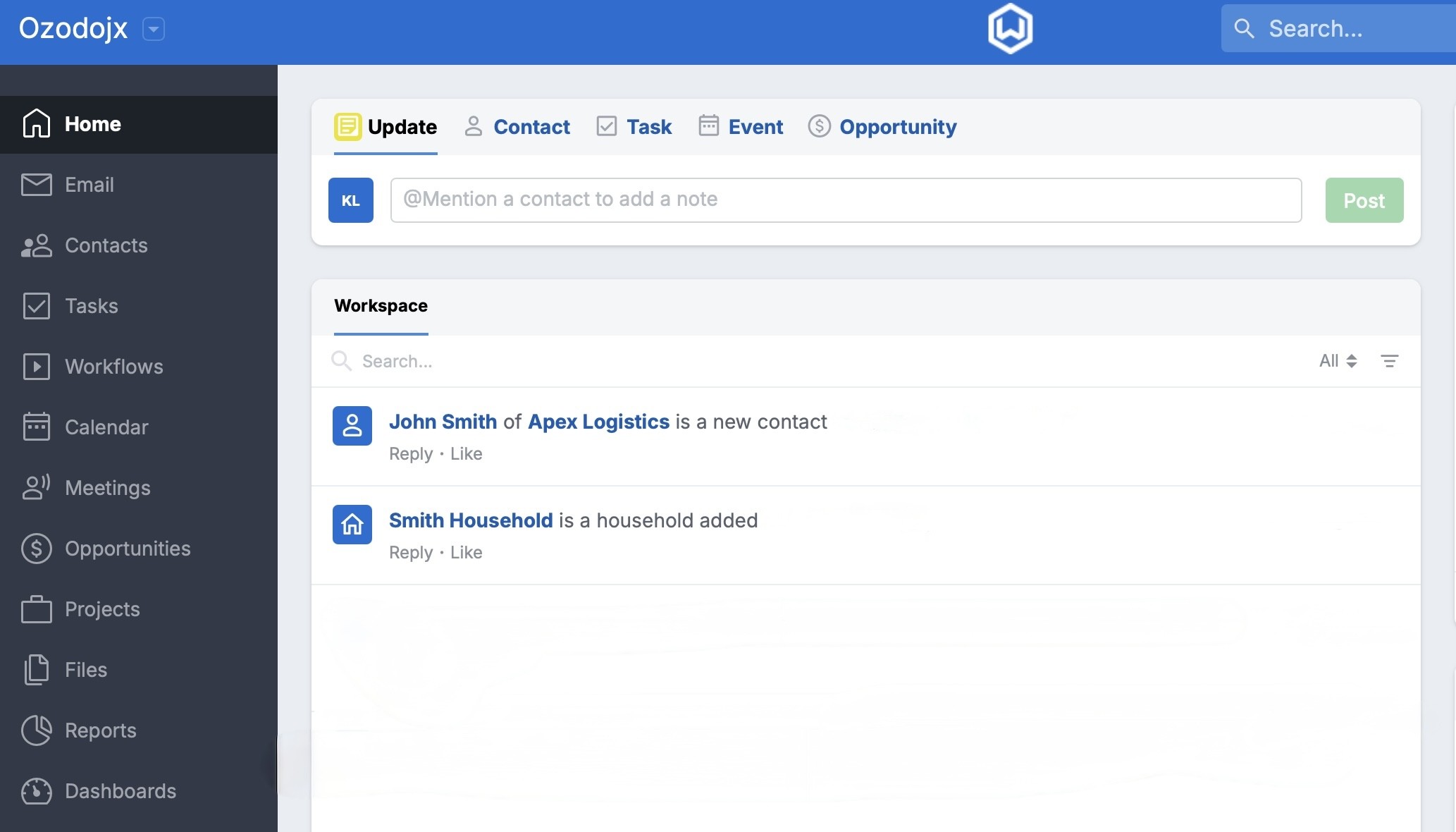
When a CRM Is Truly AI-Ready for RIAs
Every CRM demo now says AI. The question that matters is simpler: can a model read your client data and write back to it, under your control? Here are the three tests.
About the author

Written by
Michael Pavlovskyi
Founder, Bace Agency
Michael builds custom Claude and GPT workflows for insurance agencies, law firms, and PE firms on Chicago's North Shore. Speaker at Northwestern and Lake Forest College on practical AI adoption for professional services.
Connect on LinkedInSee it in your firm
Book an audit.
A free 30-minute AI audit. No obligation, no pitch deck.
Book a free AI audit