
What Agentic AI Actually Means
Software agents that plan multi-step work are changing who uses your firm's tools and how decisions get made.


Key Takeaways
- ✓ Agentic AI means autonomous software that plans multi-step work and uses tools independently, moving beyond simple question-and-answer interactions.
- ✓ Agents excel at routine, predictable workflows while humans focus on client relationships and strategic decisions requiring judgment.
- ✓ Most successful implementations start with one clear process before expanding to complex multi-system workflows.
If your North Shore firm uses AI tools today, you are likely asking them questions and reading their answers. That is helpful, but it is not agentic AI. Agentic AI means software that can plan multi-step work, use tools on its own, and finish tasks without you watching over its shoulder.
The difference matters because agentic AI changes who the primary user of your software becomes. As Nvidia's Computex 2026 keynote put it, we are moving toward a world where AI agents become the main users of software, not humans. Your firm's tools will increasingly serve agents that work on behalf of your team.
What Agentic Actually Means
Most AI interactions today follow a simple pattern: you ask, the AI answers. You read the answer, decide what to do next, then ask another question. You remain in control of each step.
Agentic AI flips this. You give the agent a goal, and it figures out the steps needed to reach that goal. It can use tools, gather information, make decisions, and course-correct when something does not work. You set the objective, then step back while the agent does the work.
The key word is autonomy. A true agent does not need you to tell it what to do at each step. It can break down complex requests, prioritize tasks, and handle unexpected problems on its own.
This shift from reactive to proactive AI changes everything about how your firm's technology stack operates. Instead of tools waiting for human input, agents actively work through your firm's processes while you focus on client relationships and strategic decisions.
Three Core Agent Capabilities
Real agentic AI has three essential capabilities that separate it from standard AI chat interfaces.
Planning and Reasoning: Agents can break down complex requests into sequential steps. If you ask an agent to prepare a client onboarding package, it can identify what information it needs, determine the order of operations, and create a logical workflow to complete the task.
Tool Use: Modern agents can operate software tools directly. Claude can now use computer tools, browse the web, write and run code, and interact with APIs. GPT-4o includes vision and voice capabilities that let it process documents, images, and audio files as part of its workflow.
Persistence and Memory: Unlike one-off chat responses, agents maintain context across long workflows. They remember what they have done, what worked, what failed, and what still needs attention. This lets them handle tasks that span hours or days.
"The best processes are invisible. You set the outcome, and the system figures out how to get there."
Jeff Bezos, on Amazon's automated fulfillment operationsThese capabilities combine to create software that can work independently on your firm's routine tasks. The agent becomes a digital team member that handles predictable work while your human staff focuses on client service and complex problem-solving.
How This Applies to Professional Services
For North Shore professional services firms, agentic AI changes how routine work gets done. Instead of staff manually moving information between systems, agents can handle the entire workflow.
Consider client onboarding. Today, your team probably collects forms, enters data into multiple systems, runs compliance checks, and sets up initial files. Each step requires human attention. An agentic approach lets you set the goal and walk away.
Insurance agencies can deploy agents to handle policy renewals, from pulling client data to generating renewal documents to scheduling follow-up calls. Law firms can use agents for conflict checking, document review, and case file preparation. Wealth advisors can automate portfolio reporting, compliance monitoring, and client communication workflows.
The pattern is the same across all verticals: agents take over predictable, multi-step processes while humans focus on relationship management and strategic decisions. This is particularly valuable for North Shore firms that need to maintain high service standards while managing growth and efficiency pressures.
Getting Started With Agents
Most firms should start with one clear, bounded workflow before attempting complex agent deployments. Pick a routine process that currently takes your staff 2-3 hours and involves moving information between 3-4 systems.
SAMPLE CLAUDE PROMPT
"I need you to act as a workflow automation agent for our client onboarding process. Here are the current manual steps: [paste your current workflow]. Your job is to identify which steps can be fully automated, which need human review, and create a step-by-step plan for an agent to handle everything that doesn't require human judgment. Include specific tools and APIs the agent would need to access."
The key is starting simple and building confidence. Our North Shore AI implementation guide walks through the exact process for identifying automation candidates and building your first agent workflow.
Most successful agent implementations follow a three-phase approach: map your current process, identify automation opportunities, then build and test the agent workflow in parallel with your manual process until you trust it completely.
Common Misconceptions
The biggest misconception is that agentic AI means giving up control. In reality, you maintain complete oversight through monitoring dashboards and approval workflows. Agents work within the boundaries you set.
Another common misunderstanding is that agents replace human judgment. They handle routine tasks that follow predictable patterns. When an agent encounters something outside its training or instructions, it flags the issue for human review rather than guessing.
"Automation should amplify human capabilities, not replace human wisdom."
Peter Drucker, on knowledge worker productivitySome firms worry about compliance and security risks. These concerns are valid and require careful setup. Security fears often kill more AI projects than actual breaches, but proper agent deployment includes audit trails, permission controls, and compliance monitoring.
The final misconception is that agentic AI requires massive technology overhauls. Most agent workflows can integrate with your existing systems through APIs and automation platforms. You don't need to rip and replace your current technology stack.
For North Shore firms ready to explore what agentic AI looks like in practice, a free 30-minute AI audit can identify the specific agent opportunities in your current workflows. No obligation. The output is a one-page plan your team can act on this quarter.
Frequently Asked Questions
What is the difference between agentic AI and regular AI chatbots? +
Regular AI chatbots respond to your questions one at a time. Agentic AI can plan multi-step workflows, use tools autonomously, and complete entire tasks without human supervision at each step. You give an agent a goal, and it figures out how to achieve it.
Can agentic AI work with our existing software systems? +
Yes. Most agent workflows integrate with existing systems through APIs and automation platforms like Zapier or Make. You typically don't need to replace your current technology stack to deploy agents.
How do we maintain compliance when using AI agents? +
Agents can be configured with approval workflows, audit trails, and compliance monitoring. They work within boundaries you set and flag exceptions for human review. The key is proper setup and ongoing monitoring.
What types of tasks are best suited for agentic AI? +
Routine, multi-step processes that follow predictable patterns work best. Examples include client onboarding, document processing, data entry across multiple systems, and compliance monitoring. Tasks requiring complex human judgment should remain with your team.
How long does it take to implement agentic AI workflows? +
Simple agent workflows can be built and tested in 2-3 weeks. Complex deployments involving multiple systems may take 1-2 months. Most firms start with one bounded process to build confidence before expanding to other workflows.
Related Articles
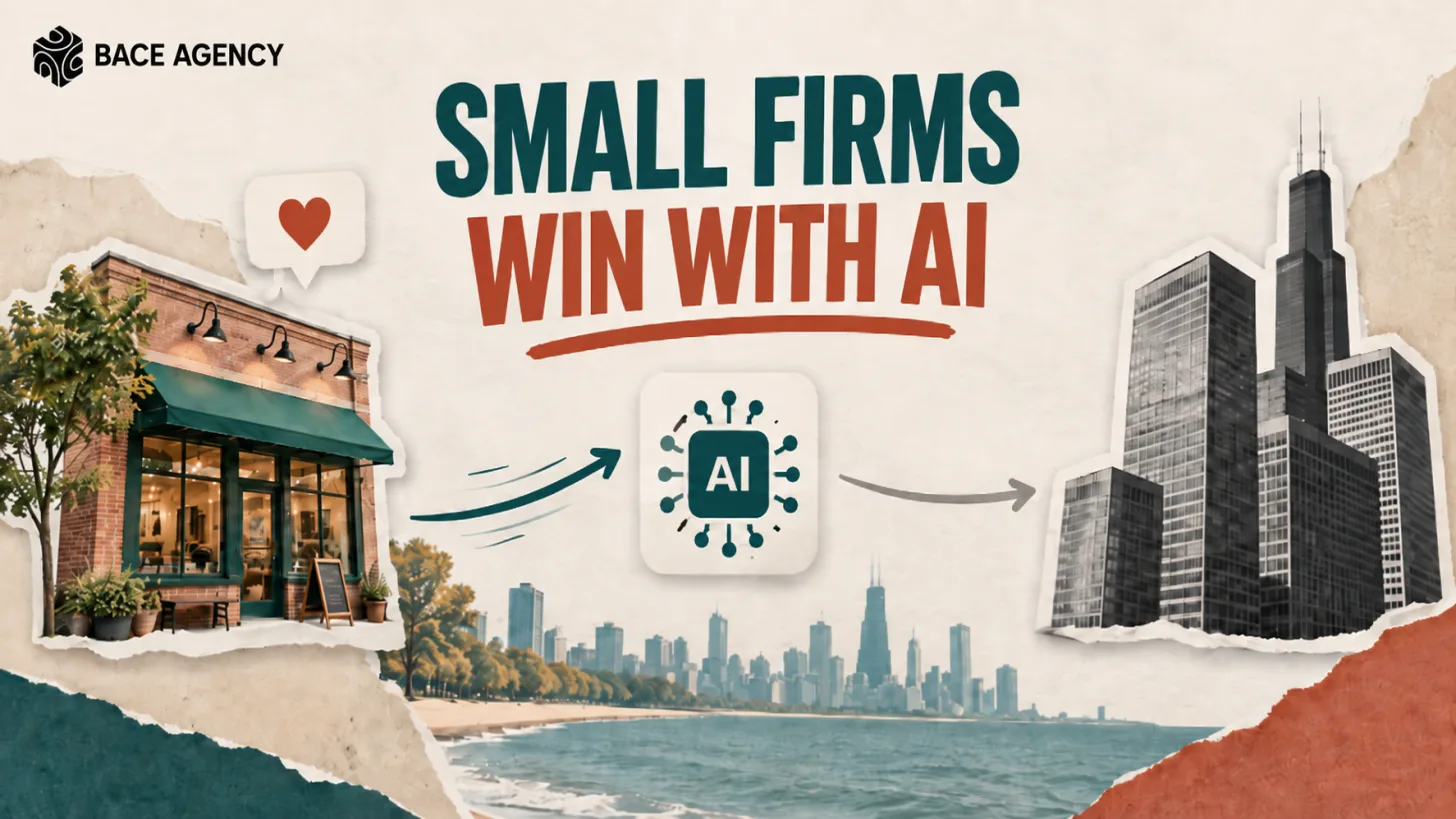
Small North Shore Firms Are Beating Big Ones to AI
While a national firm spends a year debating AI strategy, the small practice down the street already answers clients faster. The gap compounds every week.

What North Shore Firms Should Not Automate
Most AI consultants will automate anything you point at. Here is the short list I tell clients to leave alone.

What Anthropic's Valuation Means for Small Firms
Anthropic just became the most valuable AI startup at a $965 billion valuation. The fad question is closed. The useful question is where AI fits in your firm, and where it does not.
About the author

Written by
Michael Pavlovskyi
Founder, Bace Agency
Michael builds custom Claude and GPT workflows for insurance agencies, law firms, and PE firms on Chicago's North Shore. Speaker at Northwestern and Lake Forest College on practical AI adoption for professional services.
Connect on LinkedInSee it in your firm
Book an audit.
A free 30-minute AI audit. No obligation, no pitch deck.
Book a free AI audit