
Why Highland Park Family Offices Run AI In-House
The wealthiest families I work with do not send their data to the cloud. Here is what they do instead, and why the setup is more practical than most advisors expect.

Key Takeaways
- ✓ Family offices handle data that has no parallel in most professional services: trust structures, beneficiary records, private equity positions, and multi-generational governance documents.
- ✓ The SEC's amended Regulation S-P (finalized May 2024) requires covered institutions, including registered investment advisers, to maintain incident response programs and notify affected customers within 30 days of a qualifying security breach.
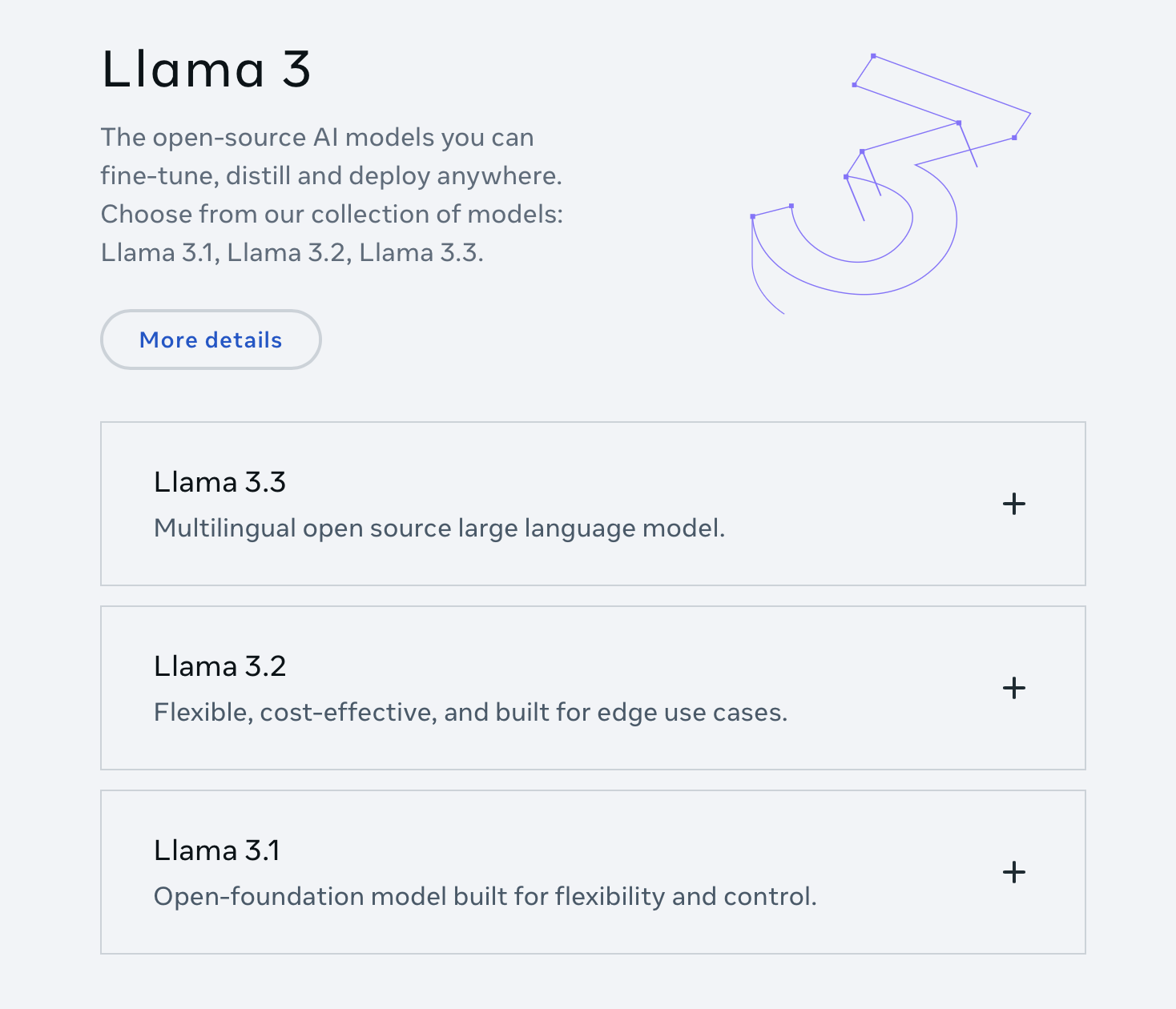
- ✓ Open-weight models like Meta's Llama 3.1 run on local hardware with no internet connection required. The document you feed the model never leaves your office network.
- ✓ The three tasks where family offices get the most immediate value: investment research summaries, trust and entity documentation, and draft communications for advisors and beneficiaries.
The families I work with on Chicago's North Shore hold significant wealth in complicated structures. Investment accounts, private equity stakes, trust assets, real estate holdings, beneficiary records going back two or three generations. The office managing all of this usually runs with a small team: a couple of investment staff, a family officer, maybe an outside CPA and attorney on retainer.
When AI tools started showing up in those conversations two years ago, the first instinct was almost always the same: keep the technology away from the data. That instinct is correct. The question is whether you can act on it and still get real operational value from AI. For most Highland Park family offices I work with, the answer is yes. But it requires a specific setup.
This article is about that setup: what runs locally, where it fits in the daily work, and what it does not replace.
What Actually Runs Locally Now
Two years ago, running a capable language model on local hardware meant real compromises: slow inference, narrow context windows, outputs that needed significant hand-holding. That has changed, and the hardware that makes it possible now sits at desktop price points.
Meta's Llama 3.1 family includes open-weight models at 8B, 70B, and 405B parameters. The 8B version runs on a current MacBook Pro without modifications. The 70B version requires a small dedicated server, roughly the cost and footprint of a desktop workstation. Neither requires an internet connection during inference.
Anthropic's Claude is available via API for organizations that want cloud access with a controlled data pipeline. For offices that want complete certainty about data residency, local open-weight deployment removes the question entirely.
The offices getting real value from this are not using AI as a general-purpose assistant. They are using it for three specific tasks, each with a defined input, a defined output, and a human review step before anything gets acted on.
"The wealthiest families I work with do not send their data to the cloud. Here is what they do instead."
Michael Pavlovskyi, Bace AgencyWhy Family Offices Handle Data Differently
A family office manages the financial and personal affairs of one or more high-net-worth families. The files it handles are confidential in a professional sense and irreplaceable in a personal one. A trust document outlining family governance, a distribution schedule listing minors by name, a private equity position list tied to a specific liquidity event: this information has no analogue in a law firm's intake form or an insurance agency's renewal file.
The data exposure risk is also different in kind. A law firm that puts privileged files on the wrong cloud tool faces a professional responsibility problem. A family office that does the same faces a breach of fiduciary duty, potential regulatory liability, and a relationship problem with a family that may have been a client for decades.
The SEC's amended Regulation S-P, finalized in May 2024, tightened requirements for covered institutions, including registered investment advisers. Even family offices that operate below the registration threshold carry fiduciary obligations that make data exposure a real liability.
Running AI locally does not by itself satisfy a compliance program. But it removes the most common data exposure vector: a staff member pasting a sensitive document into a consumer AI product to save twenty minutes on a research task. The security architecture for that is well understood.
Investment Research and Portfolio Summaries
Local AI can summarize SEC filings, earnings transcripts, and analyst notes. The model reads the document. The investment team evaluates the output.
A family office portfolio review typically requires preparing summaries of publicly held positions before a quarterly meeting. For a portfolio with twenty or thirty positions, that is a full day of preparation falling to one or two people on the investment team.
A local model handles the mechanical part quickly. You feed it a filing or transcript and ask for a structured summary keyed to the questions your team uses in review. The model returns a formatted brief in under a minute. A team member reviews it for accuracy before the meeting. The entire process stays on hardware in your office.
The same approach works for monitoring private equity and alternative positions. Manager letters and capital account statements arrive quarterly, and the model can extract key figures and flag material changes from the prior period.
SAMPLE CLAUDE PROMPT
"Here is a 10-K filing for [company]. Summarize for our investment review: (1) core business model in 3 sentences, (2) the top 3 risk factors most relevant to a long-term holder, (3) any notable changes in capital allocation or management commentary compared to the prior year. Under 400 words. No investment recommendation."
Trust and Entity Structure Documentation
A multi-generational family may hold assets across dozens of trusts and LLCs. Local AI can convert raw trust agreements into readable one-page summaries for staff and advisors.
A family office managing multiple generations often maintains a web of trusts, limited partnerships, holding companies, and charitable vehicles. The source documents are long, technical, and were drafted years or decades ago by outside counsel.
A local model can read a trust agreement and produce a plain-English summary: who the trustee is, what the distribution rules are, any spendthrift provisions, what happens at termination. This is not legal advice. It is documentation that helps the family officer answer questions without waiting on outside counsel every time.
Trust documents contain beneficiary names, asset values, family governance language, and sometimes information about individual family members that no one outside the office should see. Running this task locally is not optional. It is basic data hygiene for any office that takes its fiduciary role seriously.
SAMPLE CLAUDE PROMPT
"Here is a trust agreement. Create a one-page summary in plain English covering: (1) grantor and trustee, (2) named beneficiaries and distribution rules, (3) any key restrictions or spendthrift provisions, (4) what happens at termination or the grantor's death. Flag any provision you think a lawyer should clarify."
Draft Communications for Advisors and Beneficiaries
Family offices send dozens of routine letters each quarter. A local model drafts the structure so the family officer can focus on the judgment calls, not the formatting.
Quarterly performance letters, distribution notices, annual meeting agendas, updates to outside attorneys and CPAs: a small family office team generates a significant volume of written communication. Most of it follows the same structure each cycle. The data changes; the format does not.
A local model can draft the shell of these documents from a short brief. The family officer edits before anything goes out. This works well for routine correspondence that does not require original relationship judgment.
The rule I use with every office: if a new staff member could write the first draft from a template, the model can write the first draft from a brief. If it requires knowing the family, it requires a person.
SAMPLE CLAUDE PROMPT
"Draft a quarterly letter for a family office client. Tone: professional, warm, and direct. Include: (1) a brief acknowledgment of market conditions this quarter, (2) one key portfolio theme or action taken, (3) a note on what to watch next quarter. Do not include specific dollar amounts, performance figures, or position names. Under 300 words."
How to Get Started
Map which tasks involve sensitive data and which do not
List every task where your team spends time on research, drafting, or document review. Note whether each involves trust documents, beneficiary information, or investment positions. Tasks that touch sensitive files need local deployment. Tasks that do not can start on a cloud tool today.
Start with one task on local hardware before expanding
Pick the single most time-consuming research or drafting task your team does each week. Run it twenty times over two weeks and evaluate whether the output is accurate and the review process is manageable. Most offices get the first task right in two to three weeks.
Define the human review step before you go live, not after
Every AI workflow at a family office needs a defined review step: who reviews the output, what they check for, and what happens if something looks wrong. Define it first. Then go live.
What This Does Not Replace
A local AI model is a document processing and drafting tool. It is not a financial adviser, a fiduciary, or an analyst. It does not replace the judgment of the CPA reviewing a K-1, the attorney reviewing a distribution request, or the family officer who knows context no model can read from a document.
It also does not replace a real data governance policy. Running a local model removes one exposure vector. It does not build an information security program.
What local AI does replace is the version of this work that currently involves a staff member spending four hours reading filings, pasting trust language into a consumer chatbot, or drafting a quarterly letter from scratch every cycle. The model handles the mechanical part. The people handle everything else.
If you want to understand what the right local AI setup looks like for a Highland Park family office, a free 30-minute AI audit is the right starting point. In person on the North Shore or by video. You walk away with a concrete list of which workflows to start with, what hardware fits your situation, and what to leave alone.
The transition to in-house AI is a permanent shift in how private wealth operations handle information. Upgrading hardware is a minor operational step. The real work lies in changing the mindset of the office: accepting that code can process the mechanics of a trust or a portfolio while human judgment remains the only protective barrier for the family. Highland Park family offices that make this shift early preserve both their operational capacity and their fiduciary integrity.
Frequently Asked Questions
Does a family office have to use local AI, or can it use cloud tools? +
It depends on the task and the data. For tasks that do not touch trust documents, beneficiary information, or investment positions, a cloud tool with a strong enterprise data agreement may be appropriate. For sensitive data, local deployment removes the question entirely. Most offices use both.
Which local AI model is best for a family office? +
Meta's Llama 3.1 is the most practical starting point. It is free, runs on standard hardware, and performs well on document summarization and drafting. The right choice depends on your hardware budget, data sensitivity, and whether you need outside help to configure the setup.
Does running AI locally satisfy SEC Regulation S-P requirements? +
No. The SEC's amended Regulation S-P requires written incident response programs, appropriate safeguards, and a 30-day notification process for qualifying breaches. Running local AI is one part of a data handling posture, not a compliance program. Consult your compliance counsel.
How much does it cost to set up local AI for a family office? +
Hardware ranges from a few hundred dollars (a consumer laptop) to a few thousand dollars (a dedicated server for larger models). Software is free for open-weight models like Llama. Most offices have a first workflow running in two to four weeks. We break down the drivers in the real cost of an AI project.
Can local AI accurately summarize trust documents? +
Capable local models handle well-structured legal documents well. They are less reliable on unusual language or complex nested conditions. A family officer or attorney should always review any AI-generated summary before it informs a decision.
Related Articles
RoundTable Buys a Skincare Brand, and Healthcare Private Equity Meets AI
A Lake Forest firm just bought a skincare brand. The deal is a window into where healthcare private equity is heading with AI, and why it is a strategy problem first.
Lake Forest Hire: Can the Back Office Scale with AI?
Crescent Grove named a 25-year family-office veteran its growth chief. A rainmaker brings relationships. The harder question is whether the back office can scale as fast as the book.
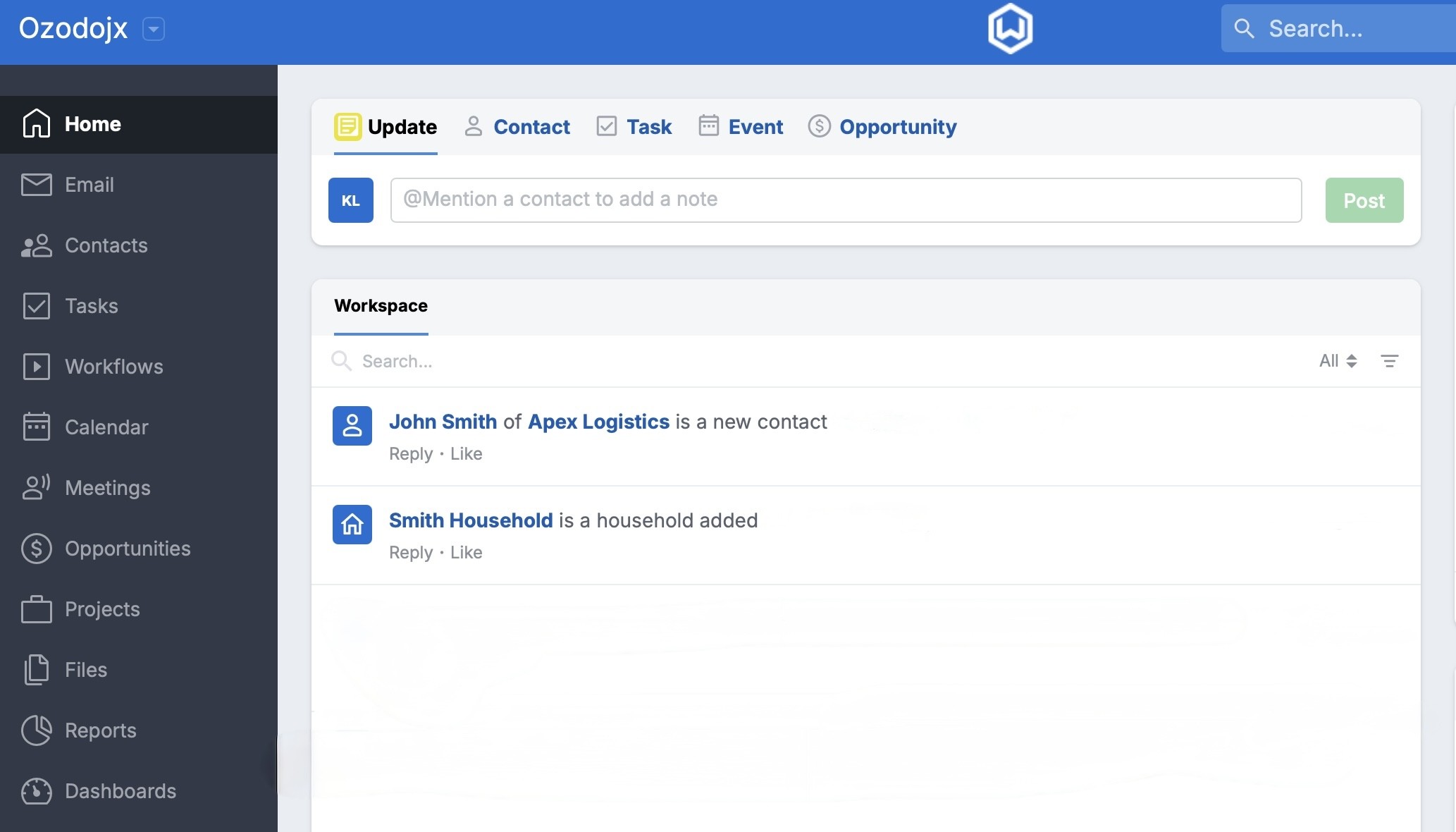
When a CRM Is Truly AI-Ready for RIAs
Every CRM demo now says AI. The question that matters is simpler: can a model read your client data and write back to it, under your control? Here are the three tests.
About the author

Written by
Michael Pavlovskyi
Founder, Bace Agency
Michael builds custom Claude and GPT workflows for insurance agencies, law firms, and PE firms on Chicago's North Shore. Speaker at Northwestern and Lake Forest College on practical AI adoption for professional services.
Connect on LinkedInSee it in your firm
Book an audit.
A free 30-minute AI audit. No obligation, no pitch deck.
Book a free AI audit