
AI for M&A Advisory Firms After the Lincoln International IPO
Independent advisors and family offices hit the same ceiling as a boutique bank: not enough hours to run more than a few live deals. AI changes that, when it is built private and secure, not bought off a shelf.

Key Takeaways
- ✓ Lincoln International reached a public listing valued near $2 billion on expertise and deal volume, not a giant balance sheet, which is the same model an independent advisor or family office runs.
- ✓ The real ceiling for a North Shore advisory practice is banker hours, not strategy: you can run two or three live mandates well before the work slips.
- ✓ Public chatbots are the wrong tool for deal work, because uploading confidential documents to them breaks the duty of confidentiality.
- ✓ The path is a private, secure AI system the firm controls, scoped by an audit that ranks sourcing, diligence, and drafting by return, not a generic subscription.
Lincoln International went public this spring, and the lesson for a North Shore wealth advisor or family office is not in the stock price. It is in the model. The firm built hundreds of millions in revenue on expertise and human hours, not a giant balance sheet. Independent financial advisors, family offices, and boutique banks on Chicago's North Shore hit the same ceiling: you have the clients and the judgment, but there are only so many hours to run more than two or three live mandates at once. That ceiling is where AI for M&A advisory firms does its real work.
This is not about buying another software subscription. It is about taking the digital grunt work that eats your best people's week, the list building, the document review, the first drafts, and handing it to a private, secure AI system your firm controls. The judgment stays human. The hours come back.
What Lincoln International's IPO Actually Says
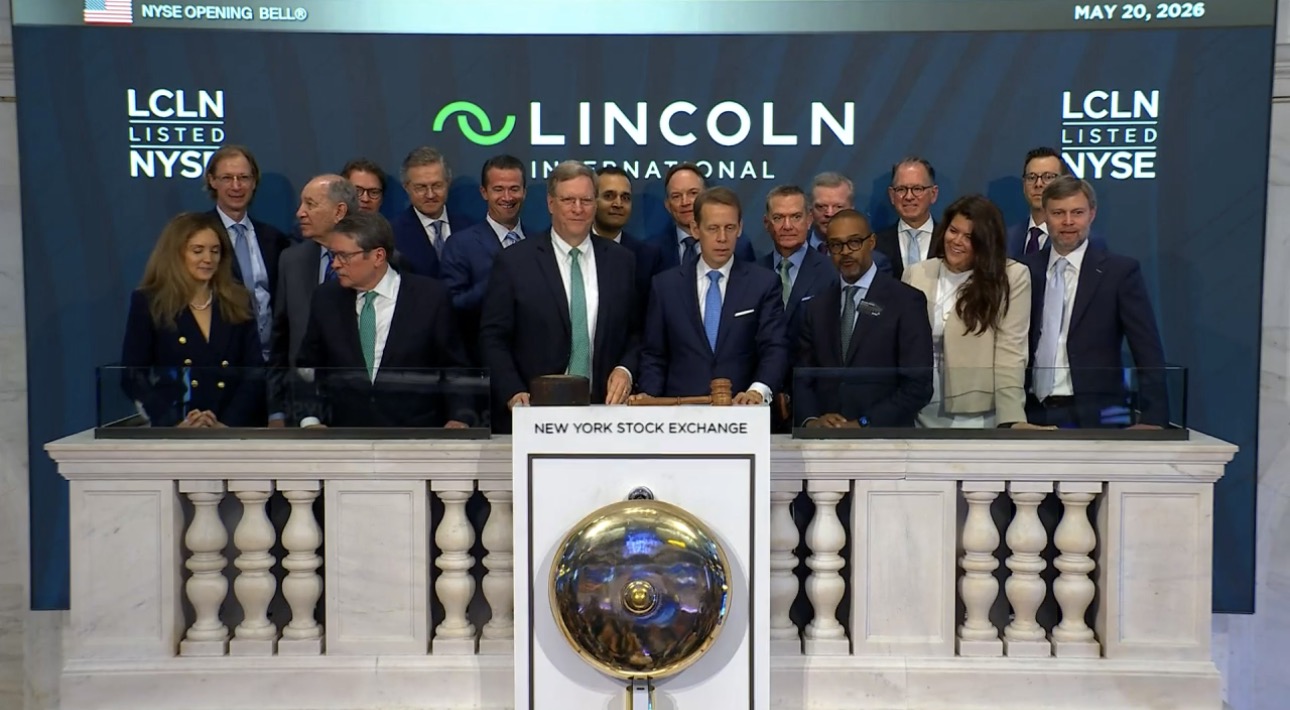
Lincoln International is a Chicago-based global advisory firm that went public in May 2026, raising about $421 million and reaching a valuation near $2 billion, per coverage of the IPO pricing. Strip away the offering mechanics and what is left is the interesting part. This is a firm with no lending balance sheet, built almost entirely on senior judgment applied to a high volume of mid-market deals.
It runs with more than 1,400 professionals across 30-plus offices and no lending book, per the firm's own IPO announcement. A Lake Forest family office or a Highland Park advisory practice runs on the same fuel. The constraint is not strategy, and it is not clients. It is that expertise does not scale past the hours in the day. You can run two or three live mandates well. The fourth is where things start to slip.

Why does a firm reaching public scale matter to a smaller advisor?
It matters because Lincoln proved that deal volume and senior relationships, not a balance sheet, can carry an independent firm a long way. Lincoln reported $783.8 million of revenue and $214.1 million of net income in 2025, completing 321 advisory transactions, up from 273 the year before, according to coverage of the IPO pricing. The growth came from doing more deals, not from a new line of business.
For an independent advisor, a family office running direct investments, or a boutique bank on the North Shore, the binding constraint is the same one Lincoln spent two decades managing: hours per live deal. There are only so many hours a senior person can spend sourcing, reading, and drafting before the pipeline stalls. That constraint is exactly the one AI relaxes, if it is built where the firm controls the data. The firms that carry more live deals at once, without thinning the judgment on each one, are the ones that grow.
"We do not believe in magic AI apps that sign deals for you. Deals are about relationships and judgment. What we automate is the digital mine that eats twenty to thirty hours of your best people's week."
Michael Pavlovskyi, Bace AgencyWhere AI for Independent Advisors Is Heading
The direction is more deals per person, not fewer people. Deloitte estimated in a 2023 analysis that the top global investment banks could raise front-office productivity by 27 to 35 percent by 2026 using generative AI, with the investment-banking division seeing roughly a 34 percent gain and about $3.5 million of additional revenue per front-office employee. Those figures, from Deloitte's investment banking analysis, describe the largest banks. The mechanism is the same for any firm doing deal work, whether a boutique bank or a family office running direct investments.
The reason this work benefits most is that it carries the most repeatable steps around the judgment. Building a buyer list, reading a data room, and writing the first version of a memorandum are pattern-heavy tasks. They reward speed and structure, and they do not require the relationship to perform the first pass. The closer a task sits to the relationship, the less AI touches it. That is the same line we drew in our piece on what AI agents actually do for an advisory practice.
This is why the move is a strategy question before it is a software question. The wrong order is buying a tool a vendor pitched and then looking for work to put through it. The right order is mapping where the hours actually go, ranking the opportunities by return and confidentiality risk, then deciding what to build, what to buy, and what to leave alone.
How should an independent advisor start with AI without overbuilding?
Start with an operational audit, not a purchase. An audit maps where the hours go across a live mandate: sourcing and list-building, drafting the memorandum, reviewing the data room, and tracking outreach. Each gets ranked by two things: the hours at stake and the confidentiality risk of the work. Only then does a build decision make sense.
This is the heart of the AI Consulting and Strategy work we do: a ranked roadmap that says which two or three workflows are worth automating first, which can wait, and where client and deal data must never go. We build the map before anyone commits to a system, because the map is what keeps a firm from funding pilots that never move a number. The same discipline shows up in how AI is becoming private equity's return engine through operations, not hype.
Use Case 1: Generate a ranked buyer universe
A private agent turns a deal thesis into a categorized buyer list a banker verifies.
Instead of an analyst scouring databases by hand, a custom Bace AI agent could scan open-market sources against the deal thesis, generate a categorized table of likely strategic and financial buyers, and flag the obvious risks on each name. The banker does not start from a blank sheet. They start from a finished draft and spend their time deciding who is real. The work runs on the firm's own logic, not a generic template.
Use Case 2: Screen the data room in a sealed environment
The security point first: confidential files never go to a public chatbot.
Uploading a target's contracts and financials to a public chatbot is a confidentiality breach waiting to happen, which is why Bace deploys an isolated, private AI system instead. Run on hardware the firm owns or in a sealed private cloud, that system could read thousands of pages in a populated data room and produce a structured red-flag memo, customer concentration, change-of-control clauses, related-party items, with a precise citation back to each source document. The first review pass compresses from days to hours.
Use Case 3: Draft the memorandum narrative
Turn management notes into a first draft, so an associate polishes instead of starting cold.
A firm could run an automated workflow that turns raw interview and management notes into a first draft of the Investment Highlights and Growth Opportunities sections of a memorandum. The machine clears the blank-page problem and writes in a measured, factual tone. An associate director then polishes the style and owns every word that ships to buyers. Nothing is sent until a person has signed off.
Where a Banker's Hours Could Shift
The table maps the work as it runs today against where a private Bace build could move it. The third column is the part most vendors skip: where the work actually happens.
| Where hours go today | Where AI could shift them | Where the work happens |
|---|---|---|
| Manual target and buyer list building | Automated buyer universe generation | Client-owned hardware or an isolated private cloud |
| Reading the data room line by line | Local AI-driven document screening | A sealed environment, never a public chatbot |
| Writing memorandum sections from scratch | Custom first-draft generation | Inside the firm's own infrastructure |
| Tracking outreach by memory | Structured outreach tracking | Access limited to the deal team |
What This Does Not Replace
AI does not replace the read on a buyer, the relationship that gets a call returned, or the judgment that prices a deal. We do not believe in a magic button that replaces human judgment, and a conservative North Shore firm should not buy one either. The work that wins mandates stays with the people who have done it for years. AI clears the repeatable prep that sits in front of that work, the twenty-plus hours a week that quietly disappear into the digital mine.
It also does not remove the build-versus-buy decision. Some workflows are worth building around a firm's own data and running on its own hardware. Most are not. Knowing the difference is the whole job, and it is why the audit comes before the build.
Lincoln's IPO is a marker. It says an independent firm can reach real scale on deal volume and judgment, and the advisors and family offices in its orbit now have a cheaper way to add capacity than hiring. The next step for a North Shore firm is not a tool. It is a ranked map of where the hours actually go, and a clear line on where the data is allowed to live. If that is the conversation you want to have, we offer a free 30-minute AI audit on the North Shore or by video, and you can start with our AI readiness quiz before committing to anything.
Frequently Asked Questions
How much did Lincoln International raise in its IPO? +
About $421 million. Lincoln International went public on the NYSE in May 2026 and reached a valuation near $2 billion, according to coverage of the IPO pricing. It did that as an independent, advisory-only firm with no lending balance sheet.
What does AI for M&A advisory firms actually do today? +
It speeds up the repeatable work that sits around the judgment: building a first-pass buyer list, reading a data room for red flags, and drafting the first version of a memorandum. Deloitte estimated in a 2023 analysis that generative AI could raise investment-banking-division productivity by roughly 34 percent by 2026. The judgment on each deal stays human.
Is a smaller advisory shop too small to benefit from AI? +
No. The binding constraint at a smaller firm is hours per live deal, which is exactly the constraint AI relaxes. The real risk is buying a tool before mapping the workflow, which is why the audit comes before any purchase.
What is the first step to adopting AI in a deal workflow? +
An operational audit, not a purchase. Map where the hours go across a live mandate, rank each workflow by the hours at stake and the confidentiality risk of the work, and only then decide what to build, what to buy, and what to leave alone.
Does using AI on deal work create confidentiality risk? +
It can if it is handled carelessly. Uploading a target's contracts and financials to a public chatbot breaks the duty of confidentiality. The safer path is a private, secure system the firm controls, with a clear line on where client and deal data is allowed to live.
Related Articles
Small North Shore Firms Are Beating Big Ones to AI
While a national firm spends a year debating AI strategy, the small practice down the street already answers clients faster. The gap compounds every week.

What North Shore Firms Should Not Automate
Most AI consultants will automate anything you point at. Here is the short list I tell clients to leave alone.

What Anthropic's Valuation Means for Small Firms
Anthropic just became the most valuable AI startup at a $965 billion valuation. The fad question is closed. The useful question is where AI fits in your firm, and where it does not.
About the author

Written by
Michael Pavlovskyi
Founder, Bace Agency
Michael builds custom Claude and GPT workflows for insurance agencies, law firms, and PE firms on Chicago's North Shore. Speaker at Northwestern and Lake Forest College on practical AI adoption for professional services.
Connect on LinkedInSee it in your firm
Book an audit.
A free 30-minute AI audit. No obligation, no pitch deck.
Book a free AI audit