
What AI Consultants Charge in 2026
Rates span from $20 a month to $7,500 a day. Most North Shore firms are shopping in the wrong tier.

Key Takeaways
- ✓ AI consulting rates in 2026 span five distinct tiers, from a $20-per-month self-service subscription to $7,500-per-day senior strategy from a global firm. The right tier depends on whether you need advice, a working system, or both.
- ✓ Most Lake Forest financial advisors and professional services firms belong in the boutique implementation tier, where focused projects run $10,000 to $75,000 and you receive a working system handed to your team, not a strategy deck.
- ✓ Four factors set the final price: whether you need custom software or configured tools, how much staff training is included, how sensitive your client data is, and how fast you need results.
- ✓ A free scoping conversation is worth more than a 40-page RFP. Before you budget for a consultant, it costs nothing to name the workflow you want to change and find out how hard it actually is to automate.
If you run an advisory practice in Lake Forest and are trying to figure out what AI consulting actually costs, you have already found that the range is absurd. The answer is simultaneously $20 a month and $7,500 a day, and both numbers are correct. The difference is what you are buying.
Most North Shore RIAs and professional services firms are somewhere in the middle of that range without a clear framework for knowing which tier fits their problem. This piece gives you that framework. The rates are real, the tiers are distinct, and the right answer comes down to a single question: do you need advice on what to build, or do you need someone to build it?
AI consulting rates in 2026 run from $20 per month for a Claude.ai subscription to $7,500 per day for senior strategy from a global firm. Boutique AI implementation agencies, the tier most North Shore financial advisors actually need, charge $100 to $250 per hour with project fees between $10,000 and $60,000 depending on scope and data sensitivity.
What Is an AI Consultant?
An AI consultant is a professional who helps a business apply artificial intelligence tools to specific workflows, processes, or systems. The term covers a wide range, from a solo developer who builds a single automation to a global firm that redesigns an entire operating model. Understanding that range is the first step to pricing it correctly.
The important distinction is between strategy and implementation. A strategy consultant tells you what to do and why. An implementation partner builds the thing and trains your team to use it. You need both, ideally in the same engagement. The market often sells you only one.
An AI implementation agency is a firm that builds and deploys AI-powered workflows directly inside a client's existing systems. The best ones work in a specific vertical, know the tools your team already uses, and are accountable for the system working after they leave.
For a Lake Forest advisory firm, the distinction matters because the wrong vendor type is not just expensive, it is also useless. A strategy deck from a global firm describing how AI could change your document-review process does nothing until someone connects the tools. The implementation partner is the one who does that work.
How Much Do AI Consultants Charge Per Hour?
The market splits into five tiers, each with a distinct price point, a different deliverable, and a different risk profile.
Global strategy firms (McKinsey, BCG, Bain). These firms charge roughly $3,000 to $7,500 per day for senior AI work, according to Management Consulted, which tracks MBB billing rates. At the senior-partner level, that is $375 to $938 per hour. Full AI strategy projects start at $500,000. What you are buying is brand credibility, board-level positioning, and a proprietary methodology. What you are not buying is someone who will configure your tools, train your staff, or be on the phone when the workflow breaks. For most North Shore professional services firms, this is the wrong tier at any price.
Big 4 AI and technology arms (Deloitte, PwC, EY, KPMG). The large accounting and technology firms have built substantial AI practices. Senior consultants in these groups typically charge $200 to $400 per hour. Project minimums run $100,000 or more. The strength is scale, regulatory experience, and existing relationships with enterprise software vendors. The common weakness is project staffing: the person who sells the engagement is rarely the one doing the work, and the actual implementation often sits with a team of junior analysts billing their first year out of school.
Boutique AI implementation agencies. This is the tier most North Shore financial advisors, law firms, and insurance agencies should be evaluating. Boutique agencies focused on AI implementation typically charge $100 to $250 per hour, with project fees running $10,000 to $75,000 depending on scope and data sensitivity. The team builds the workflows, trains the staff, and is accountable for the result functioning as described. You talk to the same people from kickoff to handoff. Bace falls in this tier.
Independent AI consultants. Solo practitioners with specific AI skills charge roughly $75 to $200 per hour on platforms like Upwork. Projects scope out at $5,000 to $25,000. The best independents match the skill level of boutique agencies at lower rates. The risk is quality variance: there is no team behind them, no one reviewing their work, and no institutional accountability. Check references carefully and ask for a completed engagement in your vertical before you commit.
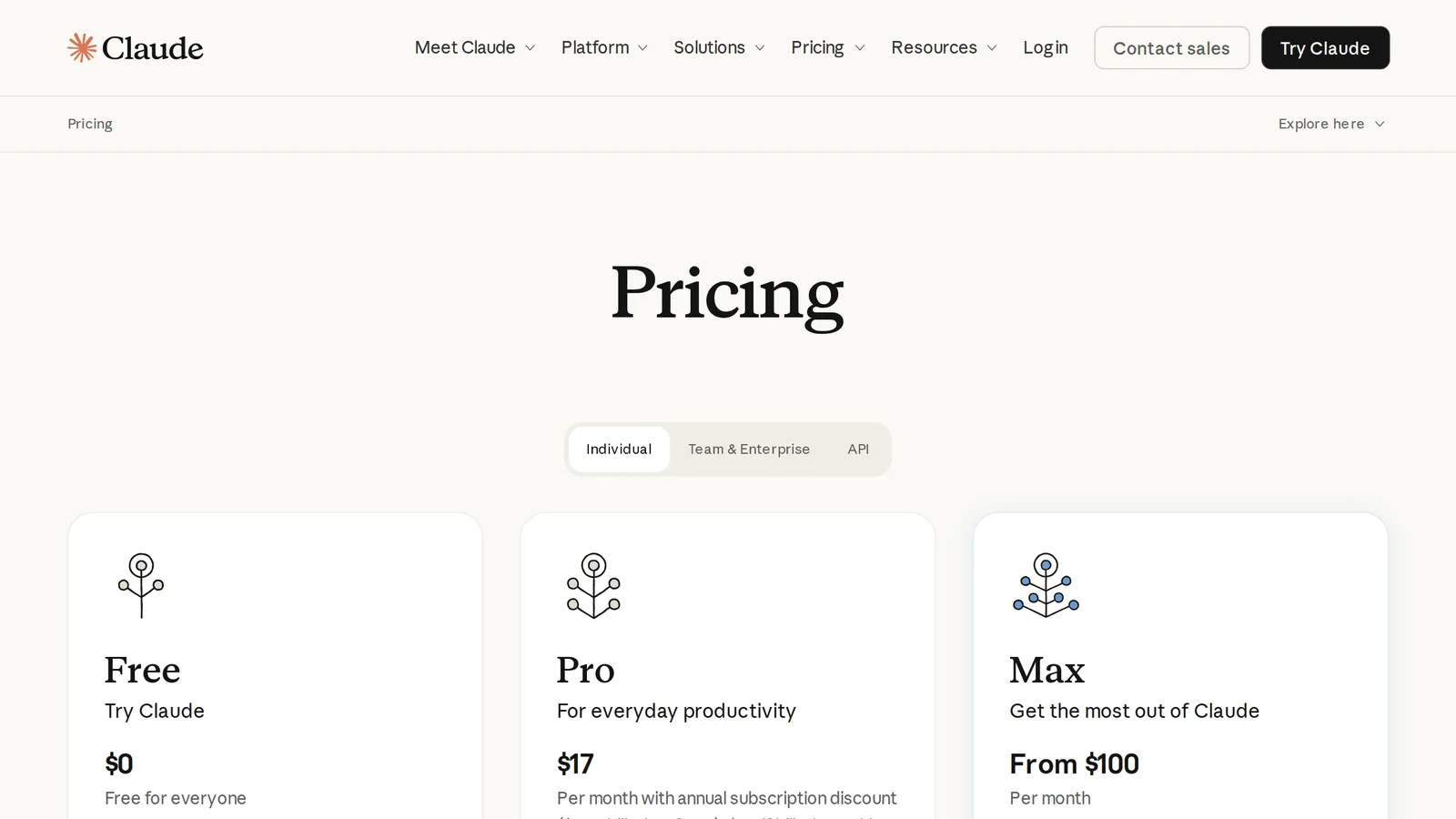
Self-service AI subscriptions. Anthropic's Claude.ai Pro costs $20 per month per user. The Team plan runs $25 per user per month. These give your team direct access to capable AI models with no consulting overhead. The ceiling is what your team knows how to do on its own. For document drafting, research, and summarization, this delivers better return per dollar than any consulting engagement. The gap that consulting closes is the gap between "I can use AI when I know what to ask" and "our intake workflow runs without anyone having to ask."
What Drives the Rate Up or Down?
The headline rate per hour tells you very little. What actually moves the total cost is scope, and four factors set it.
Custom build versus configured tools. Connecting an existing AI model to an existing platform through no-code or low-code connectors costs less than writing custom software. Firms charging $200 to $250 per hour and up are usually writing software. Firms in the $100 to $150 range are typically configuring and connecting existing tools. Both can produce lasting results. The question is which one your problem actually requires.
How much change management is included. Training your team to use new AI-assisted workflows costs more than deploying the tool and leaving. But training is where most projects fail quietly. A firm that builds the automation without teaching your staff how to maintain it has sold you a system that will stop working in six months and never get fixed. The right engagement includes the training. You pay more up front and keep the result.
Data sensitivity. Financial advisory data, client trust documents, and legal matter files require more care than general business content. A consultant who builds pipelines that keep sensitive content on your own systems, or who sets up local AI processing, costs more than one who routes everything through a standard cloud API. For an RIA holding client account details, this is not optional. The security considerations for AI agents in professional services are worth understanding before you write any check.
Timeline compression. A two-week sprint costs more per week than a twelve-week program. If you need a workflow live before a compliance review or a client event, that urgency moves the price. Build time into your planning wherever you can. The firms I have seen pay the most per result are the ones who come to the conversation with a hard deadline and a fuzzy scope.
"Price is what you pay. Value is what you get."
Warren BuffettHow Consultant Types Compare
The table below maps each tier against the four decisions that matter most for a North Shore firm evaluating AI help.
| Tier | Typical Rate | Typical Project | Deliverable | Best Fit |
|---|---|---|---|---|
| Global strategy firm | $375-$938/hr | $500,000+ | Strategy, roadmap, board presentation | Large-cap AI governance and board strategy |
| Big 4 AI practice | $200-$400/hr | $100,000-$500,000 | Methodology, compliance framework, enterprise rollout | Regulated institutions at enterprise scale |
| Boutique AI agency | $100-$250/hr | $10,000-$75,000 | Working workflows, staff training, handoff | RIAs, law firms, insurance agencies needing results |
| Independent consultant | $75-$200/hr | $5,000-$25,000 | Specific tool integration or single workflow | Firms with a clearly scoped single problem |
| Self-service subscription | $20-$25/user/month | N/A | Direct AI model access, no implementation | Teams doing day-to-day AI work independently |
What This Means for a Lake Forest Advisory Firm
If you are an RIA or an independent wealth manager in Lake Forest, the realistic answer is the boutique tier. The workflows where AI has the clearest return for an advisory practice are also the most approachable technically.
Client onboarding documents are the obvious first use case. A new client submits a financial profile, account statements, and disclosure forms. Extracting the structured data from those documents, routing the right fields to your CRM, and drafting the initial suitability notes takes a staff member two to three hours per new relationship today. An AI-assisted pipeline can reduce that to a twenty-minute review-and-approve step, without losing the human judgment that compliance rules require. Connecting that pipeline to your existing CRM, whether that is Wealthbox, Redtail, or Salesforce, is exactly the kind of work a boutique agency completes in a focused four-to-eight-week project. Our post on AI document processing for financial advisors covers the mechanics of this pipeline in detail.
Quarterly reporting prep is the second use. Client accounts arrive as unstructured PDFs from custodians. A trained AI pipeline extracts the relevant performance data, compares it against prior quarters, drafts the commentary, and formats the meeting prep materials. What used to cost several hours of staff time per client becomes an hour of review. For a practice with fifty relationships, that is a meaningful reduction in the cost of serving each client.
Compliance preparation is the third. Assembling an ADV update, a suitability review, or a surveillance report requires pulling data from multiple sources, checking it against prior periods, and writing a summary a compliance officer can approve. AI handles the aggregation and the first draft. The compliance officer handles the judgment. Total labor comes down without reducing oversight.
In each case, the consulting engagement is finite. You are not renting an ongoing service. You are buying a workflow that runs after the consultant leaves. That is the right model, and it is the reason the boutique tier, priced between $10,000 and $60,000 for a focused project, produces a better return than either the strategy deck you never implement or the subscription you never configure.
SAMPLE CLAUDE PROMPT
"I run a registered investment advisory practice in Lake Forest, Illinois with roughly 50 active client relationships. I want to understand where AI can reduce the time my staff spends on non-judgment work before I hire a consultant.
Ask me about the three or four workflows that take the most staff time per week. Then, for each one, tell me: (1) which part can be handled by AI today without custom software, (2) whether that requires a consultant to set up or if my team can do it directly, and (3) what a realistic time reduction looks like per client relationship. Be specific about tools, not general about AI."
The free AI readiness quiz on this site is also a useful starting point. It takes about four minutes and identifies which of your workflows are the most tractable for AI given your specific situation.
How to Get Started
The mistake most firms make when hiring an AI consultant is buying before they have scoped the problem. Here is the sequence that produces better results.
Pick one workflow, not a transformation
Name the single workflow that takes the most staff time and produces the most predictable output. "Onboarding document extraction" or "quarterly reporting prep" is a workflow. "Improve our operations with AI" is not. A specific workflow has a clear before-and-after, a measurable result, and a realistic scope. Any vendor who cannot price a specific workflow in a first conversation is selling something other than implementation.
Ask for a reference in your vertical
Before you sign anything, ask the vendor for one completed engagement at another RIA, law firm, or insurance agency. Ask what the client's specific workflow looked like before and after. Ask what broke during the project and how they fixed it. Ask how they handle data that cannot leave the firm. A vendor who answers all three concretely is accountable for real results. One who deflects is selling strategy, not implementation.
Buy fixed scope, not time and materials
Wherever possible, buy a fixed-scope project with a defined deliverable rather than an hourly retainer. A fixed scope forces both parties to agree on what success looks like before any work starts. A time-and-materials engagement puts the risk of scope creep on you. The post on the real cost of an AI project covers this in detail, including the costs that never show up on the initial quote.
What a Consultant Does Not Deliver
A well-run AI implementation project produces a working workflow, a trained team, and a measurable result. It does not produce several things that clients sometimes expect.
It does not replace your compliance officer. Any AI-assisted output that affects client suitability, regulatory filings, or trade decisions needs a qualified human reviewer before it is final. The consultant builds the system. Your compliance officer approves the output. That division of labor is a legal requirement, not a weakness of the system.
It does not make your data clean. If your CRM is full of inconsistent entries and your client files are scattered across three systems, an AI pipeline will surface those problems immediately. Fixing the underlying data is real work that no consultant can skip. The better engagements include a brief data-readiness assessment at the start for exactly this reason.
It does not eliminate ongoing maintenance. A workflow built on top of a third-party platform changes when that platform updates. A language model that handles document classification today may need re-tuning when the model provider releases a new version. The right engagement includes documentation of how the system works so your team can adapt it without calling the consultant every time a prompt needs updating.
And it does not replace judgment on investment decisions. The AI handles administrative and analytical preparation. The client conversation, the portfolio construction call, the judgment that the situation calls for a different approach than the model suggests: those stay with the advisor. The goal is to return the advisor's time to that work, not to automate it.
If you run an advisory practice in Lake Forest or anywhere on the North Shore and are ready to name one workflow you want to change, a free 30-minute scoping call will tell you whether that is a $5,000 problem, a $25,000 problem, or a $20-a-month problem. It is available in person on the North Shore or by video, with no obligation.
Frequently Asked Questions
How much do AI consultants charge per hour in 2026? +
Rates vary by tier. Independent AI consultants on platforms like Upwork charge roughly $75 to $200 per hour. Boutique AI implementation agencies run $100 to $250 per hour. The Big 4 technology and AI practices charge $200 to $400 per hour for senior work. Global strategy firms (McKinsey, BCG, Bain) reach $375 to $938 per hour at the partner level, which translates to roughly $3,000 to $7,500 per day, according to Management Consulted's published billing data.
What is the difference between an AI consultant and an AI implementation agency? +
An AI consultant, typically an individual, advises on strategy, vendor selection, and AI roadmap. An AI implementation agency has a full team that builds and deploys working AI workflows, integrations, and automations inside your existing systems. Most professional services firms need the agency model, not the advisory model, because they need the work done rather than a plan describing the work. The key question to ask any vendor: do you build it, or do you advise on what to build?
Can I use Claude directly instead of hiring a consultant? +
For many tasks, yes. Claude.ai Pro costs $20 per month and gives a single user direct access to a capable AI model for drafting, research, document review, and analysis. A consultant adds value when the work requires connecting AI to your existing systems, building workflows that run without daily supervision, or changing how your team operates across the firm. If you are not sure which situation you are in, take the AI readiness quiz before committing either way.
How long does a typical AI implementation project take for a financial advisory firm? +
A focused single-workflow automation, such as a client onboarding document pipeline or a quarterly reporting prep system, typically takes four to eight weeks from kickoff to handoff. A broader program covering multiple workflows and firm-wide staff training runs eight to sixteen weeks. Any vendor that promises a complete AI workflow in a week is delivering a chatbot, not a system integrated with your existing tools and data.
What should I look for when vetting an AI consultant for an RIA practice? +
Ask three questions before you sign. First, can you show me a completed engagement at another RIA or financial advisory firm, with a specific before-and-after on a named workflow? Second, how do you handle client data that cannot leave the firm or go through a general cloud API? Third, what does your handoff look like: does my team own the workflow after you leave, and can they update it themselves? A vendor who answers all three concretely is accountable for real results.
Is there a minimum budget to get meaningful AI help for a small advisory firm? +
Roughly $8,000 to $12,000 is the realistic floor for a focused boutique engagement that produces a working, maintained workflow. Below that, you are typically buying advisory hours without implementation. Above $50,000, you should expect a multi-workflow program, firm-wide staff training, and documented results tied to staff time or client capacity. A free scoping call is the only cost-free way to find out which bracket fits your situation before you commit to a number.
Related Articles

Small North Shore Firms Are Beating Big Ones to AI
While a national firm spends a year debating AI strategy, the small practice down the street already answers clients faster. The gap compounds every week.

What North Shore Firms Should Not Automate
Most AI consultants will automate anything you point at. Here is the short list I tell clients to leave alone.

What Anthropic's Valuation Means for Small Firms
Anthropic just became the most valuable AI startup at a $965 billion valuation. The fad question is closed. The useful question is where AI fits in your firm, and where it does not.
About the author

Written by
Michael Pavlovskyi
Founder, Bace Agency
Michael builds custom Claude and GPT workflows for insurance agencies, law firms, and PE firms on Chicago's North Shore. Speaker at Northwestern and Lake Forest College on practical AI adoption for professional services.
Connect on LinkedInSee it in your firm
Book an audit.
A free 30-minute AI audit. No obligation, no pitch deck.
Book a free AI audit