
When Courts Punish AI Hallucinations
A growing body of federal sanctions shows North Shore litigators who skip citation verification are one filing away from a fine, a suspension, or both.


Key Takeaways
- ✓ Federal courts have sanctioned attorneys up to $30,000 per case and imposed suspensions for filing AI-generated briefs with fabricated citations. The sanctions are growing larger and more frequent since the 2023 Mata v. Avianca case.
- ✓ Rule 11 does not prohibit AI-assisted drafting, but it holds the signing attorney personally responsible for verifying every citation before filing. Submitting an AI tool's output without independent verification is the violation.
- ✓ Concealing AI involvement when challenged consistently produces harsher sanctions than prompt disclosure. The 9th Circuit's six-month suspension was driven as much by the attorneys' lack of candor as by the underlying hallucination error.
- ✓ The safest workflow is to use AI for prose drafting only, verify all citations independently in Westlaw or Lexis before filing, and maintain a verification log for every AI-assisted brief.
If your firm runs AI tools on legal research and drafting, you are ahead of most litigators on the North Shore. But if you stop before verification, you are carrying a risk that federal courts are now pricing in fines, suspensions, and disciplinary referrals.
The cases are not hypothetical. Between 2023 and mid-2026, more than a dozen attorneys have faced sanctions for submitting AI-generated briefs containing citations that never existed or wildly misrepresented the holdings they were supposed to support. The courts are not sympathetic, and the consequences are getting more severe.
The Case Docket Builds Fast
The signal case is Mata v. Avianca, Inc. (S.D.N.Y., 2023). Roberto Mata filed a personal injury suit against the airline. His attorneys, without verifying the output, filed a brief built on ChatGPT research. The brief cited cases that did not exist, quoted holdings that were invented, and named judges who had no record of writing the opinions cited. Judge P. Kevin Castel fined the attorneys and their firm $5,000 and required them to write letters of apology to the judges whose names ChatGPT had fabricated. The legal press called it a cautionary tale. Courts called it a starting point.
Since Mata, the sanctions have grown larger and the consequences more serious. According to the ABA Journal, the 6th U.S. Circuit Court of Appeals issued a combined $30,000 sanction against two attorneys in 2025 for submitting briefs containing more than two dozen fabricated citations. The court dismissed the case entirely, finding the pervasive misconduct rendered it almost entirely frivolous.
In June 2026, the 9th U.S. Circuit Court of Appeals sanctioned two California immigration attorneys, Mike Sethi and William Rounds, $2,500 each and suspended both from practicing before the 9th Circuit for six months after they filed briefs containing AI-generated errors and then initially blamed "typographical mistakes" while denying AI involvement. The court also required them to disclose AI use in all filings for two years. The court found that at every subsequent step, the attorneys knowingly or recklessly made false statements. Hiding the source of the error cost them far more than the error itself.
$5K
Fine in Mata v. Avianca, the first major AI hallucination sanctions case (S.D.N.Y., 2023)
$30K
6th Circuit total sanction against two attorneys for two dozen fabricated citations (2025)
6 mos.
9th Circuit suspension for attorneys who filed AI-hallucinated briefs and then concealed the source (2026)
A Northern District of Georgia court in Boston v. Williams (2025) found that 17 of 24 citations in the plaintiff's summary judgment opposition were either inaccurate or nonexistent, sanctioning the attorney under Rule 11. A Southern District of Ohio court imposed $7,500 against two attorneys plus a contempt finding and a referral to the state disciplinary board for Rule 11 violations the judge described as the most egregious he had seen on this subject.
What Rule 11 Actually Requires of You
"Risk comes from not knowing what you are doing."
Warren BuffettFederal Rule of Civil Procedure 11(b) requires that every attorney who signs and files a document with the court certifies that the legal contentions in it are warranted by existing law or by a nonfrivolous argument for changing the law. That obligation sits on the attorney, not the AI tool.
Every court that has addressed this has said the same thing: there is nothing in Rule 11 that prohibits using AI to draft briefs. What Rule 11 prohibits is signing and filing a document you have not verified. If you ask Claude or ChatGPT to draft a motion and file it without confirming each cited case exists, says what you attributed to it, and supports the proposition you are advancing, you have signed a document you did not verify. That is the violation.
The courts have identified a consistent aggravating factor: candor. In Mata, the attorneys initially maintained the brief's accuracy even when opposing counsel could not locate the cases cited. In the 9th Circuit case, the attorneys' initial denial of AI involvement, followed by a later admission it was "probably" involved, drove the court toward suspension rather than a lesser remedy. The ABA Journal's reporting on candor and AI sanctions shows a clear pattern: prompt disclosure and correction reduce penalties. Concealment multiplies them.
For a Lake Forest or Evanston litigator practicing in federal court, the risk profile is the same as in any other jurisdiction. The 7th Circuit had not issued a major AI sanctions order as of mid-2026, but the cases from the 6th and 9th Circuits set the pattern courts will follow. Individual judges in the Northern District of Illinois have issued standing orders on AI use in filings. Check your assigned judge's standing orders before every AI-assisted brief.
A Verification Workflow That Holds Up
AI tools, including Claude, are genuinely useful for legal research and drafting when paired with a real verification step. Here is a practical workflow your firm can put in place this week. For a broader look at how AI agents can assist with legal work, including discovery review and conflict checks, the post on Claude Managed Agents for Wilmette law firms covers the architecture in detail.
Use AI for drafting, not for citation sourcing
Ask Claude or ChatGPT to draft the argument structure and prose. Do not ask it to provide case citations. Generate the argument first, then find citations independently in Westlaw or Lexis.
Verify every citation before filing
If you do use AI to generate citations, pull each case in Westlaw or Lexis. Confirm it exists, read the relevant holding, and verify the quote matches the actual opinion text. Check the paragraph, not just the case name and volume number.
Keep a verification log
For every AI-assisted filing, maintain a brief internal record of which citations were verified, by whom, and when. If a court later asks, you want a contemporaneous log rather than a reconstructed memory.
SAMPLE CLAUDE PROMPT
"I am drafting a motion for summary judgment in a commercial dispute. Do not include case citations in your draft. Write the argument that [describe your legal theory] using clear legal prose with numbered headings. Mark every place I should insert authority with [CITATION NEEDED]. I will verify and insert citations independently in Westlaw before filing."
The underlying principle is to use AI where it performs well: structuring arguments, improving prose clarity, flagging logical gaps in your theory. Do the citation work yourself in a verified legal database. If you want to understand how North Shore firms are safely adopting AI for client-facing work more broadly, the post on proactive agents for Lake Forest law firms covers the practical setup and cost tradeoffs.
When and How to Disclose AI Use
The disclosure landscape is changing faster than most practitioners track. As of mid-2026, roughly a dozen federal district courts have local rules or standing orders requiring some form of AI disclosure in filings. The Northern District of Illinois has not issued a universal rule, but individual judges in the district have issued standing orders. Before filing, check your assigned judge's standing orders on AI use. A quick search of the judge's docket for "artificial intelligence" or "generative AI" in recent orders takes ten minutes and can save significant professional consequences.
Even where disclosure is not required, consider adding a short certification to every AI-assisted brief: "Counsel used AI tools to assist in drafting portions of this brief. All legal citations were independently verified in Westlaw prior to filing." Two sentences. No filing cost. The entire risk posture of the document shifts.
The courts reviewing these cases are consistent on this point. Attorneys who disclose errors promptly and take responsibility receive reduced sanctions. Attorneys who deny AI involvement and then walk it back under pressure receive the harshest outcomes. The 9th Circuit's six-month suspension was driven as much by the concealment as by the underlying error. Candor is free. Concealment is expensive.
For a Highland Park or Winnetka firm with a federal practice, building the disclosure habit now, before you ever face a challenge, is the right approach. It also signals to clients and courts that your firm takes verification seriously, which is increasingly a real differentiator as more litigators adopt AI tools without the controls to match.
If you want to talk through building a safe AI workflow for your North Shore law firm, including verification protocols and disclosure language that fits your practice, reach out for a free 30-minute AI audit. Bace Agency works with law firms across Lake Forest, Highland Park, and the broader North Shore to build AI workflows that are both useful and defensible.
Frequently Asked Questions
What is an AI hallucination in a legal filing? +
An AI hallucination in a legal filing is a case citation, quote, or legal authority that an AI tool invented and that does not actually exist. Generative AI tools like ChatGPT and Claude are trained to produce plausible text, not to verify facts. When asked to find supporting case law, they sometimes fabricate plausible-sounding citations, complete with judge names, volume numbers, and page references, that have no basis in reality. The attorney who signs and files a brief containing these fabrications is personally responsible under Federal Rule of Civil Procedure 11.
Does using AI to draft a brief violate professional conduct rules or Rule 11? +
Using AI to draft a brief does not by itself violate professional conduct rules or Rule 11. Every court that has addressed the issue has said AI assistance in legal drafting is not prohibited. What is prohibited is signing and filing a document without verifying that the legal contentions in it are warranted by existing law. If AI-generated citations are not independently verified before filing, the signing attorney has potentially violated Rule 11's certification requirement.
What sanctions have courts imposed for AI hallucinations in legal filings? +
Sanctions have ranged from $2,500 per attorney to more than $30,000 per case. In Mata v. Avianca (S.D.N.Y., 2023), the court fined the attorneys and their firm $5,000 for submitting ChatGPT-generated briefs with fabricated citations. A 2025 6th Circuit case resulted in a combined $30,000 sanction for two attorneys who submitted over two dozen invented citations, and the case was dismissed. In June 2026, the 9th Circuit suspended two attorneys for six months and fined each $2,500. Courts have consistently found that attempting to conceal AI involvement, rather than disclosing it promptly, results in harsher penalties.
Do I need to disclose AI use when filing briefs in the Northern District of Illinois? +
The Northern District of Illinois does not have a universal local rule requiring AI disclosure as of mid-2026, but individual judges in the district have issued standing orders addressing AI use in filings. Before filing any AI-assisted brief, check your assigned judge's standing orders. Even where disclosure is not required, adding a brief certification that AI was used and citations were independently verified is a low-cost protection that courts have treated favorably when issues arise later.
What is the safest way to use AI for legal research without risking sanctions? +
The safest approach is to use AI for drafting argument structure and legal prose while doing citation verification independently in Westlaw or Lexis. Instruct the AI to draft the argument without providing citations, then find and verify all citations yourself. For every AI-assisted filing, maintain a brief internal log of which citations were verified, by whom, and when. If you do use AI-generated citations, pull every case in a verified legal research database, confirm it exists, and read the actual holding to confirm it supports your proposition before signing and filing.
Related Articles
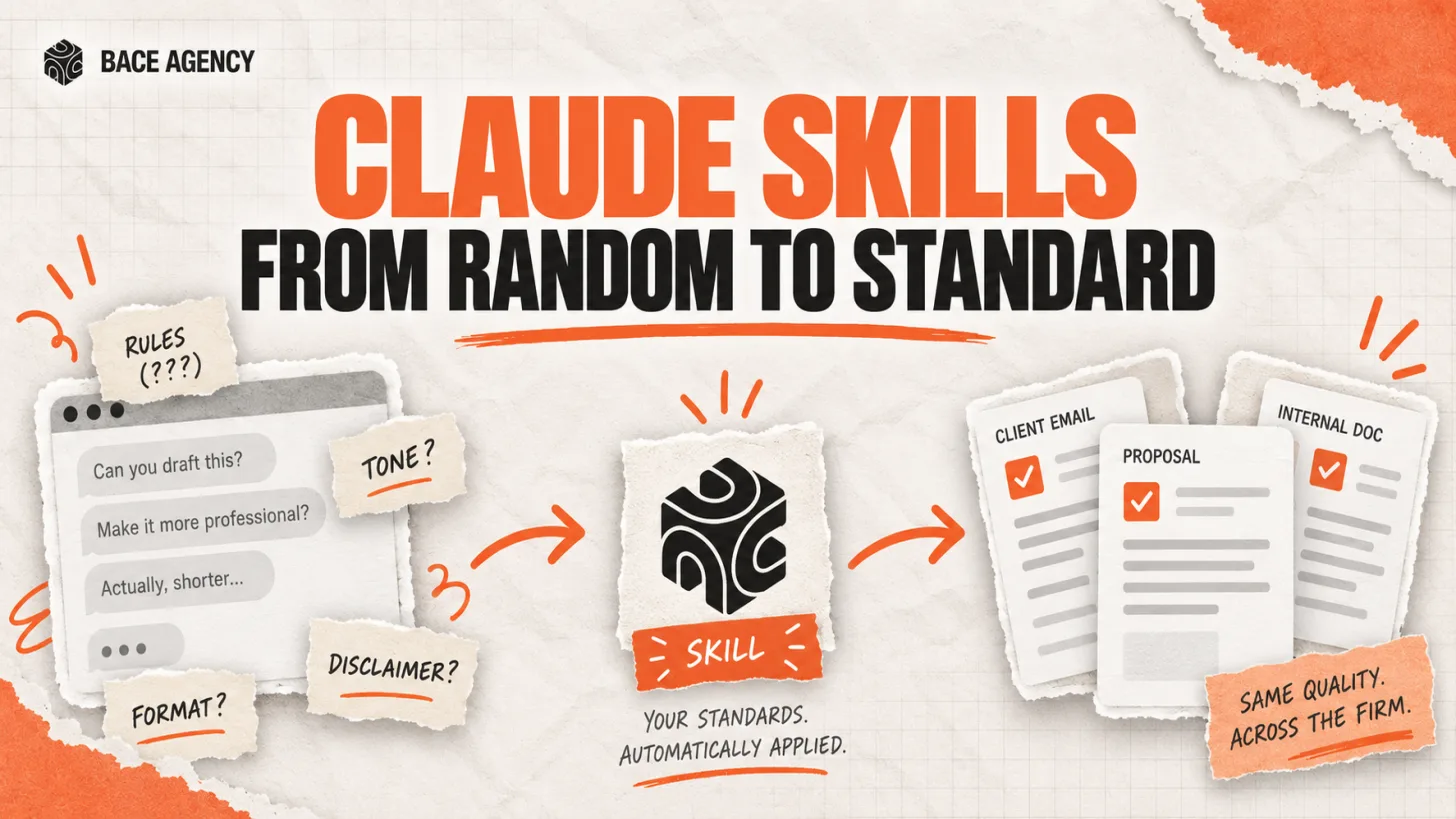
Claude Skills Give a Law Firm One AI Standard
One associate gets sharp drafts, another gets generic filler from the same tool. A Claude Skill turns one person's rules into a standard the whole firm can rely on.
Let AI Agents Handle Intake at Evanston Law Firms
Most Evanston firms still run intake on a phone and a Word template. The firms pulling ahead hand the whole new-matter pipeline to an agent, then review its work before anything reaches the client.
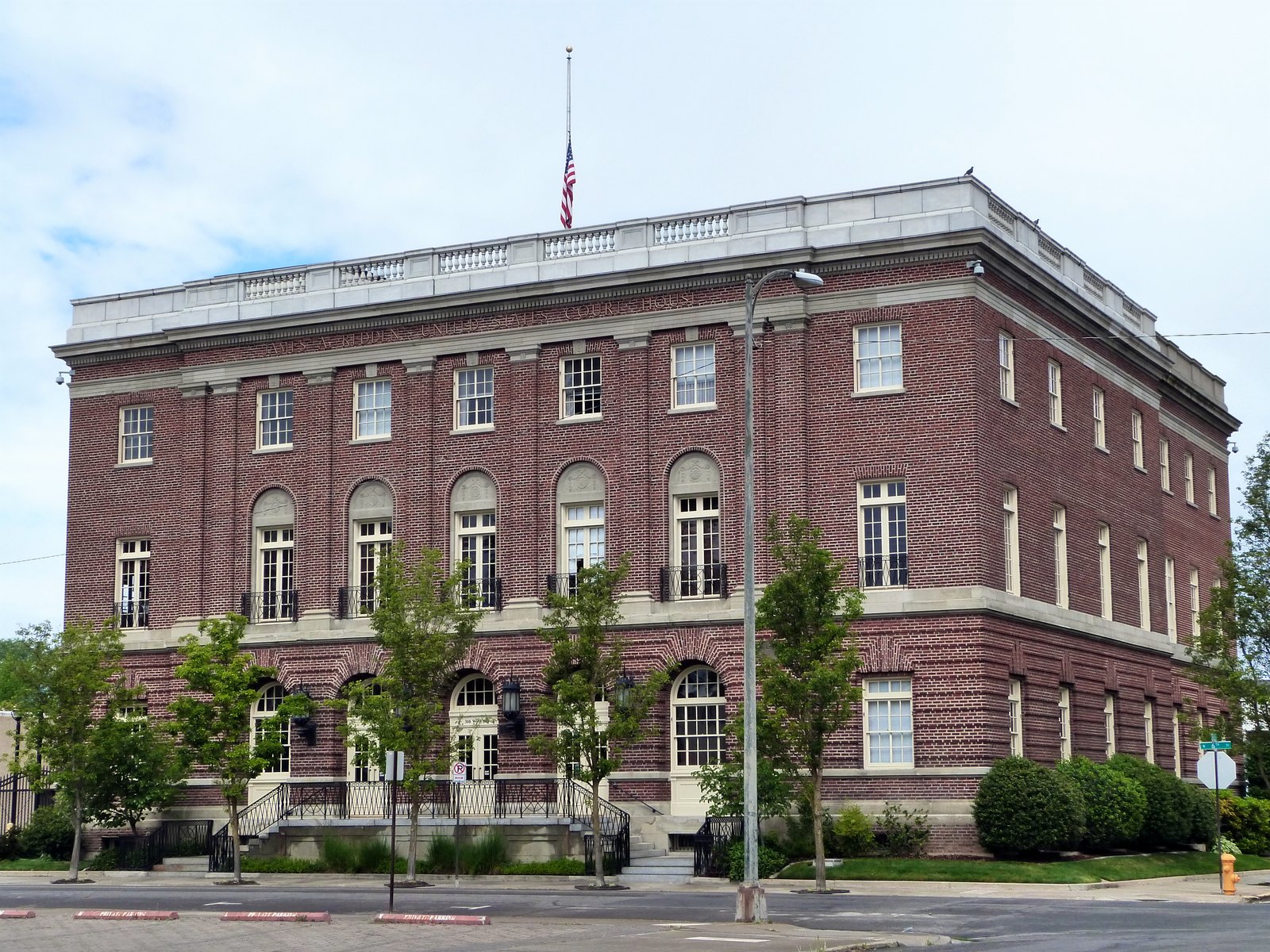
Oregon Federal Court Fines Lawyers $110,000 Over AI
Two lawyers were fined $110,000 for filing AI-invented case citations. The lesson is not to avoid AI. It is to verify it. Here is the workflow that prevents it.
About the author

Written by
Michael Pavlovskyi
Founder, Bace Agency
Michael builds custom Claude and GPT workflows for insurance agencies, law firms, and PE firms on Chicago's North Shore. Speaker at Northwestern and Lake Forest College on practical AI adoption for professional services.
Connect on LinkedInSee it in your firm
Book an audit.
A free 30-minute AI audit. No obligation, no pitch deck.
Book a free AI audit