
Small Law Firms Finally Have an AI Budget
A flat monthly Claude plan now gives a two-lawyer North Shore practice the same drafting and research power as a much larger firm.


Key Takeaways
- ✓ A flat Claude subscription now gives solo and small North Shore firms drafting and review power that used to require an enterprise legal AI contract.
- ✓ The subscription model removes per-call anxiety, so attorneys actually iterate on drafts instead of settling for the first pass.
- ✓ AI legal work still requires a licensed attorney to verify every citation and clause; that review step is non-negotiable and not something to delegate to the model.
- ✓ Start with one recurring document type, time the before and after, and only expand once the time savings are real.
If you run a two-lawyer practice in Lake Forest or a solo shop in Winnetka, you have never had a legal research budget that competes with an Am Law 100 firm. That gap just closed. For a specific kind of work, drafting, first-pass contract review, and client intake summaries, you can now hand the job to a flat-fee Claude subscription instead of a per-hour associate or a stack of point tools.
AI legal services for a North Shore solo or small firm now mean a flat monthly Claude subscription, not an enterprise contract. For about the cost of a bar association fee, a solo attorney gets a tool that drafts and reviews documents in minutes, as long as a licensed attorney verifies every citation before it reaches a client.
What Counts as AI Legal Services for a Small Firm?
AI legal services is a loose label. Vendors use it for everything from a chatbot that answers general questions to an enterprise contract-review platform priced for a 100-lawyer firm. For a solo or two-partner practice on the North Shore, the label means something narrower and more useful.
AI legal services are software tools, most often a flat monthly subscription, that draft, summarize, or review legal documents while a licensed attorney stays responsible for the final work product. That is the whole category. Nothing in it replaces an attorney's judgment or their bar license.
For most small firms, the practical version of this is a general-purpose assistant like Claude, used the way a firm might use a fast, well-read paralegal: first-draft leases, employment agreements, demand letters, and client intake summaries, all reviewed line by line before anything goes out under an attorney's signature. I have written before about the gap between marketed legal workflow software and what a small practice actually needs. See my breakdown of that gap. The short version: most solo firms do not need a vertical legal platform. They need a capable model and a review habit.
Why the Subscription Model Changes the Math
Here is the part that actually changed this year. Legal AI used to mean paying per API call, per document, or per seat on an enterprise platform quoted only after a sales call. A flat consumer or team subscription changes that math for a firm too small to negotiate enterprise pricing.
Figures on subscription price and context window are from Anthropic's pricing page and product page, current as of this writing. Check them before you budget, since AI pricing moves fast.
A flat plan also removes the anxiety of metering every draft. When a partner pays per token, they think twice before asking the model to redraft a paragraph five different ways. On a flat plan, that hesitation disappears, and the model gets used the way it is actually useful: iteratively, the way you would work with a junior associate sitting across the desk.
That shift matters more for a two-lawyer Highland Park practice than for a 100-lawyer firm, because the fixed cost of an enterprise legal AI contract barely registers against a large firm's budget. It is real money against a solo attorney's overhead. If your firm is still deciding whether AI belongs in the budget at all, our AI consulting work starts with exactly that question before it touches implementation.
Where the Real Risk Lives
None of this works if the output goes to a client unchecked. The clearest warning came out of federal court, not a vendor's marketing page. I covered the details in my write-up of the Oregon sanctions case, where a court fined attorneys for filing briefs with case citations a model had invented. That is not an argument against using AI. It is an argument against skipping the read-through.
The American Bar Association's Model Rules of Professional Conduct already require competence in the technology a lawyer uses, not only the law itself, a duty Comment 8 to Rule 1.1 spells out directly. Illinois has adopted a version of that same comment. Practically, that means you cannot delegate the verification step. An associate you supervise can be wrong, and you catch it in review. A model you do not supervise the same way is no different, except it is wrong with more confidence and better grammar.
"There is nothing so useless as doing efficiently that which should not be done at all."
Peter Drucker, on choosing which tasks to automateMy own background is in AI and machine learning engineering, including building fraud-detection models used by Blue Cross Blue Shield across North Carolina, South Carolina, California, and Florida, so I do not take model reliability lightly. Stanford's Institute for Human-Centered AI has published research tracking how often AI tools invent citations or misstate holdings, even on tools marketed specifically for legal work. See its ongoing research for the current state of that problem. Treat every citation a model gives you as a claim to verify, not a fact to trust.
If your firm handles client files sensitive enough that even a flat consumer subscription's data terms give you pause, an on-premise option exists. I covered what that looks like, and what it costs, in a separate piece on private AI for law firms.
How Much Does AI Legal Work Cost a Solo Practice?
The honest answer is that it depends on what you are replacing. A flat Claude subscription competes on price with almost nothing else in a small firm's stack, because most legal AI competitors are not priced for a firm your size in the first place.
| Metric | Traditional Legal Research Platform | Flat Claude Subscription |
|---|---|---|
| Pricing model | Custom quote, usually per seat | Published flat price |
| How you see the price | After a sales call | Before you sign up |
| Best fit | Case-law search across a large jurisdiction library | Drafting, summarizing, and first-pass review |
| What still costs the same | Attorney review time | Attorney review time |
The last row matters most. AI changes the cost of producing a first draft. It does not change the cost of a licensed attorney reading that draft carefully, and it should not. Practice management tools like Clio already build lightweight AI drafting into software many small firms already pay for. A general subscription earns its keep when the work needs more reasoning than a template offers: a lease with unusual indemnification language, for instance, or a demand letter that needs to read like it came from a specific voice.
Where to Start This Week
Do not roll AI out across every matter type at once. Pick one recurring document, a residential lease, an NDA, an engagement letter, and run it through a subscription for two weeks before you touch anything higher stakes.
SAMPLE CLAUDE PROMPT
"Attached is a residential lease for a client. Acting as a first-pass reviewer for a real estate attorney, list every clause that deviates from standard Illinois lease terms, flag any indemnification or liability language that favors the landlord unusually, and draft three questions I should ask the client before I advise them. Do not draft advice to the client directly. Flag anything I need to verify against current Illinois statute myself."
Time the before and after. If a first-pass lease review used to take 40 minutes and now takes 12, plus your review, you have your answer on whether to expand the habit to a second document type. If it does not save real time on that first document, do not force it onto the next one.
If you are unsure where AI actually fits in your practice before spending a dollar on it, our AI readiness quiz takes 10 minutes and gives you a starting point instead of a guess.
For firms ready to see what this looks like with their own documents, a free 30-minute AI audit is available, in person on the North Shore or on video. No obligation. The output is a one-page plan you can act on inside a quarter.
Frequently Asked Questions
What are AI legal services for a small law firm? +
AI legal services are software tools, most often a flat monthly subscription like Claude, that draft, summarize, or review legal documents while a licensed attorney remains responsible for the final work product. They are not a replacement for legal judgment or a law license.
Is it ethical for a solo attorney to use Claude for legal drafting? +
Yes, provided the attorney treats the output as a first draft and independently verifies every citation, fact, and clause before it reaches a client. The American Bar Association's Model Rules of Professional Conduct require competence in the technology a lawyer uses, and Illinois has adopted a version of that same standard.
How much does a Claude subscription cost for a small law firm? +
Individual Claude subscriptions start at a flat monthly price published on Anthropic's pricing page, well below the custom, per-seat quotes typical of enterprise legal AI platforms. Firms should confirm current pricing directly with Anthropic before budgeting, since AI pricing changes often.
Can AI replace a legal research subscription like Westlaw? +
Not fully. A general AI subscription is strong at drafting, summarizing, and first-pass review, but it does not replace a dedicated case-law research platform's indexed, jurisdiction-specific search. Many small firms use both: a research platform for case law and a flat AI subscription for drafting and review.
What is the biggest risk of using AI for legal work? +
The biggest risk is an unverified citation or clause reaching a client or a court filing. Federal courts have sanctioned attorneys for exactly this, and the fix is a mandatory read-through, not avoiding the tool altogether.
Related Articles
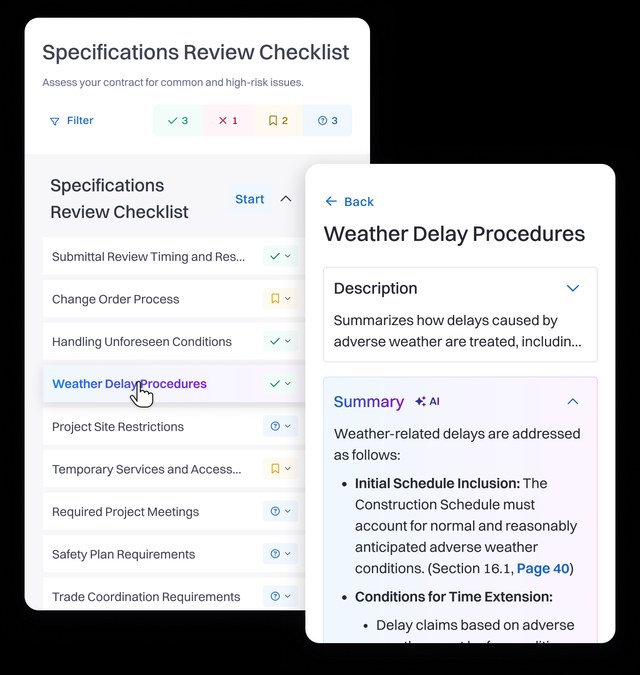
AI Contract Review for Construction Counsel
Construction counsel on the North Shore can hand Claude a full AIA or ConsensusDocs contract file to catch conflicting clauses fast, but the 2023 ChatGPT sanctions case is the reminder that every flag still needs a lawyer's sign off.

AI Legal Research Tools for North Shore Firms
Mid-size North Shore practices are fielding demos from every AI legal research vendor. Here is how the leading tools actually compare on the tasks your associates run every day.
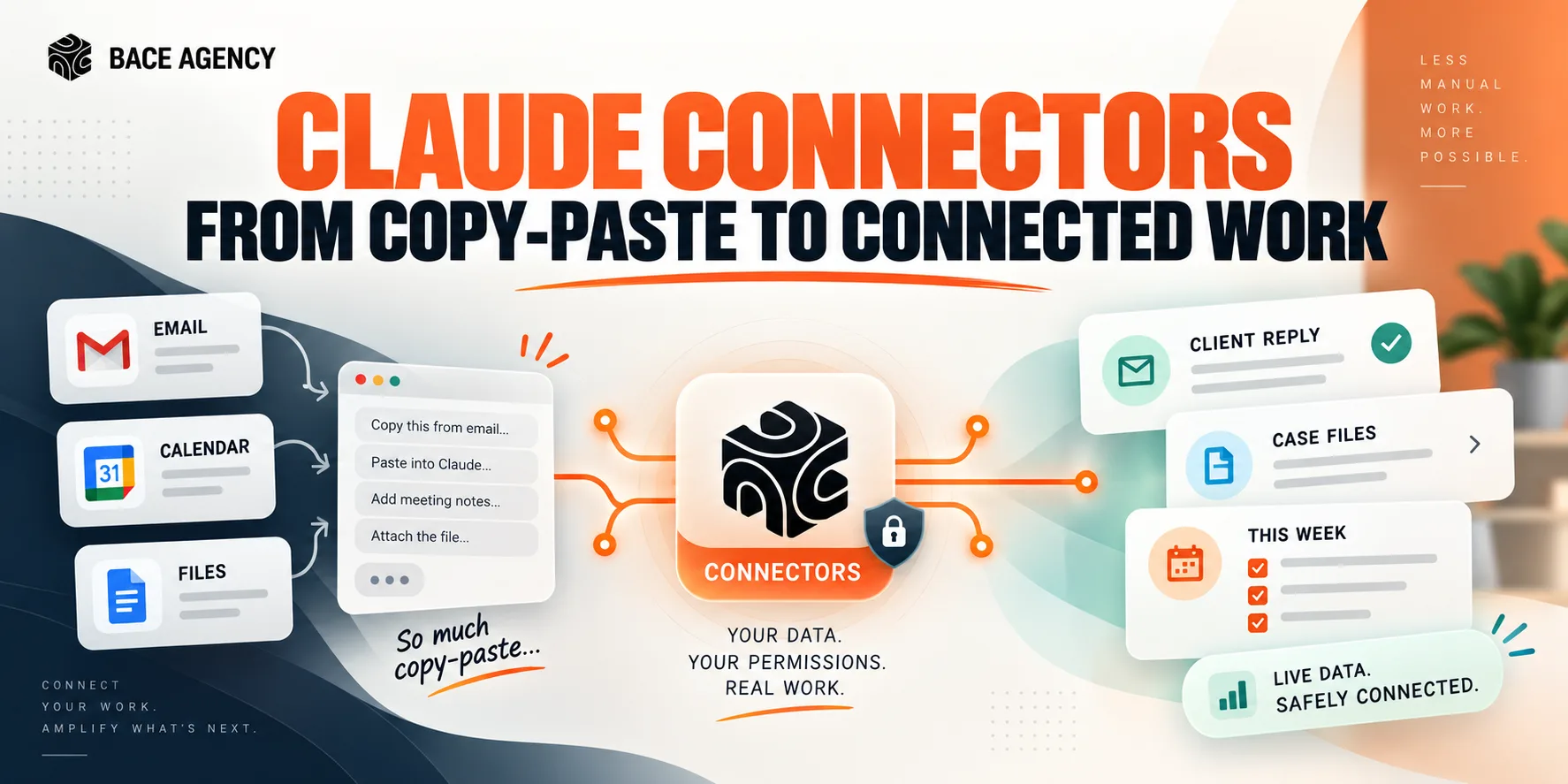
Claude Connectors for Winnetka Accounting Firms
AI stays a clever assistant until it can see your real email, files, and calendar. Connectors are that bridge, and the win depends on connecting narrowly and keeping the writes on approval.
About the author

Written by
Michael Pavlovskyi
Founder, Bace Agency
Michael builds custom Claude and GPT workflows for insurance agencies, law firms, and PE firms on Chicago's North Shore. Speaker at Northwestern and Lake Forest College on practical AI adoption for professional services.
Connect on LinkedInSee it in your firm
Book an audit.
A free 30-minute AI audit. No obligation, no pitch deck.
Book a free AI audit