
Winnetka Attorneys Are Doing Title Search the Hard Way
Most of a title chain review is pattern recognition, and that is the layer Winnetka real estate attorneys can hand off to AI today.


Key Takeaways
- ✓ Title chain review is predominantly pattern recognition: extracting grantor-grantee sequences, flagging unreleased mortgages, and listing easements. AI handles this layer consistently and without fatigue, freeing attorney time for legal judgment.
- ✓ A well-prompted Claude session can produce a structured title summary from an uploaded PDF abstract without custom software, an API build, or any new platforms. A flat monthly subscription covers the capability.
- ✓ Attorney judgment is still required for ambiguous legal descriptions, chain-of-title gaps, questionable releases, and exception negotiations with the title company. AI does the read. The attorney makes the call.
- ✓ The starting investment is one afternoon: write the extraction prompt, save it as a Claude Project, and test it against five past transactions before using it on a live closing.
If your Winnetka real estate practice still requires a paralegal to read through every chain-of-title document and transcribe the key facts by hand, you are spending hours on a job that is mostly pattern recognition. AI is very good at pattern recognition.
AI title search automation applies large language models to chain-of-title documents, legal descriptions, and recorded lien schedules to extract key facts and surface potential title defects in a fraction of the manual reading time. The core process is pattern matching: AI reads what you train it to read, consistently, on every document in the chain. That is not a replacement for attorney judgment. It is a replacement for the reading and transcription that happens before the judgment starts.
Why Title Search Is a Pattern-Matching Problem
Real estate attorneys read the same language over and over. Deed formats follow standard legal descriptions. Mortgages and releases follow predictable structures. Easements appear in repeatable clauses. Mechanic's liens, judgment liens, and tax liens are recorded in formats that the American Land Title Association and Illinois recording standards have standardized for decades.
That is not a criticism of the work. The standardization is a feature: it lets experienced attorneys and paralegals scan a document quickly and find what matters. But it also means the task is, at its core, pattern matching at a professional level.
Pattern matching is exactly what large language models do. Claude can read a 40-page abstract of title, extract the grantor-grantee chain, identify gaps in conveyance, flag unreleased mortgages, and note potential boundary discrepancies. It does not get fatigued on page 32. It does not miss a line because the formatting shifted slightly between two instruments recorded a decade apart.
Here is the honest framing: most of what a first-pass title review requires is not attorney judgment. It is reading and organizing. Attorney judgment enters when you encounter an ambiguous legal description, a disputed easement, or a gap in the chain that may require a quiet title opinion. AI handles the reading and organizing. You handle the judgment calls.
"Efficiency is doing things right; effectiveness is doing the right things."
Peter Drucker, management theorist and author of The Effective ExecutiveThe distinction matters here. A first-pass title read is an efficiency problem. Getting a paralegal through 40 pages of chain-of-title quickly and accurately is a throughput task. What you do with those findings, the legal calls on gaps, the judgment on whether a release is adequate, the opinion you give your client, that is the effectiveness layer. AI belongs on the first. You belong on the second.
What AI Can Extract from a Title Chain Document
When you upload an abstract of title or a title commitment to Claude, you can instruct it to return a structured summary. Here is what a well-prompted extraction produces for a typical Winnetka residential closing:
- Grantor-grantee chain in sequence, with recording dates and instrument numbers
- Outstanding mortgages and the most recent recorded release for each, with a flag for any mortgage carrying no recorded release
- Any recorded easements, their grantees, and the described purpose
- Judgment liens and tax liens, with lien holder names and amounts where the document states them
- Legal description pulled verbatim for comparison against the current purchase contract
- Potential gaps or irregularities flagged in plain language for attorney review
This is not AI replacing your title analysis. It is AI doing the first-pass read so your billable time starts at the judgment layer, not the transcription layer. If you want context on where North Shore attorneys typically lose non-billable hours across a full workday, the breakdown on billable time loss for Illinois attorneys makes the case for where to start and what the scale of the problem looks like.
SAMPLE CLAUDE PROMPT
"I am attaching an abstract of title for a residential property in Winnetka, Illinois. Please read the full document and return the following in numbered sections: (1) the complete grantor-grantee chain in order with recording dates and instrument numbers, (2) a list of any mortgages and their corresponding releases, with a clear flag for any mortgage that has no recorded release, (3) any easements or restrictions with the grantee name and described purpose, (4) any judgment or tax liens with lien holder name and amount as stated in the document, (5) the legal description verbatim, and (6) a list of any gaps, irregularities, or items that in your reading appear to warrant attorney review. Do not summarize or interpret: extract what the document says and quote verbatim where relevant. If you are uncertain about any instrument, note the uncertainty and cite the page."
How Do You Set Up AI Title Search Automation?
You do not need custom software or an API build to start. The setup for a small Winnetka real estate practice runs entirely on Claude's consumer or professional plan, using file uploads and a system prompt saved as a Project. Here is a working sequence:
Build Your Extraction Prompt
Write a standing prompt that tells Claude exactly what to extract from your title documents. Include your firm's specific checkpoints: what you always look for in Cook County and Lake County chain-of-title review. Save it as a Claude Project so it loads automatically with every new session. Test it against five past transactions before you rely on it for a live closing.
Upload and Run
Upload the abstract of title or title commitment as a PDF. Claude handles multi-page documents and returns structured output. Review the extraction before it goes anywhere near a client file. If the output misses something or misreads a recording date, note it, update your prompt, and run it again.
Attorney Review and Sign-Off
Take the structured output and check it against the source document. Your job at this point is to verify the extraction and apply legal judgment to the flagged items. The first-pass read has already been done. Your time goes on the exceptions and the calls, not on working through the document from page one.
This workflow does not require your staff to learn a new software platform. It runs in the same browser or desktop app your attorneys already use. If you want to think through which workflows in your firm are the best candidates to automate first, the AI readiness quiz takes about five minutes and flags the highest-value starting points for a real estate or general transactional practice.
What Does This Actually Cost?
For most Winnetka real estate practices, this starts on a flat Claude subscription. The consumer or professional plan handles document uploads, Projects, and multi-step extraction tasks. You are not building a custom API integration. You are not paying variable per-token rates for each document you process. You are paying a predictable monthly fee to run a professional-grade language model on your files.
The more interesting cost question is on the other side: what does it cost to keep doing title review the current way? If a paralegal or associate spends two to three hours per residential transaction on first-pass document reading, and your closing volume is consistent, the math on a monthly subscription becomes straightforward. For a broader view of what AI projects cost when you need a custom build rather than a subscription, this breakdown covers the four cost drivers that firms typically do not see until the quote arrives.
| Task | Manual Process | With AI Extraction |
|---|---|---|
| First-pass document read | Paralegal reads full abstract | AI extracts structured summary |
| Grantor-grantee chain | Transcribed by hand from document | Extracted in sequence with instrument numbers |
| Lien and mortgage inventory | Manual list built from page review | Extracted with flags for missing releases |
| Attorney review focus | Entire document from page one | Flagged items and edge cases only |
| Setup required | None | One afternoon to write and test the extraction prompt |
Where Human Review Still Belongs
The case here is not that AI should complete the title search job on its own. The case is that AI should handle the reading and pattern matching so attorneys can spend their time on the decisions that require legal judgment.
Title search still needs attorney eyes on:
- Ambiguous legal descriptions where a survey comparison is required before the opinion can be given
- Gaps in the chain of title that may require a quiet title action or an affidavit of heirship
- Easements with unclear language on scope, purpose, or dominant-tenement identity
- Any mortgage where the recorded release looks questionable or is missing entirely
- Situations where the title insurance company is requesting a specific exception or additional documentation
- Commercial transactions with complex ownership structures, ground leases, or multi-party lien arrangements
These are judgment calls. AI can flag them. It cannot decide them. The American Bar Association has addressed the competency obligations around technology in legal practice: the attorney remains responsible for the work product regardless of the tools used. AI is a tool. The signature on the title opinion is still yours.
The goal is not to remove attorneys from the chain. It is to move your billable time up the value stack, away from document reading and toward legal analysis. A first-pass extraction that takes minutes instead of hours does not change what a real estate attorney does. It changes where the attorney's time goes within a transaction. That is the shift worth making.
If you want to see how the same approach applies to other transactional workflows in a law practice, the guide on AI intake automation for law firms walks through a parallel setup that North Shore practices have already put to work on the front end of the client relationship.
For firms ready to see what this looks like applied to their specific practice, a free 30-minute AI audit is available, in person on the North Shore or on video. No obligation. The output is a concrete list of workflows your firm can act on this quarter.
Frequently Asked Questions
Can AI complete a title search without attorney review? +
No. AI title search automation handles the pattern-matching layer: extracting the grantor-grantee chain, flagging unreleased mortgages, listing easements, and identifying gaps in conveyance. The legal judgment on those findings, including quiet title decisions, opinions on ambiguous legal descriptions, and exception negotiations with the title company, remains the attorney's responsibility. The American Bar Association's professional responsibility guidance is clear that the attorney is responsible for the work product regardless of the tools used to prepare it.
What types of title documents can Claude process for a Winnetka real estate practice? +
Claude accepts PDF uploads of abstracts of title, title commitments, and recorded instruments. It processes multi-page documents and returns structured output covering the chain of conveyance, outstanding liens, easements, and flagged irregularities. For standard residential transactions in Winnetka and surrounding Cook County and Lake County townships, the document format is consistent enough that a well-built extraction prompt works across most instruments without adjustment. For commercial transactions with non-standard formats, the extraction step still saves time but requires closer verification.
How long does it take to set up AI title search automation at a small firm? +
For a small Winnetka real estate practice, the core setup takes one afternoon. You write an extraction prompt tailored to your review checklist, save it as a Claude Project, and test it against five or six past transactions. Refinement happens over the first two to three weeks of regular use as you tune the prompt to catch anything it initially missed. There is no software installation, no API configuration, and no vendor contract. The starting point is a Claude subscription and an afternoon.
Does AI title search automation work for commercial real estate transactions? +
It works for the extraction layer. Commercial transactions often involve more complex ownership structures, recorded restrictions, and multi-party lien arrangements, which means the AI output requires closer attorney review than a standard residential closing. The extraction step still reduces time spent on the first-pass document read. The judgment layer on commercial transactions remains more intensive, and that is where the attorney's time should be focused regardless of whether AI is involved.
What is the main risk of using AI for title search extraction? +
The primary risk is an extraction error that goes uncaught during attorney review. AI models can misread a document or miss an instrument if the PDF scan quality is poor, if the formatting is unusually structured, or if a handwritten endorsement appears mid-document. The mitigation is treating AI output as a first draft that requires attorney verification, not a finished product. Verify the grantor-grantee chain against the source document, check flagged items, and never rely on AI output in a client transaction without a review step.
Related Articles
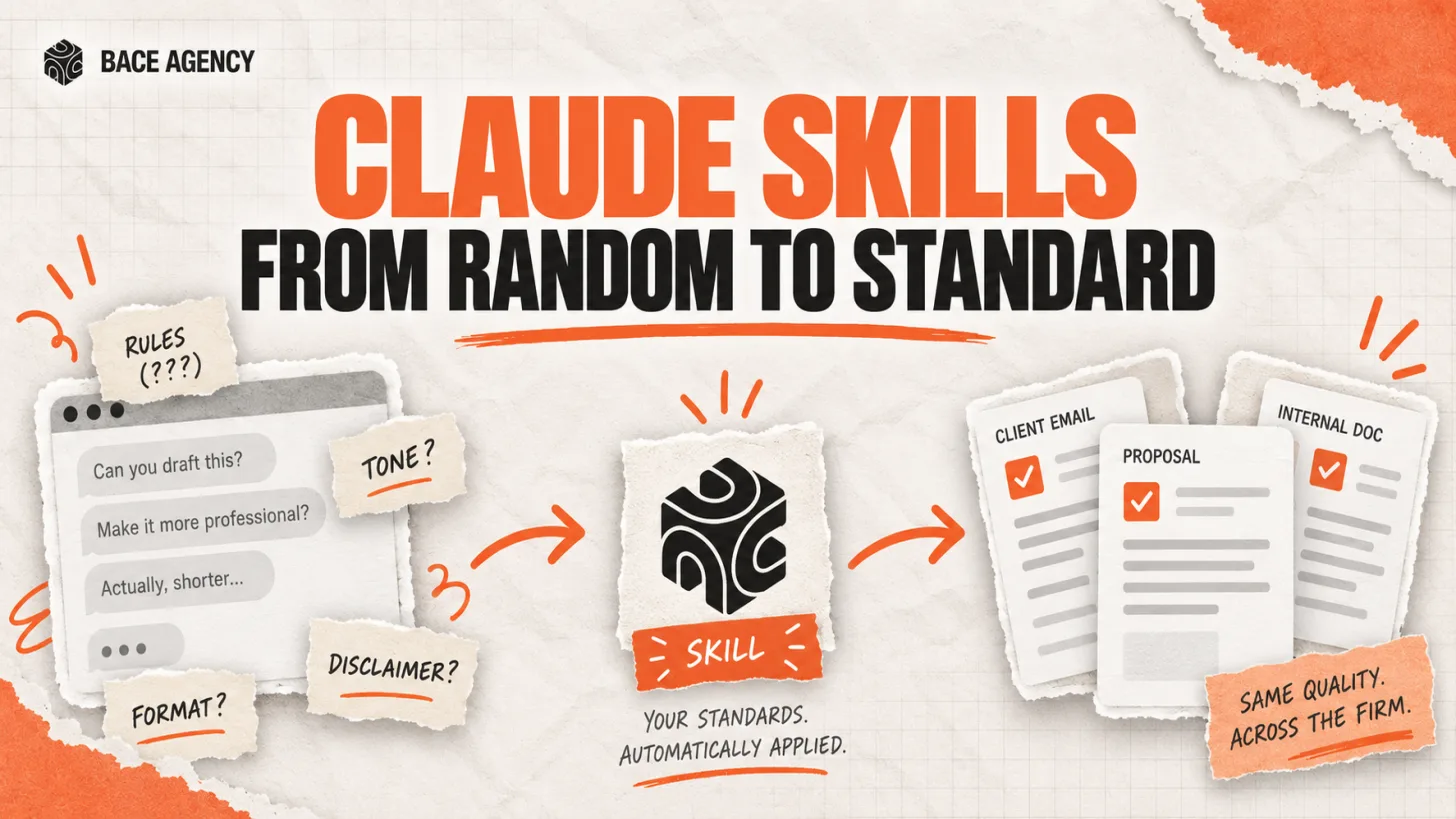
Claude Skills Give a Law Firm One AI Standard
One associate gets sharp drafts, another gets generic filler from the same tool. A Claude Skill turns one person's rules into a standard the whole firm can rely on.

Let AI Agents Handle Intake at Evanston Law Firms
Most Evanston firms still run intake on a phone and a Word template. The firms pulling ahead hand the whole new-matter pipeline to an agent, then review its work before anything reaches the client.

Oregon Federal Court Fines Lawyers $110,000 Over AI
Two lawyers were fined $110,000 for filing AI-invented case citations. The lesson is not to avoid AI. It is to verify it. Here is the workflow that prevents it.
About the author

Written by
Michael Pavlovskyi
Founder, Bace Agency
Michael builds custom Claude and GPT workflows for insurance agencies, law firms, and PE firms on Chicago's North Shore. Speaker at Northwestern and Lake Forest College on practical AI adoption for professional services.
Connect on LinkedInSee it in your firm
Book an audit.
A free 30-minute AI audit. No obligation, no pitch deck.
Book a free AI audit