
Bezos Just Reframed AI. Altman and Amodei Should Be Taking Notes.
At Blue Origin's Rocket Park on May 20, Jeff Bezos sat with CNBC's Andrew Ross Sorkin and made the case the AI industry has needed for two years. Bubbles drive useful investment. Labor shortages are the actual coming problem. The right metaphor is a bulldozer instead of a shovel. Meanwhile the country's two most-quoted AI CEOs, Sam Altman and Dario Amodei, keep telling 40 percent of US workers their jobs are about to evaporate. The damage to the conversation is real, and it is getting in the way of every North Shore firm trying to actually deploy this technology.

Key Takeaways
- ✓ On May 20, 2026, Jeff Bezos went on CNBC's Squawk Box from Blue Origin's Rocket Park in Florida and gave the cleanest public reframing of AI any major business figure has given in two years. The "AI bubble" is fine. The coming labor problem is a shortage, not a glut. The right metaphor is a bulldozer instead of a shovel.
- ✓ Sam Altman is bad at communicating the value of AI. Dario Amodei is worse. Their "white collar bloodbath" framing, repeated for the better part of a year, is the single biggest reason 40 percent of US workers now say they fear losing their job to AI (Mercer 2026, up from 28 percent in 2024).
- ✓ The actual labor data does not support the bloodbath. Yale Budget Lab found no significant change in unemployment for AI-exposed occupations from the launch of ChatGPT through March 2026. The fear is real, but it is being manufactured at the podium, not in the payroll data.
- ✓ A counter-wave of opinion leaders is forming. Bezos, Sergey Brin (back full-time at Google to "win the AI future"), Demis Hassabis, Jensen Huang. For a North Shore firm (Lake Forest law office, Highland Park wealth practice, Evanston insurance agency, Wilmette family office), the right move is not to wait for the public conversation to balance itself. Deploy the tools now. Hire the people who already use them.
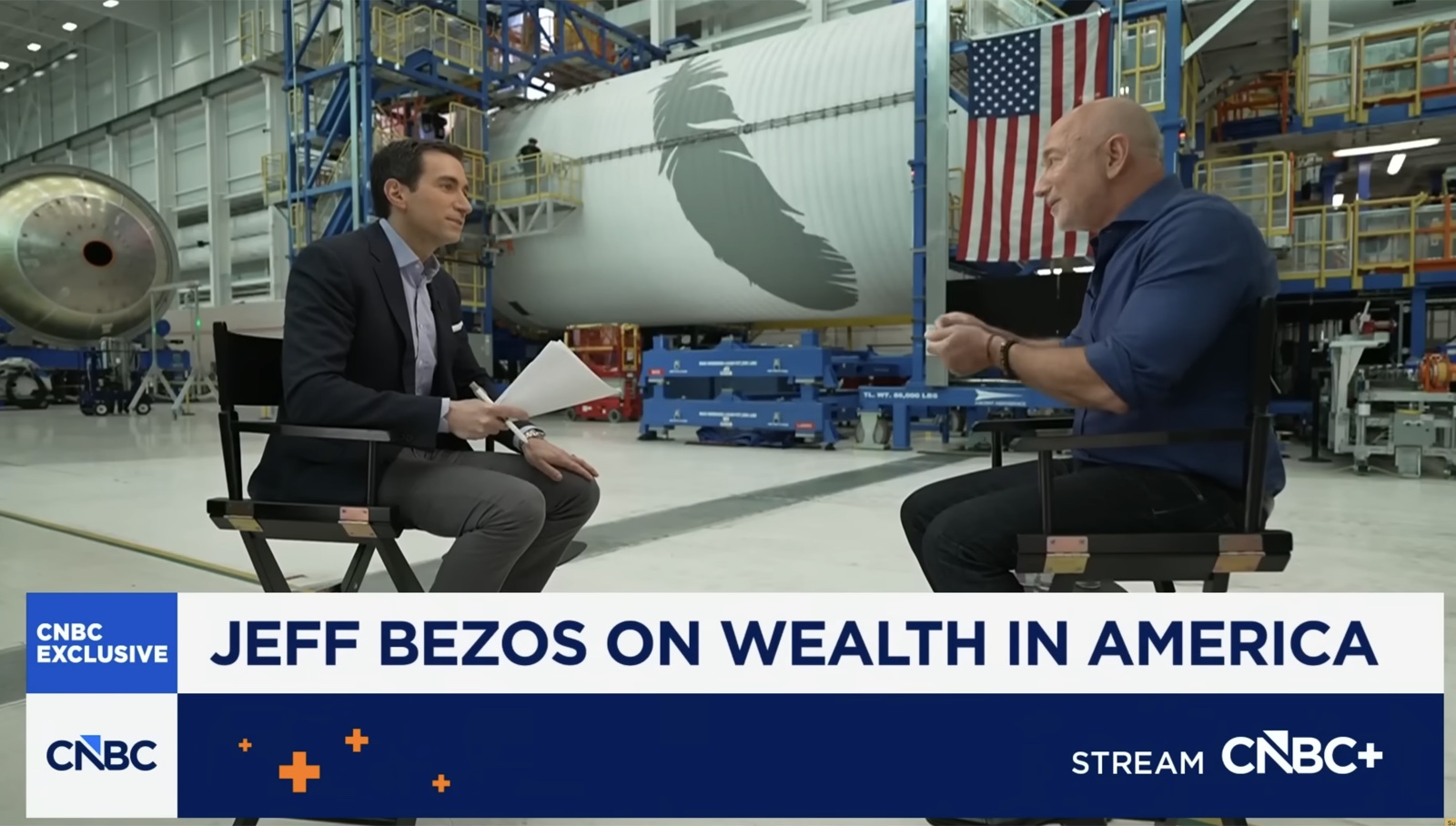
LAKE FOREST, Ill. , May 23, 2026. Jeff Bezos sat down with CNBC's Andrew Ross Sorkin on Wednesday, May 20, at Blue Origin's Rocket Park factory in Merritt Island, Florida, for what was originally pitched as a space-and-rockets interview. Within the first ten minutes, it had become something more useful. Bezos was talking about AI, and he was making the case the American AI industry has needed someone with his weight to make for two years.
Bezos shrugged off the "AI bubble" panic. He predicted labor shortages, not job losses. He described his own coding workflow as using a bulldozer in place of a shovel. CNBC published the full transcript a few hours later, along with the full video.
That is the conversation the country needed. Sam Altman and Dario Amodei have been having a different one. The mismatch is starting to cost everybody, and it is getting in the way of every small-to-midsize firm on Chicago's North Shore.
40%
of US employees now say they fear losing their jobs to AI, up from 28% in 2024 (Mercer Global Talent Trends, 2026)
$6.2B
funding Bezos disclosed for Project Prometheus, his new "artificial general engineer" startup (CNBC, May 20, 2026)
0
significant change in unemployment for AI-exposed occupations from ChatGPT's launch through March 2026 (Yale Budget Lab)
What Bezos Actually Said at Blue Origin
The interview opened on space, pivoted to AI, and stayed there. Sorkin pressed Bezos on whether the AI investment surge has the shape of a bubble. Bezos's answer is worth reading in full, because it is the cleanest version of the argument we have had from anyone with his profile.
"Even if it does turn out to be a bubble," Bezos told Sorkin, "you shouldn't worry about it because the bubble is driving investment and a lot of the investment is going to turn out to be very healthy." He acknowledged that "every experiment is getting funded" at the moment, including bad ideas, because investors have not yet learned to discriminate. But, he said, "the good ideas will pay for all of the losers."
He reached back to the 1990s biotech bubble for the analogy. A lot of investors lost money on certain things, he said, but "we still got to keep all the life-saving drugs that they had invented." The point is that capital frenzy and lasting value are not opposites. You can have both at the same time, and the United States has had both at the same time more than once in living memory.
Then Bezos went somewhere I did not expect. He predicted a labor shortage, not a layoff wave. The case is straightforward: AI is going to drive enough productivity gain across the economy that two-earner households start dropping the second earner. People will choose to step back. The aggregate labor supply contracts. And that, not mass white-collar unemployment, becomes the policy problem of the late 2020s.
On the coding question specifically (a direct shot at the Anthropic and OpenAI "AI is coming for your developers" narrative), Bezos was crisp. AI coding tools, he said, will help programmers do the work at a higher level. "A bulldozer instead of a shovel." The phrasing is almost identical to the framing I used last week on the Schmidt commencement piece, where the metaphor was a 1935 trench-digger choosing between a shovel and an excavator. Two billionaires, six days apart, reached for the same image. That is not a coincidence. It is the right image.
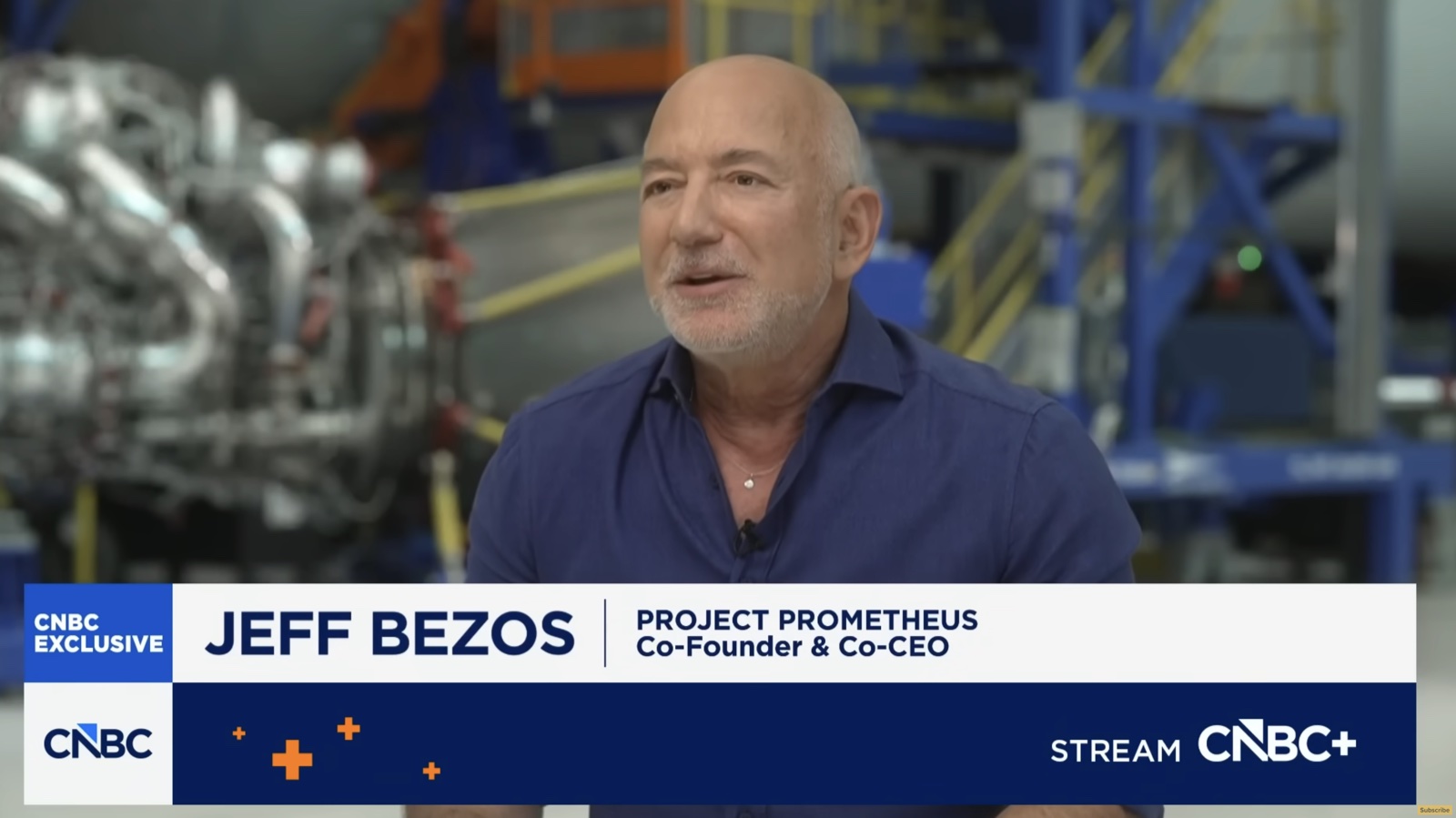
Bezos also disclosed, for the first time in detail, what he is actually building at Project Prometheus: an "artificial general engineer," with $6.2 billion in disclosed funding, building AI models for physical-world design tasks (engineering, manufacturing, drug design). He is putting real personal capital behind the optimistic case.
Altman and Amodei Are Why People Are Scared
This is where I lose a few readers. Fine.
Sam Altman is bad at communicating the value of AI. Dario Amodei is worse. The "white collar bloodbath" framing the two of them have repeatedly fed into the press for the better part of a year is the single biggest reason 40 percent of US employees now say they fear losing their job to AI, up from 28 percent in 2024 according to Mercer's 2026 Global Talent Trends survey of 12,000 workers.
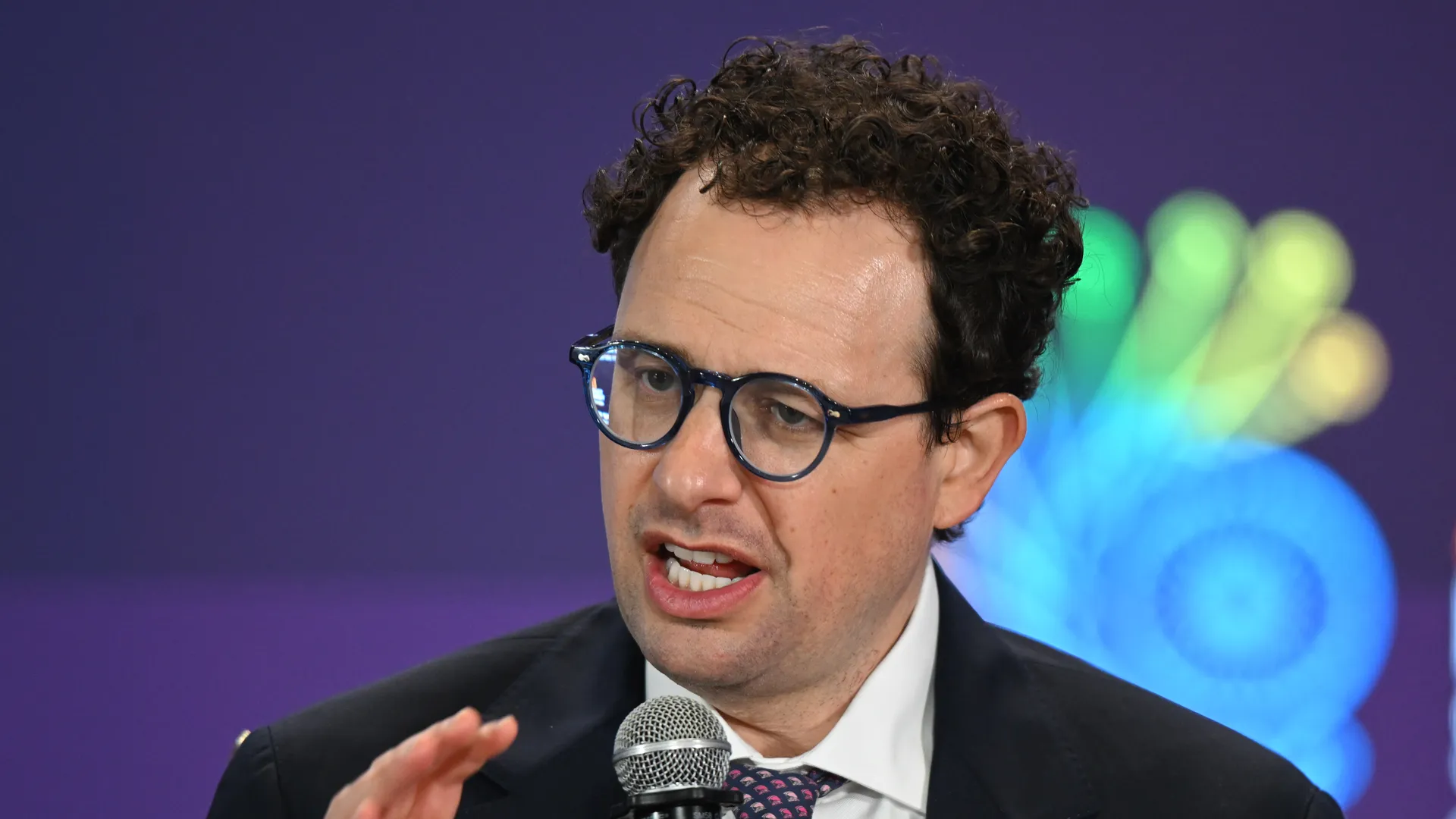
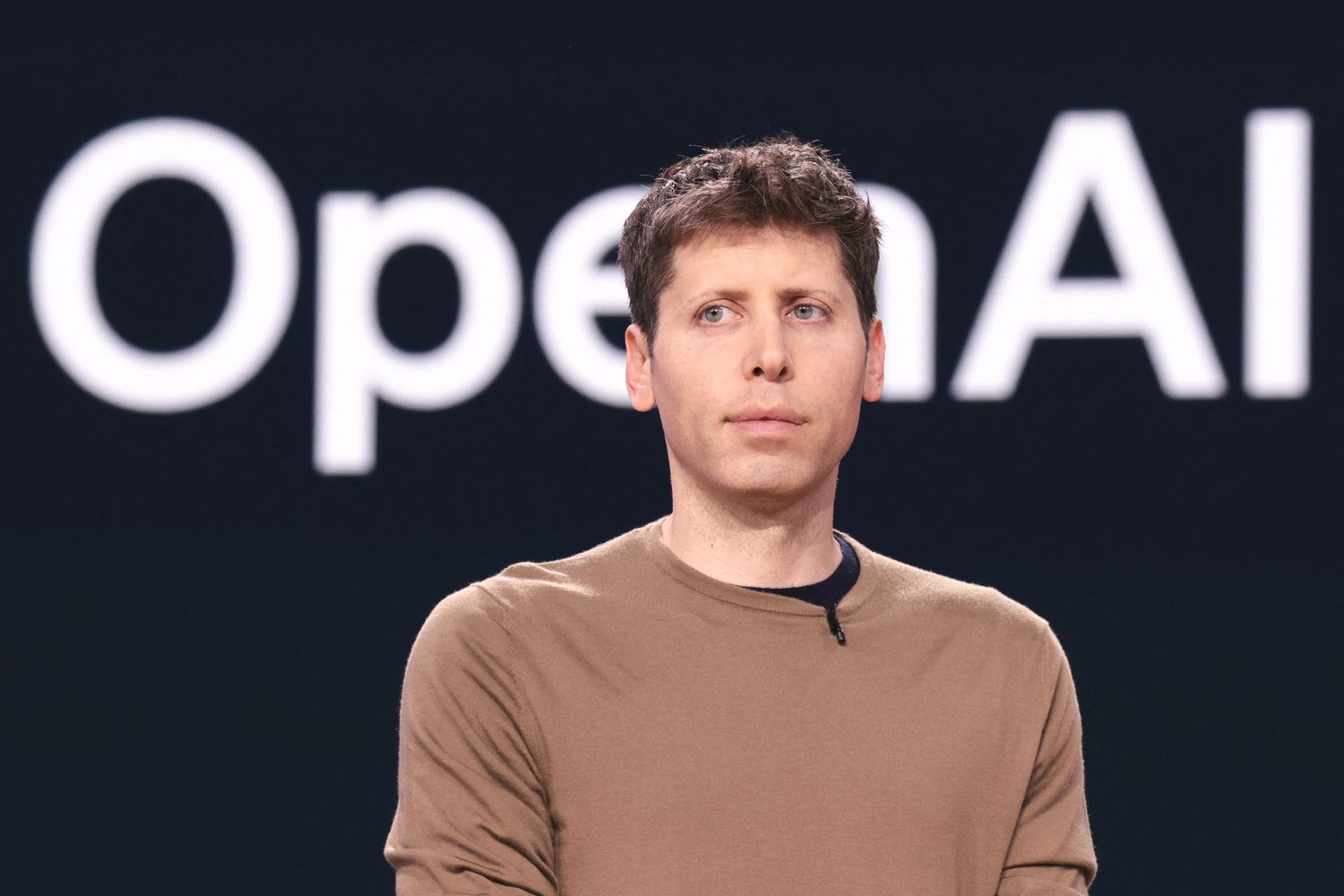
The receipts are not subtle. Amodei went on television and said the country is "sleepwalking into a white collar bloodbath" that "could wipe out half of all entry-level white collar jobs and spike unemployment to 10 to 20 percent in the next 1 to 5 years." CNBC ran the quote verbatim. Altman, for his part, has spent the year toggling between "we want to build tools to augment and elevate people, not entities to replace them" and statements like "AI will soon do the work of a major-company CEO better than I can". Pick one.
The cynical read on this is that doom is good marketing. If your investors believe your product is about to obsolete half the white-collar economy, they will fund your next round at any valuation. The kinder read is that the two of them genuinely believe the bloodbath claim and feel a moral duty to warn the public. Either way, the second-order effect is the same. Forty percent of US workers are now scared, and that fear is not landing as productive policy debate. It is landing as resistance inside every services firm in the country.
And here is the part that should embarrass both Anthropic and OpenAI. The actual labor data does not support the bloodbath. Yale Budget Lab researchers looked at occupational employment data from the launch of ChatGPT in late 2022 through March 2026, comparing AI-exposed occupations to unexposed ones. Their finding: no significant difference in the rate of occupational change or unemployment between the two groups. Three and a half years in. The white-collar bloodbath has not happened. It might still. But the people who keep promising it weekly have produced no evidence that the labor market is responding the way they keep saying it will.
So what we have, today, in May 2026, is two of the most-quoted AI executives in the world repeatedly telling the country to be afraid of a thing the data does not yet show is happening. And we have a Mercer survey saying the fear has gone from 28 percent to 40 percent in 24 months. The connection is not subtle. The messengers are doing damage. Bezos, walking onto Sorkin's set on May 20, did something neither of them seems willing to do: he told the country the picture is more interesting than that.
The Counter-Wave Is Building
Bezos is not the only one. A wave of major builder-voices is starting to push back on the doom framing, and the cumulative weight of it is going to matter over the next twelve months.
Sergey Brin has come back full-time to Google after a decade of semi-retirement, telling Google's engineering staff that "every computer scientist should not be retired right now, but working on AI" and stating publicly that he intends Gemini to be the first AGI. Fortune's profile of DeepMind CEO Demis Hassabis described Brin's return as the active driver of a $3.9 trillion company going back on offense. That is a person voting with his calendar, not his X posts.
Hassabis himself, who has more technical credibility than almost anyone in the conversation, has stayed firmly in the augmentation camp and consistently pushes the long-run timeline (AGI before 2030) without the bloodbath color commentary. Jensen Huang has spent the last year telling every audience that the right interpretation of AI is a new general-purpose technology that lifts the economy the way electrification did, not a job-eating villain.
The counter-wave is forming because the doom narrative is bad business. It scares the customers. It scares the workforce. It scares the policymakers writing the rules. And it does not match the actual evidence on the ground. Builder-voices who have something to lose from a public opinion collapse on AI (Bezos with Amazon, Prometheus, and Blue Origin; Brin with Google; Huang with Nvidia) are starting to organize the counter-argument.
The Class of 2026 booing Eric Schmidt at the University of Arizona last week was the doom narrative's high-water mark in the public conversation. I wrote about that booing on Friday. The Bezos interview on Wednesday was the first public sign that the tide is turning.
The Bulldozer, Not the Shovel
I keep coming back to Bezos's metaphor because it is precisely the right one, and it is the same metaphor I used in my own work last week.
You are a software engineer, or a contract lawyer, or a wealth advisor, or an insurance broker. The work in front of you on Monday morning has not changed in its essential nature for twenty years. You can do it the way you have always done it (the shovel), or you can do it with the current generation of AI tools sitting next to you doing the rote layers (the bulldozer). The county is paying the same rate either way. The bulldozer-runner finishes twenty times as much.
This is not a story about replacement. It is a story about leverage at the individual contributor level, and it is happening now, this quarter, with tools that already exist and that any motivated professional can be productive with inside two weeks. The Bezos framing and the Schmidt framing converge on this point because there is one correct way to read what AI is doing to knowledge work in 2026, and it is not "the machines are coming for your job." It is "the people who pick up the machines first are going to run the work."
"Even if it does turn out to be a bubble, you shouldn't worry about it because the bubble is driving investment and a lot of the investment is going to turn out to be very healthy."
Jeff Bezos to Andrew Ross Sorkin, CNBC Squawk Box, Blue Origin Rocket Park, Merritt Island, Florida, May 20, 2026.The Real Story
Bezos did not say anything on Sorkin's set that the most thoughtful people inside Amazon, Google, and the venture community have not been saying privately for two years. The difference is that he said it on national television, at the rocket factory he owns, in front of the audience that funds and votes on this stuff. That matters. The reframing the AI industry has needed is starting to arrive, from the people the country actually listens to.
If you are a Lake Forest law partner, an Evanston insurance principal, a Highland Park wealth practice owner, a Wilmette family-office CIO, or a Winnetka search-fund operator, the right read on this week is that the public conversation is about to swing. Not because Altman and Amodei stop saying what they have been saying, but because Bezos, Brin, Huang, and a half-dozen others are about to start saying the truer thing louder than the doomers can. Let's plan how to position your firm for the conversation that is coming.
What North Shore Firms Should Do This Week
The temptation, for a Lake Forest law partner or a Wilmette wealth practice owner watching this play out on cable news, is to wait. Wait for the public conversation to balance. Wait for the regulatory dust to settle. Wait for a clearer signal about whether the doomers or the builders end up being right.
Do not wait. The cost of waiting in 2026 compounds against you in two specific ways.
First, your clients are forming an opinion about AI from cable news and from the same Sam Altman quotes everyone else is reading. If you have not had an explicit, plain-English conversation with each of your top 20 clients about how your firm uses AI, what you let it touch, where you keep a human in the loop, and how you protect their data, you are going to lose at least one of those clients to a firm that did have that conversation. Probably more.
Second, the AI-fluent operators are getting hired and promoted faster than the non-fluent ones at every layer of the economy, and the gap is not going to close. I wrote up five hiring lessons that informed how I now screen candidates, and the rule going forward is simple: AI fluency is not a nice-to-have on a resume. It is the screen.
| Claim | Doomer framing (Altman, Amodei) | Builder framing (Bezos, Brin, Huang) |
|---|---|---|
| What AI does to entry-level white-collar jobs | "Wipes out half of them" in 1-5 years (Amodei) | Raises per-worker productivity, drives labor shortages as people drop the second income (Bezos) |
| What the right metaphor is | "Bloodbath," "replacement," "unemployment to 10-20%" | "Bulldozer instead of a shovel," same trench, more output per worker |
| What the 2026 labor data actually shows | Mostly anecdote and forecasts | Yale Budget Lab: no significant displacement signal in AI-exposed occupations through March 2026 |
| What 40% of US workers heard | "My job is about to disappear" (Mercer 2026) | A framing they have not been exposed to often enough to internalize yet |
The practical move for your firm this week is twofold. Pick the three workflows where AI tools could give you a real productivity step-change (intake, drafting, client communication, summary research, financial-model first drafts), pick the one with the lowest client-impact risk, and run a 30-day pilot with one Claude or ChatGPT license per person on that workflow. Measure the time delta. Hire your next role with AI fluency as the first-pass screen. If you want a fast first cut on where your own firm stands today, take the AI readiness quiz before your next hire.
The right "first workflow" looks different for every vertical. The pattern that tends to hold across professional services firms is below. Each row links to the deeper Bace write-up if you want the full playbook for your specific situation.
| Your firm | Best first workflow to pilot | Deeper playbook |
|---|---|---|
| Law firm (estate, corporate, family) | AI-assisted contract review with privilege-safe prompting | AI Contract Review for Evanston Law Firms Without Privilege Risk |
| Wealth advisor / RIA | Quarterly client review drafting + portfolio-letter automation | How Glencoe Wealth Advisors Can Automate Quarterly Reviews |
| Insurance agency (P&C, executive benefits) | First-pass claims-file review with E&O guardrails | AI Insurance Claims Processing With E&O Guardrails |
| PE shop / search fund / ETA operator | Deal-memo first draft + diligence summary generation | How Lake Forest PE Firms Can Use the Claude Agent SDK to Build Their Own Deal Team |
| Family office / financial planner | Estate-scenario modeling + client correspondence drafting | AI Estate Planning: Claude for Evanston Financial Planners |
The common pattern: in every vertical, the highest-value first workflow is something the firm already does manually every week or every quarter, where the rote layers are mechanical, the judgment layers are clear, and a 5x time-saver translates directly to either capacity for more clients or hours back to the principal. Pick that workflow. Pilot it for 30 days. Then build the next one.
SAMPLE CLAUDE PROMPT: for talking to a skeptical client
"You are an experienced relationship manager at a wealth advisory firm on Chicago's North Shore. One of our top-20 clients (a retired CFO, late 60s, conservative) just asked me on a call if I use AI on their account, and the question was loaded. Draft a two-paragraph response I can use on a follow-up call that does three things: (1) honestly describes the tools we use and where we keep a human in the loop on their account specifically; (2) gives a concrete example of how the tool made the work better or faster for them in the last quarter; (3) closes by inviting them to ask any follow-up questions in writing. Tone: calm, specific, no hype, no defensiveness."
Frequently Asked Questions
What did Jeff Bezos actually say in the May 20 CNBC interview at Blue Origin?
Bezos sat with CNBC's Andrew Ross Sorkin at Blue Origin's Rocket Park factory in Merritt Island, Florida, and made three substantive AI claims. First, the so-called AI bubble is fine and even healthy, because the capital frenzy is funding a wide range of experiments and the winners will more than cover the losers (he reached back to the 1990s biotech bubble as the analogue). Second, the real coming labor problem is a shortage, not a glut, because AI-driven productivity will let two-earner households step down to one. Third, on the question of whether AI is coming for software engineers, he said the right metaphor is a bulldozer instead of a shovel: same trench, dramatically more output per worker. He also disclosed $6.2 billion in funding and the first detailed description of Project Prometheus, his new "artificial general engineer" startup.
Are Sam Altman and Dario Amodei actually wrong about AI taking jobs, or is the criticism overstated?
Two things can be true at once. AI is going to change a lot of jobs over the next decade, and the specific "white collar bloodbath" framing Altman and Amodei have used in 2026 is not supported by the actual labor data so far. Yale Budget Lab researchers looked at occupational employment from the launch of ChatGPT through March 2026 and found no significant change in unemployment for AI-exposed occupations versus unexposed ones. Meanwhile Mercer's 2026 Global Talent Trends survey of 12,000 workers found the share of US employees who fear losing their job to AI rose from 28 percent in 2024 to 40 percent in 2026. The fear is real. The labor displacement underneath it, as of May 2026, mostly is not.
What is Project Prometheus and why does the announcement matter?
Project Prometheus is Jeff Bezos's new AI startup, with $6.2 billion in disclosed funding as of November 2025. In the May 20 interview, Bezos described its mission for the first time in detail: building AI models for physical-world design tasks (engineering, manufacturing, drug design) and what he calls an "artificial general engineer." He was explicit that it has nothing to do with robotics. The announcement matters because it is Bezos voting his personal capital in size on the same optimistic AI thesis he is making publicly, which makes the public framing harder to dismiss as cheap talk.
How should a small North Shore firm think about the Bezos vs. Altman framing for its own AI decisions?
Use the Bezos framing operationally and ignore the cable-news debate. The practical move is to pick three workflows in your firm where AI tools could realistically give your people a 5x to 10x productivity step-change (drafting, summary research, client communication, intake, first-pass model building), run a 30-day pilot on the lowest-client-impact one with one Claude or ChatGPT license per participant, and measure the time delta. Then hire your next role with AI fluency as the first-pass screen, not as a nice-to-have on the resume. Do not wait for the public AI debate to balance itself. Your competitors are not waiting.
Related Articles
Small North Shore Firms Are Beating Big Ones to AI
While a national firm spends a year debating AI strategy, the small practice down the street already answers clients faster. The gap compounds every week.

What North Shore Firms Should Not Automate
Most AI consultants will automate anything you point at. Here is the short list I tell clients to leave alone.

What Anthropic's Valuation Means for Small Firms
Anthropic just became the most valuable AI startup at a $965 billion valuation. The fad question is closed. The useful question is where AI fits in your firm, and where it does not.
About the author

Written by
Michael Pavlovskyi
Founder, Bace Agency
Michael builds custom Claude and GPT workflows for insurance agencies, law firms, and PE firms on Chicago's North Shore. Speaker at Northwestern and Lake Forest College on practical AI adoption for professional services.
Connect on LinkedInSee it in your firm
Book an audit.
A free 30-minute AI audit. No obligation, no pitch deck.
Book a free AI audit